![Immunohistochemistry-Paraffin: FoxP3 Antibody [NB100-39002] - Mouse spleen stained with FoxP3 antibody. IHC-P image submitted by a verified customer review.](http://images.novusbio.com/fullsize/FoxP3-Antibody-Immunohistochemistry-Paraffin-NB100-39002-img0011.jpg "Immunohistochemistry-Paraffin: FoxP3 Antibody [NB100-39002] - Mouse spleen stained with FoxP3 antibody. IHC-P image submitted by a verified customer review.")
| Reactivity | Hu, Mu, Rt, BvSpecies Glossary |
| Applications | WB, Flow, ICC/IF, IHC, IP, WB, Dual ISH-IHC, Single-Cell Western |
| Clonality | Polyclonal |
| Host | Rabbit |
| Conjugate | Unconjugated |
| Format | BSA Free |
| Concentration | 1.0 mg/ml |
| Immunogen | A peptide corresponding to amino acids 43-100 of mouse FOXP3. [Swiss-Prot# Q99JB6] |
| Localization | Nuclear |
| Isotype | IgG |
| Clonality | Polyclonal |
| Host | Rabbit |
| Gene | FOXP3 |
| Purity | Epitope affinity purified |
| Innovator's Reward | Test in a species/application not listed above to receive a full credit towards a future purchase. |
| Dilutions |
|
|
| Application Notes | Prior to immunostaining paraffin tissues, antigen retrieval with sodium citrate buffer (pH 6.0) is recommended. SCW is validating using FoxP3-transfected HEK293T cells. |
|
| Reviewed Applications |
|
|
| Publications |
|
| Storage | Aliquot and store at -20C or -80C. Avoid freeze-thaw cycles. |
| Buffer | PBS |
| Preservative | 0.05% Sodium Azide |
| Concentration | 1.0 mg/ml |
| Purity | Epitope affinity purified |


![Flow Cytometry GITR/TNFRSF18 Antibody (110416) [Unconjugated]](https://images.novusbio.com/images/antibody/mab689_human-gitr-tnfrsf18-mab-clone-110416-flow-cytometry-286202414437..jpg)
![ELISA GITR/TNFRSF18 Antibody (110416) [Unconjugated]](https://images.novusbio.com/images/mab689_human-gitr-tnfrsf18-mab-clone-110416-elisa-639201780596909658.jpg)
| Images | Ratings | Applications | Species | Date | Details | ||||||||||
|---|---|---|---|---|---|---|---|---|---|---|---|---|---|---|---|

Enlarge |
reviewed by:
Verified Customer |
IHC-P | Bovine, Goat, Sheep | 10/21/2019 |
Summary
Comments
|
||||||||||

Enlarge |
reviewed by:
Verified Customer |
IHC-P | Mouse | 10/06/2015 |
Summary
|
Secondary Antibodies |
Isotype Controls |
Research Areas for FoxP3 Antibody (NB100-39002)Find related products by research area.
|
|
Meeting Report: 2nd International Antibody Validation Meeting Bio-Techne brands Novus Biologicals® and R&D Systems® were proud to support the 2nd International Antibody Validation Meeting held at Bath University, on the 15-16 September, 2016. Almost 100 participants from around the world, including funde... Read full blog post. |
|
FOXP3 Is has been established that the regulatory transcription factor FOXP3 (a member of the forkhead/winged-helix family of transcription factors) is imperative to immune system homeostasis through CD4+CD25+ regulatory T cell function. Distinctively, ... Read full blog post. |
|
FOXP3 is a Master Regulator of T Regulatory (Treg) Cells FOXP3, a member of forkhead/winged-helix family of transcription factors acts as a "master" regulator for the development and suppressive function of regulatory T cells (Tregs). Its constitutive expression is necessary for the suppressive function of ... Read full blog post. |
|
FOXP3: Master Regulatory Transcriptional Factor FOXP3, a forkhead family transcription factor specially expressed in regulatory T (Treg) cells, controls the expression of many key immune-regulatory genes. Treg cells are a population of T lymphocytes that have critical roles in the immune system hom... Read full blog post. |
The concentration calculator allows you to quickly calculate the volume, mass or concentration of your vial. Simply enter your mass, volume, or concentration values for your reagent and the calculator will determine the rest.
5 | |
4 | |
3 | |
2 | |
1 |
| Verified Customer 10/21/2019 |
||
| Application: | IHC-P | |
| Species: | Bovine, Goat, Sheep |
| Verified Customer 10/06/2015 |
||
| Application: | IHC-P | |
| Species: | Mouse |


![Flow Cytometry: FoxP3 Antibody [NB100-39002] - An intracellular stain was performed on SK-MEL-28 cells with NB100-39002 (blue) and a matched isotype control (orange). Cells were fixed with 4% PFA and then permeabilized with 0.1% saponin. Cells were incubated in an antibody dilution of 2.5 ug/mL for 30 minutes at room temperature, followed by Rabbit IgG (H+L) Cross-Adsorbed Secondary Antibody.](http://images.novusbio.com/fullsize/FoxP3-Antibody-Flow-Cytometry-NB100-39002-img0022.jpg "Flow Cytometry: FoxP3 Antibody [NB100-39002] - An intracellular stain was performed on SK-MEL-28 cells with NB100-39002 (blue) and a matched isotype control (orange). Cells were fixed with 4% PFA and then permeabilized with 0.1% saponin. Cells were incubated in an antibody dilution of 2.5 ug/mL for 30 minutes at room temperature, followed by Rabbit IgG (H+L) Cross-Adsorbed Secondary Antibody.")
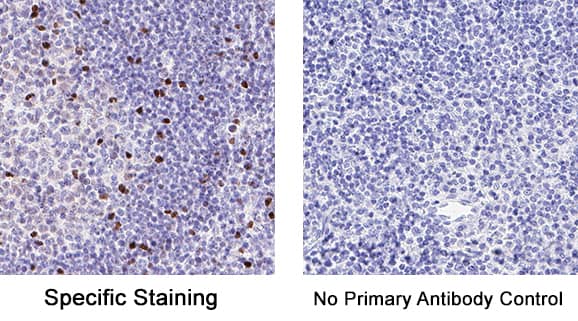
![Immunohistochemistry-Paraffin: FoxP3 Antibody [NB100-39002] - Tissue section of human tonsil using 1:200 dilution of rabbit anti-FoxP3 antibody. The staining was developed with HRP-labeled anti-rabbit IgG secondary antibody and DAB reagent, and nuclei of cells were counter-stained with hematoxylin. This FoxP3 antibody generated an expected and a specific nuclear staining of FOXP3 in a subset of cells which are potentially the Treg cells.](http://images.novusbio.com/fullsize/FoxP3-Antibody-Immunohistochemistry-Paraffin-NB100-39002-img0017.jpg "Immunohistochemistry-Paraffin: FoxP3 Antibody [NB100-39002] - Tissue section of human tonsil using 1:200 dilution of rabbit anti-FoxP3 antibody. The staining was developed with HRP-labeled anti-rabbit IgG secondary antibody and DAB reagent, and nuclei of cells were counter-stained with hematoxylin. This FoxP3 antibody generated an expected and a specific nuclear staining of FOXP3 in a subset of cells which are potentially the Treg cells.")
![Immunohistochemistry: FoxP3 Antibody [NB100-39002] - Antibody was tested in mouse spleen using DAB with hematoxylin counterstain.](http://images.novusbio.com/fullsize/FoxP3-Antibody-Immunohistochemistry-NB100-39002-img0014.jpg "Immunohistochemistry: FoxP3 Antibody [NB100-39002] - Antibody was tested in mouse spleen using DAB with hematoxylin counterstain.")
![Immunohistochemistry-Paraffin: FoxP3 Antibody [NB100-39002] - FFPE bovine spleen tissue. Deparaffinization and antigen retrieval was carried out with PTlink from Dako, citrate buffer pH 6. Anti-Foxp3 antibody was used at a 1:100 dilution. Secondary reagent: Envision, from Dako. Staining: DAB and hematoxylin. IHC-P image submitted by a verified customer review.](http://images.novusbio.com/fullsize/FoxP3-Antibody-Immunohistochemistry-Paraffin-NB100-39002-img0024.jpg "Immunohistochemistry-Paraffin: FoxP3 Antibody [NB100-39002] - FFPE bovine spleen tissue. Deparaffinization and antigen retrieval was carried out with PTlink from Dako, citrate buffer pH 6. Anti-Foxp3 antibody was used at a 1:100 dilution. Secondary reagent: Envision, from Dako. Staining: DAB and hematoxylin. IHC-P image submitted by a verified customer review.")
![Western Blot: FoxP3 Antibody [NB100-39002] - Jurkat Tag cells were transfected with the expression vector (vector) or with the Foxp3 expression construct (Foxp3). 24 hours after transfection, cells were lysed and analyzed by Western blot with anti-Foxp3 antiserum (1:2000 dilution).](http://images.novusbio.com/fullsize/FoxP3-Antibody-Western-Blot-NB100-39002-img0018.jpg "Western Blot: FoxP3 Antibody [NB100-39002] - Jurkat Tag cells were transfected with the expression vector (vector) or with the Foxp3 expression construct (Foxp3). 24 hours after transfection, cells were lysed and analyzed by Western blot with anti-Foxp3 antiserum (1:2000 dilution).")
![Immunocytochemistry/Immunofluorescence: FoxP3 Antibody [NB100-39002] - Transfectants were stained with anti-Foxp3 antibody and HRPO-conjugated (upper panel) or Cy3-conjugated (lower panels) secondary antibody. Representative images (x100) are shown.](http://images.novusbio.com/fullsize/FoxP3-Antibody-Immunocytochemistry-Immunofluorescence-NB100-39002-img0012.jpg "Immunocytochemistry/Immunofluorescence: FoxP3 Antibody [NB100-39002] - Transfectants were stained with anti-Foxp3 antibody and HRPO-conjugated (upper panel) or Cy3-conjugated (lower panels) secondary antibody. Representative images (x100) are shown.")
![Immunohistochemistry-Paraffin: FoxP3 Antibody [NB100-39002] - Tissue section of human tonsil using 1:200 dilution of rabbit anti-FoxP3 antibody. The staining was developed with HRP-labeled anti-rabbit IgG secondary antibody and DAB reagent, and nuclei of cells were counterstained with hematoxylin. This FoxP3 antibody generated an expected and a specific nuclear staining of FOXP3 in a subset of cells which are potentially the Treg cells.](http://images.novusbio.com/fullsize/FoxP3-Antibody-Immunohistochemistry-Paraffin-NB100-39002-img0015.jpg "Immunohistochemistry-Paraffin: FoxP3 Antibody [NB100-39002] - Tissue section of human tonsil using 1:200 dilution of rabbit anti-FoxP3 antibody. The staining was developed with HRP-labeled anti-rabbit IgG secondary antibody and DAB reagent, and nuclei of cells were counterstained with hematoxylin. This FoxP3 antibody generated an expected and a specific nuclear staining of FOXP3 in a subset of cells which are potentially the Treg cells.")
![Flow Cytometry: FoxP3 Antibody [NB100-39002] - Transfectants were permeabilized and stained with anti-Foxp3 antibody and FITC-conjugated secondary antibody. Cells were analyzed by flow cytometry. Percentage of positively stained cells are shown.](http://images.novusbio.com/fullsize/FoxP3-Antibody-Flow-Cytometry-NB100-39002-img0013.jpg "Flow Cytometry: FoxP3 Antibody [NB100-39002] - Transfectants were permeabilized and stained with anti-Foxp3 antibody and FITC-conjugated secondary antibody. Cells were analyzed by flow cytometry. Percentage of positively stained cells are shown.")
![Flow Cytometry: FoxP3 Antibody [NB100-39002] - An intracellular stain was performed on MCF7 cells with FoxP3 Antibody NB100-39002PE (blue) and a matched isotype control (orange). Cells were fixed with 4% PFA and then permeablized with 0.1% saponin. Cells were incubated in an antibody dilution of 5 ug/mL for 30 minutes at room temperature. Both antibodies were conjugated to Phycoerythrin.](http://images.novusbio.com/fullsize/FoxP3-Antibody-Flow-Cytometry-NB100-39002-img0021.jpg "Flow Cytometry: FoxP3 Antibody [NB100-39002] - An intracellular stain was performed on MCF7 cells with FoxP3 Antibody NB100-39002PE (blue) and a matched isotype control (orange). Cells were fixed with 4% PFA and then permeablized with 0.1% saponin. Cells were incubated in an antibody dilution of 5 ug/mL for 30 minutes at room temperature. Both antibodies were conjugated to Phycoerythrin.")
![Dual RNAscope ISH-IHC: FoxP3 Antibody [NB100-39002] - CD8A mRNA (red) and FOXP3 protein (green) were detected in formalin-fixed paraffin-embedded tissue sections of human breast cancer. ACD's Integrated Co-Detection Workflow was performed using ACD RNAScope Probe Hs-CD8A and FoxP3 antibody at 1:400 dilution. Tissue was stained on Leica Bond RX using RNAscope (TM) 2.5 LS Reagent Kit-RED, BOND Polymer Refine Detection (DAB) and Hematoxylin, BOND Polymer Refine Red Detection and Hematoxylin and RNAscope (TM) 2.5 LS Green Accessory Pack. Tissue was counterstained with 50% hematoxylin (blue).](http://images.novusbio.com/fullsize/FoxP3-Antibody-Dual-RNAscope-ISH-IHC-NB100-39002-img0028.jpg "Dual RNAscope ISH-IHC: FoxP3 Antibody [NB100-39002] - CD8A mRNA (red) and FOXP3 protein (green) were detected in formalin-fixed paraffin-embedded tissue sections of human breast cancer. ACD's Integrated Co-Detection Workflow was performed using ACD RNAScope Probe Hs-CD8A and FoxP3 antibody at 1:400 dilution. Tissue was stained on Leica Bond RX using RNAscope (TM) 2.5 LS Reagent Kit-RED, BOND Polymer Refine Detection (DAB) and Hematoxylin, BOND Polymer Refine Red Detection and Hematoxylin and RNAscope (TM) 2.5 LS Green Accessory Pack. Tissue was counterstained with 50% hematoxylin (blue).")
![Dual RNAscope ISH-IHC: FoxP3 Antibody [NB100-39002] - CD4 mRNA (red) and FOXP3 protein (green) were detected in formalin-fixed paraffin-embedded tissue sections of human breast cancer. ACD's Integrated Co-Detection Workflow was performed using ACD RNAScope Probe Hs-CD4 and FOXP3 antibody at 1:200 dilution. Tissue was stained on Leica Bond RX using RNAscope (TM) 2.5 LS Reagent Kit-RED, BOND Polymer Refine Detection (DAB) and Hematoxylin, BOND Polymer Refine Red Detection and Hematoxylin and RNAscope (TM) 2.5 LS Green Accessory Pack. Tissue was counterstained with 50% hematoxylin (blue).](http://images.novusbio.com/fullsize/FoxP3-Antibody-Dual-RNAscope-ISH-IHC-NB100-39002-img0029.jpg "Dual RNAscope ISH-IHC: FoxP3 Antibody [NB100-39002] - CD4 mRNA (red) and FOXP3 protein (green) were detected in formalin-fixed paraffin-embedded tissue sections of human breast cancer. ACD's Integrated Co-Detection Workflow was performed using ACD RNAScope Probe Hs-CD4 and FOXP3 antibody at 1:200 dilution. Tissue was stained on Leica Bond RX using RNAscope (TM) 2.5 LS Reagent Kit-RED, BOND Polymer Refine Detection (DAB) and Hematoxylin, BOND Polymer Refine Red Detection and Hematoxylin and RNAscope (TM) 2.5 LS Green Accessory Pack. Tissue was counterstained with 50% hematoxylin (blue).")


![Immunocytochemistry/ Immunofluorescence: FoxP3 Antibody - BSA Free [NB100-39002] - CCR10-expressing CD4+CD25+FOXP3+ Treg cells are enriched in the spinal cord after SCI. (A, B) Representative flow cytometry dot plots (A) & percentage (B) of CD4+CD25+FOXP3+ cells among the CD4+ T cells in the spinal cord after sham or SCI surgery. Cells were gated on 7-AAD negative population & the numbers inside plots refer to % Treg cells (n=5). (C, D) Representative histogram of CCR10 (C) & CCR3 (D) expression in CD4+CD25+FOXP3+ cells as gated in (A). (E) CD4+CD25+FOXP3+ cells in the spinal cord from sham & SCI mice were sorted out & analyzed by Western blotting to detect the expression of CCR10 & CCR3. GAPDH was used as a loading control. (F) Double immunostaining of FOXP3 (red) & CCR10 (green) in the spinal cord sections after sham or SCI surgery. The merged images are also shown. Arrows indicate cells with positive staining & colocalization. Scale bar, 100 μm. Data are mean ± SD. The statistical analysis was performed using Student’s t-test. **, P<0.01. Image collected & cropped by CiteAb from the following publication (//pubmed.ncbi.nlm.nih.gov/31557129), licensed under a CC-BY license. Not internally tested by Novus Biologicals.](http://images.novusbio.com/fullsize/nb100-39002_rabbit-polyclonal-foxp3-antibody-310202415541911.jpg "Immunocytochemistry/ Immunofluorescence: FoxP3 Antibody - BSA Free [NB100-39002] - CCR10-expressing CD4+CD25+FOXP3+ Treg cells are enriched in the spinal cord after SCI. (A, B) Representative flow cytometry dot plots (A) & percentage (B) of CD4+CD25+FOXP3+ cells among the CD4+ T cells in the spinal cord after sham or SCI surgery. Cells were gated on 7-AAD negative population & the numbers inside plots refer to % Treg cells (n=5). (C, D) Representative histogram of CCR10 (C) & CCR3 (D) expression in CD4+CD25+FOXP3+ cells as gated in (A). (E) CD4+CD25+FOXP3+ cells in the spinal cord from sham & SCI mice were sorted out & analyzed by Western blotting to detect the expression of CCR10 & CCR3. GAPDH was used as a loading control. (F) Double immunostaining of FOXP3 (red) & CCR10 (green) in the spinal cord sections after sham or SCI surgery. The merged images are also shown. Arrows indicate cells with positive staining & colocalization. Scale bar, 100 μm. Data are mean ± SD. The statistical analysis was performed using Student’s t-test. **, P<0.01. Image collected & cropped by CiteAb from the following publication (//pubmed.ncbi.nlm.nih.gov/31557129), licensed under a CC-BY license. Not internally tested by Novus Biologicals.")
![Immunocytochemistry/ Immunofluorescence: FoxP3 Antibody - BSA Free [NB100-39002] - Effects of anaphylatoxins on transcription factor phosphorylation in ARPE-19 cells. (A–C) Protein phosphorylation of (A) CREB (Ser133); (B) FoxP3 (Ser418); & (C) FOXO1 (Ser256) was examined in ARPE-19 cells treated with C3a, C5a, or the combination of C3a/C5a at 1, 5, 10, & 15 min. Phosphorylation levels were normalized to beta -actin (relative p-protein levels), & slopes of the time course were determined. Anaphylatoxins were applied at concentrations of 300 nM (C3a) & 50 nM (C5a). Data are mean + SEM, n = 3, *p < 0.05, ***p < 0.001 (Student’s t-test). (D) Immunofluorescence staining of FoxP3. Upper panel: Lewis rat (albino) eye with experimental uveitis; lower panel: normal rat eye. Asterisks mark immune cells infiltrating the retina from the choroid through the retinal pigment epithelium (RPE) in the eye with uveitis (clinical score of 2, histological score of 1). Image collected & cropped by CiteAb from the following publication (//journal.frontiersin.org/article/10.3389/fimmu.2017.00703/full), licensed under a CC-BY license. Not internally tested by Novus Biologicals.](http://images.novusbio.com/fullsize/nb100-39002_rabbit-polyclonal-foxp3-antibody-31020241554547.jpg "Immunocytochemistry/ Immunofluorescence: FoxP3 Antibody - BSA Free [NB100-39002] - Effects of anaphylatoxins on transcription factor phosphorylation in ARPE-19 cells. (A–C) Protein phosphorylation of (A) CREB (Ser133); (B) FoxP3 (Ser418); & (C) FOXO1 (Ser256) was examined in ARPE-19 cells treated with C3a, C5a, or the combination of C3a/C5a at 1, 5, 10, & 15 min. Phosphorylation levels were normalized to beta -actin (relative p-protein levels), & slopes of the time course were determined. Anaphylatoxins were applied at concentrations of 300 nM (C3a) & 50 nM (C5a). Data are mean + SEM, n = 3, *p < 0.05, ***p < 0.001 (Student’s t-test). (D) Immunofluorescence staining of FoxP3. Upper panel: Lewis rat (albino) eye with experimental uveitis; lower panel: normal rat eye. Asterisks mark immune cells infiltrating the retina from the choroid through the retinal pigment epithelium (RPE) in the eye with uveitis (clinical score of 2, histological score of 1). Image collected & cropped by CiteAb from the following publication (//journal.frontiersin.org/article/10.3389/fimmu.2017.00703/full), licensed under a CC-BY license. Not internally tested by Novus Biologicals.")
![N/A CD25/IL-2R alpha [HRP]](https://images.novusbio.com/images/elisa/IL-2_R_alpha_DR2A00_ELISA_167.jpg)
![N/A CD25/IL-2R alpha [HRP]](https://images.novusbio.com/images/elisa/DATA_CD25_DR2A00_ELISA_800.jpg)


![N/A IL-10 [Biotin]](https://images.novusbio.com/images/elisa/DATA_IL10_DY417_ELISA_2014.jpg)
![Bioactivity CTLA-4 [Unconjugated]](https://images.novusbio.com/images/protein/CTLA4_7268CT_2293.jpg)
![Bioactivity IL-2 [Unconjugated]](https://images.novusbio.com/images/202-il_recombinant-human-il-2-protein-bioactivity-174202314946.jpg)
![Bioactivity IL-4 [Unconjugated]](https://images.novusbio.com/images/protein/6507-ilcf_recombinant-human-il-4-cho-expressed-protein-cf-bioactivity-272020133214.jpg)
![N/A IL-17/IL-17A [Biotin]](https://images.novusbio.com/images/elisa/DATA_IL17_DY421_ELISA_2448.jpg)
![N/A IL-6 [HRP]](https://images.novusbio.com/images/elisa/DATA_IL6_M6000_ELISA_936.jpg)
![N/A IL-6 [HRP]](https://images.novusbio.com/images/elisa/IL-6_M6000_ELISA_415.jpg)
![N/A IL-6 [HRP]](https://images.novusbio.com/images/m6000b_mouse-il-6-quantikine-elisa-kit-1752025024034.jpg)
![SEC-MALS IFN-gamma [Unconjugated]](https://images.novusbio.com/images/485-mi_recombinant-mouse-ifn-gamma-protein-sec-mals-1612202583245.jpg)
![Bioactivity IFN-gamma [Unconjugated]](https://images.novusbio.com/images/protein/IFN-gamma_485-MI_455.jpg)
![SDS-Page IFN-gamma [Unconjugated]](https://images.novusbio.com/images/protein/IFN-gamma_485-MI_407.jpg)
![SDS-Page TNF-alpha [Unconjugated]](https://images.novusbio.com/images/protein/TNF-alpha_210-TA_256.jpg)
![Bioactivity TNF-alpha [Unconjugated]](https://images.novusbio.com/images/protein/TNFalpha_210TA_1658.jpg)
![SEC-MALS TNF-alpha [Unconjugated]](https://images.novusbio.com/images/210-ta_recombinant-human-tnf-alpha-protein-sec-mals-35202312244..jpg)
![Agonist Activity CD28 Antibody (37407) [Unconjugated]](https://images.novusbio.com/images/antibody/CD28_MAB342_Functional_Assay_2393.jpg)
![Immunocytochemistry CD28 Antibody (37407) [Unconjugated]](https://images.novusbio.com/images/mab342_human-cd28-mab-clone-37407-immunocytochemistry-31102022134634.jpg)


![Western Blot: Goat anti-Rabbit IgG (H+L) Secondary Antibody [HRP] [NB7160] - Western blot showing vemurafenib treatment in BRAFV600E CRC cells inhibits fission mediator DRP1 with no significant effect on fusion proteins (Mfn1 & 2) using MFN-1 antibody (NBP1-51841) and corresponding secondary antibody, goat anti-rabbit IgG-HRP (NB7160). Image collected and cropped by CiteAb from the following publication (https://pubmed.ncbi.nlm.nih.gov/33738242).](https://images.novusbio.com/images/Goat-anti-Rabbit-IgG-H+L-Secondary-Antibody-HRP-Western-Blot-NB7160-img0001.jpg "Western Blot: Goat anti-Rabbit IgG (H+L) Secondary Antibody [HRP] [NB7160] - Western blot showing vemurafenib treatment in BRAFV600E CRC cells inhibits fission mediator DRP1 with no significant effect on fusion proteins (Mfn1 & 2) using MFN-1 antibody (NBP1-51841) and corresponding secondary antibody, goat anti-rabbit IgG-HRP (NB7160). Image collected and cropped by CiteAb from the following publication (https://pubmed.ncbi.nlm.nih.gov/33738242).")
![Flow Cytometry: Rabbit IgG Isotype Control [NBP2-24891] - An intracellular stain was performed on Raji cells with Adiponectin antibody NB100-65810 (blue) and a matched isotype control NBP2-24893 (orange). Cells were fixed with 4% PFA and then permeablized with 0.1% saponin. Cells were incubated in an antibody dilution of 1 ug/mL for 30 minutes at room temperature, followed by Dylight488-conjugated anti-rabbit secondary antibody. Image using the Azide Free form of this antibody.](https://images.novusbio.com/images/Rabbit--Mouse-IgG-Isotype-Control-Flow-Cytometry-NBP2-24891-img0006.jpg "Flow Cytometry: Rabbit IgG Isotype Control [NBP2-24891] - An intracellular stain was performed on Raji cells with Adiponectin antibody NB100-65810 (blue) and a matched isotype control NBP2-24893 (orange). Cells were fixed with 4% PFA and then permeablized with 0.1% saponin. Cells were incubated in an antibody dilution of 1 ug/mL for 30 minutes at room temperature, followed by Dylight488-conjugated anti-rabbit secondary antibody. Image using the Azide Free form of this antibody.")
![Flow Cytometry: FoxP3 Antibody [PE] [NB100-39002PE] - An intracellular stain was performed on MCF7 cells with FoxP3 Antibody NB100-39002PE (blue) and a matched isotype control (orange). Cells were fixed with 4% PFA and then permeablized with 0.1% saponin. Cells were incubated in an antibody dilution of 5 ug/mL for 30 minutes at room temperature. Both antibodies were conjugated to Phycoerythrin.](https://images.novusbio.com/images/FoxP3-Antibody-[PE]-Flow-Cytometry-NB100-39002PE-img0001.jpg "Flow Cytometry: FoxP3 Antibody [PE] [NB100-39002PE] - An intracellular stain was performed on MCF7 cells with FoxP3 Antibody NB100-39002PE (blue) and a matched isotype control (orange). Cells were fixed with 4% PFA and then permeablized with 0.1% saponin. Cells were incubated in an antibody dilution of 5 ug/mL for 30 minutes at room temperature. Both antibodies were conjugated to Phycoerythrin.")

