
| Reactivity | Hu, Mu, Rt, GpSpecies Glossary |
| Applications | WB, Simple Western, ELISA, Flow, ICC/IF, IHC, IP, Mycoplasma |
| Clonality | Polyclonal |
| Host | Rabbit |
| Conjugate | Unconjugated |
| Format | BSA Free |
| Concentration | 1.0 mg/ml |
| Immunogen | Bacterially expressed human Aryl hydrocarbon Receptor (C-terminus). [UniProt# P35869] |
| Localization | First cytoplasmic, upon binding with ligand and interaction with a HSP90, it translocates to the nucleus. |
| Isotype | IgG |
| Clonality | Polyclonal |
| Host | Rabbit |
| Gene | AHR |
| Purity | Immunogen affinity purified |
| Innovator's Reward | Test in a species/application not listed above to receive a full credit towards a future purchase. |
| Dilutions |
|
||||
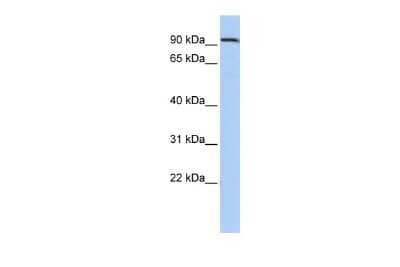
| Application Notes | In Western blot a band is seen ~90 to 105 kDa representing AHR (molecular weight varies by species and by strain). Prior to immunostaining paraffin tissues, antigen retrieval with sodium citrate buffer (pH 6.0) is recommended. In Simple Western only 10 - 15 uL of the recommended dilution is used per data point. See Simple Western Antibody Database for Simple Western validation: Tested in HepG2 lysate 0.5 mg/mL, separated by Size, antibody dilution of 1:200, apparent MW was 74 kDa. Separated by Size-Wes, Sally Sue/Peggy Sue. The observed molecular weight of the protein may vary from the listed predicted molecular weight due to post translational modifications, post translation cleavages, relative charges, and other experimental factors. |
||||
| Theoretical MW | 96 kDa. Disclaimer note: The observed molecular weight of the protein may vary from the listed predicted molecular weight due to post translational modifications, post translation cleavages, relative charges, and other experimental factors. |
||||
| Control |
|
||||
| Reviewed Applications |
|
||||
| Publications |
|
| Storage | Store at 4C. Do not freeze. |
| Buffer | PBS |
| Preservative | 0.02% Sodium Azide |
| Concentration | 1.0 mg/ml |
| Purity | Immunogen affinity purified |




| Images | Ratings | Applications | Species | Date | Details | ||||||||
|---|---|---|---|---|---|---|---|---|---|---|---|---|---|

Enlarge |
reviewed by:
Verified Customer |
IHC-P | Pig | 10/26/2020 |
Summary
|
||||||||
|
reviewed by:
Verified Customer |
ELISA | Other | 06/04/2009 |
Summary
|
Secondary Antibodies |
Isotype Controls |
Research Areas for AHR Antibody (NB100-2289)Find related products by research area.
|
|
AHR - A transcription factor regulating immunity and tumorigenesis The aryl hydrocarbon receptor (AHR) is a ligand activated transcription factor that controls the expression of a diverse set of genes. In the absence of ligand, AHR is retained in the cytoplasm. Upon ligand binding AHR translocates to the nucleus w... Read full blog post. |
|
Aryl Hydrocarbon Signaling: AIP, AhR, ARNT, BMAL1 and more... AH receptor-interacting protein (AIP) is a 37 kD immunophilin-like factor found in a variety of tissues with expression levels ranging from high (spleen, thymus, pituitary heart, placenta and skeletal muscle) to low (liver, kidney and lung). It mediat... Read full blog post. |
The concentration calculator allows you to quickly calculate the volume, mass or concentration of your vial. Simply enter your mass, volume, or concentration values for your reagent and the calculator will determine the rest.
5 | |
4 | |
3 | |
2 | |
1 |
| Verified Customer 10/26/2020 |
||
| Application: | IHC-P | |
| Species: | Pig |
| Verified Customer 06/04/2009 |
||
| Application: | ELISA | |
| Species: | Other |
| Gene Symbol | AHR |


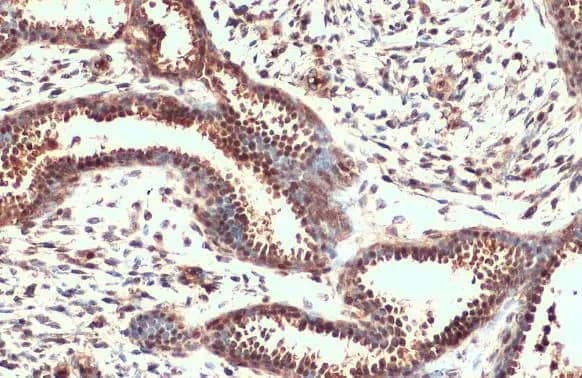
![Immunohistochemistry: AHR Antibody [NB100-2289] - Staining of Aryl hydrocarbon Receptor in mouse prostate.](http://images.novusbio.com/fullsize/AHR-Antibody-Immunohistochemistry-NB100-2289-img0005.jpg "Immunohistochemistry: AHR Antibody [NB100-2289] - Staining of Aryl hydrocarbon Receptor in mouse prostate.")
![Immunocytochemistry/Immunofluorescence: AHR Antibody [NB100-2289] - HeLa cells were fixed for 10 minutes using 10% formalin and then permeabilized for 5 minutes using 1X PBS + 0.5% Triton X-100. The cells were incubated with anti-AHR at 5 ug/mL overnight at 4C and detected with an anti-rabbit Dylight 488 (Green) at a 1:500 dilution. Nuclei were counterstained with DAPI (Blue). Cells were imaged using a 40X objective.](http://images.novusbio.com/fullsize/AHR-Antibody-Immunocytochemistry-Immunofluorescence-NB100-2289-img0012.jpg "Immunocytochemistry/Immunofluorescence: AHR Antibody [NB100-2289] - HeLa cells were fixed for 10 minutes using 10% formalin and then permeabilized for 5 minutes using 1X PBS + 0.5% Triton X-100. The cells were incubated with anti-AHR at 5 ug/mL overnight at 4C and detected with an anti-rabbit Dylight 488 (Green) at a 1:500 dilution. Nuclei were counterstained with DAPI (Blue). Cells were imaged using a 40X objective.")
![Western Blot: AHR Antibody [NB100-2289] - Detection of AhR in mouse liver cytosol using NB 100-2289.](http://images.novusbio.com/fullsize/AHR-Antibody-Western-Blot-NB100-2289-img0008.jpg "Western Blot: AHR Antibody [NB100-2289] - Detection of AhR in mouse liver cytosol using NB 100-2289.")
![Immunocytochemistry/Immunofluorescence: AHR Antibody [NB100-2289] - HepG2 cells were fixed for 10 minutes using 4% paraformaldehyde for 10 minutes and permeabilized in 0.05% Triton X-100 in PBS for 5 minutes. The cells were incubated with anti-AHR at 1 ug/ml overnight at 4C and detected with an anti-rabbit Dylight 488 (Green) at a 1:1000 dilution. Nuclei were counterstained with DAPI (Blue). Cells were imaged using a 40X objective.](http://images.novusbio.com/fullsize/AHR-Antibody-Immunocytochemistry-Immunofluorescence-NB100-2289-img0015.jpg "Immunocytochemistry/Immunofluorescence: AHR Antibody [NB100-2289] - HepG2 cells were fixed for 10 minutes using 4% paraformaldehyde for 10 minutes and permeabilized in 0.05% Triton X-100 in PBS for 5 minutes. The cells were incubated with anti-AHR at 1 ug/ml overnight at 4C and detected with an anti-rabbit Dylight 488 (Green) at a 1:1000 dilution. Nuclei were counterstained with DAPI (Blue). Cells were imaged using a 40X objective.")
![Flow Cytometry: AHR Antibody [NB100-2289] - An intracellular stain was performed on U937 cells with NB100-2289 (blue) and a matched isotype control NBP2-24891 (orange). Cells were fixed with 4% PFA and then permeabilized with 0.1% saponin. Cells were incubated in an antibody dilution of 1.0 ug/mL for 30 minutes at room temperature, followed by Rabbit IgG (H+L) Cross-Adsorbed Secondary Antibody, Dylight 550 (SA5-10033, Thermo Fisher).](http://images.novusbio.com/fullsize/AHR-Antibody-Flow-Cytometry-NB100-2289-img0017.jpg "Flow Cytometry: AHR Antibody [NB100-2289] - An intracellular stain was performed on U937 cells with NB100-2289 (blue) and a matched isotype control NBP2-24891 (orange). Cells were fixed with 4% PFA and then permeabilized with 0.1% saponin. Cells were incubated in an antibody dilution of 1.0 ug/mL for 30 minutes at room temperature, followed by Rabbit IgG (H+L) Cross-Adsorbed Secondary Antibody, Dylight 550 (SA5-10033, Thermo Fisher).")
![Immunocytochemistry/Immunofluorescence: AHR Antibody [NB100-2289] - Aryl hydrocarbon Receptor antibody was tested in HeLa cells with DyLight 488 (green). Nuclei and alpha-tubulin were counterstained with DAPI (blue) and Dylight 550 (red).](http://images.novusbio.com/fullsize/AHR-Antibody-Immunocytochemistry-Immunofluorescence-NB100-2289-img0010.jpg "Immunocytochemistry/Immunofluorescence: AHR Antibody [NB100-2289] - Aryl hydrocarbon Receptor antibody was tested in HeLa cells with DyLight 488 (green). Nuclei and alpha-tubulin were counterstained with DAPI (blue) and Dylight 550 (red).")
![Flow Cytometry: AHR Antibody [NB100-2289] - An intracellular stain was performed on U-87 cells with AHR Antibody NB100-2289B (blue) and a matched isotype control (orange). Both antibodies were conjugated to Biotin. Cells were fixed with 4% PFA and then permeabilized with 0.1% saponin. Cells were incubated in an antibody dilution of 2.5 ug/mL for 30 minutes at room temperature, followed by Streptavidin - R-Phycoerythrin Protein (2012-1000, Novus Biologicals).](http://images.novusbio.com/fullsize/AHR-Antibody-Flow-Cytometry-NB100-2289-img0013.jpg "Flow Cytometry: AHR Antibody [NB100-2289] - An intracellular stain was performed on U-87 cells with AHR Antibody NB100-2289B (blue) and a matched isotype control (orange). Both antibodies were conjugated to Biotin. Cells were fixed with 4% PFA and then permeabilized with 0.1% saponin. Cells were incubated in an antibody dilution of 2.5 ug/mL for 30 minutes at room temperature, followed by Streptavidin - R-Phycoerythrin Protein (2012-1000, Novus Biologicals).")
![Simple Western: AHR Antibody [NB100-2289] - Image shows a specific band for Aryl hydrocarbon receptor in 0.5 mg/mL of HepG2 lysate. This experiment was performed under reducing conditions using the 12-230 kDa separation system.](http://images.novusbio.com/fullsize/AHR-Antibody-Simple-Western-NB100-2289-img0011.jpg "Simple Western: AHR Antibody [NB100-2289] - Image shows a specific band for Aryl hydrocarbon receptor in 0.5 mg/mL of HepG2 lysate. This experiment was performed under reducing conditions using the 12-230 kDa separation system.")
![Western Blot: AHR Antibody - BSA Free [NB100-2289] - Activation of AHR/Nrf2 pathway by PFT-alpha . (A) qPCR to detect mRNA level of CYP1A1, NQO1, HO1 & TRXR1 upon 20 h PFT-alpha treatment (20 µM) in MCF7 p53KO cells (upper part) & T47D cells (lower part). Relative expression level of CYP1A1 is shown in log2 scale; relative expression level of NQO1, HO1 & TRXR1 are shown as fold change, both normalized with DMSO treatment. All values represent the mean ± SD of two times independent experiments performed in three replicates. (B) Knock-down efficiency of AHR siRNA as detected by qPCR (upper part) & western blot (lower part). Relative expression level is shown as fold change normalized to scramble siRNA. All values represent the mean ± SD of two independent experiments performed in three replicates. (C) DCF-DA staining of ROS levels upon doxorubicin treatment (1 µM, 8 h) with or without PFT-alpha (20 µM, 12 h pre-treatment) in MCF7 p53KO cells transfected with scramble siRNA & siAHR. For quantification of ROS levels (lower panel), the values are reported as percentage relative to DMSO treatment group. (D) qPCR to detect mRNA level of Nrf2 targets NQO1, HO1 & TRXR1 upon 20 h PFT-alpha treatment (20 µM) in MCF7 p53KO cells transfected with scramble siRNA & siAHR. Image collected & cropped by CiteAb from the following publication (//pubmed.ncbi.nlm.nih.gov/31974452), licensed under a CC-BY license. Not internally tested by Novus Biologicals.](http://images.novusbio.com/fullsize/nb100-2289_rabbit-polyclonal-ahr-antibody-3102024165720.jpg "Western Blot: AHR Antibody - BSA Free [NB100-2289] - Activation of AHR/Nrf2 pathway by PFT-alpha . (A) qPCR to detect mRNA level of CYP1A1, NQO1, HO1 & TRXR1 upon 20 h PFT-alpha treatment (20 µM) in MCF7 p53KO cells (upper part) & T47D cells (lower part). Relative expression level of CYP1A1 is shown in log2 scale; relative expression level of NQO1, HO1 & TRXR1 are shown as fold change, both normalized with DMSO treatment. All values represent the mean ± SD of two times independent experiments performed in three replicates. (B) Knock-down efficiency of AHR siRNA as detected by qPCR (upper part) & western blot (lower part). Relative expression level is shown as fold change normalized to scramble siRNA. All values represent the mean ± SD of two independent experiments performed in three replicates. (C) DCF-DA staining of ROS levels upon doxorubicin treatment (1 µM, 8 h) with or without PFT-alpha (20 µM, 12 h pre-treatment) in MCF7 p53KO cells transfected with scramble siRNA & siAHR. For quantification of ROS levels (lower panel), the values are reported as percentage relative to DMSO treatment group. (D) qPCR to detect mRNA level of Nrf2 targets NQO1, HO1 & TRXR1 upon 20 h PFT-alpha treatment (20 µM) in MCF7 p53KO cells transfected with scramble siRNA & siAHR. Image collected & cropped by CiteAb from the following publication (//pubmed.ncbi.nlm.nih.gov/31974452), licensed under a CC-BY license. Not internally tested by Novus Biologicals.")




![PXR/NR1I2 Antibody (H4417) [Unconjugated]](/sites/all/modules/enterprise-tech/et_datasheets/images/novus_guarantee.png "PXR/NR1I2 Antibody (H4417) [Unconjugated]")
![N/A IL-13 [Biotin]](https://images.novusbio.com/images/elisa/DATA_IL13_DY413_ELISA_2010.jpg)
![Bioactivity IL-4 [Unconjugated]](https://images.novusbio.com/images/protein/6507-ilcf_recombinant-human-il-4-cho-expressed-protein-cf-bioactivity-272020133214.jpg)

![N/A IL-5 [HRP]](https://images.novusbio.com/images/elisa/IL-5_M5000_ELISA_237.jpg)
![N/A IL-5 [HRP]](https://images.novusbio.com/images/elisa/DATA_IL5_M5000_ELISA_935.jpg)
![SDS-Page TNF-alpha [Unconjugated]](https://images.novusbio.com/images/protein/TNF-alpha_210-TA_256.jpg)
![Bioactivity TNF-alpha [Unconjugated]](https://images.novusbio.com/images/protein/TNFalpha_210TA_1658.jpg)
![SEC-MALS TNF-alpha [Unconjugated]](https://images.novusbio.com/images/210-ta_recombinant-human-tnf-alpha-protein-sec-mals-35202312244..jpg)
![N/A IL-6 [HRP]](https://images.novusbio.com/images/elisa/DATA_IL6_M6000_ELISA_936.jpg)
![N/A IL-6 [HRP]](https://images.novusbio.com/images/elisa/IL-6_M6000_ELISA_415.jpg)
![N/A IL-6 [HRP]](https://images.novusbio.com/images/m6000b_mouse-il-6-quantikine-elisa-kit-1752025024034.jpg)
![N/A IL-10 [Biotin]](https://images.novusbio.com/images/elisa/DATA_IL10_DY417_ELISA_2014.jpg)


![Western Blot: Goat anti-Rabbit IgG (H+L) Secondary Antibody [HRP] [NB7160] - Western blot showing vemurafenib treatment in BRAFV600E CRC cells inhibits fission mediator DRP1 with no significant effect on fusion proteins (Mfn1 & 2) using MFN-1 antibody (NBP1-51841) and corresponding secondary antibody, goat anti-rabbit IgG-HRP (NB7160). Image collected and cropped by CiteAb from the following publication (https://pubmed.ncbi.nlm.nih.gov/33738242).](https://images.novusbio.com/images/Goat-anti-Rabbit-IgG-H+L-Secondary-Antibody-HRP-Western-Blot-NB7160-img0001.jpg "Western Blot: Goat anti-Rabbit IgG (H+L) Secondary Antibody [HRP] [NB7160] - Western blot showing vemurafenib treatment in BRAFV600E CRC cells inhibits fission mediator DRP1 with no significant effect on fusion proteins (Mfn1 & 2) using MFN-1 antibody (NBP1-51841) and corresponding secondary antibody, goat anti-rabbit IgG-HRP (NB7160). Image collected and cropped by CiteAb from the following publication (https://pubmed.ncbi.nlm.nih.gov/33738242).")
![Flow Cytometry: Rabbit IgG Isotype Control [NBP2-24891] - An intracellular stain was performed on Raji cells with Adiponectin antibody NB100-65810 (blue) and a matched isotype control NBP2-24893 (orange). Cells were fixed with 4% PFA and then permeablized with 0.1% saponin. Cells were incubated in an antibody dilution of 1 ug/mL for 30 minutes at room temperature, followed by Dylight488-conjugated anti-rabbit secondary antibody. Image using the Azide Free form of this antibody.](https://images.novusbio.com/images/Rabbit--Mouse-IgG-Isotype-Control-Flow-Cytometry-NBP2-24891-img0006.jpg "Flow Cytometry: Rabbit IgG Isotype Control [NBP2-24891] - An intracellular stain was performed on Raji cells with Adiponectin antibody NB100-65810 (blue) and a matched isotype control NBP2-24893 (orange). Cells were fixed with 4% PFA and then permeablized with 0.1% saponin. Cells were incubated in an antibody dilution of 1 ug/mL for 30 minutes at room temperature, followed by Dylight488-conjugated anti-rabbit secondary antibody. Image using the Azide Free form of this antibody.")
