| Reactivity | HuSpecies Glossary |
| Applications | IHC |
| Clone | MSVA-045R |
| Clonality | Monoclonal |
| Host | Rabbit |
| Conjugate | Unconjugated |
| Description | This antibody is highly specific and optimized for use in Immunohistochemistry. It has been validated on TMAs covering 76 normal tissues and numerous cancer tissues. The antibody concentration is optimized for dilution within dilution range using commercially available antibody diluent for immunohistochemistry. Positive Control Negative Control Storage |
| Additional Information | Recombinant Monoclonal Antibody |
| Immunogen | Recombinant fragment of human CD45 protein Swissprot P08575 |
| Localization | Cell Surface & Cytoplasmic |
| Isotype | IgG |
| Clonality | Monoclonal |
| Host | Rabbit |
| Gene | PTPRC |
| Purity | Protein A or G purified |
| Innovator's Reward | Test in a species/application not listed above to receive a full credit towards a future purchase. |
| Dilutions |
|
| Application Notes | Manual Protocol: Freshly cut sections should be used (less than 10 days between cutting and staining). Heat-induced antigen retrieval for 5 minutes in an autoclave at 121C in pH 7,8 Target Retrieval Solution buffer. Apply the antibody at a dilution of 1:150 at 37C for 60 minutes. Visualization of bound antibody by the EnVision Kit (Dako, Agilent) according to the manufacturer's directions. |
| Storage | Store at 4C. |
| Buffer | 10mM PBS |
| Preservative | <0.1% Sodium Azide |
| Purity | Protein A or G purified |


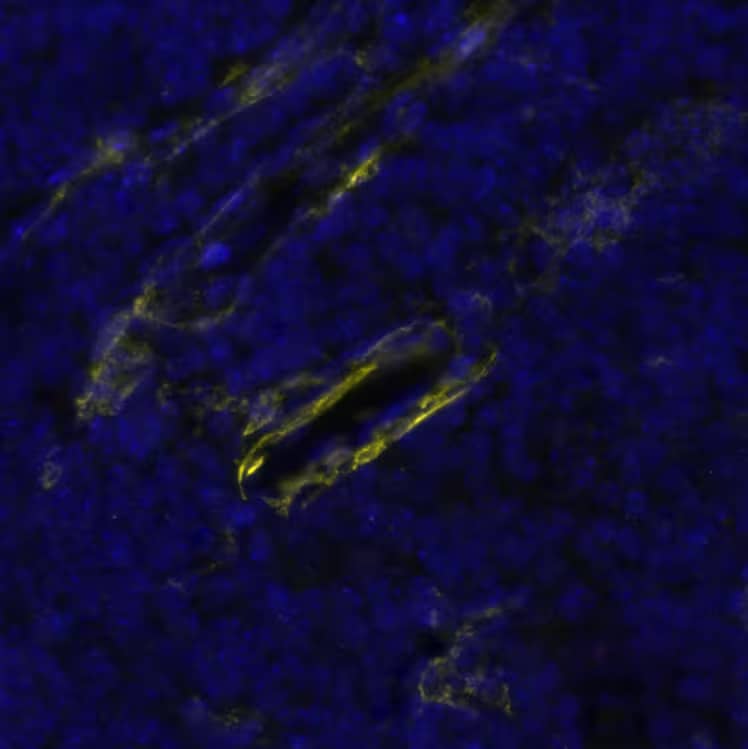


![Immunoprecipitation CD44 Antibody (2C5) [Unconjugated] - s Pan Specific](https://images.novusbio.com/images/antibody/bba10_human-cd44s-pan-specific-mab-clone-2c5-immunoprecipitation-2852025105258..png)
![Knockout Validated CD44 Antibody (2C5) [Unconjugated] - s Pan Specific](https://images.novusbio.com/images/antibody/bba10_human-cd44s-pan-specific-mab-clone-2c5-knockout-validated-285202510529..png)
![Western Blot CD44 Antibody (2C5) [Unconjugated] - s Pan Specific](https://images.novusbio.com/images/antibody/CD44_BBA10_Western_Blot_21459.jpg)


Secondary Antibodies |
Isotype Controls |
|
Read full blog post. |
|
How To Identify B Cell Subsets Using Flow Cytometry By Victoria OsinskiUsing Flow Cytometry to Identify B Cell SubsetsIdentifying cellular subsets by flow cytometry requires careful and thorough planning in order to ensure the correct subset of cells are identified... Read full blog post. |
|
You complete me: Natural killer cells need TGF-beta inhibition to effectively combat cancers By Jamshed Arslan Pharm.D. Natural killer (NK) cells are lymphocytes of the innate immune system that were first discovered for their “natural” ability to kill cancer cells. To use NK cells as anti-cancer therapy, t... Read full blog post. |
|
The application of CD31/Pecam-1 (MEC 7.46) in breast cancer research CD31/PECAM-1, or platelet endothelial cell adhesion molecule 1, is a 130-kDa glycoprotein expressed on vascular and hematopoietic cells. Depending on the cell type, CD31/PECAM-1 expression can be largely localized to cell junctions, playing a rol... Read full blog post. |
|
CD45 - Much more than just a housekeeping protein CD45, also known as T200 or the Leukocyte Common Antigen (LCA), is encoded by the Protein Tyrosine Phosphatase Receptor type C (PTPRC) gene. The protein is expressed exclusively on cells of the haematopoietic system, and is one of the most abundant le... Read full blog post. |
|
CD45 Isoforms: Hematopoietic Differentiation, Cancer and Alzheimer's CD45, also known as protein tyrosine phosphatase, receptor type, C (PTPRC), was originally known as common leukocyte antigen and is a signal transducer involved in many physiological processes such as growth and differentiation, cancer transformation,... Read full blog post. |
|
Vimentin Antibodies in Rheumatoid Arthritis & Cataracts Research Vimentin is a 57kDa type III intermediate filament (IF) protein that is the major cytoskeletal component of mesenchymal cells and the first to be expressed during cell differentiation. It plays a significant role in supporting and anchoring the positi... Read full blog post. |
|
Antibodies In The Differential Diagnosis Of Undifferentiated Tumors Immunohistochemical testing using antibody panels has a valuable role in cancer diagnosis. Some tumors, especially more malignant ones, tend to lose the appearance of the tissue of origin. However, knowing the tissue of origin assists the physician in... Read full blog post. |
The concentration calculator allows you to quickly calculate the volume, mass or concentration of your vial. Simply enter your mass, volume, or concentration values for your reagent and the calculator will determine the rest.
| Gene Symbol | PTPRC |


![Bioactivity CTLA-4 [Unconjugated]](https://images.novusbio.com/images/protein/CTLA4_7268CT_2293.jpg)
![Bioactivity IL-2 [Unconjugated]](https://images.novusbio.com/images/202-il_recombinant-human-il-2-protein-bioactivity-174202314946.jpg)
![Bioactivity IL-4 [Unconjugated]](https://images.novusbio.com/images/protein/6507-ilcf_recombinant-human-il-4-cho-expressed-protein-cf-bioactivity-272020133214.jpg)
![SDS-Page TNF-alpha [Unconjugated]](https://images.novusbio.com/images/protein/TNF-alpha_210-TA_256.jpg)
![Bioactivity TNF-alpha [Unconjugated]](https://images.novusbio.com/images/protein/TNFalpha_210TA_1658.jpg)
![SEC-MALS TNF-alpha [Unconjugated]](https://images.novusbio.com/images/210-ta_recombinant-human-tnf-alpha-protein-sec-mals-35202312244..jpg)
![N/A IL-6 [HRP]](https://images.novusbio.com/images/elisa/DATA_IL6_M6000_ELISA_936.jpg)
![N/A IL-6 [HRP]](https://images.novusbio.com/images/elisa/IL-6_M6000_ELISA_415.jpg)
![N/A IL-6 [HRP]](https://images.novusbio.com/images/m6000b_mouse-il-6-quantikine-elisa-kit-1752025024034.jpg)
![SEC-MALS IFN-gamma [Unconjugated]](https://images.novusbio.com/images/485-mi_recombinant-mouse-ifn-gamma-protein-sec-mals-1612202583245.jpg)
![Bioactivity IFN-gamma [Unconjugated]](https://images.novusbio.com/images/protein/IFN-gamma_485-MI_455.jpg)
![SDS-Page IFN-gamma [Unconjugated]](https://images.novusbio.com/images/protein/IFN-gamma_485-MI_407.jpg)
![N/A CD14 [HRP]](https://images.novusbio.com/images/elisa/DATA_CD14_DC140_ELISA_597.jpg)
![N/A CD14 [HRP]](https://images.novusbio.com/images/elisa/CD14_DC140_ELISA_42.jpg)
![Flow Cytometry Integrin beta 1/CD29 Antibody (P5D2) [Unconjugated]](https://images.novusbio.com/images/antibody/Integrin_beta_1_MAB17781_Flow_Cytometry_17077.jpg)
![Flow Cytometry Integrin beta 1/CD29 Antibody (P5D2) [Unconjugated]](https://images.novusbio.com/images/antibody/Integrin_beta_1_MAB17781_Flow_Cytometry_23861.jpg)
![Western Blot: Goat anti-Rabbit IgG (H+L) Secondary Antibody [HRP] [NB7160] - Western blot showing vemurafenib treatment in BRAFV600E CRC cells inhibits fission mediator DRP1 with no significant effect on fusion proteins (Mfn1 & 2) using MFN-1 antibody (NBP1-51841) and corresponding secondary antibody, goat anti-rabbit IgG-HRP (NB7160). Image collected and cropped by CiteAb from the following publication (https://pubmed.ncbi.nlm.nih.gov/33738242).](https://images.novusbio.com/images/Goat-anti-Rabbit-IgG-H+L-Secondary-Antibody-HRP-Western-Blot-NB7160-img0001.jpg "Western Blot: Goat anti-Rabbit IgG (H+L) Secondary Antibody [HRP] [NB7160] - Western blot showing vemurafenib treatment in BRAFV600E CRC cells inhibits fission mediator DRP1 with no significant effect on fusion proteins (Mfn1 & 2) using MFN-1 antibody (NBP1-51841) and corresponding secondary antibody, goat anti-rabbit IgG-HRP (NB7160). Image collected and cropped by CiteAb from the following publication (https://pubmed.ncbi.nlm.nih.gov/33738242).")
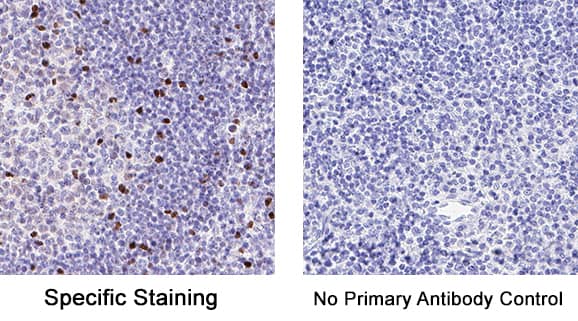
![Flow Cytometry: Rabbit IgG Isotype Control [NBP2-24891] - An intracellular stain was performed on Raji cells with Adiponectin antibody NB100-65810 (blue) and a matched isotype control NBP2-24893 (orange). Cells were fixed with 4% PFA and then permeablized with 0.1% saponin. Cells were incubated in an antibody dilution of 1 ug/mL for 30 minutes at room temperature, followed by Dylight488-conjugated anti-rabbit secondary antibody. Image using the Azide Free form of this antibody.](https://images.novusbio.com/images/Rabbit--Mouse-IgG-Isotype-Control-Flow-Cytometry-NBP2-24891-img0006.jpg "Flow Cytometry: Rabbit IgG Isotype Control [NBP2-24891] - An intracellular stain was performed on Raji cells with Adiponectin antibody NB100-65810 (blue) and a matched isotype control NBP2-24893 (orange). Cells were fixed with 4% PFA and then permeablized with 0.1% saponin. Cells were incubated in an antibody dilution of 1 ug/mL for 30 minutes at room temperature, followed by Dylight488-conjugated anti-rabbit secondary antibody. Image using the Azide Free form of this antibody.")