![Flow Cytometry: 53BP1 Antibody - BSA Free [NB100-904] - An intracellular stain was performed on Ntera2 cells with 53BP1 Antibody NB100-904 (blue) and a matched isotype control NBP2-24891 (orange). Cells were fixed with 4% PFA and then permeabilized with 0.1% saponin. Cells were incubated in an antibody dilution of 1.0 ug/mL for 30 minutes at room temperature, followed by Rabbit IgG (H+L) Cross-Adsorbed Secondary Antibody, Dylight 550 (SA5-10033, Thermo Fisher).](http://images.novusbio.com/fullsize/53BP1-Antibody---BSA-Free-Flow-Cytometry-NB100-904-img0022.jpg "Flow Cytometry: 53BP1 Antibody - BSA Free [NB100-904] - An intracellular stain was performed on Ntera2 cells with 53BP1 Antibody NB100-904 (blue) and a matched isotype control NBP2-24891 (orange). Cells were fixed with 4% PFA and then permeabilized with 0.1% saponin. Cells were incubated in an antibody dilution of 1.0 ug/mL for 30 minutes at room temperature, followed by Rabbit IgG (H+L) Cross-Adsorbed Secondary Antibody, Dylight 550 (SA5-10033, Thermo Fisher).")
| Reactivity | Hu, Mu, Other, Pm, Pm-Or, PmSpecies Glossary |
| Applications | WB, Simple Western, Flow, Func, ICC/IF, IHC, IP, Mycoplasma |
| Clonality | Polyclonal |
| Host | Rabbit |
| Conjugate | Unconjugated |
| Format | BSA Free |
| Concentration | 1 mg/ml |
| Immunogen | 53BP1 Antibody was made to a synthetic peptide corresponding to a portion of human 53BP1 encoded in exon 11, 12 and 19 [Uniprot: Q12888]. This antibody is a cocktail hybrid of NB100-304 and NB100-305. |
| Marker | DNA Double Strand Break Marker |
| Predicted Species | Primate (95%), Orangutan (99%), Chimpanzee (99%). Backed by our 100% Guarantee. |
| Isotype | IgG |
| Clonality | Polyclonal |
| Host | Rabbit |
| Gene | TP53BP1 |
| Purity | Immunogen affinity purified |
| Innovator's Reward | Test in a species/application not listed above to receive a full credit towards a future purchase. |
| Dilutions |
|
||||
| Control |
|
||||
| Reviewed Applications |
|
||||
| Publications |
|
| Storage | Store at -20 °C. |
| Buffer | PBS |
| Preservative | 0.02% Sodium Azide |
| Concentration | 1 mg/ml |
| Purity | Immunogen affinity purified |

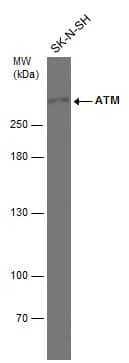


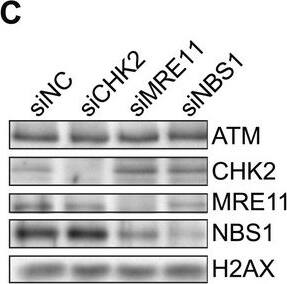


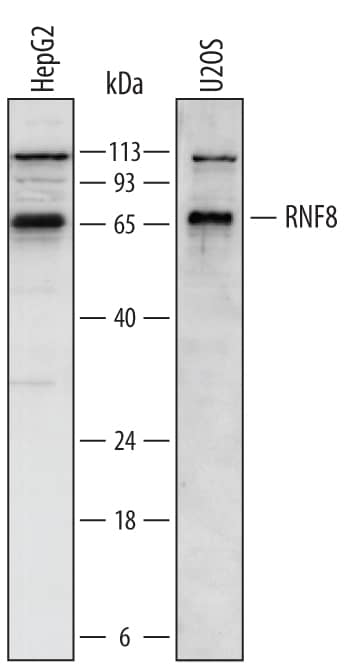



| Images | Ratings | Applications | Species | Date | Details | ||||||||||
|---|---|---|---|---|---|---|---|---|---|---|---|---|---|---|---|
|
reviewed by:
Verified Customer |
ICC | Human | 01/20/2017 |
Summary
Comments
|
|||||||||||

Enlarge |
reviewed by:
Verified Customer |
IF | Human | 11/20/2014 |
Summary
|
||||||||||
|
reviewed by:
Iris Eke |
IF | Human | 08/24/2012 |
Summary
|
|||||||||||

Enlarge |
reviewed by:
Olivia Patsalos |
IF | Mouse | 05/22/2012 |
Summary
|
| Human Kidney Whole Tissue Lysate (Adult Whole Tumor) | |
| Human Salivary Gland Whole Tissue Lysate (Adult Whole Normal) |
Secondary Antibodies |
Isotype Controls |
Research Areas for 53BP1 Antibody (NB100-904)Find related products by research area.
|
|
The recent relationship of BRCA1 and 53BP1 The p53-binding protein 1 (53BP1) is a DNA damage response factor, which is recruited to nuclear structures at the site of DNA damage. DNA double-strand breaks (DSBs) are mutations that are detrimental to cell viability and genome stability, and m... Read full blog post. |
|
53BP1 - a marker for DNA Double Strand Break 53BP1 (p53 binding protein 1) was originally thought to be an enhancer for p53 transcriptional, but later studies have demonstrated that it is actually a substrate for ataxia telangiectasia mutated (ATM). 53BP1 is a classic late DNA damage response... Read full blog post. |
|
53BP1 - DNA damage is no fun The 53BP1 (p53 binding protein 1) was initially believed to be a p53 transcriptional enhancing partner, but it has now been established as an ataxia telangiectasia mutated (ATM) substrate. As a late DNA damage response (DDR) marker, 53BP1 appears duri... Read full blog post. |
|
53BP1, DNA Damage Response and Tumor Suppression 53BP1 (p53 binding protein 1) was originally thought to be a p53 transcriptional enhancing partner, but now has been shown to be an ataxia telangiectasia mutated (ATM) substrate. It is a late DNA damage response (DDR) marker, appearing in the telophas... Read full blog post. |
|
53BP1, DNA Damage Response and Tumor Suppression 53BP1 (p53 binding protein 1) was originally thought to be a p53 transcriptional enhancing partner, but now has been shown to be an ataxia telangiectasia mutated (ATM) substrate. It is a late DNA damage response (DDR) marker, appearing in the telophas... Read full blog post. |
|
NUP153 & 53BP1: A Novel DNA Repair Pathway Mediating DNA damage is a crucial process, and one of the most important cellular guards against cancer. In response to DNA damage, sophisticated cellular machinery is recruited to repair the breaks, and if it fails, the cell is committed to death. De... Read full blog post. |
|
Blocking 53BP1 Expression Lessens Tumor Development in BRCA1-Defective Mice Our antibody database at Novus Biologicals provides research tools for the forefront of cancer research. Recently, a mouse study using 53BP1 and BRCA1 antibodies showed that deletion of 53BP1 greatly lessened the incidence of tumor development in mice... Read full blog post. |
The concentration calculator allows you to quickly calculate the volume, mass or concentration of your vial. Simply enter your mass, volume, or concentration values for your reagent and the calculator will determine the rest.
5 | |
4 | |
3 | |
2 | |
1 |
| Verified Customer 01/20/2017 |
||
| Application: | ICC | |
| Species: | Human |
| Verified Customer 11/20/2014 |
||
| Application: | IF | |
| Species: | Human |
| Iris Eke 08/24/2012 |
||
| Application: | IF | |
| Species: | Human |


![Immunocytochemistry/Immunofluorescence: 53BP1 Antibody - BSA Free [NB100-904] - NIH3T3 cells were fixed in 4% paraformaldehyde for 10 minutes and permeabilized in 0.5% Triton X-100 in PBS for 5 minutes. The cells were incubated with anti- NB100-904 at 2 ug/ml overnight at 4C and detected with an anti-rabbit Dylight 488 (Green) at a 1:1000 dilution for 60 minutes. Alpha tubulin (DM1A) NB100-690 was used as a co-stain at a 1:1000 dilution and detected with an anti-mouse Dylight 550 (Red) at a 1:1000 dilution. Nuclei were counterstained with DAPI (Blue). Cells were imaged using a 100X objective and digitally deconvolved.](http://images.novusbio.com/fullsize/53BP1-Antibody---BSA-Free-Immunocytochemistry-Immunofluorescence-NB100-904-img0021.jpg "Immunocytochemistry/Immunofluorescence: 53BP1 Antibody - BSA Free [NB100-904] - NIH3T3 cells were fixed in 4% paraformaldehyde for 10 minutes and permeabilized in 0.5% Triton X-100 in PBS for 5 minutes. The cells were incubated with anti- NB100-904 at 2 ug/ml overnight at 4C and detected with an anti-rabbit Dylight 488 (Green) at a 1:1000 dilution for 60 minutes. Alpha tubulin (DM1A) NB100-690 was used as a co-stain at a 1:1000 dilution and detected with an anti-mouse Dylight 550 (Red) at a 1:1000 dilution. Nuclei were counterstained with DAPI (Blue). Cells were imaged using a 100X objective and digitally deconvolved.")
![Immunohistochemistry: 53BP1 Antibody - BSA Free [NB100-904] - Staining of 53BP1 in human renal cancer cells using DAB with hematoxylin counterstain.](http://images.novusbio.com/fullsize/53BP1-Antibody---BSA-Free-Immunohistochemistry-NB100-904-img0008.jpg "Immunohistochemistry: 53BP1 Antibody - BSA Free [NB100-904] - Staining of 53BP1 in human renal cancer cells using DAB with hematoxylin counterstain.")
![Western Blot: 53BP1 Antibody - BSA Free [NB100-904] - Western blot analysis of untreated U2OS cell lysate blotted with 53BP1 Antibody. The observed molecular weight here is ~220 kDa, and the theoretical molecular weight is 214 kDa.](http://images.novusbio.com/fullsize/53BP1-Antibody---BSA-Free-Western-Blot-NB100-904-img0011.jpg "Western Blot: 53BP1 Antibody - BSA Free [NB100-904] - Western blot analysis of untreated U2OS cell lysate blotted with 53BP1 Antibody. The observed molecular weight here is ~220 kDa, and the theoretical molecular weight is 214 kDa.")

![Immunocytochemistry/Immunofluorescence: 53BP1 Antibody - BSA Free [NB100-904] - Immunofluorescence of 53BP1 Antibody in HeLa cells. Image from verified customer review.](http://images.novusbio.com/fullsize/53BP1-Antibody---BSA-Free-Immunocytochemistry-Immunofluorescence-NB100-904-img0009.jpg "Immunocytochemistry/Immunofluorescence: 53BP1 Antibody - BSA Free [NB100-904] - Immunofluorescence of 53BP1 Antibody in HeLa cells. Image from verified customer review.")
![Immunocytochemistry/Immunofluorescence: 53BP1 Antibody - BSA Free [NB100-904] - Immunofluorescence of 53BP1 Antibody in C33A cells. Image from verified customer review.](http://images.novusbio.com/fullsize/53BP1-Antibody---BSA-Free-Immunocytochemistry-Immunofluorescence-NB100-904-img0012.jpg "Immunocytochemistry/Immunofluorescence: 53BP1 Antibody - BSA Free [NB100-904] - Immunofluorescence of 53BP1 Antibody in C33A cells. Image from verified customer review.")
![Immunocytochemistry/Immunofluorescence: 53BP1 Antibody - BSA Free [NB100-904] - HeLa cells were fixed for 10 minutes using 10% formalin and then permeabilized for 5 minutes using 1X PBS + 0.5% Triton X-100. The cells were incubated with 53BP1 Antibody conjugated to Alexa Fluor 488 (Catalog #NB100-904AF488) at 10ug/mL for 1 hour at room temperature. Nuclei were counterstained with DAPI (Blue). Cells were imaged using a 40X objective.](http://images.novusbio.com/fullsize/53BP1-Antibody---BSA-Free-Immunocytochemistry-Immunofluorescence-NB100-904-img0013.jpg "Immunocytochemistry/Immunofluorescence: 53BP1 Antibody - BSA Free [NB100-904] - HeLa cells were fixed for 10 minutes using 10% formalin and then permeabilized for 5 minutes using 1X PBS + 0.5% Triton X-100. The cells were incubated with 53BP1 Antibody conjugated to Alexa Fluor 488 (Catalog #NB100-904AF488) at 10ug/mL for 1 hour at room temperature. Nuclei were counterstained with DAPI (Blue). Cells were imaged using a 40X objective.")
![Immunocytochemistry/Immunofluorescence: 53BP1 Antibody - BSA Free [NB100-904] - Ntera2 cells were fixed in 4% paraformaldehyde for 10 minutes and permeabilized in 0.5% Triton X-100 in PBS for 5 minutes. The cells were incubated with anti-53BP1 Antibody NB100-904 at 2 ug/ml overnight at 4C and detected with an anti-rabbit Dylight 488 (Green) at a 1:1000 dilution for 60 minutes. Alpha tubulin (DM1A) NB100-690 was used as a co-stain at a 1:1000 dilution and detected with an anti-mouse Dylight 550 (Red) at a 1:1000 dilution. Nuclei were counterstained with DAPI (Blue). Cells were imaged using a 100X objective and digitally deconvolved.](http://images.novusbio.com/fullsize/53BP1-Antibody---BSA-Free-Immunocytochemistry-Immunofluorescence-NB100-904-img0019.jpg "Immunocytochemistry/Immunofluorescence: 53BP1 Antibody - BSA Free [NB100-904] - Ntera2 cells were fixed in 4% paraformaldehyde for 10 minutes and permeabilized in 0.5% Triton X-100 in PBS for 5 minutes. The cells were incubated with anti-53BP1 Antibody NB100-904 at 2 ug/ml overnight at 4C and detected with an anti-rabbit Dylight 488 (Green) at a 1:1000 dilution for 60 minutes. Alpha tubulin (DM1A) NB100-690 was used as a co-stain at a 1:1000 dilution and detected with an anti-mouse Dylight 550 (Red) at a 1:1000 dilution. Nuclei were counterstained with DAPI (Blue). Cells were imaged using a 100X objective and digitally deconvolved.")
![Flow Cytometry: 53BP1 Antibody - BSA Free [NB100-904] - An intracellular stain was performed on HeLa cells (blue) and a matched isotype control (orange). Cells were fixed with 4% PFA and then permeabilized with 0.1% saponin. Cells were incubated in an antibody dilution of 5 ug/mL for 30 minutes at room temperature. Both antibodies were conjugated to DyLight 550.](http://images.novusbio.com/fullsize/53BP1-Antibody---BSA-Free-Flow-Cytometry-NB100-904-img0014.jpg "Flow Cytometry: 53BP1 Antibody - BSA Free [NB100-904] - An intracellular stain was performed on HeLa cells (blue) and a matched isotype control (orange). Cells were fixed with 4% PFA and then permeabilized with 0.1% saponin. Cells were incubated in an antibody dilution of 5 ug/mL for 30 minutes at room temperature. Both antibodies were conjugated to DyLight 550.")
![Flow Cytometry: 53BP1 Antibody - BSA Free [NB100-904] - An intracellular stain was performed on HeLa cells with 53BP1 Antibody (Catalog #NB100-904AF647) (blue) and a matched isotype control (orange). Cells were fixed with 4% PFA and then permeabilized with 0.1% saponin. Cells were incubated in an antibody dilution of 2.5 ug/mL for 30 minutes at room temperature. Both antibodies were conjugated to Alexa Fluor 647.](http://images.novusbio.com/fullsize/53BP1-Antibody---BSA-Free-Flow-Cytometry-NB100-904-img0017.jpg "Flow Cytometry: 53BP1 Antibody - BSA Free [NB100-904] - An intracellular stain was performed on HeLa cells with 53BP1 Antibody (Catalog #NB100-904AF647) (blue) and a matched isotype control (orange). Cells were fixed with 4% PFA and then permeabilized with 0.1% saponin. Cells were incubated in an antibody dilution of 2.5 ug/mL for 30 minutes at room temperature. Both antibodies were conjugated to Alexa Fluor 647.")
![Flow Cytometry: 53BP1 Antibody - BSA Free [NB100-904] - An intracellular stain was performed on HeLa cells with 53BP1 Antibody (Catalog #NB100-904C) (blue) and a matched isotype control (orange). Cells were fixed with 4% PFA and then permeabilized with 0.1% saponin. Cells were incubated in an antibody dilution of 2.5 ug/mL for 30 minutes at room temperature. Both antibodies were conjugated to DyLight 650.](http://images.novusbio.com/fullsize/53BP1-Antibody---BSA-Free-Flow-Cytometry-NB100-904-img0018.jpg "Flow Cytometry: 53BP1 Antibody - BSA Free [NB100-904] - An intracellular stain was performed on HeLa cells with 53BP1 Antibody (Catalog #NB100-904C) (blue) and a matched isotype control (orange). Cells were fixed with 4% PFA and then permeabilized with 0.1% saponin. Cells were incubated in an antibody dilution of 2.5 ug/mL for 30 minutes at room temperature. Both antibodies were conjugated to DyLight 650.")
![Immunocytochemistry/ Immunofluorescence: 53BP1 Antibody - BSA Free [NB100-904] - Chromatin opening activates DDR via a mechanism that requires catalytically functional LOXL2 but can be independent of DNA damage. d gamma -H2AX & 53BP1 staining & foci quantification are shown after immunofluorescence w/ indicated antibodies in non-replicative conditions. Dot graphs indicate number of gamma -H2AX (left graph) & 53BP1 (right graph) foci in control & LOXL2 KD cells. Image collected & cropped by CiteAb from following publication (//pubmed.ncbi.nlm.nih.gov/31462706), licensed under a CC-BY license. Not internally tested by Novus Biologicals.](http://images.novusbio.com/fullsize/nb100-904_rabbit-polyclonal-53bp1-antibody-31020241535691.jpg "Immunocytochemistry/ Immunofluorescence: 53BP1 Antibody - BSA Free [NB100-904] - Chromatin opening activates DDR via a mechanism that requires catalytically functional LOXL2 but can be independent of DNA damage. d gamma -H2AX & 53BP1 staining & foci quantification are shown after immunofluorescence w/ indicated antibodies in non-replicative conditions. Dot graphs indicate number of gamma -H2AX (left graph) & 53BP1 (right graph) foci in control & LOXL2 KD cells. Image collected & cropped by CiteAb from following publication (//pubmed.ncbi.nlm.nih.gov/31462706), licensed under a CC-BY license. Not internally tested by Novus Biologicals.")
![Immunocytochemistry/ Immunofluorescence: 53BP1 Antibody - BSA Free [NB100-904] - Integrin-associated proteins affected cell cycle & DNA double strand repairA. Western blot & B. densitometric analysis of p53-wildtype A172 & U87MG cells 48 h after PINCH1, ILK or ILKAP knockdown. Non-specific siRNA served as the control. C. Percentage of BrdU positivity as a marker for S-phase cells at different time points after siRNA transfection. Representative images are shown. D. Immunofluorescence staining of 53BP1 (green) & gamma H2AX (red) & E. quantitative analysis of foci numbers in irradiated A172 & U87MG cells after PINCH1, ILK or ILKAP depletion. Nuclei were stained with DAPI (blue). Data are mean ± SD (n = 3; t-test; *P < 0.05, **P < 0.01). Image collected & cropped by CiteAb from the following publication (//www.oncotarget.com/lookup/doi/10.18632/oncotarget.5423), licensed under a CC-BY license. Not internally tested by Novus Biologicals.](http://images.novusbio.com/fullsize/nb100-904_rabbit-polyclonal-53bp1-antibody-310202415382422.jpg "Immunocytochemistry/ Immunofluorescence: 53BP1 Antibody - BSA Free [NB100-904] - Integrin-associated proteins affected cell cycle & DNA double strand repairA. Western blot & B. densitometric analysis of p53-wildtype A172 & U87MG cells 48 h after PINCH1, ILK or ILKAP knockdown. Non-specific siRNA served as the control. C. Percentage of BrdU positivity as a marker for S-phase cells at different time points after siRNA transfection. Representative images are shown. D. Immunofluorescence staining of 53BP1 (green) & gamma H2AX (red) & E. quantitative analysis of foci numbers in irradiated A172 & U87MG cells after PINCH1, ILK or ILKAP depletion. Nuclei were stained with DAPI (blue). Data are mean ± SD (n = 3; t-test; *P < 0.05, **P < 0.01). Image collected & cropped by CiteAb from the following publication (//www.oncotarget.com/lookup/doi/10.18632/oncotarget.5423), licensed under a CC-BY license. Not internally tested by Novus Biologicals.")
![Immunocytochemistry/ Immunofluorescence: 53BP1 Antibody - BSA Free [NB100-904] - Chromatin opening activates DDR via a mechanism that requires catalytically functional LOXL2 but can be independent of DNA damage. a gamma -H2AX & 53BP1 staining & foci quantification are shown by immunofluorescence w/ a specific antibody for gamma -H2AX (left image)/for 53BP1 (right image). Dot graphs indicate number of foci for gamma -H2AX (upper graph) & 53BP1 (lower graph) per cell in control & LOXL2 KD conditions. Image collected & cropped by CiteAb from following publication (//pubmed.ncbi.nlm.nih.gov/31462706), licensed under a CC-BY license. Not internally tested by Novus Biologicals.](http://images.novusbio.com/fullsize/nb100-904_rabbit-polyclonal-53bp1-antibody-310202415392543.jpg "Immunocytochemistry/ Immunofluorescence: 53BP1 Antibody - BSA Free [NB100-904] - Chromatin opening activates DDR via a mechanism that requires catalytically functional LOXL2 but can be independent of DNA damage. a gamma -H2AX & 53BP1 staining & foci quantification are shown by immunofluorescence w/ a specific antibody for gamma -H2AX (left image)/for 53BP1 (right image). Dot graphs indicate number of foci for gamma -H2AX (upper graph) & 53BP1 (lower graph) per cell in control & LOXL2 KD conditions. Image collected & cropped by CiteAb from following publication (//pubmed.ncbi.nlm.nih.gov/31462706), licensed under a CC-BY license. Not internally tested by Novus Biologicals.")
![Immunocytochemistry/ Immunofluorescence: 53BP1 Antibody - BSA Free [NB100-904] - Cellular RER & not enzyme activity against RNA:DNA hybrids correlates with DNA damage & proinflammatory responseAOverexpression of RNase H1 in Rnaseh2b−/− cells restores RNase H activity against RNA:DNA hybrids to 81 ± 10% of wild‐type levels, while overexpression of RNASEH2B restores cellular enzyme activity for cleavage of both RNA:DNA & DRD:DNA substrates (RER). Rnaseh2b−/− MEFs were complemented with Rnaseh1 (+H1), Rnaseh2b (+H2B) or EGFP by retroviral infection. Mean of n = 3 independent experiments ± SEM.B, CDNA damage is reduced to wild‐type levels by complementation with Rnaseh2b but not Rnaseh1, measured by 53BP1 foci formation in detergent‐extracted fixed cells. (B) Representative images (scale bar, 10 μm). (C) At least 150 cells were counted for each cell line in three independent experiments. Mean ± SEM, ****P < 0.0001 two‐tailed t‐test.D–FCCL5 (D) & CXCL10 production (E), as well as ISG induction (F) in Rnaseh2b−/− MEFs are reduced close to wild‐type levels (Rnaseh2b+/+), by complementation with Rnaseh2b but not Rnaseh1. Mean of n = 6 independent experiments ± SEM for complemented cells; n = 3 independent experiments for Rnaseh2b−/− parental & Rnaseh2b+/+ controls cells. *P < 0.05, **P < 0.01, ***P < 0.001, ****P < 0.0001 two‐tailed t‐test indicates significantly reduced expression compared to Rnaseh2b−/− parental cells. Image collected & cropped by CiteAb from the following publication (//pubmed.ncbi.nlm.nih.gov/26903602), licensed under a CC-BY license. Not internally tested by Novus Biologicals.](http://images.novusbio.com/fullsize/nb100-904_rabbit-polyclonal-53bp1-antibody-31020241628490.jpg "Immunocytochemistry/ Immunofluorescence: 53BP1 Antibody - BSA Free [NB100-904] - Cellular RER & not enzyme activity against RNA:DNA hybrids correlates with DNA damage & proinflammatory responseAOverexpression of RNase H1 in Rnaseh2b−/− cells restores RNase H activity against RNA:DNA hybrids to 81 ± 10% of wild‐type levels, while overexpression of RNASEH2B restores cellular enzyme activity for cleavage of both RNA:DNA & DRD:DNA substrates (RER). Rnaseh2b−/− MEFs were complemented with Rnaseh1 (+H1), Rnaseh2b (+H2B) or EGFP by retroviral infection. Mean of n = 3 independent experiments ± SEM.B, CDNA damage is reduced to wild‐type levels by complementation with Rnaseh2b but not Rnaseh1, measured by 53BP1 foci formation in detergent‐extracted fixed cells. (B) Representative images (scale bar, 10 μm). (C) At least 150 cells were counted for each cell line in three independent experiments. Mean ± SEM, ****P < 0.0001 two‐tailed t‐test.D–FCCL5 (D) & CXCL10 production (E), as well as ISG induction (F) in Rnaseh2b−/− MEFs are reduced close to wild‐type levels (Rnaseh2b+/+), by complementation with Rnaseh2b but not Rnaseh1. Mean of n = 6 independent experiments ± SEM for complemented cells; n = 3 independent experiments for Rnaseh2b−/− parental & Rnaseh2b+/+ controls cells. *P < 0.05, **P < 0.01, ***P < 0.001, ****P < 0.0001 two‐tailed t‐test indicates significantly reduced expression compared to Rnaseh2b−/− parental cells. Image collected & cropped by CiteAb from the following publication (//pubmed.ncbi.nlm.nih.gov/26903602), licensed under a CC-BY license. Not internally tested by Novus Biologicals.")
![Immunocytochemistry/ Immunofluorescence: 53BP1 Antibody - BSA Free [NB100-904] - Correlation of CK2 & PTEN subcellular distribution with delay in DNA damage response in GBMs.(a) Co-IF of CK2 beta & PTEN with DAPI nuclear staining in the absence of doxorubicin (DOX−; dimethylsulfoxide (DMSO)-treated) or after 5 h of exposure to DOX (DOX+; 0.5 μM DOX-treated) in GXP GBM3 compared with WT or GXP NS. Representative images are shown. See Supplementary Fig. 3a for representative IFs of GX or GP NS, GXP GBM2 & T98G. Scale bar, 20 μm. (b) Immunoblot analysis of nuclear (N) & cytosolic (Cy) distributions of total PTEN & S380/T382/T383-phospho-PTEN in WT or GXP NS, or GXP GBM3 in DOX− (DMSO-treated) & DOX+ (0.5 μM/5 h) conditions. Loading controls: S6RP (cytosolic) & Histone3 (nuclear). (c) Immunoblot analysis of PTEN & CK2 beta in two representative GXP GBMs compared with GXP NS in DOX− (DMSO-treated) & DOX+ (0.5 μM/5 h). Loading control: beta -actin. (d) Co-IF staining of DOX-induced foci of gamma H2AX & 53BP1 in WT or GXP NS, GXP GBM2 & T98G. Cells were exposed to DOX (0.5 μM) for 0, 0.5, 1 or 5 h, & allowed to recover for 5 or 24 h before fixation, & antibody & DAPI nuclear staining. Representative images are shown. Scale bars, 10 μm. IF images for GX or GP NS compared with WT NS are further shown in Supplementary Fig. 3b. The percentage of gamma H2AX-positive cells (y axis) at the indicated time points (x axis) for each group is summarized in the graph in (e). Error bars represent mean±s.d. Representative 100 cells were randomly selected for quantification. Cells containing ≥5 foci were considered as gamma H2AX positive. See also Supplementary Fig. 3. Image collected & cropped by CiteAb from the following publication (//pubmed.ncbi.nlm.nih.gov/28094268), licensed under a CC-BY license. Not internally tested by Novus Biologicals.](http://images.novusbio.com/fullsize/nb100-904_rabbit-polyclonal-53bp1-antibody-310202416284911.jpg "Immunocytochemistry/ Immunofluorescence: 53BP1 Antibody - BSA Free [NB100-904] - Correlation of CK2 & PTEN subcellular distribution with delay in DNA damage response in GBMs.(a) Co-IF of CK2 beta & PTEN with DAPI nuclear staining in the absence of doxorubicin (DOX−; dimethylsulfoxide (DMSO)-treated) or after 5 h of exposure to DOX (DOX+; 0.5 μM DOX-treated) in GXP GBM3 compared with WT or GXP NS. Representative images are shown. See Supplementary Fig. 3a for representative IFs of GX or GP NS, GXP GBM2 & T98G. Scale bar, 20 μm. (b) Immunoblot analysis of nuclear (N) & cytosolic (Cy) distributions of total PTEN & S380/T382/T383-phospho-PTEN in WT or GXP NS, or GXP GBM3 in DOX− (DMSO-treated) & DOX+ (0.5 μM/5 h) conditions. Loading controls: S6RP (cytosolic) & Histone3 (nuclear). (c) Immunoblot analysis of PTEN & CK2 beta in two representative GXP GBMs compared with GXP NS in DOX− (DMSO-treated) & DOX+ (0.5 μM/5 h). Loading control: beta -actin. (d) Co-IF staining of DOX-induced foci of gamma H2AX & 53BP1 in WT or GXP NS, GXP GBM2 & T98G. Cells were exposed to DOX (0.5 μM) for 0, 0.5, 1 or 5 h, & allowed to recover for 5 or 24 h before fixation, & antibody & DAPI nuclear staining. Representative images are shown. Scale bars, 10 μm. IF images for GX or GP NS compared with WT NS are further shown in Supplementary Fig. 3b. The percentage of gamma H2AX-positive cells (y axis) at the indicated time points (x axis) for each group is summarized in the graph in (e). Error bars represent mean±s.d. Representative 100 cells were randomly selected for quantification. Cells containing ≥5 foci were considered as gamma H2AX positive. See also Supplementary Fig. 3. Image collected & cropped by CiteAb from the following publication (//pubmed.ncbi.nlm.nih.gov/28094268), licensed under a CC-BY license. Not internally tested by Novus Biologicals.")
![Immunocytochemistry/ Immunofluorescence: 53BP1 Antibody - BSA Free [NB100-904] - Recruitment of DNA repair factors to double-strand breaks is impaired in splicing-deficient cells. (a) HeLa Luc-I or Luc cells were exposed to DMSO (control), 100 nM pladienolide B or 50 μM isoginkgetin for 1–16 h. After normalization to the corresponding DMSO value, the ratio between Luc-I & Luc luciferase activity is presented as a percentage. Means±S.D. are shown, n=4. (b) U2OS cells were treated with pladienolide B or isoginkgetin for 2, 6 or 16 h, irradiated (6 Gy, 1 h recovery) 1 h prior to termination of the treatment, fixed & immunostained for gamma H2AX, MDC1, WRAP53 beta , RNF168, conjugated ubiquitin recognized by the FK2 antibody, 53BP1, RAD51 or BRCA1. Nuclei were stained with DAPI in all immunofluorescence experiments. The numbers in white represent the percentage of 100–200 cells counted whose nuclei contained >10 IR-induced foci. Means±S.D. are shown, n=3. *P-value<0.05, as determined by a non-paired two-tailed Student's t-test. The ‘foci-like' accumulations RAD51 after splicing inhibition in (b) are not IR-induced foci, but accumulation of RAD51 in the nucleolus for unknown reasons Image collected & cropped by CiteAb from the following publication (//pubmed.ncbi.nlm.nih.gov/27315300), licensed under a CC-BY license. Not internally tested by Novus Biologicals.](http://images.novusbio.com/fullsize/nb100-904_rabbit-polyclonal-53bp1-antibody-310202416284929.jpg "Immunocytochemistry/ Immunofluorescence: 53BP1 Antibody - BSA Free [NB100-904] - Recruitment of DNA repair factors to double-strand breaks is impaired in splicing-deficient cells. (a) HeLa Luc-I or Luc cells were exposed to DMSO (control), 100 nM pladienolide B or 50 μM isoginkgetin for 1–16 h. After normalization to the corresponding DMSO value, the ratio between Luc-I & Luc luciferase activity is presented as a percentage. Means±S.D. are shown, n=4. (b) U2OS cells were treated with pladienolide B or isoginkgetin for 2, 6 or 16 h, irradiated (6 Gy, 1 h recovery) 1 h prior to termination of the treatment, fixed & immunostained for gamma H2AX, MDC1, WRAP53 beta , RNF168, conjugated ubiquitin recognized by the FK2 antibody, 53BP1, RAD51 or BRCA1. Nuclei were stained with DAPI in all immunofluorescence experiments. The numbers in white represent the percentage of 100–200 cells counted whose nuclei contained >10 IR-induced foci. Means±S.D. are shown, n=3. *P-value<0.05, as determined by a non-paired two-tailed Student's t-test. The ‘foci-like' accumulations RAD51 after splicing inhibition in (b) are not IR-induced foci, but accumulation of RAD51 in the nucleolus for unknown reasons Image collected & cropped by CiteAb from the following publication (//pubmed.ncbi.nlm.nih.gov/27315300), licensed under a CC-BY license. Not internally tested by Novus Biologicals.")
![Western Blot: 53BP1 Antibody - BSA Free [NB100-904] - Inhibition of splicing downregulates repair factors at both the mRNA & protein levels. (a) U2OS cells were treated with pladienolide B for 2, 6 & 16 h & irradiated (6 Gy, 1 h recovery) 1 h prior to termination of the treatment. The levels of the indicated mRNAs were measured through qPCR analysis. The change is relative to the DMSO control & two reference genes (18S rRNA & beta -actin). Means±S.D. are shown, n=3. (b) qPCR analysis of the levels mRNA & pre-mRNA for RNF8 & RAD51 in U2OS cells treated with pladienolide B or isoginkgetin for 2, 6 or 16 h & irradiated (6 Gy, 1 h recovery) 1 h prior to termination of this treatment. The change is expressed relative to the DMSO control value & the levels of mRNA for two reference genes (18S rRNA & beta -actin). Means±S.D. are shown, n=3. The arrows indicate the positioning of the PCR primers used & their sequences are shown in Supplementary Table S1. (c) Western blotting following pladienolide B treatment of U2OS cells as described in (a). beta -Actin was used as a loading control. Densitometric quantification of each protein is shown in Supplementary Figure S2B. The three MDC1 bands correspond to the unphosphorylated, phosphorylated & hyperphosphorylated forms of full-length MDC1 Image collected & cropped by CiteAb from the following publication (//pubmed.ncbi.nlm.nih.gov/27315300), licensed under a CC-BY license. Not internally tested by Novus Biologicals.](http://images.novusbio.com/fullsize/nb100-904_rabbit-polyclonal-53bp1-antibody-31020241628496.jpg "Western Blot: 53BP1 Antibody - BSA Free [NB100-904] - Inhibition of splicing downregulates repair factors at both the mRNA & protein levels. (a) U2OS cells were treated with pladienolide B for 2, 6 & 16 h & irradiated (6 Gy, 1 h recovery) 1 h prior to termination of the treatment. The levels of the indicated mRNAs were measured through qPCR analysis. The change is relative to the DMSO control & two reference genes (18S rRNA & beta -actin). Means±S.D. are shown, n=3. (b) qPCR analysis of the levels mRNA & pre-mRNA for RNF8 & RAD51 in U2OS cells treated with pladienolide B or isoginkgetin for 2, 6 or 16 h & irradiated (6 Gy, 1 h recovery) 1 h prior to termination of this treatment. The change is expressed relative to the DMSO control value & the levels of mRNA for two reference genes (18S rRNA & beta -actin). Means±S.D. are shown, n=3. The arrows indicate the positioning of the PCR primers used & their sequences are shown in Supplementary Table S1. (c) Western blotting following pladienolide B treatment of U2OS cells as described in (a). beta -Actin was used as a loading control. Densitometric quantification of each protein is shown in Supplementary Figure S2B. The three MDC1 bands correspond to the unphosphorylated, phosphorylated & hyperphosphorylated forms of full-length MDC1 Image collected & cropped by CiteAb from the following publication (//pubmed.ncbi.nlm.nih.gov/27315300), licensed under a CC-BY license. Not internally tested by Novus Biologicals.")
![Western Blot: 53BP1 Antibody - BSA Free [NB100-904] - Reptin depletion reduces the recruitment on chromatin of BRCA1 & 53BP1 after gamma ray irradiation.HuH7 cells stably expressing a doxycycline-inducible Reptin shRNA were treated with doxycycline (sh Reptin +) or left untreated (sh Reptin-) for 4 days. (A) Representative images of 53BP1 & BRCA1 foci in HuH7 cells detected using immunofluorescence 2h after gamma ray irradiation. (B) The bars represent the mean number of foci per cell from two independent experiments (>200 cells were counted per experiment). Expression levels of BRCA1 & 53BP1 were assessed by Western Blot on whole cell extracts 4 days after doxycycline treatment. A representative picture is shown in (C). The migration positions of molecular weight standards (in kDa) are indicated on the left. (D) Quantification of 3 Western blot experiments. Image collected & cropped by CiteAb from the following publication (//dx.plos.org/10.1371/journal.pone.0123333), licensed under a CC-BY license. Not internally tested by Novus Biologicals.](http://images.novusbio.com/fullsize/nb100-904_rabbit-polyclonal-53bp1-antibody-310202416284918.jpg "Western Blot: 53BP1 Antibody - BSA Free [NB100-904] - Reptin depletion reduces the recruitment on chromatin of BRCA1 & 53BP1 after gamma ray irradiation.HuH7 cells stably expressing a doxycycline-inducible Reptin shRNA were treated with doxycycline (sh Reptin +) or left untreated (sh Reptin-) for 4 days. (A) Representative images of 53BP1 & BRCA1 foci in HuH7 cells detected using immunofluorescence 2h after gamma ray irradiation. (B) The bars represent the mean number of foci per cell from two independent experiments (>200 cells were counted per experiment). Expression levels of BRCA1 & 53BP1 were assessed by Western Blot on whole cell extracts 4 days after doxycycline treatment. A representative picture is shown in (C). The migration positions of molecular weight standards (in kDa) are indicated on the left. (D) Quantification of 3 Western blot experiments. Image collected & cropped by CiteAb from the following publication (//dx.plos.org/10.1371/journal.pone.0123333), licensed under a CC-BY license. Not internally tested by Novus Biologicals.")
![Immunocytochemistry/ Immunofluorescence: 53BP1 Antibody - BSA Free [NB100-904] - hWDR76 interaction network & subnuclear localization suggest conservation of Cmr1 function.(a) Domain organization of Cmr1 & human WDR76. Human WDR76 shares 29% sequence similarity with Cmr1 from S. cerevisiae. Filled boxes indicate WD40 repeats. NLS, putative nuclear localization signal. (b) Human WDR76 interacts with HELLS, SUGT1, XRCC5, XRCC6 & the CCT–TRiC complex. SILAC-labelled HeLa cells were transfected with GFP-WDR76 or empty vector. GFP-WDR76 & its interacting proteins were enriched using GFP-Trap resin. Proteins were resolved by SDS–PAGE & digested in-gel with trypsin. Peptides were analysed on a quadrupole Orbitrap mass spectrometer. The plot shows log(10) SILAC ratios of proteins associated with GFP-WDR76 compared with background. WDR76 is highlighted in red & several other interactors are also indicated. (c) Human WDR76 localizes into nuclear foci. Twenty-four hours after GFP-WDR76 transfection, U2OS cells were treated with 10 μM MG132 or 1.5 mM MMS for 2 h. Immunofluorescence analyses of 53BP1 were performed with anti-53BP1 antibody. DAPI was used to stain nuclei. Scale bar, 20 μm. (d) Human WDR76 does not co-localize with PCNA. Stably expressing RFP-PCNA U2OS cells were transfected with GFP-WDR76. 24 h after transfection, cells were fixed & stained with DAPI. Scale bar, 20 μm. (e) Model for the role of Cmr1 in promoting replication recovery. See Discussion for details. Image collected & cropped by CiteAb from the following publication (//pubmed.ncbi.nlm.nih.gov/25817432), licensed under a CC-BY license. Not internally tested by Novus Biologicals.](http://images.novusbio.com/fullsize/nb100-904_rabbit-polyclonal-53bp1-antibody-310202416284913.jpg "Immunocytochemistry/ Immunofluorescence: 53BP1 Antibody - BSA Free [NB100-904] - hWDR76 interaction network & subnuclear localization suggest conservation of Cmr1 function.(a) Domain organization of Cmr1 & human WDR76. Human WDR76 shares 29% sequence similarity with Cmr1 from S. cerevisiae. Filled boxes indicate WD40 repeats. NLS, putative nuclear localization signal. (b) Human WDR76 interacts with HELLS, SUGT1, XRCC5, XRCC6 & the CCT–TRiC complex. SILAC-labelled HeLa cells were transfected with GFP-WDR76 or empty vector. GFP-WDR76 & its interacting proteins were enriched using GFP-Trap resin. Proteins were resolved by SDS–PAGE & digested in-gel with trypsin. Peptides were analysed on a quadrupole Orbitrap mass spectrometer. The plot shows log(10) SILAC ratios of proteins associated with GFP-WDR76 compared with background. WDR76 is highlighted in red & several other interactors are also indicated. (c) Human WDR76 localizes into nuclear foci. Twenty-four hours after GFP-WDR76 transfection, U2OS cells were treated with 10 μM MG132 or 1.5 mM MMS for 2 h. Immunofluorescence analyses of 53BP1 were performed with anti-53BP1 antibody. DAPI was used to stain nuclei. Scale bar, 20 μm. (d) Human WDR76 does not co-localize with PCNA. Stably expressing RFP-PCNA U2OS cells were transfected with GFP-WDR76. 24 h after transfection, cells were fixed & stained with DAPI. Scale bar, 20 μm. (e) Model for the role of Cmr1 in promoting replication recovery. See Discussion for details. Image collected & cropped by CiteAb from the following publication (//pubmed.ncbi.nlm.nih.gov/25817432), licensed under a CC-BY license. Not internally tested by Novus Biologicals.")
![Immunocytochemistry/ Immunofluorescence: 53BP1 Antibody - BSA Free [NB100-904] - Overexpression of RNF8 restores repair of DNA double-strand breaks in splicing-deficient cells. (a) U2OS cells were treated with DMSO, pladienolide B or isoginkgetin for 16 h, irradiated (6 Gy, 1 h recovery) 1 h prior to termination of this treatment, & then subjected to western blotting for H2A, RNF8 & beta -actin. (b & c) U2OS cells were transfected with either GFP-RNF8 or GFP-Empty for 2 h, followed by addition of pladienolide B, isoginkgetin or DMSO, incubation for an additional 5 h, irradiation with 6 Gy, fixation 1 h later, & immunostaining for (b) conjugated ubiquitin (FK2 antibody) & (c) 53BP1. The numbers in white indicate the percentage of 100 transfected, i.e, green cells whose nuclei contained >10 IR-induced foci. Means±S.D. are shown, n=3. (d) U2OS cells were treated as above, except that fixation was performed 24 h after irradiation & the immunostaining was for gamma H2AX. Again, the white numbers indicate the percentage of 100 transfected, i.e, green cells whose nuclei contained >10 gamma H2AX foci. Means±S.D. are shown, n=3. (e) The efficiency of HR measured in direct repeated-GFP U2OS cells transfected with I-SceI in combination with either Flag-Empty or Flag-RNF8 for 24 h, followed by addition of DMSO or pladienolide B & incubation for another 24 h. Means±S.D. are shown, n=3. *P<0.05, as determined by a non-paired two-tailed Student's t-test Image collected & cropped by CiteAb from the following publication (//pubmed.ncbi.nlm.nih.gov/27315300), licensed under a CC-BY license. Not internally tested by Novus Biologicals.](http://images.novusbio.com/fullsize/nb100-904_rabbit-polyclonal-53bp1-antibody-310202416284916.jpg "Immunocytochemistry/ Immunofluorescence: 53BP1 Antibody - BSA Free [NB100-904] - Overexpression of RNF8 restores repair of DNA double-strand breaks in splicing-deficient cells. (a) U2OS cells were treated with DMSO, pladienolide B or isoginkgetin for 16 h, irradiated (6 Gy, 1 h recovery) 1 h prior to termination of this treatment, & then subjected to western blotting for H2A, RNF8 & beta -actin. (b & c) U2OS cells were transfected with either GFP-RNF8 or GFP-Empty for 2 h, followed by addition of pladienolide B, isoginkgetin or DMSO, incubation for an additional 5 h, irradiation with 6 Gy, fixation 1 h later, & immunostaining for (b) conjugated ubiquitin (FK2 antibody) & (c) 53BP1. The numbers in white indicate the percentage of 100 transfected, i.e, green cells whose nuclei contained >10 IR-induced foci. Means±S.D. are shown, n=3. (d) U2OS cells were treated as above, except that fixation was performed 24 h after irradiation & the immunostaining was for gamma H2AX. Again, the white numbers indicate the percentage of 100 transfected, i.e, green cells whose nuclei contained >10 gamma H2AX foci. Means±S.D. are shown, n=3. (e) The efficiency of HR measured in direct repeated-GFP U2OS cells transfected with I-SceI in combination with either Flag-Empty or Flag-RNF8 for 24 h, followed by addition of DMSO or pladienolide B & incubation for another 24 h. Means±S.D. are shown, n=3. *P<0.05, as determined by a non-paired two-tailed Student's t-test Image collected & cropped by CiteAb from the following publication (//pubmed.ncbi.nlm.nih.gov/27315300), licensed under a CC-BY license. Not internally tested by Novus Biologicals.")
![Immunocytochemistry/ Immunofluorescence: 53BP1 Antibody - BSA Free [NB100-904] - Restoration of nuclear PTEN-mediated DNA damage signalling by restraining CK2 impairs tumour but not normal neural stem cell survival.(a) Immunoblot analysis displaying the impact of TBB treatment (25 μM/24 h) on CK2 beta , PTEN, p-PTEN (S380/T382/T383), p-AKT (S473) & p-PRAS40 (T246) in GXP GBM3 & 4, with beta -actin used as loading control. (b) IF of PTEN with DAPI nuclear staining in dimethylsulfoxide (DMSO)- or TBB (25 μM/24 h)-treated cells in the absence of DOX or after 5 h of exposure to DOX (0.5 μM). DOX was added 5 h before the end point of DMSO or TBB treatment. Representative images are shown. Scale bars, 20 μm. (c) Co-IF of gamma H2AX & 53BP1 foci formation with DAPI nuclear staining in DMSO- or TBB (25 μM/24 h)-treated GXP NS or GBM2 with DOX−, or 1 h or 5 h of DOX (0.5 μM) exposure followed by 5 or 24 h of recovery time. Scale bars, 10 μm. A graph quantifying the percent of gamma H2AX-positive GXP NS or GBM2 cells (y axis) with DMSO or TBB treatment at indicated time points of DOX treatment (x axis) is summarized in the graph in (d). Error bars represent mean±s.d. Representative 100 cells were randomly selected for quantification. Cells with ≥5 foci were considered as gamma H2AX positive. (e) Co-IF of FANCD2 & gamma H2AX with DAPI nuclear staining in TBB (25 μM/24 h)-treated GXP GBM2 exposed to DOX (0.5 μM) 5 h before fixation. Scale bars, 10 μm. The percent of FANCD2/ gamma H2AX-positive foci at DSB sites (y axis) in TBB− or TBB+ (x axis) in GXP GBM2 is summarized in the graph shown in (f). Error bars represent mean±s.e.m. See also Supplementary Fig. 4. Image collected & cropped by CiteAb from the following publication (//pubmed.ncbi.nlm.nih.gov/28094268), licensed under a CC-BY license. Not internally tested by Novus Biologicals.](http://images.novusbio.com/fullsize/nb100-904_rabbit-polyclonal-53bp1-antibody-310202416284915.jpg "Immunocytochemistry/ Immunofluorescence: 53BP1 Antibody - BSA Free [NB100-904] - Restoration of nuclear PTEN-mediated DNA damage signalling by restraining CK2 impairs tumour but not normal neural stem cell survival.(a) Immunoblot analysis displaying the impact of TBB treatment (25 μM/24 h) on CK2 beta , PTEN, p-PTEN (S380/T382/T383), p-AKT (S473) & p-PRAS40 (T246) in GXP GBM3 & 4, with beta -actin used as loading control. (b) IF of PTEN with DAPI nuclear staining in dimethylsulfoxide (DMSO)- or TBB (25 μM/24 h)-treated cells in the absence of DOX or after 5 h of exposure to DOX (0.5 μM). DOX was added 5 h before the end point of DMSO or TBB treatment. Representative images are shown. Scale bars, 20 μm. (c) Co-IF of gamma H2AX & 53BP1 foci formation with DAPI nuclear staining in DMSO- or TBB (25 μM/24 h)-treated GXP NS or GBM2 with DOX−, or 1 h or 5 h of DOX (0.5 μM) exposure followed by 5 or 24 h of recovery time. Scale bars, 10 μm. A graph quantifying the percent of gamma H2AX-positive GXP NS or GBM2 cells (y axis) with DMSO or TBB treatment at indicated time points of DOX treatment (x axis) is summarized in the graph in (d). Error bars represent mean±s.d. Representative 100 cells were randomly selected for quantification. Cells with ≥5 foci were considered as gamma H2AX positive. (e) Co-IF of FANCD2 & gamma H2AX with DAPI nuclear staining in TBB (25 μM/24 h)-treated GXP GBM2 exposed to DOX (0.5 μM) 5 h before fixation. Scale bars, 10 μm. The percent of FANCD2/ gamma H2AX-positive foci at DSB sites (y axis) in TBB− or TBB+ (x axis) in GXP GBM2 is summarized in the graph shown in (f). Error bars represent mean±s.e.m. See also Supplementary Fig. 4. Image collected & cropped by CiteAb from the following publication (//pubmed.ncbi.nlm.nih.gov/28094268), licensed under a CC-BY license. Not internally tested by Novus Biologicals.")
![Immunocytochemistry/ Immunofluorescence: 53BP1 Antibody - BSA Free [NB100-904] - HHS-associated WRAP53 beta mutations attenuate repair of DNA double-strand breaks & lead to accumulation of DNA damage.a HeLa cells were transfected with the GFP plasmids indicated & Flag-RNF8 for 24 h; irradiated with 2 Gy; left to recover for 1 h; & then subjected to immunoprecipitation with a GFP antibody, followed by immunoblotting. b Densitometric quantifications of western blots as shown in a. The bars represent the levels of co-precipitated protein normalized to levels of the corresponding immunoprecipitated GFP protein itself, & then relative to the value obtained in wild-type WRAP53 beta . The values are means ± s.d. (the error bars) (n = 3). *p < 0.05, **p < 0.01, ***p < 0.001, ns (not significant) as determined by Student’s t-test. c, d HeLa cells were transfected with siControl or siWRAP53#2 oligonucleotides for 24 h; followed by transfection with GFP-Empty or GFP-WRAP53 beta siRNA resistant plasmids for another 24 h; irradiated with 2 Gy; & 1 h later harvested for either western blotting using the antibodies indicated (c) or immunostaining for 53BP1 (d). The graph in d shows the percentage of 100 GFP-transfected cells in each experiment whose nuclei contained ≥10 53BP1 foci with the error bars depicting the s.d. (n = 4). e HeLa cells were transfected with siRNA for 8 h; followed by transfection with the GFP plasmids indicated for another 16 h; irradiated with 2 Gy; & after 24 h of recovery, immunostained for gamma H2AX. The graph shows the percentage of 100 GFP-transfected cells in each experiment whose nuclei contained ≥10 gamma H2AX foci with the error bars depicting the s.d. (n = 3). *p < 0.05, **p < 0.01, ns (not significant) as determined by Student’s t-test. Image collected & cropped by CiteAb from the following publication (//pubmed.ncbi.nlm.nih.gov/32303682), licensed under a CC-BY license. Not internally tested by Novus Biologicals.](http://images.novusbio.com/fullsize/nb100-904_rabbit-polyclonal-53bp1-antibody-310202416284914.jpg "Immunocytochemistry/ Immunofluorescence: 53BP1 Antibody - BSA Free [NB100-904] - HHS-associated WRAP53 beta mutations attenuate repair of DNA double-strand breaks & lead to accumulation of DNA damage.a HeLa cells were transfected with the GFP plasmids indicated & Flag-RNF8 for 24 h; irradiated with 2 Gy; left to recover for 1 h; & then subjected to immunoprecipitation with a GFP antibody, followed by immunoblotting. b Densitometric quantifications of western blots as shown in a. The bars represent the levels of co-precipitated protein normalized to levels of the corresponding immunoprecipitated GFP protein itself, & then relative to the value obtained in wild-type WRAP53 beta . The values are means ± s.d. (the error bars) (n = 3). *p < 0.05, **p < 0.01, ***p < 0.001, ns (not significant) as determined by Student’s t-test. c, d HeLa cells were transfected with siControl or siWRAP53#2 oligonucleotides for 24 h; followed by transfection with GFP-Empty or GFP-WRAP53 beta siRNA resistant plasmids for another 24 h; irradiated with 2 Gy; & 1 h later harvested for either western blotting using the antibodies indicated (c) or immunostaining for 53BP1 (d). The graph in d shows the percentage of 100 GFP-transfected cells in each experiment whose nuclei contained ≥10 53BP1 foci with the error bars depicting the s.d. (n = 4). e HeLa cells were transfected with siRNA for 8 h; followed by transfection with the GFP plasmids indicated for another 16 h; irradiated with 2 Gy; & after 24 h of recovery, immunostained for gamma H2AX. The graph shows the percentage of 100 GFP-transfected cells in each experiment whose nuclei contained ≥10 gamma H2AX foci with the error bars depicting the s.d. (n = 3). *p < 0.05, **p < 0.01, ns (not significant) as determined by Student’s t-test. Image collected & cropped by CiteAb from the following publication (//pubmed.ncbi.nlm.nih.gov/32303682), licensed under a CC-BY license. Not internally tested by Novus Biologicals.")
![Immunocytochemistry/ Immunofluorescence: 53BP1 Antibody - BSA Free [NB100-904] - Reptin depletion reduces the recruitment on chromatin of BRCA1 & 53BP1 after gamma ray irradiation.HuH7 cells stably expressing a doxycycline-inducible Reptin shRNA were treated with doxycycline (sh Reptin +) or left untreated (sh Reptin-) for 4 days. (A) Representative images of 53BP1 & BRCA1 foci in HuH7 cells detected using immunofluorescence 2h after gamma ray irradiation. (B) The bars represent the mean number of foci per cell from two independent experiments (>200 cells were counted per experiment). Expression levels of BRCA1 & 53BP1 were assessed by Western Blot on whole cell extracts 4 days after doxycycline treatment. A representative picture is shown in (C). The migration positions of molecular weight standards (in kDa) are indicated on the left. (D) Quantification of 3 Western blot experiments. Image collected & cropped by CiteAb from the following publication (//dx.plos.org/10.1371/journal.pone.0123333), licensed under a CC-BY license. Not internally tested by Novus Biologicals.](http://images.novusbio.com/fullsize/nb100-904_rabbit-polyclonal-53bp1-antibody-310202416284924.jpg "Immunocytochemistry/ Immunofluorescence: 53BP1 Antibody - BSA Free [NB100-904] - Reptin depletion reduces the recruitment on chromatin of BRCA1 & 53BP1 after gamma ray irradiation.HuH7 cells stably expressing a doxycycline-inducible Reptin shRNA were treated with doxycycline (sh Reptin +) or left untreated (sh Reptin-) for 4 days. (A) Representative images of 53BP1 & BRCA1 foci in HuH7 cells detected using immunofluorescence 2h after gamma ray irradiation. (B) The bars represent the mean number of foci per cell from two independent experiments (>200 cells were counted per experiment). Expression levels of BRCA1 & 53BP1 were assessed by Western Blot on whole cell extracts 4 days after doxycycline treatment. A representative picture is shown in (C). The migration positions of molecular weight standards (in kDa) are indicated on the left. (D) Quantification of 3 Western blot experiments. Image collected & cropped by CiteAb from the following publication (//dx.plos.org/10.1371/journal.pone.0123333), licensed under a CC-BY license. Not internally tested by Novus Biologicals.")
![Immunocytochemistry/ Immunofluorescence: 53BP1 Antibody - BSA Free [NB100-904] - WRAP53 beta plays an important role in recruitment of factors involved in HR & NHEJ to DNA breaks in A2780 cells. (a) A2780 cells were transfected with siControl or siWRAP53#2 oligonucleotides for 48 h; exposed to IR (6 Gy), & 1 h later immunostained for gamma H2AX, MDC1, RNF168, FK2 (recognizes conjugated ubiquitin), BRCA1, 53BP1 & RAD51. (b) Quantification of the results in (a), as the percentage of 200 cells counted in each experiment whose nuclei contained >10 IR-induced foci. The error bars depict the S.E.M.; n=3, **P<0.01 & ***P<0.001, as determined by Student's t-test. (c) A2780 cells were treated as in (a) & then subjected to western blotting for WRAP53 beta , gamma H2AX, MDC1, RNF168, 53BP1, RAD51 & beta -actin. We could not assess the protein levels of BRCA1 due to a lack of antibodies that work for western blotting Image collected & cropped by CiteAb from the following publication (//pubmed.ncbi.nlm.nih.gov/26426684), licensed under a CC-BY license. Not internally tested by Novus Biologicals.](http://images.novusbio.com/fullsize/nb100-904_rabbit-polyclonal-53bp1-antibody-31020241628493.jpg "Immunocytochemistry/ Immunofluorescence: 53BP1 Antibody - BSA Free [NB100-904] - WRAP53 beta plays an important role in recruitment of factors involved in HR & NHEJ to DNA breaks in A2780 cells. (a) A2780 cells were transfected with siControl or siWRAP53#2 oligonucleotides for 48 h; exposed to IR (6 Gy), & 1 h later immunostained for gamma H2AX, MDC1, RNF168, FK2 (recognizes conjugated ubiquitin), BRCA1, 53BP1 & RAD51. (b) Quantification of the results in (a), as the percentage of 200 cells counted in each experiment whose nuclei contained >10 IR-induced foci. The error bars depict the S.E.M.; n=3, **P<0.01 & ***P<0.001, as determined by Student's t-test. (c) A2780 cells were treated as in (a) & then subjected to western blotting for WRAP53 beta , gamma H2AX, MDC1, RNF168, 53BP1, RAD51 & beta -actin. We could not assess the protein levels of BRCA1 due to a lack of antibodies that work for western blotting Image collected & cropped by CiteAb from the following publication (//pubmed.ncbi.nlm.nih.gov/26426684), licensed under a CC-BY license. Not internally tested by Novus Biologicals.")


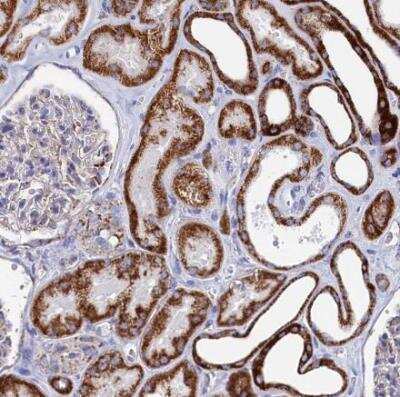

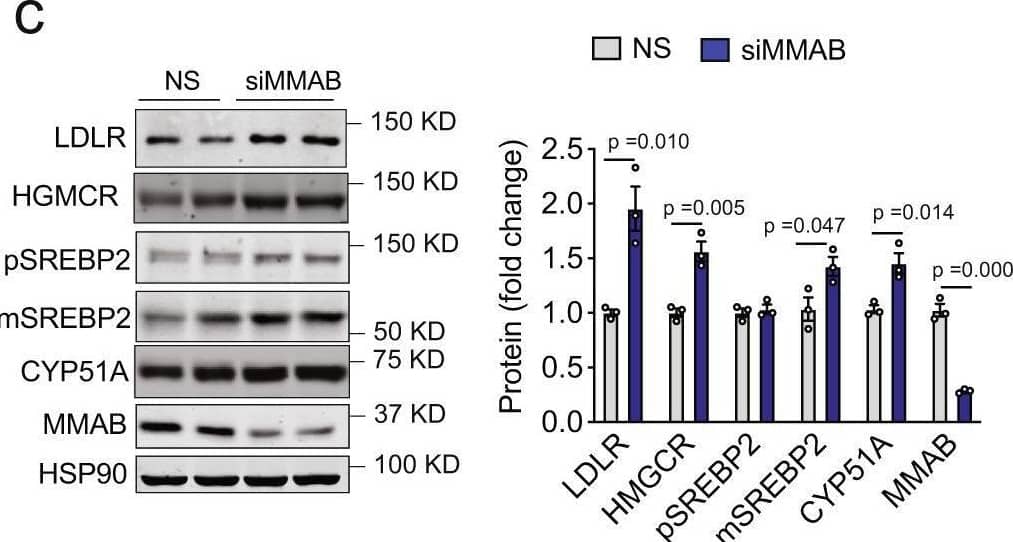


![Immunohistochemistry DDR1 Antibody [Unconjugated]](https://images.novusbio.com/images/antibody/DDR1_AF2396_Immunohistochemistry_7152.jpg)
![Simple Western DDR1 Antibody [Unconjugated]](https://images.novusbio.com/images/antibody/DDR1_AF2396_Immunohistochemistry_17635.jpg)
![Western Blot DDR1 Antibody [Unconjugated]](https://images.novusbio.com/images/antibody/DDR1_AF2396_Western_Blot_16723.jpg)


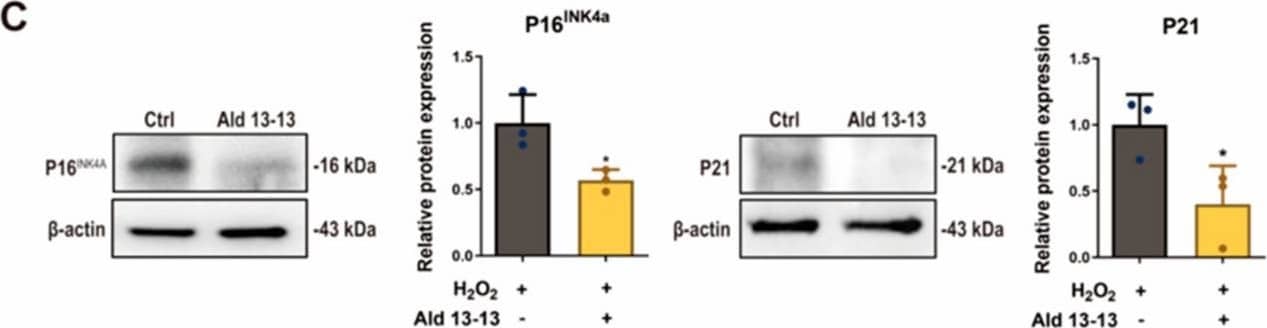


![Western Blot: Goat anti-Rabbit IgG (H+L) Secondary Antibody [HRP] [NB7160] - Western blot showing vemurafenib treatment in BRAFV600E CRC cells inhibits fission mediator DRP1 with no significant effect on fusion proteins (Mfn1 & 2) using MFN-1 antibody (NBP1-51841) and corresponding secondary antibody, goat anti-rabbit IgG-HRP (NB7160). Image collected and cropped by CiteAb from the following publication (https://pubmed.ncbi.nlm.nih.gov/33738242).](https://images.novusbio.com/images/Goat-anti-Rabbit-IgG-H+L-Secondary-Antibody-HRP-Western-Blot-NB7160-img0001.jpg "Western Blot: Goat anti-Rabbit IgG (H+L) Secondary Antibody [HRP] [NB7160] - Western blot showing vemurafenib treatment in BRAFV600E CRC cells inhibits fission mediator DRP1 with no significant effect on fusion proteins (Mfn1 & 2) using MFN-1 antibody (NBP1-51841) and corresponding secondary antibody, goat anti-rabbit IgG-HRP (NB7160). Image collected and cropped by CiteAb from the following publication (https://pubmed.ncbi.nlm.nih.gov/33738242).")
![Flow Cytometry: Rabbit IgG Isotype Control [NBP2-24891] - An intracellular stain was performed on Raji cells with Adiponectin antibody NB100-65810 (blue) and a matched isotype control NBP2-24893 (orange). Cells were fixed with 4% PFA and then permeablized with 0.1% saponin. Cells were incubated in an antibody dilution of 1 ug/mL for 30 minutes at room temperature, followed by Dylight488-conjugated anti-rabbit secondary antibody. Image using the Azide Free form of this antibody.](https://images.novusbio.com/images/Rabbit--Mouse-IgG-Isotype-Control-Flow-Cytometry-NBP2-24891-img0006.jpg "Flow Cytometry: Rabbit IgG Isotype Control [NBP2-24891] - An intracellular stain was performed on Raji cells with Adiponectin antibody NB100-65810 (blue) and a matched isotype control NBP2-24893 (orange). Cells were fixed with 4% PFA and then permeablized with 0.1% saponin. Cells were incubated in an antibody dilution of 1 ug/mL for 30 minutes at room temperature, followed by Dylight488-conjugated anti-rabbit secondary antibody. Image using the Azide Free form of this antibody.")
