![Immunocytochemistry/Immunofluorescence: 53BP1 Antibody [NB100-305] - NIH3T3 cells were fixed in 4% paraformaldehyde for 10 minutes and permeabilized in 0.5% Triton X-100 in PBS for 5 minutes. The cells were incubated with anti- NB100-305 at 2 ug/mL overnight at 4C and detected with an anti-rabbit DyLight 488 (Green) at a 1:1000 dilution for 60 minutes. Alpha tubulin (DM1A) NB100-690 was used as a co-stain at a 1:1000 dilution and detected with an anti-mouse DyLight 550 (Red) at a 1:1000 dilution. Nuclei were counterstained with DAPI (Blue). Cells were imaged using a 100X objective and digitally deconvolved.](http://images.novusbio.com/fullsize/53BP1-Antibody-Immunocytochemistry-Immunofluorescence-NB100-305-img0010.jpg "Immunocytochemistry/Immunofluorescence: 53BP1 Antibody [NB100-305] - NIH3T3 cells were fixed in 4% paraformaldehyde for 10 minutes and permeabilized in 0.5% Triton X-100 in PBS for 5 minutes. The cells were incubated with anti- NB100-305 at 2 ug/mL overnight at 4C and detected with an anti-rabbit DyLight 488 (Green) at a 1:1000 dilution for 60 minutes. Alpha tubulin (DM1A) NB100-690 was used as a co-stain at a 1:1000 dilution and detected with an anti-mouse DyLight 550 (Red) at a 1:1000 dilution. Nuclei were counterstained with DAPI (Blue). Cells were imaged using a 100X objective and digitally deconvolved.")
| Reactivity | Hu, Mu, Rt, Bt, Bv, Ca, Nm, Po, Pm, Eq, Fe, Ha, Pm-Or, Pm, Rb, ShSpecies Glossary |
| Applications | WB, ChIP, Flow, ICC/IF, IHC, ChIP, Mycoplasma |
| Clonality | Polyclonal |
| Host | Rabbit |
| Conjugate | Unconjugated |
| Format | BSA Free |
| Concentration | 1 mg/ml |
| Immunogen | Synthetic peptide made to the C-terminal portion of the human 53BP1 protein (between amino acids 1925 and 1972) (NP_005648.1). |
| Marker | DNA Double Strand Break Marker |
| Predicted Species | Porcine (100%), Chimpanzee (100%), Rabbit (100%), Orangutan (100%), Feline (100%), Equine (100%), Primate (100%), Hamster (100%), Sheep (100%). Backed by our 100% Guarantee. |
| Isotype | IgG |
| Clonality | Polyclonal |
| Host | Rabbit |
| Gene | TP53BP1 |
| Purity | Immunogen affinity purified |
| Innovator's Reward | Test in a species/application not listed above to receive a full credit towards a future purchase. |
| Dilutions |
|
||
| Control |
|
||
| Reviewed Applications |
|
||
| Publications |
|
| Storage | Store at 4C short term. Aliquot and store at -20C long term. Avoid freeze-thaw cycles. |
| Buffer | PBS |
| Preservative | 0.02% Sodium Azide |
| Concentration | 1 mg/ml |
| Purity | Immunogen affinity purified |








| Images | Ratings | Applications | Species | Date | Details | ||||||||||
|---|---|---|---|---|---|---|---|---|---|---|---|---|---|---|---|

Enlarge |
reviewed by:
Marina Rodriguez Candela |
ICC | Human | 06/14/2021 |
Summary
Comments
|
||||||||||
Enlarge |
reviewed by:
Verified Customer |
ICC | Human | 12/30/2019 |
Summary
|
||||||||||

Enlarge |
reviewed by:
Verified Customer |
ICC | Human | 08/08/2019 |
Summary
Comments
|
||||||||||

Enlarge |
reviewed by:
Verified Customer |
WB | Human | 06/30/2015 |
Summary
|
||||||||||
|
reviewed by:
Manuela Buonanno |
ICC | Human | 11/07/2013 |
Summary
|
|||||||||||
|
reviewed by:
Verified Customer |
ICC | Mouse | 10/06/2011 |
Summary
|
Secondary Antibodies |
Isotype Controls |
Research Areas for 53BP1 Antibody (NB100-305)Find related products by research area.
|
|
The recent relationship of BRCA1 and 53BP1 The p53-binding protein 1 (53BP1) is a DNA damage response factor, which is recruited to nuclear structures at the site of DNA damage. DNA double-strand breaks (DSBs) are mutations that are detrimental to cell viability and genome stability, and m... Read full blog post. |
|
53BP1 - a marker for DNA Double Strand Break 53BP1 (p53 binding protein 1) was originally thought to be an enhancer for p53 transcriptional, but later studies have demonstrated that it is actually a substrate for ataxia telangiectasia mutated (ATM). 53BP1 is a classic late DNA damage response... Read full blog post. |
|
53BP1 - DNA damage is no fun The 53BP1 (p53 binding protein 1) was initially believed to be a p53 transcriptional enhancing partner, but it has now been established as an ataxia telangiectasia mutated (ATM) substrate. As a late DNA damage response (DDR) marker, 53BP1 appears duri... Read full blog post. |
|
53BP1, DNA Damage Response and Tumor Suppression 53BP1 (p53 binding protein 1) was originally thought to be a p53 transcriptional enhancing partner, but now has been shown to be an ataxia telangiectasia mutated (ATM) substrate. It is a late DNA damage response (DDR) marker, appearing in the telophas... Read full blog post. |
|
53BP1, DNA Damage Response and Tumor Suppression 53BP1 (p53 binding protein 1) was originally thought to be a p53 transcriptional enhancing partner, but now has been shown to be an ataxia telangiectasia mutated (ATM) substrate. It is a late DNA damage response (DDR) marker, appearing in the telophas... Read full blog post. |
|
NUP153 & 53BP1: A Novel DNA Repair Pathway Mediating DNA damage is a crucial process, and one of the most important cellular guards against cancer. In response to DNA damage, sophisticated cellular machinery is recruited to repair the breaks, and if it fails, the cell is committed to death. De... Read full blog post. |
|
Blocking 53BP1 Expression Lessens Tumor Development in BRCA1-Defective Mice Our antibody database at Novus Biologicals provides research tools for the forefront of cancer research. Recently, a mouse study using 53BP1 and BRCA1 antibodies showed that deletion of 53BP1 greatly lessened the incidence of tumor development in mice... Read full blog post. |
The concentration calculator allows you to quickly calculate the volume, mass or concentration of your vial. Simply enter your mass, volume, or concentration values for your reagent and the calculator will determine the rest.
5 | |
4 | |
3 | |
2 | |
1 |
| Marina Rodriguez Candela 06/14/2021 |
||
| Application: | ICC | |
| Species: | Human |
| Verified Customer 12/30/2019 |
||
| Application: | ICC | |
| Species: | Human |
| Verified Customer 08/08/2019 |
||
| Application: | ICC | |
| Species: | Human |
| Gene Symbol | TP53BP1 |


![Immunohistochemistry: 53BP1 Antibody [NB100-305] - Immunohistochemical staining of placental villi with 53BP1 Antibody (Catalog #NB100-305) at 40X magnification.](http://images.novusbio.com/fullsize/53BP1-Antibody-Immunohistochemistry-NB100-305-img0005.jpg "Immunohistochemistry: 53BP1 Antibody [NB100-305] - Immunohistochemical staining of placental villi with 53BP1 Antibody (Catalog #NB100-305) at 40X magnification.")
![Western Blot: 53BP1 Antibody [NB100-305] - Western blot of whole cell lysate (20 ug/lane) from U2Os cells resolved on a 3 to 8 percent trisacetate gel. A band appears at approximately the theoretical molecular weight of 214 kDa.](http://images.novusbio.com/fullsize/53BP1-Antibody-Western-Blot-NB100-305-img0004.jpg "Western Blot: 53BP1 Antibody [NB100-305] - Western blot of whole cell lysate (20 ug/lane) from U2Os cells resolved on a 3 to 8 percent trisacetate gel. A band appears at approximately the theoretical molecular weight of 214 kDa.")
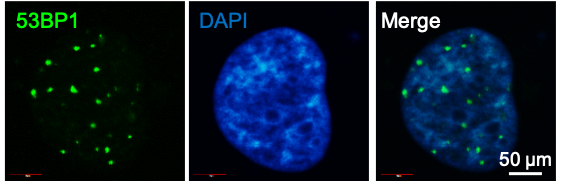
![Immunocytochemistry/Immunofluorescence: 53BP1 Antibody [NB100-305] - HCC1937 cells (human) were treated with PARPi for 96 h. Nuclei are stained in blue (DAPI) and 53BP1 antibody (foci in green). ICC/IF image submitted by a verified customer review.](http://images.novusbio.com/fullsize/53BP1-Antibody-Immunocytochemistry-Immunofluorescence-NB100-305-img0012.jpg "Immunocytochemistry/Immunofluorescence: 53BP1 Antibody [NB100-305] - HCC1937 cells (human) were treated with PARPi for 96 h. Nuclei are stained in blue (DAPI) and 53BP1 antibody (foci in green). ICC/IF image submitted by a verified customer review.")
![Flow Cytometry: 53BP1 Antibody [NB100-305] - An intracellular stain was performed on Ntera2 cells with 53BP1 Antibody NB100-305 (blue) and a matched isotype control NBP2-24891 (orange). Cells were fixed with 4% PFA and then permeabilized with 0.1% saponin. Cells were incubated in an antibody dilution of 1.0 ug/mL for 30 minutes at room temperature, followed by Rabbit IgG (H+L) Cross-Adsorbed Secondary Antibody, Dylight 550 (SA5-10033, Thermo Fisher).](http://images.novusbio.com/fullsize/53BP1-Antibody-Flow-Cytometry-NB100-305-img0011.jpg "Flow Cytometry: 53BP1 Antibody [NB100-305] - An intracellular stain was performed on Ntera2 cells with 53BP1 Antibody NB100-305 (blue) and a matched isotype control NBP2-24891 (orange). Cells were fixed with 4% PFA and then permeabilized with 0.1% saponin. Cells were incubated in an antibody dilution of 1.0 ug/mL for 30 minutes at room temperature, followed by Rabbit IgG (H+L) Cross-Adsorbed Secondary Antibody, Dylight 550 (SA5-10033, Thermo Fisher).")
![Immunocytochemistry/Immunofluorescence: 53BP1 Antibody [NB100-305] - Paraformaldehyde (4%) fixed Saos-2 cells (human osteosarcoma cell line) were stained with anti-53BP1 antibody followed by Alexa Fluor 488 secondary antibody. ICC/IF image submitted by a verified customer review.](http://images.novusbio.com/fullsize/53BP1-Antibody-Immunocytochemistry-Immunofluorescence-NB100-305-img0007.jpg "Immunocytochemistry/Immunofluorescence: 53BP1 Antibody [NB100-305] - Paraformaldehyde (4%) fixed Saos-2 cells (human osteosarcoma cell line) were stained with anti-53BP1 antibody followed by Alexa Fluor 488 secondary antibody. ICC/IF image submitted by a verified customer review.")
![Immunocytochemistry/Immunofluorescence: 53BP1 Antibody [NB100-305] - Ntera2 cells were fixed in 4% paraformaldehyde for 10 minutes and permeabilized in 0.5% Triton X-100 in PBS for 5 minutes. The cells were incubated with anti- NB100-305 at 2 ug/mL overnight at 4C and detected with an anti-rabbit DyLight 488 (Green) at a 1:1000 dilution for 60 minutes. Alpha tubulin (DM1A) NB100-690 was used as a co-stain at a 1:1000 dilution and detected with an anti-mouse DyLight 550 (Red) at a 1:1000 dilution. Nuclei were counterstained with DAPI (Blue). Cells were imaged using a 100X objective and digitally deconvolved.](http://images.novusbio.com/fullsize/53BP1-Antibody-Immunocytochemistry-Immunofluorescence-NB100-305-img0009.jpg "Immunocytochemistry/Immunofluorescence: 53BP1 Antibody [NB100-305] - Ntera2 cells were fixed in 4% paraformaldehyde for 10 minutes and permeabilized in 0.5% Triton X-100 in PBS for 5 minutes. The cells were incubated with anti- NB100-305 at 2 ug/mL overnight at 4C and detected with an anti-rabbit DyLight 488 (Green) at a 1:1000 dilution for 60 minutes. Alpha tubulin (DM1A) NB100-690 was used as a co-stain at a 1:1000 dilution and detected with an anti-mouse DyLight 550 (Red) at a 1:1000 dilution. Nuclei were counterstained with DAPI (Blue). Cells were imaged using a 100X objective and digitally deconvolved.")
![Flow Cytometry: 53BP1 Antibody [NB100-305] - An intracellular stain was performed on HeLa cells with 53BP1 Antibody (Catalog #NB100-305AF488) (blue) and a matched isotype control (orange). Cells were fixed with 4% PFA and then permeabilized with 0.1% saponin. Cells were incubated in an antibody dilution of 5 ug/mL for 30 minutes at room temperature. Both antibodies were conjugated to Alexa Fluor 488.](http://images.novusbio.com/fullsize/53BP1-Antibody-Flow-Cytometry-NB100-305-img0006.jpg "Flow Cytometry: 53BP1 Antibody [NB100-305] - An intracellular stain was performed on HeLa cells with 53BP1 Antibody (Catalog #NB100-305AF488) (blue) and a matched isotype control (orange). Cells were fixed with 4% PFA and then permeabilized with 0.1% saponin. Cells were incubated in an antibody dilution of 5 ug/mL for 30 minutes at room temperature. Both antibodies were conjugated to Alexa Fluor 488.")
![Western Blot: 53BP1 Antibody - BSA Free [NB100-305] - DNA damage & DNA damage responses upon H2O2 challenge. a, c, e, g Confocal images showing the basal region of the organ of Corti cultures treated with either culture medium alone (a, e) or containing 0.5 mM H2O2 (c, g) for 5 h before being maintained in culture medium alone for 3 days. The samples were then immunolabeled for myosin 7A (red, a, c, e, g), gamma H2AX (green, a & c) & 53BP1 (green, e & g). Scale bars: a, c, e & g = 10 μm. b, d, f, h Higher magnification images of representative OHC & IHC nuclei from all conditions tested. Scale bar = 2.5 μm. i Representative Western blot analysis using antibodies against gamma H2AX, 53BP1, DDB2, p-Chk1, p-Chk2, p53, & beta -actin in whole cochlear extracts. j, k Histograms representing the levels of gamma H2AX, 53BP1, DDB2, p-Chk1, p-Chk2, & p53 in control & in 0.4 & 0.5 mM H2O2-exposed groups (n = 6 cochleae per condition). beta -Actin served as a loading control. Data are expressed as mean ± SEM. One-way ANOVA test followed by post hoc Tukey’s test (*P ≤ 0.04, **P ≤ 0.01, ***P ≤ 0.001 vs. H2O2 0 mM). All experiments were performed in triplicate Image collected & cropped by CiteAb from the following publication (//pubmed.ncbi.nlm.nih.gov/30693443), licensed under a CC-BY license. Not internally tested by Novus Biologicals.](http://images.novusbio.com/fullsize/nb100-305_rabbit-polyclonal-53bp1-antibody-310202415532062.jpg "Western Blot: 53BP1 Antibody - BSA Free [NB100-305] - DNA damage & DNA damage responses upon H2O2 challenge. a, c, e, g Confocal images showing the basal region of the organ of Corti cultures treated with either culture medium alone (a, e) or containing 0.5 mM H2O2 (c, g) for 5 h before being maintained in culture medium alone for 3 days. The samples were then immunolabeled for myosin 7A (red, a, c, e, g), gamma H2AX (green, a & c) & 53BP1 (green, e & g). Scale bars: a, c, e & g = 10 μm. b, d, f, h Higher magnification images of representative OHC & IHC nuclei from all conditions tested. Scale bar = 2.5 μm. i Representative Western blot analysis using antibodies against gamma H2AX, 53BP1, DDB2, p-Chk1, p-Chk2, p53, & beta -actin in whole cochlear extracts. j, k Histograms representing the levels of gamma H2AX, 53BP1, DDB2, p-Chk1, p-Chk2, & p53 in control & in 0.4 & 0.5 mM H2O2-exposed groups (n = 6 cochleae per condition). beta -Actin served as a loading control. Data are expressed as mean ± SEM. One-way ANOVA test followed by post hoc Tukey’s test (*P ≤ 0.04, **P ≤ 0.01, ***P ≤ 0.001 vs. H2O2 0 mM). All experiments were performed in triplicate Image collected & cropped by CiteAb from the following publication (//pubmed.ncbi.nlm.nih.gov/30693443), licensed under a CC-BY license. Not internally tested by Novus Biologicals.")
![Western Blot: 53BP1 Antibody - BSA Free [NB100-305] - Assessment of satellite cell radiosensitivity & DNA repair pathways w/ age.(A–B) Expression of major proteins involved in homologous recombination & non-homologous end joining detected using WB. Protein nuclear extracts prepared from activated satellite cells 72 hrs post muscle injury. Lamin B used as loading control. (A) Representative images of WBs. (B) Quantification using Image J software. Data represents mean +/− SEM, n = 3 to 5 (n = a pool of muscles from 3 mice), 2-tailed unpaired Student's t-test, no significant difference. (C) Graphical representation of data from Table S1. Gene expression of old relative to young satellite cells presented as fold change w/ a 95 % confidence interval for the 12 genes w/ a statistically significant relative expression, n = 3 mice per group, two-tailed unpaired Student's t-test, *: p value<0.05. Dotted line represents young level. BER: Base Excision Repair, NER: Nucleotide-Excision Repair; MR: Mismatch Repair, DRR: DNA Repair Related. (D–E) Satellite cells freshly isolated from uninjured (D) or 72 hrs after injury (E) muscle of C57BL/6 young & old mice, & of young SCID mice. Cells plated at low density, irradiated at indicated Gray (Gy) doses, & cultured for 10 days. Myogenic colonies formed by irradiated cells quantified & represented relative to ir respective non-irradiated controls. On average, 178, 77, & 228 myogenic colonies scored per mouse for young, old, & SCID uninjured non-irradiated respectively & 67, 34, & 91 myogenic colonies scored per mouse for young, old, & SCID injured non-irradiated respectively. Data represent mean +/− SEM, n = 3 to 4 mice per group, two-tailed unpaired Student's t-test, a, b or c: p value<0.05, (a: young vs old, b: young vs SCID, c: old versus SCID). Image collected & cropped by CiteAb from the following publication (//pubmed.ncbi.nlm.nih.gov/23704914), licensed under a CC-BY license. Not internally tested by Novus Biologicals.](http://images.novusbio.com/fullsize/nb100-305_rabbit-polyclonal-53bp1-antibody-31020241553204.jpg "Western Blot: 53BP1 Antibody - BSA Free [NB100-305] - Assessment of satellite cell radiosensitivity & DNA repair pathways w/ age.(A–B) Expression of major proteins involved in homologous recombination & non-homologous end joining detected using WB. Protein nuclear extracts prepared from activated satellite cells 72 hrs post muscle injury. Lamin B used as loading control. (A) Representative images of WBs. (B) Quantification using Image J software. Data represents mean +/− SEM, n = 3 to 5 (n = a pool of muscles from 3 mice), 2-tailed unpaired Student's t-test, no significant difference. (C) Graphical representation of data from Table S1. Gene expression of old relative to young satellite cells presented as fold change w/ a 95 % confidence interval for the 12 genes w/ a statistically significant relative expression, n = 3 mice per group, two-tailed unpaired Student's t-test, *: p value<0.05. Dotted line represents young level. BER: Base Excision Repair, NER: Nucleotide-Excision Repair; MR: Mismatch Repair, DRR: DNA Repair Related. (D–E) Satellite cells freshly isolated from uninjured (D) or 72 hrs after injury (E) muscle of C57BL/6 young & old mice, & of young SCID mice. Cells plated at low density, irradiated at indicated Gray (Gy) doses, & cultured for 10 days. Myogenic colonies formed by irradiated cells quantified & represented relative to ir respective non-irradiated controls. On average, 178, 77, & 228 myogenic colonies scored per mouse for young, old, & SCID uninjured non-irradiated respectively & 67, 34, & 91 myogenic colonies scored per mouse for young, old, & SCID injured non-irradiated respectively. Data represent mean +/− SEM, n = 3 to 4 mice per group, two-tailed unpaired Student's t-test, a, b or c: p value<0.05, (a: young vs old, b: young vs SCID, c: old versus SCID). Image collected & cropped by CiteAb from the following publication (//pubmed.ncbi.nlm.nih.gov/23704914), licensed under a CC-BY license. Not internally tested by Novus Biologicals.")


![Exosomes modulate the repair of DNA DSBs in irradiated recipient cells.(A) Number of 53BP1 foci in BHY cells 1 hour after irradiation with 0 and 2 Gy and transfer of BHY exosomes isolated 24 hours after irradiation with 0 and 6 Gy [n = 5]. (B) Representative images of 53BP1 foci in BHY cells 6 hours after 2 Gy and transfer of BHY exosomes isolated 24 hours after irradiation with 0, 3, 6 or 9 Gy (53BP1 foci green, nuclei blue). (C) Number of 53BP1 foci in BHY cells 6 hours after 2 Gy and transfer of BHY exosomes isolated 24 and 48 hours after irradiation [n1 (control; EXO 0 Gy 24 h; EXO 6 Gy 24 h) = 6, n2 (EXO 0 Gy 48 h; EXO 3 Gy; EXO 6 Gy 48 h; EXO 9 Gy) = 3]. (D) Number of 53BP1 foci in FaDu cells 6 hours after 2 Gy and transfer of FaDu exosomes [n = 3]. (E) Number of 53BP1 foci in FaDu cells 6 hours after 2 Gy and transfer of BHY exosomes [n = 3]. (F) Number of 53BP1 in BHY cells after 2 Gy and transfer of destabilized BHY exosomes. Exosomes from BHY cells isolated 24 hours after irradiation with 0 and 6 Gy were treated with RNase A or a mixture of Triton and Trypsin [n1 (control; intact) = 6; n2 (RNase A 5 μg/μl) = 2; n3 (RNase A 400 μg/μl; Triton + Trypsin) = 3]. For all experiments the +/- SD was shown and p-values calculated on control were considered to be significant if * p < 0.05 and highly significant ** if p < 0.01, while ▲ p < 0.05 and ▲▲ p < 0.01 indicate significant differences to EXO 0 Gy. Image collected and cropped by CiteAb from the following open publication (//pubmed.ncbi.nlm.nih.gov/27006994), licensed under a CC-BY license. Not internally tested by Novus Biologicals.](http://images.novusbio.com/fullsize/nb100-305_rabbit-polyclonal-53bp1-antibody-immunocytochemistry-immunofluorescence-13220261941180.jpg "Exosomes modulate the repair of DNA DSBs in irradiated recipient cells.(A) Number of 53BP1 foci in BHY cells 1 hour after irradiation with 0 and 2 Gy and transfer of BHY exosomes isolated 24 hours after irradiation with 0 and 6 Gy [n = 5]. (B) Representative images of 53BP1 foci in BHY cells 6 hours after 2 Gy and transfer of BHY exosomes isolated 24 hours after irradiation with 0, 3, 6 or 9 Gy (53BP1 foci green, nuclei blue). (C) Number of 53BP1 foci in BHY cells 6 hours after 2 Gy and transfer of BHY exosomes isolated 24 and 48 hours after irradiation [n1 (control; EXO 0 Gy 24 h; EXO 6 Gy 24 h) = 6, n2 (EXO 0 Gy 48 h; EXO 3 Gy; EXO 6 Gy 48 h; EXO 9 Gy) = 3]. (D) Number of 53BP1 foci in FaDu cells 6 hours after 2 Gy and transfer of FaDu exosomes [n = 3]. (E) Number of 53BP1 foci in FaDu cells 6 hours after 2 Gy and transfer of BHY exosomes [n = 3]. (F) Number of 53BP1 in BHY cells after 2 Gy and transfer of destabilized BHY exosomes. Exosomes from BHY cells isolated 24 hours after irradiation with 0 and 6 Gy were treated with RNase A or a mixture of Triton and Trypsin [n1 (control; intact) = 6; n2 (RNase A 5 μg/μl) = 2; n3 (RNase A 400 μg/μl; Triton + Trypsin) = 3]. For all experiments the +/- SD was shown and p-values calculated on control were considered to be significant if * p < 0.05 and highly significant ** if p < 0.01, while ▲ p < 0.05 and ▲▲ p < 0.01 indicate significant differences to EXO 0 Gy. Image collected and cropped by CiteAb from the following open publication (//pubmed.ncbi.nlm.nih.gov/27006994), licensed under a CC-BY license. Not internally tested by Novus Biologicals.")


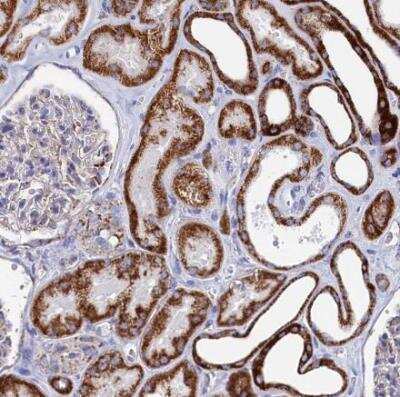

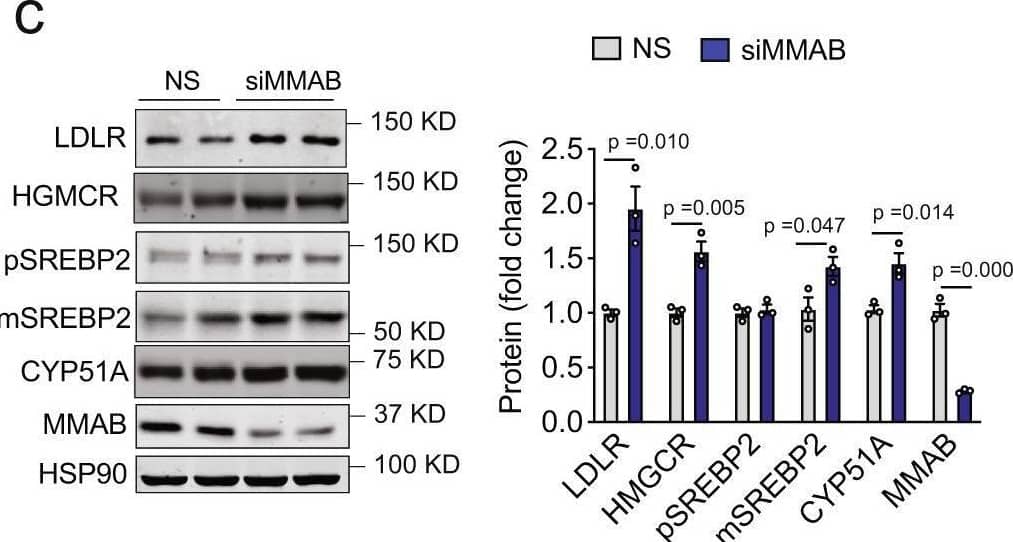


![Immunohistochemistry DDR1 Antibody [Unconjugated]](https://images.novusbio.com/images/antibody/DDR1_AF2396_Immunohistochemistry_7152.jpg)
![Simple Western DDR1 Antibody [Unconjugated]](https://images.novusbio.com/images/antibody/DDR1_AF2396_Immunohistochemistry_17635.jpg)
![Western Blot DDR1 Antibody [Unconjugated]](https://images.novusbio.com/images/antibody/DDR1_AF2396_Western_Blot_16723.jpg)
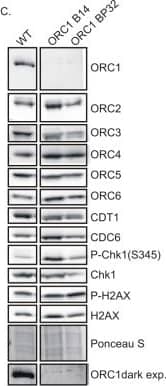


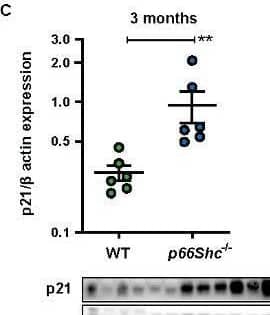


![Western Blot: Human Placenta Whole Tissue Lysate (Adult Whole Normal) [NB820-59248] - Used as a positive control for human PiT-1 (SLC20A1) protein on an anti-human PiT-1 Western blot using human plancenta lysate. Primary antibody @ 1:1000, secondary antibody @ 1:5000, visualization by ECL. Image from verified customer review.](https://images.novusbio.com/images/Human-Placenta-Whole-Tissue-Lysate-Adult-Whole-Normal-Western-Blot-NB820-59248-img0001.jpg "Western Blot: Human Placenta Whole Tissue Lysate (Adult Whole Normal) [NB820-59248] - Used as a positive control for human PiT-1 (SLC20A1) protein on an anti-human PiT-1 Western blot using human plancenta lysate. Primary antibody @ 1:1000, secondary antibody @ 1:5000, visualization by ECL. Image from verified customer review.")
![Western Blot: Goat anti-Rabbit IgG (H+L) Secondary Antibody [HRP] [NB7160] - Western blot showing vemurafenib treatment in BRAFV600E CRC cells inhibits fission mediator DRP1 with no significant effect on fusion proteins (Mfn1 & 2) using MFN-1 antibody (NBP1-51841) and corresponding secondary antibody, goat anti-rabbit IgG-HRP (NB7160). Image collected and cropped by CiteAb from the following publication (https://pubmed.ncbi.nlm.nih.gov/33738242).](https://images.novusbio.com/images/Goat-anti-Rabbit-IgG-H+L-Secondary-Antibody-HRP-Western-Blot-NB7160-img0001.jpg "Western Blot: Goat anti-Rabbit IgG (H+L) Secondary Antibody [HRP] [NB7160] - Western blot showing vemurafenib treatment in BRAFV600E CRC cells inhibits fission mediator DRP1 with no significant effect on fusion proteins (Mfn1 & 2) using MFN-1 antibody (NBP1-51841) and corresponding secondary antibody, goat anti-rabbit IgG-HRP (NB7160). Image collected and cropped by CiteAb from the following publication (https://pubmed.ncbi.nlm.nih.gov/33738242).")
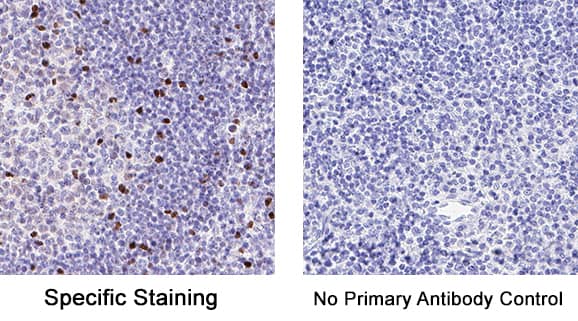
![Flow Cytometry: Rabbit IgG Isotype Control [NBP2-24891] - An intracellular stain was performed on Raji cells with Adiponectin antibody NB100-65810 (blue) and a matched isotype control NBP2-24893 (orange). Cells were fixed with 4% PFA and then permeablized with 0.1% saponin. Cells were incubated in an antibody dilution of 1 ug/mL for 30 minutes at room temperature, followed by Dylight488-conjugated anti-rabbit secondary antibody. Image using the Azide Free form of this antibody.](https://images.novusbio.com/images/Rabbit--Mouse-IgG-Isotype-Control-Flow-Cytometry-NBP2-24891-img0006.jpg "Flow Cytometry: Rabbit IgG Isotype Control [NBP2-24891] - An intracellular stain was performed on Raji cells with Adiponectin antibody NB100-65810 (blue) and a matched isotype control NBP2-24893 (orange). Cells were fixed with 4% PFA and then permeablized with 0.1% saponin. Cells were incubated in an antibody dilution of 1 ug/mL for 30 minutes at room temperature, followed by Dylight488-conjugated anti-rabbit secondary antibody. Image using the Azide Free form of this antibody.")

