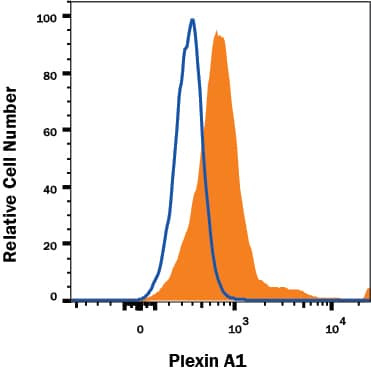
IC0041G). View our protocol for Staining Membrane-associated Proteins." title="Rat splenocytes were stained with Mouse Anti-Rat CD4 APC-conjugated Monoclonal Antibody and either (A) Mouse Anti-Rat CD44 Alexa Fluor® 488-conjugated Monoclonal Antibody (Catalog # FAB6577G) or (B) Mouse IgG2BAlexa Fluor 488 Isotype Control (Catalog # IC0041G). View our protocol for Staining Membrane-associated Proteins." />
| Reactivity | RtSpecies Glossary |
| Applications | Flow |
| Clone | 740017 |
| Clonality | Monoclonal |
| Host | Mouse |
| Conjugate | Alexa Fluor 488 |
| Immunogen | Mouse myeloma cell line NS0-derived recombinant rat CD44 Gln22-Thr223 (predicted) Accession # P26051 |
| Specificity | Detects rat CD44 in direct ELISAs. In direct ELISAs, no cross-reactivity with recombinant
human, mouse, or porcine CD44 is observed. |
| Source | N/A |
| Isotype | IgG2b |
| Clonality | Monoclonal |
| Host | Mouse |
| Gene | CD44 |
| Purity Statement | Protein A or G purified from hybridoma culture supernatant |
| Innovator's Reward | Test in a species/application not listed above to receive a full credit towards a future purchase. |
| Dilutions |
|
|
| Publications |
|
| Storage | Store the unopened product at 2 - 8° C. Do not use past expiration date. Protect from light. |
| Buffer | Supplied in a saline solution containing BSA and Sodium Azide. |
| Preservative | Sodium Azide |
CD44 is a ubiquitously expressed protein that is a major receptor for hyaluronan and exerts control over cell growth and migration (1-5). Mouse CD44 has an extracellular domain (ECD) that contains a 100 amino acid (aa) hyaluronan-binding disulfide-stabilized link region, plus a 48-463 aa stem region, a 21 aa transmembrane domain, and a 72 aa cytoplasmic domain. Within the stem, ten variably spliced exons (v1-10, exons 6-15) produce multiple protein isoforms (1‑5). The standard or hematopoietic form, CD44H, does not include the variable segments (1‑5). Cancer aggressiveness and T cell activation have been correlated with expression of specific isoforms (2, 4). With variable N- and O-glycosylation and splicing within the stalk, CD44 can range from 80 to 200 kDa (1, 2). Within the N‑terminal invariant portion of the ECD (aa 23-222), rat CD44 shares 91% and 75% aa sequence identity with corresponding mouse and human CD44, respectively. The many reported functions of CD44 fall within three categories (1, 2). First, CD44 binds hyaluronan and other ligands within the extracellular matrix and can function as a “platform” for growth factors and metalloproteinases. Second, CD44 is a co-receptor that modifies activity of receptors including MET and the ErbB family of tyrosine kinases. Third, the CD44 intracellular domain links the plasma membrane to the actin cytoskeleton via the ERM proteins, ezrin, radixin and moesin. CD44 can be synthesized in a soluble form or may be cleaved at multiple sites by either membrane-type matrix metalloproteinases or ADAM proteases to produce soluble ectodomains (4, 6, 7). The cellular portion may then undergo gamma secretase-dependent intramembrane cleavage to form an A beta ‑like transmembrane portion and a cytoplasmic signaling molecule that affects gene expression (8, 9). These cleavage events are thought to promote metastasis by enhancing tumor cell motility and growth (1, 2, 6).


![Flow Cytometry L-Selectin/CD62L Antibody (4G8) [Unconjugated]](https://images.novusbio.com/images/antibody/bba24_human-l-selectin-cd62l-mab-cl-4g8-flow-cytometry-822024174319..jpg)
![ELISA L-Selectin/CD62L Antibody (4G8) [Unconjugated]](https://images.novusbio.com/images/bba24_human-l-selectin-cd62l-mab-cl-4g8-elisa-639201780831724199.jpg)


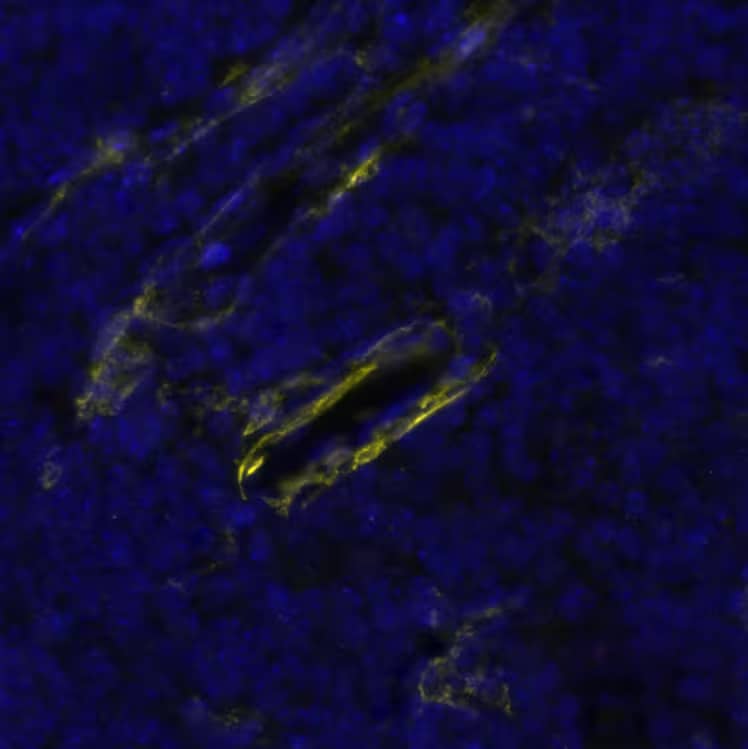

![Western Blot Osteopontin/OPN Antibody [Unconjugated]](https://images.novusbio.com/images/af808_mouse-osteopontin-opn-affinity-purified-polyclonal-ab-western-blot-121220259133019.jpg)
![Western Blot Osteopontin/OPN Antibody [Unconjugated]](https://images.novusbio.com/images/af808_mouse-osteopontin-opn-affinity-purified-polyclonal-ab-western-blot-12122025932150.jpg)
![Western Blot Osteopontin/OPN Antibody [Unconjugated]](https://images.novusbio.com/images/af808_mouse-osteopontin-opn-affinity-purified-polyclonal-ab-western-blot-121220259224819.jpg)

| Publication using FAB6577G | Applications | Species |
|---|---|---|
| YU WANG, GUOYING ZHU, JIANPING WANG, JUNXIANG CHEN Irradiation alters the differentiation potential of bone marrow mesenchymal stem cells Molecular Medicine Reports 2016-01-01 [PMID: 26572960] (Flow Cytometry, Rat) | Flow Cytometry | Rat |
Secondary Antibodies |
Isotype Controls |
|
Taking Biomarker Discovery From 2D to 3D: Increased Biological Activity of EVs Isolated From 3D Prostate Cancer Cultures Jamshed Arslan, Pharm D, PhD Tissues within the human body are made of a three-dimensional (3D) arrangement of cells working together to perform vital functions. The commonly used 2D monolayer cultures have limited ... Read full blog post. |
|
Stemness is responsible for onset and metastasis of colorectal cancer By Jamshed Arslan, Pharm. D., PhD. Colorectal cancer stem cells are a rare subpopulation of colorectal cancer cells that can self-renew and initiate and sustain tumor growth when transplanted into an animal host.1,2 C... Read full blog post. |
|
The Osteopontin Antibody and Hepatic Research Antibody suppliers, such as us at Novus Biologicals, supply a wide range of cell marker products, among them the Osteopontin antibody. Recently, the osteopontin antibody has proven useful in hepatic cancer research.Osteopontin (OPN) is mainly expres... Read full blog post. |
|
CD Antibodies Uncover Markers for Rare Breast Cancer We at Novus Biologicals have added several new products to our CD antibody database. The CD, or Cluster of Differential proteins are a family of type I transmembrane glycoproteins widely expressed in immune cell populations. These include B cells, thy... Read full blog post. |
The concentration calculator allows you to quickly calculate the volume, mass or concentration of your vial. Simply enter your mass, volume, or concentration values for your reagent and the calculator will determine the rest.


![Bioactivity CTLA-4 [Unconjugated]](https://images.novusbio.com/images/protein/CTLA4_7268CT_2293.jpg)
![Western Blot ICAM-1/CD54 Antibody [Unconjugated]](https://images.novusbio.com/images/af796_mouse-icam-1-cd54-affinity-purified-polyclonal-ab-41202410481192.jpg)
![Western Blot ICAM-1/CD54 Antibody [Unconjugated]](https://images.novusbio.com/images/af796_mouse-icam-1-cd54-affinity-purified-polyclonal-ab-4120241048112.jpg)
![Western Blot ICAM-1/CD54 Antibody [Unconjugated]](https://images.novusbio.com/images/af796_mouse-icam-1-cd54-affinity-purified-polyclonal-ab-4120241049436.jpg)
![SDS-Page TNF-alpha [Unconjugated]](https://images.novusbio.com/images/protein/TNF-alpha_210-TA_256.jpg)
![Bioactivity TNF-alpha [Unconjugated]](https://images.novusbio.com/images/protein/TNFalpha_210TA_1658.jpg)
![SEC-MALS TNF-alpha [Unconjugated]](https://images.novusbio.com/images/210-ta_recombinant-human-tnf-alpha-protein-sec-mals-35202312244..jpg)
![Immunohistochemistry CD45 Antibody [Unconjugated]](https://images.novusbio.com/images/antibody/CD45_AF114_Immunohistochemistry_23525.jpg)
![Immunocytochemistry CD45 Antibody [Unconjugated]](https://images.novusbio.com/images/antibody/af114_mouse-cd45-affinity-purified-polyclonal-ab-immunocytochemistry-6122021145449.jpg)
![Bioactivity IL-2 [Unconjugated]](https://images.novusbio.com/images/202-il_recombinant-human-il-2-protein-bioactivity-174202314946.jpg)
![Flow Cytometry Integrin beta 1/CD29 Antibody (P5D2) [Unconjugated]](https://images.novusbio.com/images/antibody/Integrin_beta_1_MAB17781_Flow_Cytometry_17077.jpg)
![Flow Cytometry Integrin beta 1/CD29 Antibody (P5D2) [Unconjugated]](https://images.novusbio.com/images/antibody/Integrin_beta_1_MAB17781_Flow_Cytometry_23861.jpg)
![Flow Cytometry Integrin beta 2/CD18 Antibody [Unconjugated]](https://images.novusbio.com/images/antibody/af1730_human-integrin-beta-2-cd18-affinity-purified-polyclonal-ab-flow-cytometry-7220258626..jpg)
![Immunocytochemistry Integrin beta 2/CD18 Antibody [Unconjugated]](https://images.novusbio.com/images/antibody/Integrin_beta_2_AF1730_Immunocytochemistry_6474.jpg)
![Immunocytochemistry Integrin beta 2/CD18 Antibody [Unconjugated]](https://images.novusbio.com/images/antibody/af1730_human-integrin-beta-2-cd18-affinity-purified-polyclonal-ab-immunocytochemistry-1292023225343.jpg)


![Western Blot Integrin alpha L/CD11a Antibody (345913) [Unconjugated]](https://images.novusbio.com/images/antibody/Integrin_alpha_L_MAB3595_Western_Blot_10266.jpg)
![Simple Western Integrin alpha L/CD11a Antibody (345913) [Unconjugated]](https://images.novusbio.com/images/mab3595_human-integrin-alpha-l-cd11a-mab-clone-345913-simple-western-268202215744.jpg)
![Flow Cytometry Syndecan-2/CD362 Antibody (305515) [Unconjugated]](https://images.novusbio.com/images/antibody/Syndecan2_MAB2965_Flow_Cytometry_20268.jpg)
![N/A IL-6 [HRP]](https://images.novusbio.com/images/elisa/DATA_IL6_M6000_ELISA_936.jpg)
![N/A IL-6 [HRP]](https://images.novusbio.com/images/elisa/IL-6_M6000_ELISA_415.jpg)
![N/A IL-6 [HRP]](https://images.novusbio.com/images/m6000b_mouse-il-6-quantikine-elisa-kit-1752025024034.jpg)