After August 17, 2026, Novus Biologicals products and services will no longer be available on this website; you will access all products and services on rndsystems.com. Create your R&D Systems online account today.
Measured by its ability to neutralize Activin-mediated erythroid differentiation of K562 human chronic myelogenous leukemia cells. The ED50 for this effect is 0.1‑0.4 µg/mL in the presence of 7.5 ng/mL of rhActivin A.
Source
Spodoptera frugiperda, Sf 21 (baculovirus)-derived human Follistatin protein Gly30-Asp329, with an N-terminal Met
>90%, by SDS-PAGE visualized with Silver Staining and quantitative densitometry by Coomassie® Blue Staining
Endotoxin Note
<0.01 EU per 1 μg of the protein by the LAL method.
Applications/Dilutions
Dilutions
Bioactivity
Theoretical MW
31 kDa. Disclaimer note: The observed molecular weight of the protein may vary from the listed predicted molecular weight due to post translational modifications, post translation cleavages, relative charges, and other experimental factors.
SDS-PAGE
38-43 kDa, reducing conditions
Publications
Read Publications using 669-FO in the following applications:
Use a manual defrost freezer and avoid repeated freeze-thaw cycles.
12 months from date of receipt, -20 to -70 °C as supplied.
1 month, 2 to 8 °C under sterile conditions after reconstitution.
3 months, -20 to -70 °C under sterile conditions after reconstitution.
Buffer
Lyophilized from a 0.2 μm filtered solution in Acetonitrile and TFA with BSA as a carrier protein.
Purity
>90%, by SDS-PAGE visualized with Silver Staining and quantitative densitometry by Coomassie® Blue Staining
Reconstitution Instructions
Reconstitute at 100 μg/mL in sterile PBS containing at least 0.1% human or bovine serum albumin.
Notes
This product is produced by and ships from R&D Systems, Inc., a Bio-Techne brand.
Alternate Names for Recombinant Human Follistatin 300 Protein
follistatin isoform FST317
Follistatin
FS
FSActivin-binding protein
FST
Background
Follistatin (FS) was initially identified as a follicle-stimulating hormone inhibiting substance found in ovarian follicular fluid. It has since been shown that FS is a high‑affinity activin-binding protein that can act as an activin antagonist. Two alternatively spliced follistatin mRNAs, encoding mature FS with 288 amino acid (aa) residues (FS‑288) and 315 aa residues (FS‑315), exist. Natural FS purified from porcine ovaries is primarily a carboxy-terminal truncated form of FS‑315 composed of 300 aa residues. The recombinant human FS‑300 produced at R&D Systems contains 301 aa residues and represents a molecular form derived from human FS‑315 containing a truncation of 15 residues from the carboxy–terminus. FS‑288 binds with high‑affinity to cell-surface heparan sulfate proteoglycans whereas FS‑315 binds with low‑affinity. The binding affinity of R&D Systems' FS‑300 to heparan sulfate has not been determined. Cell surface-associated FS has been suggested to play a role in the clearance and bioavailability of activin in vivo. Besides activin, FS has also been shown to bind with multiple BMPs and to inhibit BMP activity in early Xenopus embryos. FS deficient mice have been shown to have multiple embryonic defects that will result in death shortly after birth. Over‑expression of FS can also cause reproductive defects in transgenic mice.
Iemura, S. et al. (1998) Proc. Natl. Acad. Sci. USA 95:9337
Guo, Q. (1998) Mol. Endocrinol. 12:96
Hashimoto, O. et al. (1997) J. Biol. Chem. 272:13835
The concentration calculator allows you to quickly calculate the volume, mass or concentration of your vial. Simply enter your mass, volume, or concentration values for your reagent and the calculator will determine the rest.
=
÷
Review this Product
Be the first to review our Recombinant Human Follistatin 300 Protein and receive a gift card or discount.
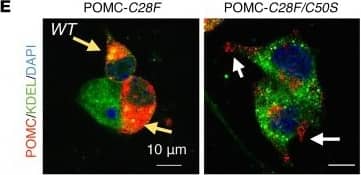


![Immunohistochemistry Albumin Antibody (188835) [Unconjugated] - Serum](https://images.novusbio.com/images/antibody/Albumin_MAB1455_Immunohistochemistry_23317.jpg)
![Immunocytochemistry Albumin Antibody (188835) [Unconjugated] - Serum](https://images.novusbio.com/images/antibody/Albumin_MAB1455_Immunocytochemistry__Immunofluorescence_17777.jpg)
![Intracellular Staining by Flow Cytometry Albumin Antibody (188835) [Unconjugated] - Serum](https://images.novusbio.com/images/antibody/Albumin_MAB1455_Flow_Cytometry_15110.jpg)



![Bioactivity GDF-8/Myostatin [Unconjugated]](https://images.novusbio.com/images/protein/GDF-8_788-G8_CF_116.jpg)
![SDS-Page GDF-8/Myostatin [Unconjugated]](https://images.novusbio.com/images/protein/GDF-8_788-G8_CF_114.jpg)


![SDS-Page BMP-4 [Unconjugated]](https://images.novusbio.com/images/protein/BMP-4_314-BP_100.jpg)
![Bioactivity BMP-4 [Unconjugated]](https://images.novusbio.com/images/314-bp_recombinant-human-bmp-4-protein-1882021123744.jpg)


![N/A IL-6 [HRP]](https://images.novusbio.com/images/elisa/DATA_IL6_M6000_ELISA_936.jpg)
![N/A IL-6 [HRP]](https://images.novusbio.com/images/elisa/IL-6_M6000_ELISA_415.jpg)
![N/A IL-6 [HRP]](https://images.novusbio.com/images/m6000b_mouse-il-6-quantikine-elisa-kit-1752025024034.jpg)
![SDS-Page TNF-alpha [Unconjugated]](https://images.novusbio.com/images/protein/TNF-alpha_210-TA_256.jpg)
![Bioactivity TNF-alpha [Unconjugated]](https://images.novusbio.com/images/protein/TNFalpha_210TA_1658.jpg)
![SEC-MALS TNF-alpha [Unconjugated]](https://images.novusbio.com/images/210-ta_recombinant-human-tnf-alpha-protein-sec-mals-35202312244..jpg)
![N/A BDNF [HRP]](https://images.novusbio.com/images/elisa/BDNF_DBD00_ELISA_36.jpg)
![N/A BDNF [HRP]](https://images.novusbio.com/images/elisa/DATA_BDNF_DBD00_ELISA_587.jpg)
![N/A BDNF [HRP]](https://images.novusbio.com/images/elisa/DATA_BDNF_DBD00_ELISA_588.jpg)
![N/A Follistatin-related Gene Protein/FLRG/Fstl3 [HRP]](https://images.novusbio.com/images/elisa/DATA_FLRG_DFLRG0_ELISA_680.jpg)
![N/A Follistatin-related Gene Protein/FLRG/Fstl3 [HRP]](https://images.novusbio.com/images/elisa/DATA_FLRG_DFLRG0_ELISA_679.jpg)
![N/A Follistatin-related Gene Protein/FLRG/Fstl3 [HRP]](https://images.novusbio.com/images/elisa/FLRG_DFLRG0_ELISA_96.jpg)
![Bioactivity BMP-2 [Unconjugated]](https://images.novusbio.com/images/protein/355-bm_recombinant-human-mouse-rat-bmp-2-protein-bioactivity-181120209742.jpg)
![Bioactivity Noggin [Unconjugated]](https://images.novusbio.com/images/protein/Noggin_6057NG_923.jpg)
![SEC-MALS Noggin [Unconjugated]](https://images.novusbio.com/images/6057-ng_recombinant-human-noggin-protein-sec-mals-2520239284..jpg)
![Bioactivity Noggin [Unconjugated]](https://images.novusbio.com/images/6057-ng_recombinant-human-noggin-protein-bioactivity-25202383124.jpg)
![Bioactivity EGF [Unconjugated]](https://images.novusbio.com/images/protein/EGF_236EG_1570.jpg)
![Cell Culture EGF [Unconjugated]](https://images.novusbio.com/images/236-eg_recombinant-human-egf-protein-cf-25202394526.jpg)
![Cell Culture EGF [Unconjugated]](https://images.novusbio.com/images/236-eg_recombinant-human-egf-protein-cf-bioactivity-25202394053.jpg)

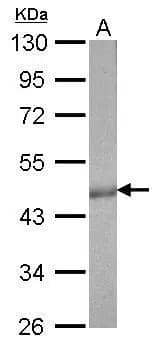

![Immunohistochemistry Insulin Antibody (182410) [Unconjugated]](https://images.novusbio.com/images/antibody/mab1417_human-bovine-mouse-insulin-mab-clone-182410-immunohistochemistry-308202115145.jpg)
![Immunocytochemistry Insulin Antibody (182410) [Unconjugated]](https://images.novusbio.com/images/antibody/Insulin_MAB1417_Immunocytochemistry_9376.jpg)
![Cell Culture BMP-7 [Unconjugated]](https://images.novusbio.com/images/354-bp_recombinant-human-bmp-7-protein-cell-culture-252023113257..jpg)
![Bioactivity BMP-7 [Unconjugated]](https://images.novusbio.com/images/protein/354-bp_recombinant-human-bmp-7-protein-bioactivity-7122020141940.jpg)