 MAB002, open histogram), followed by Phycoerythrin-conjugated Anti-Mouse IgG Secondary Antibody (Catalog # F0102B). View our protocol for Staining Membrane-associated Proteins." title="U937 human histiocytic lymphoma cell line was stained with Mouse Anti-Human Endoglin/CD105 Monoclonal Antibody (Catalog # MAB10971, filled histogram) or isotype control antibody (Catalog # MAB002, open histogram), followed by Phycoerythrin-conjugated Anti-Mouse IgG Secondary Antibody (Catalog # F0102B). View our protocol for Staining Membrane-associated Proteins." />
| Reactivity | HuSpecies Glossary |
| Applications | Flow, CyTOF-ready |
| Clone | 166707 |
| Clonality | Monoclonal |
| Host | Mouse |
| Conjugate | Unconjugated |
| Concentration | LYOPH |
| Immunogen | Mouse myeloma cell line NS0-derived recombinant human Endoglin/CD105 Glu26-Gly586 Accession # Q5T9B9 |
| Specificity | Detects human Endoglin/CD105. |
| Source | N/A |
| Isotype | IgG1 |
| Clonality | Monoclonal |
| Host | Mouse |
| Gene | ENG |
| Purity Statement | Protein A or G purified from hybridoma culture supernatant |
| Innovator's Reward | Test in a species/application not listed above to receive a full credit towards a future purchase. |
| Dilutions |
|
|
| Publications |
|
| Storage | Use a manual defrost freezer and avoid repeated freeze-thaw cycles.
|
| Buffer | Lyophilized from a 0.2 μm filtered solution in PBS with Trehalose. *Small pack size (SP) is supplied either lyophilized or as a 0.2 µm filtered solution in PBS. |
| Preservative | No Preservative |
| Concentration | LYOPH |
| Reconstitution Instructions | Reconstitute at 0.5 mg/mL in sterile PBS. |
Endoglin (CD105) is a 90 kDa type I transmembrane glycoprotein of the zona pellucida (ZP) family of proteins (1‑3). Endoglin and betaglycan/T beta RIII are type III receptors for TGF beta superfamily ligands, sharing 71% aa identity in the transmembrane (TM) and cytoplasmic domains. Endoglin is highly expressed on proliferating vascular endothelial cells, chondrocytes, and syncytiotrophoblasts of term placenta, with lower amounts on hematopoietic, mesenchymal and neural crest stem cells, activated monocytes, and lymphoid and myeloid leukemic cells (2‑5). Human Endoglin cDNA encodes 658 amino acids (aa) including a 25 aa signal sequence, a 561 aa extracellular domain (ECD) with an orphan domain and a two-part ZP domain, a TM domain and a 47 aa cytoplasmic domain (1‑3). An isoform with a 14 aa cytoplasmic domain (S-endoglin) can oppose effects of long (L) Endoglin (6, 7). The human Endoglin ECD shares 65-72% aa identity with mouse, rat, bovine, porcine and canine Endoglin. Endoglin homodimers interact with TGF-beta 1 and TGF-beta 3 (but not TGF-beta 2), but only after binding T beta RII (8). Similarly, they interact with activin-A and BMP-7 via activin type IIA or B receptors, and with BMP-2 via BMPR-1A/ALK-3 or BMPR-1B/ALK-6 (9). BMP-9, however, is reported to bind Endoglin directly (10). Endoglin modifies ligand-induced signaling in multiple ways. For example, expression of Endoglin can inhibit TGF-beta 1 signals but enhance BMP7 signals in the same myoblast cell line (11). In endothelial cells, Endoglin inhibits T beta RI/ALK5, but enhances ALK1-mediated activation (12). Deletion of mouse Endoglin causes lethal vascular and cardiovascular defects, and human Endoglin haploinsufficiency can a cause the vascular disorder, hereditary hemorrhagic telangiectasia type I (13, 14). These abnormalities confirm the essential function of Endoglin in differentiation of smooth muscle, angiogenesis, and neovascularization (2‑4, 12‑14). In preeclampsia of pregnancy, high levels of proteolytically generated soluble Endoglin and VEGF R1 (sFLT1), along with low placental growth factor (PlGF), are pathogenic due to antiangiogenic activity (15).


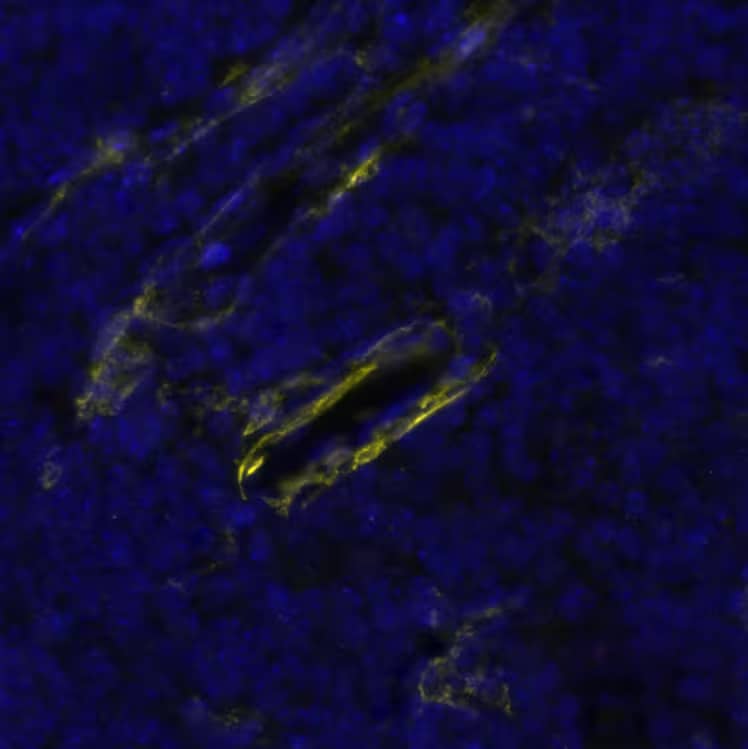

![Flow Cytometry CD31/PECAM-1 Antibody [Unconjugated]](https://images.novusbio.com/images/af3628_human-mouse-rat-cd31-pecam-1-affinity-purified-polyclonal-ab-flow-cytometry-30112023144624..jpg)
![Western Blot CD31/PECAM-1 Antibody [Unconjugated]](https://images.novusbio.com/images/af3628_human-mouse-rat-cd31-pecam-1-affinity-purified-polyclonal-ab-41202410325588.jpg)
![Immunohistochemistry CD31/PECAM-1 Antibody [Unconjugated]](https://images.novusbio.com/images/antibody/af3628_mouse-rat-cd31-pecam-1-affinity-purified-polyclonal-ab-immunohistochemistry-2572023161128.jpg)


![Immunoprecipitation CD44 Antibody (2C5) [Unconjugated] - s Pan Specific](https://images.novusbio.com/images/antibody/bba10_human-cd44s-pan-specific-mab-clone-2c5-immunoprecipitation-2852025105258..png)
![Knockout Validated CD44 Antibody (2C5) [Unconjugated] - s Pan Specific](https://images.novusbio.com/images/antibody/bba10_human-cd44s-pan-specific-mab-clone-2c5-knockout-validated-285202510529..png)
![Western Blot CD44 Antibody (2C5) [Unconjugated] - s Pan Specific](https://images.novusbio.com/images/antibody/CD44_BBA10_Western_Blot_21459.jpg)
![Western Blot ALCAM/CD166 Antibody [Unconjugated]](https://images.novusbio.com/images/antibody/ALCAM_AF1172_Western_Blot_19223.jpg)
![Flow Cytometry ALCAM/CD166 Antibody [Unconjugated]](https://images.novusbio.com/images/antibody/ALCAM_AF1172_Flow_Cytometry_14835.jpg)
![Flow Cytometry ALCAM/CD166 Antibody [Unconjugated]](https://images.novusbio.com/images/antibody/af1172_human-mouse-rat-canine-alcam-affinity-purified-polyclonal-ab-flow-cytometry-1512202583944.jpg)
![Endoglin/CD105 Antibody (166707) [Unconjugated]](/sites/all/modules/enterprise-tech/et_datasheets/images/novus_guarantee.png "Endoglin/CD105 Antibody (166707) [Unconjugated]")
Secondary Antibodies |
Isotype Controls |
The concentration calculator allows you to quickly calculate the volume, mass or concentration of your vial. Simply enter your mass, volume, or concentration values for your reagent and the calculator will determine the rest.


![Bioactivity CTLA-4 [Unconjugated]](https://images.novusbio.com/images/protein/CTLA4_7268CT_2293.jpg)
![Western Blot ALK-1 Antibody [Unconjugated]](https://images.novusbio.com/images/af370_human-alk-1-affinity-purified-polyclonal-ab-western-blot-121220258505310.jpg)
![Western Blot ALK-1 Antibody [Unconjugated]](https://images.novusbio.com/images/af370_human-alk-1-affinity-purified-polyclonal-ab-western-blot-1212202596164.jpg)
![Western Blot ALK-1 Antibody [Unconjugated]](https://images.novusbio.com/images/af370_human-alk-1-affinity-purified-polyclonal-ab-western-blot-121220258541121.jpg)
![N/A VEGF [HRP]](https://images.novusbio.com/images/elisa/VEGF_DVE00_ELISA_208.jpg)
![N/A VEGF [HRP]](https://images.novusbio.com/images/elisa/DATA_VEGF_DVE00_ELISA_871.jpg)
![N/A VEGF [HRP]](https://images.novusbio.com/images/elisa/DATA_VEGF_DVE00_ELISA_872.jpg)
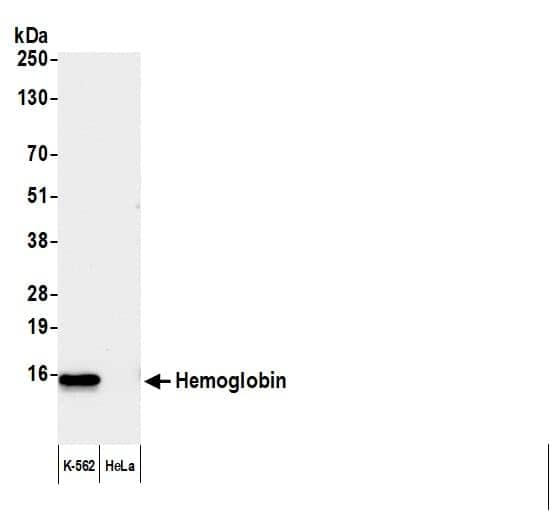
![Immunohistochemistry CD45 Antibody [Unconjugated]](https://images.novusbio.com/images/antibody/CD45_AF114_Immunohistochemistry_23525.jpg)
![Immunocytochemistry CD45 Antibody [Unconjugated]](https://images.novusbio.com/images/antibody/af114_mouse-cd45-affinity-purified-polyclonal-ab-immunocytochemistry-6122021145449.jpg)
![N/A PLGF [HRP]](https://images.novusbio.com/images/elisa/DATA_PlGF_DPG00_ELISA_788.jpg)
![N/A PLGF [HRP]](https://images.novusbio.com/images/elisa/DATA_PlGF_DPG00_ELISA_789.jpg)
![N/A PLGF [HRP]](https://images.novusbio.com/images/elisa/PlGF_DPG00_ELISA_158.jpg)


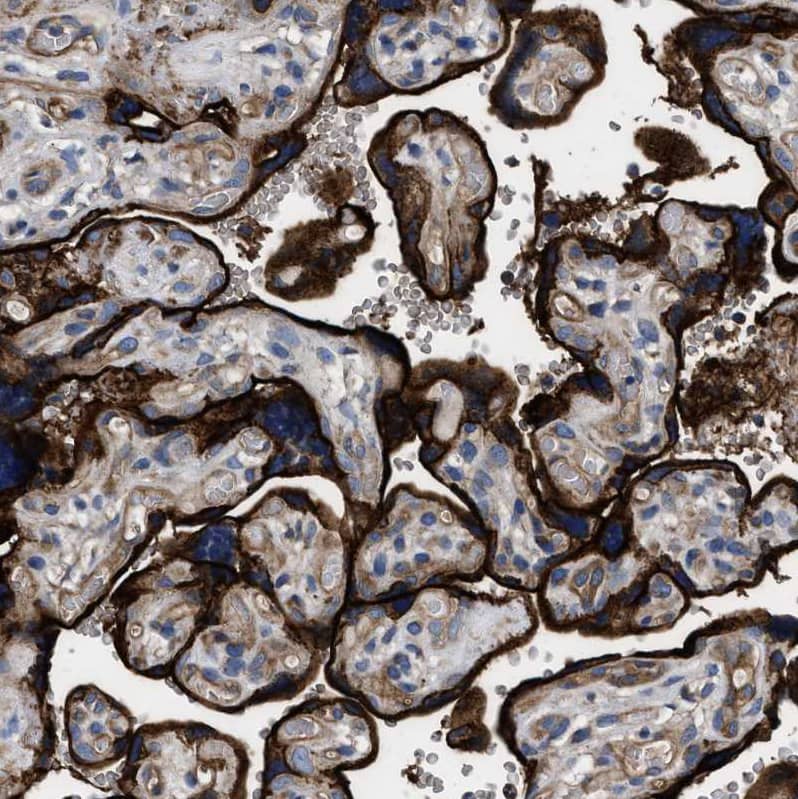
![Flow Cytometry Integrin beta 1/CD29 Antibody (P5D2) [Unconjugated]](https://images.novusbio.com/images/antibody/Integrin_beta_1_MAB17781_Flow_Cytometry_17077.jpg)
![Flow Cytometry Integrin beta 1/CD29 Antibody (P5D2) [Unconjugated]](https://images.novusbio.com/images/antibody/Integrin_beta_1_MAB17781_Flow_Cytometry_23861.jpg)

![Immunohistochemistry VEGFR1/Flt-1 Antibody [Unconjugated]](https://images.novusbio.com/images/antibody/VEGF_R1_AF321_Immunohistochemistry_6778.jpg)
![Western Blot VEGFR1/Flt-1 Antibody [Unconjugated]](https://images.novusbio.com/images/af321_human-vegf-r1-flt-1-affinity-purified-polyclonal-ab-81202555530.jpg)
![Western Blot VEGFR1/Flt-1 Antibody [Unconjugated]](https://images.novusbio.com/images/af321_human-vegf-r1-flt-1-affinity-purified-polyclonal-ab-822024950461.jpg)
![N/A SLPI [HRP]](https://images.novusbio.com/images/elisa/SLPI_DPI00_ELISA_160.jpg)
![N/A SLPI [HRP]](https://images.novusbio.com/images/elisa/DATA_SLPI_DPI00_ELISA_792.jpg)


