HAF007). A specific band was detected for Adiponectin/Acrp30 at approximately 32 kDa (as indicated). This experiment was conducted under reducing conditions and using Immunoblot Buffer Group 1." title="Western blot shows lysates of human adipose tissue. PVDF Membrane was probed with 2 µg/mL of Human Adiponectin/Acrp30 Monoclonal Antibody (Catalog # MAB10652) followed by HRP-conjugated Anti-Mouse IgG Secondary Antibody (Catalog # HAF007). A specific band was detected for Adiponectin/Acrp30 at approximately 32 kDa (as indicated). This experiment was conducted under reducing conditions and using Immunoblot Buffer Group 1." />
| Reactivity | HuSpecies Glossary |
| Applications | WB |
| Clone | 553517 |
| Clonality | Monoclonal |
| Host | Mouse |
| Conjugate | Unconjugated |
| Concentration | LYOPH |
| Immunogen | Mouse myeloma cell line NS0-derived recombinant human Adiponectin/Acrp30 Glu19-Asn244 Accession # Q15848 |
| Specificity | Detects human Adiponectin/Acrp30 in direct ELISAs. In direct ELISAs, no cross-reactivity with recombinant human (rh) Acrp30 (aa 101-244), recombinant mouse (rm) Acrp30 (aa 111-247), rmAcrp30 (HWM), recombinant rat Acrp30 (aa 1-244), rhC1qTNF1, rmCORS26/C1qTNF3, rhC1qTNF4, rhC1qTNF5, rhC1qTNF9, or rhC1qL2 is observed. |
| Source | N/A |
| Isotype | IgG2b |
| Clonality | Monoclonal |
| Host | Mouse |
| Gene | ADIPOQ |
| Purity Statement | Protein A or G purified from hybridoma culture supernatant |
| Innovator's Reward | Test in a species/application not listed above to receive a full credit towards a future purchase. |
| Dilutions |
|
|
| Publications |
|
| Storage | Use a manual defrost freezer and avoid repeated freeze-thaw cycles.
|
| Buffer | Lyophilized from a 0.2 μm filtered solution in PBS with Trehalose. *Small pack size (SP) is supplied either lyophilized or as a 0.2 µm filtered solution in PBS. |
| Preservative | No Preservative |
| Concentration | LYOPH |
| Reconstitution Instructions | Sterile PBS to a final concentration of 0.5 mg/mL. |




Secondary Antibodies |
Isotype Controls |
The concentration calculator allows you to quickly calculate the volume, mass or concentration of your vial. Simply enter your mass, volume, or concentration values for your reagent and the calculator will determine the rest.


![Immunohistochemistry Insulin Antibody (182410) [Unconjugated]](https://images.novusbio.com/images/antibody/mab1417_human-bovine-mouse-insulin-mab-clone-182410-immunohistochemistry-308202115145.jpg)
![Immunocytochemistry Insulin Antibody (182410) [Unconjugated]](https://images.novusbio.com/images/antibody/Insulin_MAB1417_Immunocytochemistry_9376.jpg)
![N/A Leptin/OB [HRP]](https://images.novusbio.com/images/elisa/Leptin_DLP00_ELISA_134.jpg)
![N/A Leptin/OB [HRP]](https://images.novusbio.com/images/elisa/DATA_Leptin_DLP00_ELISA_749.jpg)
![SDS-Page TNF-alpha [Unconjugated]](https://images.novusbio.com/images/protein/TNF-alpha_210-TA_256.jpg)
![Bioactivity TNF-alpha [Unconjugated]](https://images.novusbio.com/images/protein/TNFalpha_210TA_1658.jpg)
![SEC-MALS TNF-alpha [Unconjugated]](https://images.novusbio.com/images/210-ta_recombinant-human-tnf-alpha-protein-sec-mals-35202312244..jpg)
![N/A IL-6 [HRP]](https://images.novusbio.com/images/elisa/DATA_IL6_M6000_ELISA_936.jpg)
![N/A IL-6 [HRP]](https://images.novusbio.com/images/elisa/IL-6_M6000_ELISA_415.jpg)
![N/A IL-6 [HRP]](https://images.novusbio.com/images/m6000b_mouse-il-6-quantikine-elisa-kit-1752025024034.jpg)
![N/A C-Reactive Protein/CRP [Biotin]](https://images.novusbio.com/images/elisa/DATA_CReactive_Protein_DY1707_ELISA_1701.jpg)
![N/A Resistin [HRP]](https://images.novusbio.com/images/elisa/DATA_Resistin_DRSN00_ELISA_814.jpg)
![N/A Resistin [HRP]](https://images.novusbio.com/images/elisa/Resistin_DRSN00_ELISA_174.jpg)


![N/A CCL2/JE/MCP-1 [HRP]](https://images.novusbio.com/images/elisa/CCL2_DCP00_ELISA_67.jpg)
![N/A CCL2/JE/MCP-1 [HRP]](https://images.novusbio.com/images/elisa/DATA_CCL2_DCP00_ELISA_633.jpg)
![N/A CCL2/JE/MCP-1 [HRP]](https://images.novusbio.com/images/elisa/DATA_CCL2_DCP00_ELISA_634.jpg)
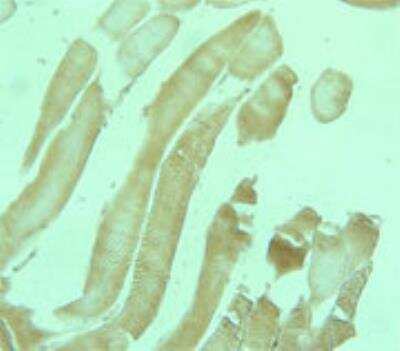
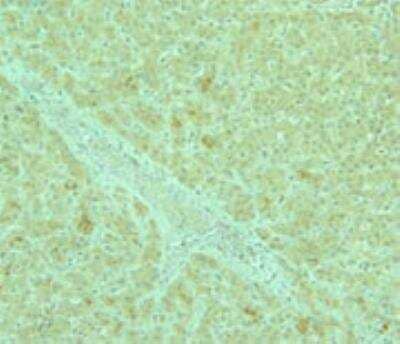
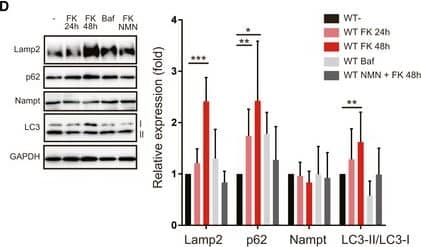


![Immunocytochemistry AMPK alpha 2 Antibody [Unconjugated]](https://images.novusbio.com/images/antibody/AMPK_alpha_2_AF2850_Immunocytochemistry__Immunofluorescence_19686.jpg)
![Western Blot AMPK alpha 2 Antibody [Unconjugated]](https://images.novusbio.com/images/antibody/AMPK_alpha_2_AF2850_Western_Blot_5219.jpg)
![Simple Western AMPK alpha 2 Antibody [Unconjugated]](https://images.novusbio.com/images/antibody/AMPK_alpha_2_AF2850_Simple_Western_16678.jpg)
![Immunohistochemistry AMPK beta 1 Antibody [Unconjugated]](https://images.novusbio.com/images/antibody/af2854_human-mouse-rat-ampk-beta-1-affinity-purified-polyclonal-ab-immunohistochemistry-255202312830..jpg)
![Western Blot AMPK beta 1 Antibody [Unconjugated]](https://images.novusbio.com/images/antibody/AMPK_beta_1_AF2854_Western_Blot_5220.jpg)
![Immunohistochemistry AMPK beta 1 Antibody [Unconjugated]](https://images.novusbio.com/images/af2854_human-mouse-rat-ampk-beta-1-affinity-purified-polyclonal-ab-immunohistochemistry-252023124938.jpg)
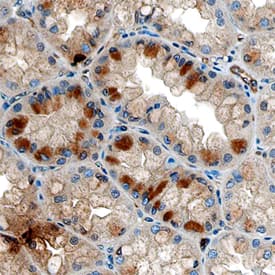
![Bioactivity IGF-I/IGF-1 [Unconjugated]](https://images.novusbio.com/images/protein/IGF-I_291-G1_41.jpg)
![Mass Spectrometry IGF-I/IGF-1 [Unconjugated]](https://images.novusbio.com/images/protein/IGF-I_291-G1_42.jpg)
![SEC-MALS IGF-I/IGF-1 [Unconjugated]](https://images.novusbio.com/images/291-g1_recombinant-human-igf-i-igf-1-protein-cf-sec-mals-224202691859.jpg)