| Immunogen | A peptide containing H-539 and N-541, two important amino acids involved in the binding of dsRNA to TLR3, was used as the immunogen. |
| Isotype | IgG |
| Clonality | Polyclonal |
| Host | Rabbit |
| Gene | TLR3 |
| Purity | Immunogen affinity purified |
| Innovator's Reward | Test in a species/application not listed above to receive a full credit towards a future purchase. |
| Dilutions |
|
|
| Agonist | ||
| Reviewed Applications |
|
|
| Publications |
|
| Storage | Store at 4C short term. Aliquot and store at -20C long term. Avoid freeze-thaw cycles. |
| Buffer | PBS |
| Preservative | 0.05% Sodium Azide |
| Concentration | 1.0 mg/ml |
| Purity | Immunogen affinity purified |


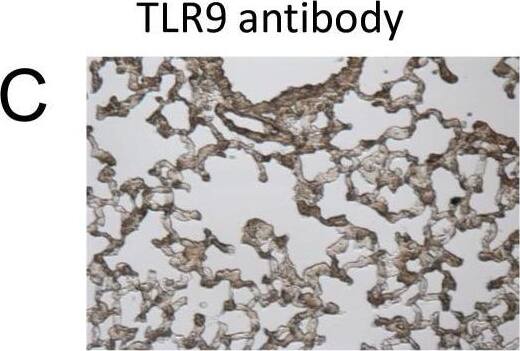
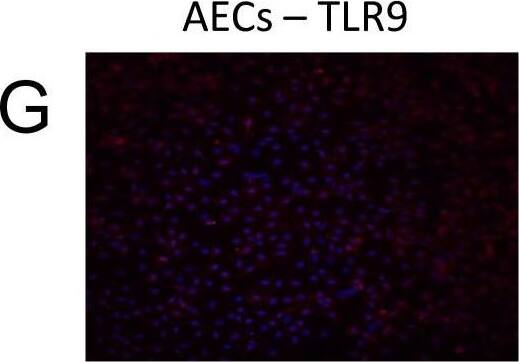
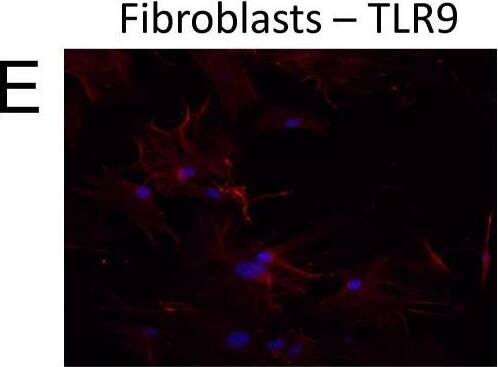





| Images | Ratings | Applications | Species | Date | Details | ||||||
|---|---|---|---|---|---|---|---|---|---|---|---|
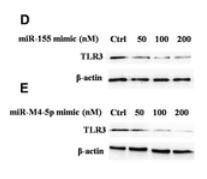
Enlarge |
reviewed by:
Verified Customer |
WB | Other | 07/22/2015 |
Summary
|
Secondary Antibodies |
Isotype Controls |
Research Areas for TLR3 Antibody (NBP2-24565)Find related products by research area.
|
|
Read full blog post. |
|
The role of STING/TMEM173 in gamma and encephalitis Herpes Simplex Virus (HSV) Stimulator of interferon genes (STING), also known as TMEM173, promotes the production of the interferon’s IFN-alpha and IFN-beta. STING possesses three functional domains: a cytoplasmic C-terminal tail, a central globular domain, and four N-... Read full blog post. |
|
TRIF/TICAM1 and mitochondrial dynamics in the innate immune response TRIF, also known as toll like receptor adaptor molecule 1 or TICAM1, is known for its role in invading foreign pathogens as part of our innate immune response. TRIF/TICAM1 is a TIR-domain adaptor protein (toll/interleukin-1 receptor) that interacts... Read full blog post. |
|
The role of TLR4 in breast cancer Toll like receptors (TLRs) are highly conserved proteins that are first known for their role in pathogen recognition and immune response activation. In order to elicit the necessary immune response in reaction to a foreign pathogen, TLRs trigger cy... Read full blog post. |
The concentration calculator allows you to quickly calculate the volume, mass or concentration of your vial. Simply enter your mass, volume, or concentration values for your reagent and the calculator will determine the rest.
| Gene Symbol | TLR3 |


![N/A IL-6 [HRP]](https://images.novusbio.com/images/elisa/DATA_IL6_M6000_ELISA_936.jpg)
![N/A IL-6 [HRP]](https://images.novusbio.com/images/elisa/IL-6_M6000_ELISA_415.jpg)
![N/A IL-6 [HRP]](https://images.novusbio.com/images/m6000b_mouse-il-6-quantikine-elisa-kit-1752025024034.jpg)
![SDS-Page TNF-alpha [Unconjugated]](https://images.novusbio.com/images/protein/TNF-alpha_210-TA_256.jpg)
![Bioactivity TNF-alpha [Unconjugated]](https://images.novusbio.com/images/protein/TNFalpha_210TA_1658.jpg)
![SEC-MALS TNF-alpha [Unconjugated]](https://images.novusbio.com/images/210-ta_recombinant-human-tnf-alpha-protein-sec-mals-35202312244..jpg)
![Binding Activity IFN-beta [Unconjugated]](https://images.novusbio.com/images/protein/IFNbeta_8499IF_1038.jpg)


![N/A IL-10 [Biotin]](https://images.novusbio.com/images/elisa/DATA_IL10_DY417_ELISA_2014.jpg)
