| Reactivity | Hu, Mu, RtSpecies Glossary |
| Applications | WB, ICC/IF |
| Clonality | Polyclonal |
| Host | Goat |
| Conjugate | Alexa Fluor 350 |
| Immunogen | E. coli-derived recombinant human CDC25B Glu391-Gln580 Accession # P30305 |
| Specificity | Detects human, mouse, and rat CDC25B. Four splice variants of CDC25B, with molecular weights of 61, 63, 65, and 67 kDa, are known. The immunogen selected for this antibody is common to all variants. Immunoreactivity consistent with at least 3 variants has |
| Isotype | IgG |
| Clonality | Polyclonal |
| Host | Goat |
| Purity Statement | Antigen Affinity-purified |
| Innovator's Reward | Test in a species/application not listed above to receive a full credit towards a future purchase. |
| Storage | Protect from light. Do not freeze. 12 months from date of receipt, 2 to 8 °C as supplied |
| Buffer | Supplied 0.2 mg/mL in a saline solution containing BSA and Sodium Azide. |
Cell Division Cycle 25B (Cdc25B) phosphatase removes inorganic phosphate groups covalently attached to tyrosine, serine and threonine residues in proteins (1). Breast cancer patients bearing tumors containing high levels of Cdc25B have been found to have a greater incidence of aggressive, high-grade tumors than those with low Cdc25B levels (2). In cells, the levels of Cdc25B activity are highest during the G2/M transition of the cell cycle, where it is suspected to be involved in “checkpoint” control of cell cycle progression (3). Overexpression of Cdc25B reduces the G2/M cell cycle block caused by ionizing radiation (4). Although activated by phosphorylation, Ser323 phosphorylation causes the enzyme to bind the protein 14-3-3, preventing substrate access to the catalytic site (5). One of the major substrates of Cdc25B is Cdc2, a kinase that is activated by dephosphorylation (6). The recombinant protein is truncated to remove the N‑terminal regulatory domains and is fully active.


Secondary Antibodies |
Isotype Controls |
The concentration calculator allows you to quickly calculate the volume, mass or concentration of your vial. Simply enter your mass, volume, or concentration values for your reagent and the calculator will determine the rest.
| Uniprot |
|


![Western Blot CDC25C Antibody (461908) [Unconjugated]](https://images.novusbio.com/images/antibody/CDC25C_MAB4459_Western_Blot_6183.jpg)
![Western Blot CDC25C Antibody (461908) [Unconjugated]](https://images.novusbio.com/images/mab4459_human-mouse-rat-cdc25c-mab-clone-461908-western-blot-12122025813161.jpg)
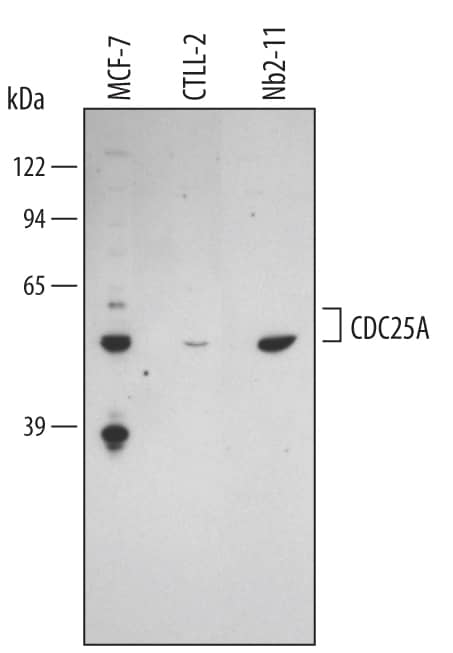


![Immunohistochemistry Cyclin B1 Antibody [Unconjugated]](https://images.novusbio.com/images/antibody/Cyclin_B1_AF6000_Immunohistochemistry_11792.jpg)
![Western Blot Cyclin B1 Antibody [Unconjugated]](https://images.novusbio.com/images/af6000_human-mouse-cyclin-b1-affinity-purified-polyclonal-ab-western-blot-12122025961622.jpg)
![Western Blot Cyclin B1 Antibody [Unconjugated]](https://images.novusbio.com/images/antibody/Cyclin_B1_AF6000_Western_Blot_9526.jpg)
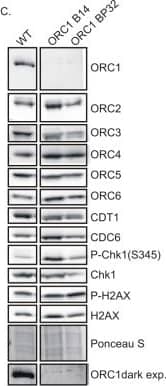


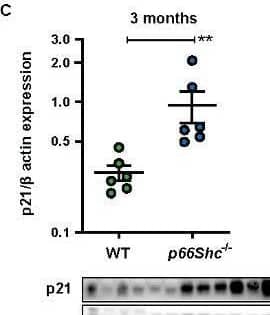
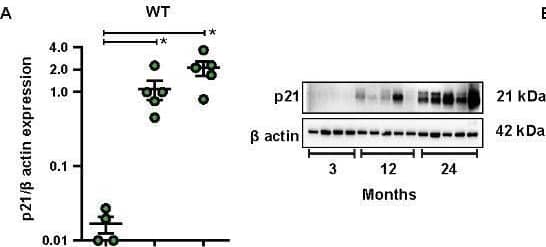


![Western Blot PTP1B/PTPN1 Antibody [Unconjugated]](https://images.novusbio.com/images/antibody/PTP1B_AF3954_Western_Blot_5368.jpg)
![Simple Western PTP1B/PTPN1 Antibody [Unconjugated]](https://images.novusbio.com/images/antibody/PTP1B_AF3954_Simple_Western_16943.jpg)
![Western Blot p27/Kip1 [p Thr157] Antibody](https://images.novusbio.com/images/antibody/p27_AF1555_Western_Blot_5119.jpg)


