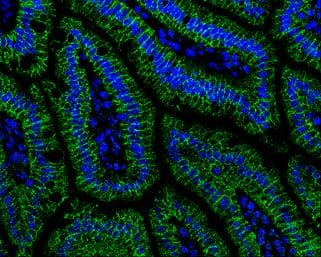
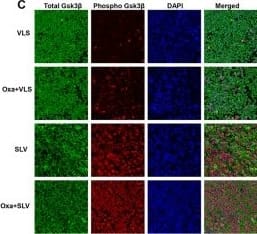
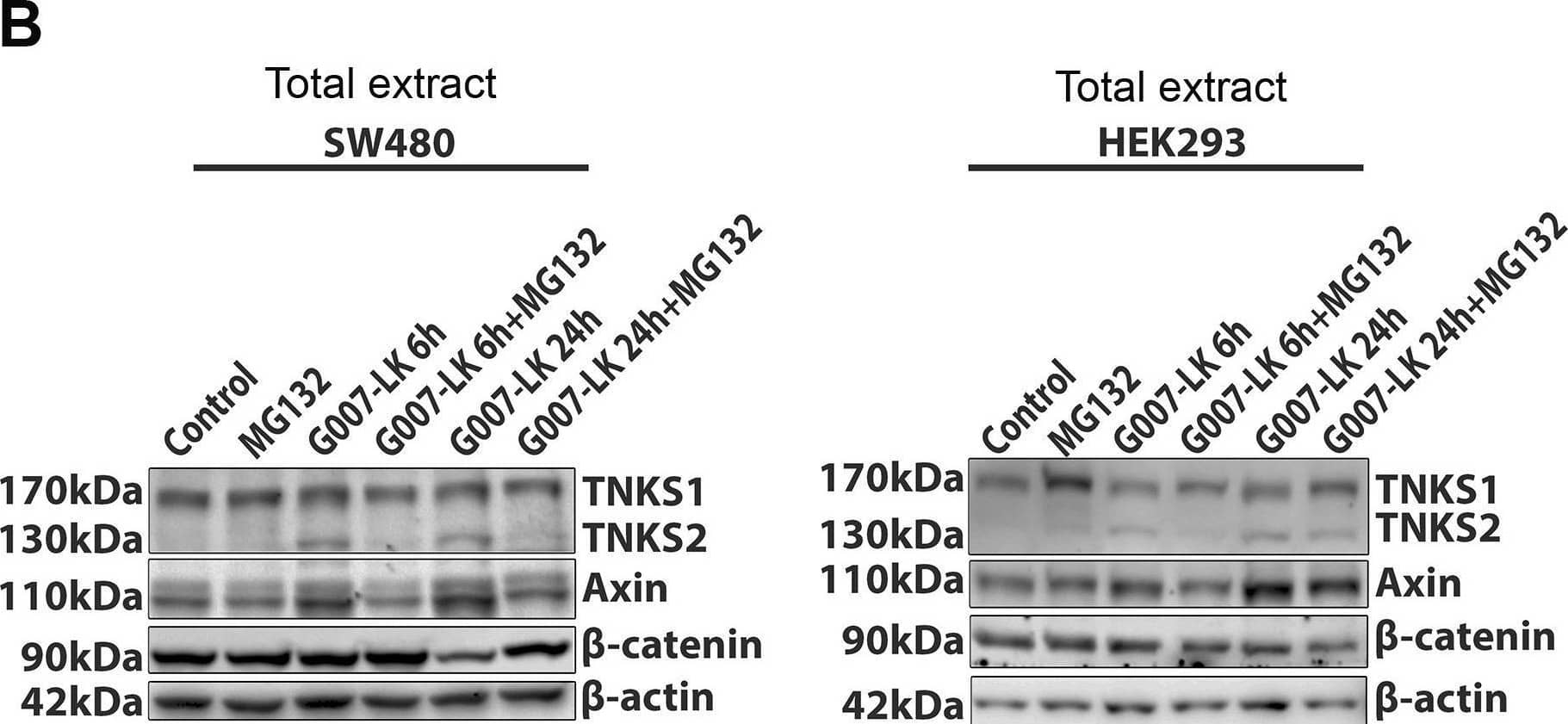
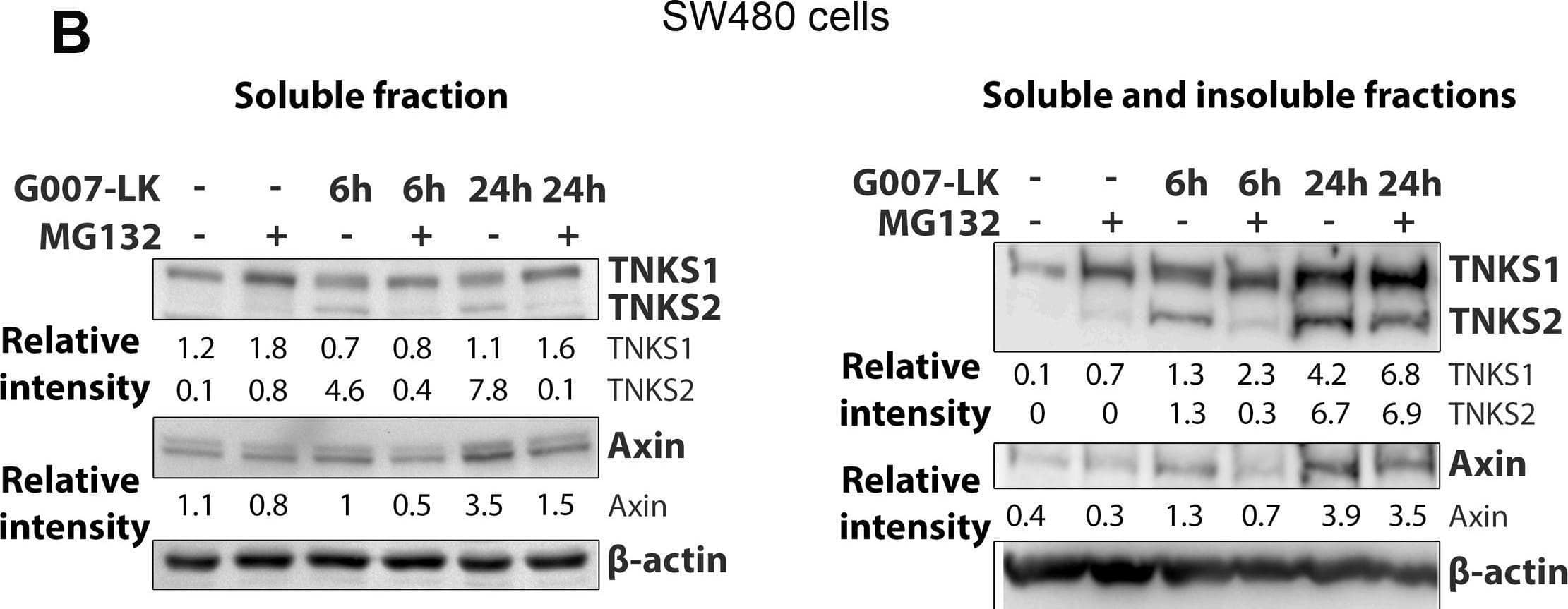
beta-Catenin [p Ser33] Antibody (BC-76)

Images


Product Details

Summary
Product Discontinued
View other related beta-Catenin Primary Antibodies

Order Details


    • Catalog Number
      NB600-869
    • Availability
      Product Discontinued

    Can't find what you are looking for? Use our Antibody Concierge Service & we will help you locate your antibody!

    Or feel free to contact us for alternative products.

beta-Catenin [p Ser33] Antibody (BC-76) Summary

Immunogen
Synthetic peptide, corresponding to amino acids 32-45 of Human beta Catenin, phosphorylated at Ser33.
Modification
p Ser33
Localization
Cytoplasmic when it is unstabilized (high level of phosphorylation) or bound to CDH1. Translocates to the nucleus when it is stabilized (low level of phosphorylation).
Marker
Epithelial Cell Marker, Adherens Junction Marker
Specificity
Monoclonal Anti-Phospho-beta-Catenin (pSer33) recognizes human beta-Catenin phosphorylated at Ser33.
Isotype
IgM
Clonality
Monoclonal
Host
Mouse
Gene
CTNNB1
Purity
IgM purified
Innovator's Reward
Test in a species/application not listed above to receive a full credit towards a future purchase.

Applications/Dilutions

Dilutions
  • ELISA 5 ug/ml
  • Western Blot 5 ug/ml
Application Notes
WB:Detects a band of approximately 94 kDa. Not tested in other applications. Optimal dilutions should be determined by the end user.
Control
293 Whole Cell Lysate
beta-Catenin Overexpression Lysate

Reactivity Notes

Cross-reacts with Human. Not yet tested in other species.

Packaging, Storage & Formulations

Storage
Store at 4C short term. Aliquot and store at -20C long term. Avoid freeze-thaw cycles.
Buffer
10mM PBS (pH 7.4) and 1.0% BSA
Preservative
0.09% Sodium Azide
Concentration
1.0 mg/ml
Purity
IgM purified

Alternate Names for beta-Catenin [p Ser33] Antibody (BC-76)

  • bCatenin
  • beta 1 (88kD)
  • beta-Catenin
  • catenin (cadherin-associated protein), beta 1, 88kDa
  • catenin beta-1
  • CTNNB
  • CTNNB1
  • DKFZp686D02253
  • FLJ25606
  • FLJ37923

Background

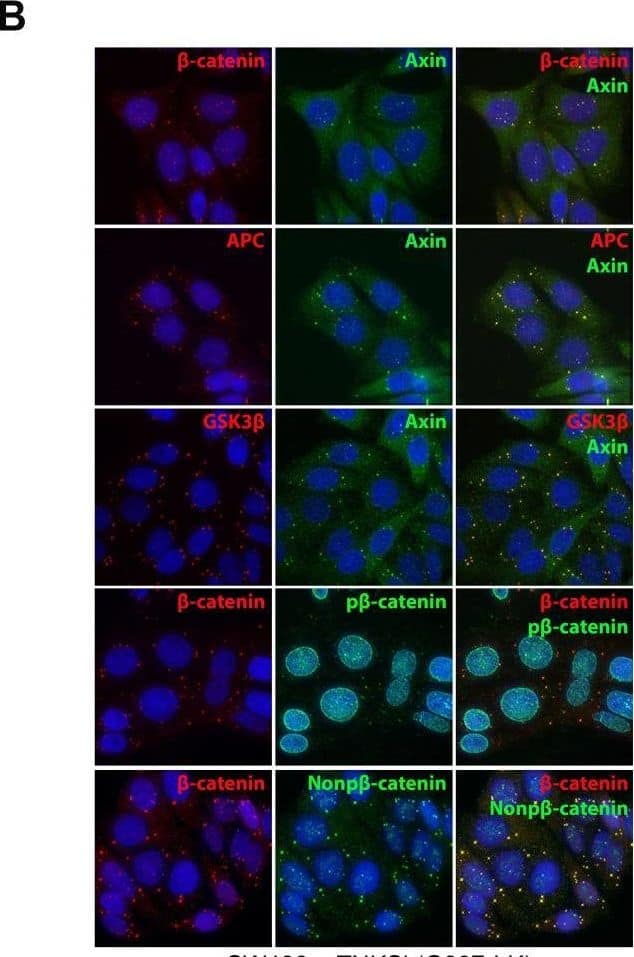
Cell adhesion is important during development, as well as in sorting of cells, induction of cellular morphogenesis and maintenance of tissue integrity.1-3 Ca2+-dependent adhesion of cells involves a multifunctional family of transmembrane glycoproteins termed cadherins that regulate homophilic interactions in cells. These interactions initiate a cascade of events that leads to the structural and functional reorganizations of cells. Cadherins function is mediated by both specific binding of extracellular domains at the cell surface and interaction with components of the cytoplasm. These components include alpha-, beta- and gamma-catenin (plakoglobin) that bind to the cytoplasmic domain of cadherins.4 Beta-catenin (92-97 kDa) shares 70% sequence identity to a protein encoded by Drosophila armadillo, a segment polarity gene.5-8 Beta-catenin binds to a diverse set of proteins including the presenilins, epidermal growth factor receptor (EGF-R), the actin-binding protein fascin and the transcription factor Teashirt.9-10 Beta-catenin is composed of a series of proteinprotein interaction motifs that allow it to function as a scaffold. The N-terminus domain, containing the binding site for alpha-catenin and the phosphorylation sites, is recognized by GSK3Beta. The C-terminus contains the transcriptional activation domain and the binding site for Teashirt.9-10 Beta-catenin translocates into the nucleus, where it complexes with transcription factors of the LEF-1 family and thus regulates the expression of specific genes. By playing such a dual function, i.e. a structural role in cell junctions and a regulatory role in the nucleus, beta-catenin can transduce changes in cell adhesion and junction formation to control transmembrane signaling and gene expression.1, 11 Beta-catenin-mediated signaling depends on its accumulation and subsequent translocation into the nucleus. The level of beta-catenin is regulated by its association with the tumor suppressor molecule Adenomatous Polyposis Coli (APC), axin, and GSK3Beta. In this complex, GSK3Beta phosphorylates beta-catenin at multiple serine or threonine residues present in the amino terminal region of beta-catenin,1 thereby marking beta-catenin for degradation by the proteasome pathway. The significance of beta-catenin phosphorylation for its stability is most clearly manifested in several types of human cancers. In cells expressing mutant APC, common in human colon cancer and melanoma, beta-catenin accumulates due to the failure of its degradation.1 Moreover, a single amino acid mutation at one of the four critical serine or threonine residues (Ser33, -37 and -45 and Thr-41) at the amino terminal region in the consensus GSK3Beta phosphorylation site, results in deregulated accumulation of beta-catenin and thereby increased signaling through the TCF/beta-catenin transcriptional complex, which contributes to tumorigenesis. Immunofluorescence studies indicate that phosphorylated beta-catenin accumulates in the nuclei of Madin-Darby Canine Kidney (MDCK) and BCAP (human breast cancer) cells and is transiently associated with adherens junctions.12 It was recently shown that phosphorylation of Ser45 and Thr41 precedes the phosphorylation of Ser33 and Ser37. Phosphorylation is mediated by casein kinase IAlph (CKIAlpha), an axin associated kinase.13 Monoclonal antibodies reacting specifically with beta-catenin phosphorylated at Ser33 are essential tools for defining the role of the phosphorylated form in the distributions, interactions, and regulation/deregulation of beta-catenin in signal transduction.

Limitations

This product is for research use only and is not approved for use in humans or in clinical diagnosis. Primary Antibodies are guaranteed for 1 year from date of receipt.

Customers Who Viewed This Item Also Viewed...

AF1329
Species: Hu, Mu, Rt
Applications: ChIP, CyTOF-ready, ICC, IHC, ICFlow, Simple Western, WB
NB100-91662
Species: Hu, Mu, Rt
Applications: Flow, ICC/IF, IHC,  IHC-P, Simple Western, WB
AF748
Species: Hu, Mu
Applications: CyTOF-ready, Dual ISH-IHC, Flow, ICC, IHC, Simple Western, WB
NBP2-15723
Species: Hu, Mu, Rt
Applications: ICC/IF, IHC,  IHC-P, IP, WB
H00006934-M06
Species: Hu, Mu
Applications: ELISA, ICC/IF, IHC,  IHC-P, WB
AF4885
Species: Mu
Applications: IP, WB
NBP1-89679
Species: Hu, Mu, Rt
Applications: ChIP-EXO-SEQ, ICC/IF, IHC, IHC-Fr,  IHC-P, WB
NBP1-86960
Species: Hu
Applications: ChIP-EXO-SEQ, ICC/IF, IHC,  IHC-P, WB
AF3287
Species: Hu, Mu, Rt
Applications: WB
NB200-103
Species: Hu, Mu, Rt, Xp(-), Ye
Applications: CyTOF-ready, ELISA, Flow-IC, Flow, ICC/IF, IHC, IHC-Fr,  IHC-P, IP, WB
NBP2-32840
Species: Hu, Pm, Mu, Rt
Applications: Flow, ICC/IF, IHC,  IHC-P, WB
NB600-302
Species: Bv, Dr, Hu, Mu
Applications: ChIP, ELISA, Flow-IC, Flow, IB, ICC/IF, IHC, IHC-Fr,  IHC-P, IP, PLA, S-ELISA, Simple Western, WB
H00006925-M03
Species: Hu, Pm, Mu, Rb, Rt
Applications: ELISA, ICC/IF, IHC,  IHC-P, IP, WB
AF887
Species: Hu, Mu, Rt
Applications: CyTOF-ready, IHC, ICFlow, Simple Western, WB
NBP1-47470
Species: Hu, Mu, Pm, Rt
Applications: ELISA, Flow, ICC/IF, IHC,  IHC-P, Simple Western, WB
NBP2-54527
Species: Bv, Ca, Ch, Fe, Hu, Mu, Rt
Applications: CyTOF-ready, Flow, ICC/IF,  IHC-P, WB
NB100-74510
Species: Hu, Mu, Pm, Rt
Applications: ELISA, ICC/IF, IHC,  IHC-P, IP, WB
NB600-869
Species: Hu
Applications: WB, ELISA

Publications for beta-Catenin Antibody (NB600-869) (0)

There are no publications for beta-Catenin Antibody (NB600-869).
By submitting your publication information earn gift cards and discounts for future purchases.

Reviews for beta-Catenin Antibody (NB600-869) (0)

There are no reviews for beta-Catenin Antibody (NB600-869). By submitting a review you will receive an Amazon e-Gift Card or Novus Product Discount.
  • Review with no image -- $10/€7/£6/$10 CAD/¥70 Yuan/¥1110 Yen
  • Review with an image -- $25/€18/£15/$25 CAD/¥150 Yuan/¥2500 Yen

Product General Protocols

Find general support by application which include: protocols, troubleshooting, illustrated assays, videos and webinars.

Video Protocols

WB Video Protocol

FAQs for beta-Catenin Antibody (NB600-869) (0)

There are no specific FAQs related to this product. Read our general customer & technical service FAQs.

Control Lysate(s)

Secondary Antibodies


Isotype Controls

Additional beta-Catenin Products

Research Areas for beta-Catenin Antibody (NB600-869)

Find related products by research area.

Blogs on beta-Catenin.


  Read full blog post.

Stemness is responsible for onset and metastasis of colorectal cancer
By Jamshed Arslan, Pharm. D., PhD. Colorectal cancer stem cells are a rare subpopulation of colorectal cancer cells that can self-renew and initiate and sustain tumor growth when transplanted into an animal host.1,2 C...  Read full blog post.

The role of Wnts in neuroinflammation
By Michalina Hanzel, PhDThe multifaceted roles of the Wnt family of glycoproteins have been extensively characterized throughout embryonic development and adult homeostasis. The highly conserved, cell- and tissue- s...  Read full blog post.

Stemness for Surviving Hypoxia: TGF-beta/Smad Signaling in Multiple Myeloma
By Jamshed Arslan Pharm.D. Multiple myeloma (MM) is a cancer of antibody-producing plasma cells. The bone marrow (BM) of MM patients is hypoxic, and MM cells overexpress many cancerous genes that are regulated by hy...  Read full blog post.

Epithelial-Mesenchymal Transition (EMT) Markers
Epithelial-Mesenchymal Transition (EMT) is the trans-differentiation of stationary epithelial cells into motile mesenchymal cells. During EMT, epithelial cells lose their junctions and apical-basal polarity, reorganize their cytoskeleton, undergo a...  Read full blog post.

CD63: is it pro-metastatic or anti-metastatic?
CD63 is a type II membrane protein belonging to tetraspanin superfamily and it play key roles in the activation of several cellular signaling cascades along with acting as TIMP1 receptor. It is expressed by activated platelets, monocytes,...  Read full blog post.

Notch1 - A multifunctional transmembrane receptor
Notch1 is a member of the Notch family of Type 1 single-pass transmembrane proteins that share an extracellular domain of multiple epidermal growth factor-like (EGF) repeats. Notch family members play key roles in a variety of developmental process...  Read full blog post.

Contact Information

Product PDFs

Calculators

Concentration Calculator

The concentration calculator allows you to quickly calculate the volume, mass or concentration of your vial. Simply enter your mass, volume, or concentration values for your reagent and the calculator will determine the rest.

=
÷

Review this Product

Be the first to review our beta-Catenin [p Ser33] Antibody (BC-76) and receive a gift card or discount.

Bioinformatics

Gene Symbol CTNNB1
Entrez