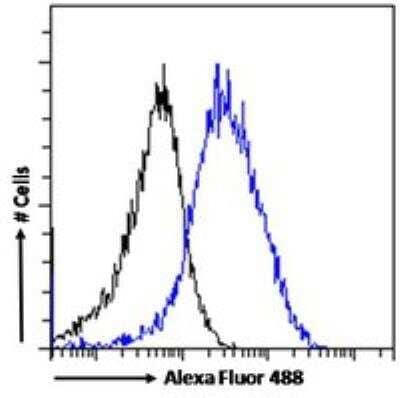
| Reactivity | MuSpecies Glossary |
| Applications | ICC/IF |
| Clone | 757712 |
| Clonality | Monoclonal |
| Host | Rat |
| Conjugate | Alexa Fluor 488 |
| Immunogen | E. coli-derived recombinant mouse TRAM/TICAM2 Met1-Ala232 Accession # Q8BJQ4 |
| Specificity | Detects mouse TRAM/TICAM2 in direct ELISAs. In direct ELISAs, no cross-reactivity with recombinant human (rh) TRAM or rhTRIF is observed. |
| Isotype | IgG2b |
| Clonality | Monoclonal |
| Host | Rat |
| Purity Statement | Protein A or G purified |
| Innovator's Reward | Test in a species/application not listed above to receive a full credit towards a future purchase. |
| Storage | Protect from light. Do not freeze. 12 months from date of receipt, 2 to 8 °C as supplied |
| Buffer | Supplied 0.2 mg/mL in a saline solution containing BSA and Sodium Azide. |
The innate and adaptive immune responses depend on systems that link cell surface surveillance receptor signals to cytoplasmic proteins such as kinases, adaptors, and transcription factors. Toll-like receptors (TLR) recognize different pathogen associated molecular patterns (PAMPs), and initiate a signaling cascades mediated by a Toll/interleukin-1 receptor (TIR) domain-containing adaptor proteins such as MyD88, TIRAP/MAL, and TRIF. Mouse TRIF-related adaptor molecule (TRAM), is a 232 amino acid, 26 kDa (predicted), ubiquitously expressed member of the TIR domain-containing adaptor family. TRAM, also known as TIR domain-containing adapter protein 2 (TICAM2) and TIR domain-containing protein (TIRP), contains a central Toll/interleukin-1 receptor (TIR) domain that is most similar to that of TRIF. TRAM plays an essential role in the MyD88-independent signaling of TLR4 by binding members of the IRAK family, ultimately leading to the activation of NF kappa B. Mouse TRAM shares 75% and 77% amino acid sequence identity with human and rat TRAM, respectively.






Secondary Antibodies |
Isotype Controls |
The concentration calculator allows you to quickly calculate the volume, mass or concentration of your vial. Simply enter your mass, volume, or concentration values for your reagent and the calculator will determine the rest.
| Uniprot |
|


![SDS-Page TNF-alpha [Unconjugated]](https://images.novusbio.com/images/protein/TNF-alpha_210-TA_256.jpg)
![Bioactivity TNF-alpha [Unconjugated]](https://images.novusbio.com/images/protein/TNFalpha_210TA_1658.jpg)
![SEC-MALS TNF-alpha [Unconjugated]](https://images.novusbio.com/images/210-ta_recombinant-human-tnf-alpha-protein-sec-mals-35202312244..jpg)
![N/A IL-6 [HRP]](https://images.novusbio.com/images/elisa/DATA_IL6_M6000_ELISA_936.jpg)
![N/A IL-6 [HRP]](https://images.novusbio.com/images/elisa/IL-6_M6000_ELISA_415.jpg)
![N/A IL-6 [HRP]](https://images.novusbio.com/images/m6000b_mouse-il-6-quantikine-elisa-kit-1752025024034.jpg)
![Binding Activity IFN-beta [Unconjugated]](https://images.novusbio.com/images/protein/IFNbeta_8499IF_1038.jpg)
![Bioactivity IL-1 beta/IL-1F2 [Unconjugated]](https://images.novusbio.com/images/protein/IL-1_beta_201-LB_306.jpg)
![SDS-Page IL-1 beta/IL-1F2 [Unconjugated]](https://images.novusbio.com/images/protein/IL-1_beta_201-LB_304.jpg)
![SEC-MALS IL-1 beta/IL-1F2 [Unconjugated]](https://images.novusbio.com/images/201-lb_recombinant-human-il-1-beta-il-1f2-protein-sec-mals-123202491556.jpg)