VC004) or the HRP-conjugated Anti-Goat IgG Secondary Antibody (Catalog # HAF109). Before incubation with the primary antibody, tissue was subjected to heat-induced epitope retrieval using VisUCyte Antigen Retrieval Reagent-Basic (Catalog # VCTS021). Tissue was stained using DAB (brown) and counterstained with hematoxylin (blue). Specific staining was localized to the cytoplasm and nucleus. View our protocol for IHC Staining with VisUCyte HRP Polymer Detection Reagents." title="Galectin‑7 was detected in immersion fixed paraffin-embedded sections of mouse skin using Goat Anti-Mouse Galectin‑7 Antigen Affinity-purified Polyclonal Antibody (Catalog # AF1304) at 1 µg/ml for 1 hour at room temperature followed by incubation with the Anti-Goat IgG VisUCyte™ HRP Polymer Antibody (Catalog # VC004) or the HRP-conjugated Anti-Goat IgG Secondary Antibody (Catalog # HAF109). Before incubation with the primary antibody, tissue was subjected to heat-induced epitope retrieval using VisUCyte Antigen Retrieval Reagent-Basic (Catalog # VCTS021). Tissue was stained using DAB (brown) and counterstained with hematoxylin (blue). Specific staining was localized to the cytoplasm and nucleus. View our protocol for IHC Staining with VisUCyte HRP Polymer Detection Reagents." />
| Reactivity | MuSpecies Glossary |
| Applications | WB, IHC |
| Clonality | Polyclonal |
| Host | Goat |
| Conjugate | Unconjugated |
| Concentration | LYOPH |
| Immunogen | E. coli-derived recombinant mouse Galectin‑7 Ser2-Phe136 Accession # AAK29385 |
| Specificity | Detects mouse Galectin-7 in direct ELISAs and Western blots. In direct ELISAs, approximately 40% cross‑reactivity with recombinant human Galectin-7 is observed and less than 1% cross-reactivity with recombinant mouse (rm) Galectin-1, rmGalectin-3, recombinant human (rh) Galectin-8, and rhGalectin-2 is observed. |
| Source | N/A |
| Isotype | IgG |
| Clonality | Polyclonal |
| Host | Goat |
| Gene | LGALS7 |
| Purity Statement | Antigen Affinity-purified |
| Innovator's Reward | Test in a species/application not listed above to receive a full credit towards a future purchase. |
| Dilutions |
|
|
| Publications |
|
| Storage | Use a manual defrost freezer and avoid repeated freeze-thaw cycles.
|
| Buffer | Lyophilized from a 0.2 μm filtered solution in PBS with Trehalose. See Certificate of Analysis for details. *Small pack size (-SP) is supplied either lyophilized or as a 0.2 µm filtered solution in PBS. |
| Preservative | No Preservative |
| Concentration | LYOPH |
| Reconstitution Instructions | Reconstitute at 0.2 mg/mL in sterile PBS. For liquid material, refer to CoA for concentration. |
The galectins constitute a large family of carbohydrate-binding proteins with specificity for N-acetyl-lactosamine-containing glycoproteins. At least 14 mammalian galectins, which share structural similarities in their carbohydrate recognition domains (CRD), have been identified. The galectins have been classified into the prototype galectins (-1, -2, -5, -7, -10, -11, -13, -14), which contain one CRD and exist either as a monomer or a noncovalent homodimer; the chimera galectins (Galectin-3) containing one CRD linked to a nonlectin domain; and the tandem-repeat galectins (-4, -6, -8, -9, -12) consisting of two CRDs joined by a linker peptide. Galectins lack a classical signal peptide and can be localized to the cytosolic compartments where they have intracellular functions. However, via one or more as yet unidentified non-classical secretory pathways, galectins can also be secreted to function extracellularly. Individual members of the galectin family have different tissue distribution profiles and exhibit subtle differences in their carbohydrate-binding specificities. Each family member may preferentially bind to a unique subset of cell-surface glycoproteins (1‑4).
Mouse Galectin-7 is a prototype monomeric galectin. It is expressed in stratified epithelia and is significantly down-regulated in squamous cell carcinomas. Galectin-7 is a pro-apoptotic protein that is highly induced by the tumor suppressor protein p53. It functions intracellularly upstream of JNK activation to enhance cytochrome c release during apoptosis (5). Galectin-7 may also be involved in cell-cell and cell-matrix interactions and exogenous galectin has been found to accelerate the re‑epithelialization of wounds (6).
![Western Blot Galectin-1 Antibody [Unconjugated]](https://images.novusbio.com/images/antibody/Galectin-1_AF1152_Western_Blot_12374.jpg)
![Simple Western Galectin-1 Antibody [Unconjugated]](https://images.novusbio.com/images/antibody/af1152_human-galectin-1-affinity-purified-polyclonal-ab-simple-western-236202593440..jpg)
![Simple Western Galectin-1 Antibody [Unconjugated]](https://images.novusbio.com/images/antibody/Galectin1_AF1152_Simple_Western_16673.jpg)


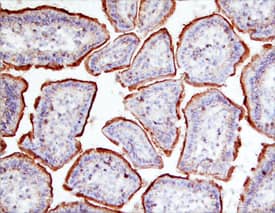
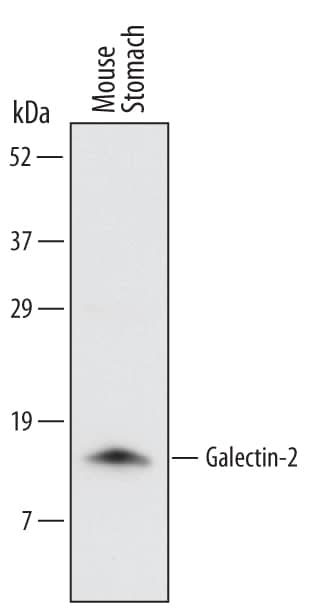


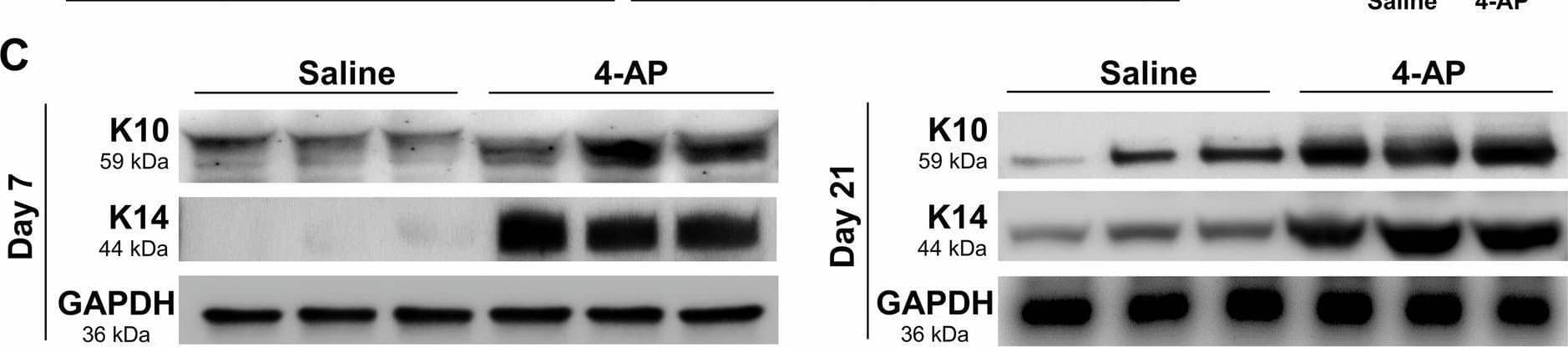


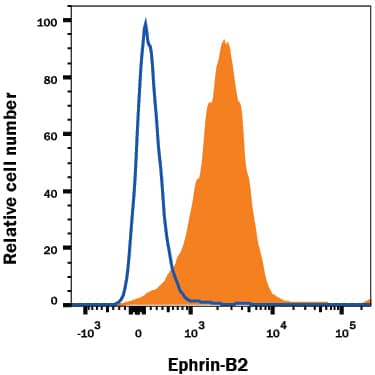
![Galectin-7 Antibody [Unconjugated]](/sites/all/modules/enterprise-tech/et_datasheets/images/novus_guarantee.png "Galectin-7 Antibody [Unconjugated]")
Secondary Antibodies |
Isotype Controls |
The concentration calculator allows you to quickly calculate the volume, mass or concentration of your vial. Simply enter your mass, volume, or concentration values for your reagent and the calculator will determine the rest.


 1304-GA) was serially diluted and captured by Rat Anti-Mouse Galectin‑7 Monoclonal Antibody (Catalog #


![Western Blot Galectin-3 Antibody [Unconjugated]](https://images.novusbio.com/images/antibody/Galectin3_AF1197_Western_Blot_21471.jpg)
![Simple Western Galectin-3 Antibody [Unconjugated]](https://images.novusbio.com/images/antibody/Galectin3_AF1197_Simple_Western_18971.jpg)
![Western Blot Galectin-3 Antibody [Unconjugated]](https://images.novusbio.com/images/antibody/Galectin3_AF1197_Western_Blot_18989.jpg)
![Immunohistochemistry Galectin-4 Antibody [Unconjugated]](https://images.novusbio.com/images/antibody/af2128_mouse-galectin-4-affinity-purified-polyclonal-ab-immunohistochemistry-29122022154254.jpg)


![N/A MMP-9 [HRP]](https://images.novusbio.com/images/elisa/DATA_MMP9_DMP900_ELISA_770.jpg)
![N/A MMP-9 [HRP]](https://images.novusbio.com/images/elisa/MMP-9_DMP900_ELISA_148.jpg)


![Immunohistochemistry Caspase-3 Antibody [Unconjugated] - Active](https://images.novusbio.com/images/af835_human-mouse-active-caspase-3-affinity-purified-pab-41202410331943.jpg)
![Western Blot Caspase-3 Antibody [Unconjugated] - Active](https://images.novusbio.com/images/af835_human-mouse-active-caspase-3-affinity-purified-pab-812025554170.jpg)
![Western Blot Caspase-3 Antibody [Unconjugated] - Active](https://images.novusbio.com/images/af835_human-mouse-active-caspase-3-affinity-purified-pab-8120255534731.jpg)
![Western Blot Galectin-8 Antibody [Unconjugated]](https://images.novusbio.com/images/antibody/Galectin8_AF1305_Western_Blot_16880.jpg)
![Immunohistochemistry Galectin-8 Antibody [Unconjugated]](https://images.novusbio.com/images/antibody/Galectin8_AF1305_Immunohistochemistry_19141.jpg)
![Simple Western Galectin-8 Antibody [Unconjugated]](https://images.novusbio.com/images/antibody/Galectin8_AF1305_Simple_Western_18662.jpg)