 IC006P, open histogram). View our protocol for Staining Membrane-associated Proteins." title="RAW 264.7 mouse monocyte/macrophage cell line was stained with Rat Anti-Mouse TIM-3 PE-conjugated Monoclonal Antibody (Catalog # FAB1529P, filled histogram) or isotype control antibody (Catalog # IC006P, open histogram). View our protocol for Staining Membrane-associated Proteins." />
| Reactivity | MuSpecies Glossary |
| Applications | Flow |
| Clone | 215008 |
| Clonality | Monoclonal |
| Host | Rat |
| Conjugate | Phycoerythrin |
| Immunogen | Mouse myeloma cell line NS0-derived recombinant mouse TIM‑3 Arg20-Ala193 Accession # Q8VIM0 |
| Specificity | Detects mouse TIM-3 in direct ELISAs and Western blots. |
| Source | N/A |
| Isotype | IgG2a |
| Clonality | Monoclonal |
| Host | Rat |
| Gene | HAVCR2 |
| Purity Statement | Protein A or G purified from hybridoma culture supernatant |
| Innovator's Reward | Test in a species/application not listed above to receive a full credit towards a future purchase. |
| Dilutions |
|
|
| Publications |
|
| Storage | Protect from light. Do not freeze.
|
| Buffer | Supplied in a saline solution containing BSA and Sodium Azide. |
| Preservative | Sodium Azide |
TIM-3 (T cell immunoglobulin and mucin domain-3) is a 60 kDa member of the TIM family of immune regulating molecules. TIMs are type I transmembrane glycoproteins with one Ig-like V-type domain and a Ser/Thr-rich mucin stalk (1 - 3). There are three TIM genes in human and eight in mouse. Mature mouse TIM-3 consists of a 174 aa extracellular domain (ECD), a 21 aa transmembrane segment (TM), and a 67 aa cytoplasmic tail (4). Two alternately spliced isoforms have been reported in mouse which lack either the TM or both the TM and mucin regions (5, 6). Within the ECD, mouse TIM-3 shares 58% and 74% aa sequence identity with human and rat TIM-3, respectively. TIM-3 is specifically expressed on Th1 cells whereas TIM-1 and TIM-2 are expressed on TH2 cells. In chronic inflammation, autoimmune disorders, and some cancers, TIM-3 is upregulated on several other hematopoietic cell types and on hippocampal neurons (9 - 12). The glycosylated Ig domain of TIM-3 binds cell-associated galectin-9 which induces TIM-3 Tyr phosphorylation and proapoptotic signaling(10, 13). TIM-3 functions as a negative regulator of Th1 cell activity. Its blockade results in increased IFN-gamma production, Th1 cell proliferation, and cytotoxicity (5, 7, 12, 14). TIM-3 may play a role in regulatory T cell development, (7) inflammation, (15) and immune tolerance (5, 13, 14). Soluble mouse TIM-3 has been shown to inhibit anti-tumor effector T cell responses and to enhance autoimmune reactions (6, 7).


![In-situ Hybridization PD-1 Antibody [Unconjugated]](https://images.novusbio.com/images/antibody/af1086_human-pd-1-affinity-purified-polyclonal-ab-in-situ-hybridization-235202421027..jpg)
![Western Blot PD-1 Antibody [Unconjugated]](https://images.novusbio.com/images/antibody/PD1_AF1086_Western_Blot_19120.jpg)


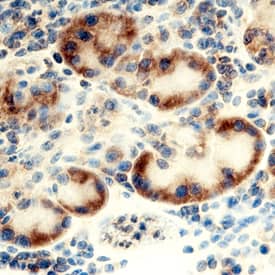
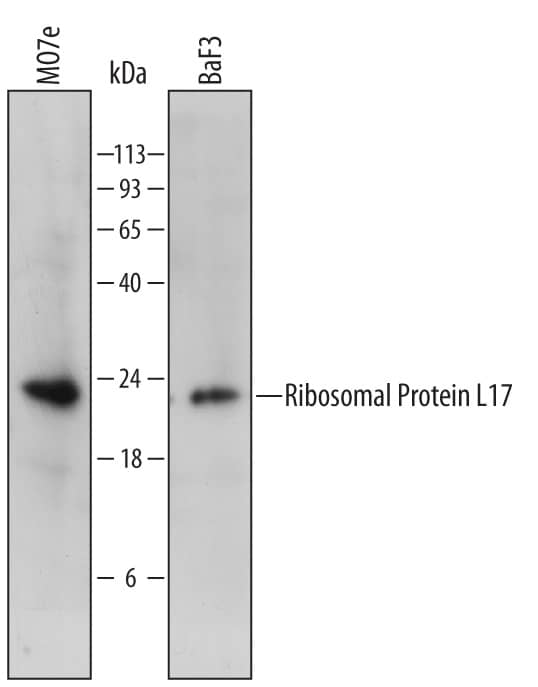


![TIM-3 Antibody (215008) [Phycoerythrin]](/sites/all/modules/enterprise-tech/et_datasheets/images/novus_guarantee.png "TIM-3 Antibody (215008) [Phycoerythrin]")
Secondary Antibodies |
Isotype Controls |
|
TIM-3, a critical immune checkpoint in HIV research CD4+ T-helper cells (Th) are the white blood lymphocytes expressing surface glycoprotein antigen CD4. These T-helper cells play an important role in the adaptive immune system by releasing T cell cytokines that help other immune cells to suppress o... Read full blog post. |
The concentration calculator allows you to quickly calculate the volume, mass or concentration of your vial. Simply enter your mass, volume, or concentration values for your reagent and the calculator will determine the rest.


![Western Blot Galectin-9 Antibody [Unconjugated]](https://images.novusbio.com/images/antibody/Galectin9_AF2045_Western_Blot_14747.jpg)
![Immunohistochemistry Galectin-9 Antibody [Unconjugated]](https://images.novusbio.com/images/antibody/Galectin9_AF2045_Immunohistochemistry_20210.jpg)
![Immunocytochemistry Galectin-9 Antibody [Unconjugated]](https://images.novusbio.com/images/antibody/Galectin9_AF2045_Immunocytochemistry__Immunofluorescence_18917.jpg)
![Immunohistochemistry TIM-1/KIM-1/HAVCR Antibody [Unconjugated]](https://images.novusbio.com/images/af1817_mouse-tim-1-kim-1-havcr-affinity-purified-polyclonal-ab-immunohistochemistry-1212202582418.jpg)
![Western Blot TIM-1/KIM-1/HAVCR Antibody [Unconjugated]](https://images.novusbio.com/images/af1817_mouse-tim-1-kim-1-havcr-affinity-purified-polyclonal-ab-4120241049450.jpg)
![Western Blot TIM-1/KIM-1/HAVCR Antibody [Unconjugated]](https://images.novusbio.com/images/af1817_mouse-tim-1-kim-1-havcr-affinity-purified-polyclonal-ab-western-blot-12122025961617.jpg)


![Bioactivity CTLA-4 [Unconjugated]](https://images.novusbio.com/images/protein/CTLA4_7268CT_2293.jpg)
![SEC-MALS IFN-gamma [Unconjugated]](https://images.novusbio.com/images/485-mi_recombinant-mouse-ifn-gamma-protein-sec-mals-1612202583245.jpg)
![Bioactivity IFN-gamma [Unconjugated]](https://images.novusbio.com/images/protein/IFN-gamma_485-MI_455.jpg)
![SDS-Page IFN-gamma [Unconjugated]](https://images.novusbio.com/images/protein/IFN-gamma_485-MI_407.jpg)
![Bioactivity IL-2 [Unconjugated]](https://images.novusbio.com/images/202-il_recombinant-human-il-2-protein-bioactivity-174202314946.jpg)
![SDS-Page TNF-alpha [Unconjugated]](https://images.novusbio.com/images/protein/TNF-alpha_210-TA_256.jpg)
![Bioactivity TNF-alpha [Unconjugated]](https://images.novusbio.com/images/protein/TNFalpha_210TA_1658.jpg)
![SEC-MALS TNF-alpha [Unconjugated]](https://images.novusbio.com/images/210-ta_recombinant-human-tnf-alpha-protein-sec-mals-35202312244..jpg)
![N/A IL-10 [Biotin]](https://images.novusbio.com/images/elisa/DATA_IL10_DY417_ELISA_2014.jpg)
![Western Blot TIM-4 Antibody [Unconjugated]](https://images.novusbio.com/images/antibody/TIM4_AF2929_Western_Blot_21021.jpg)
![Immunohistochemistry TIM-4 Antibody [Unconjugated]](https://images.novusbio.com/images/antibody/TIM4_AF2929_Immunohistochemistry_23059.jpg)
![Bioactivity IL-4 [Unconjugated]](https://images.novusbio.com/images/protein/6507-ilcf_recombinant-human-il-4-cho-expressed-protein-cf-bioactivity-272020133214.jpg)
