 IC002P, open histogram). View our protocol for Staining Membrane-associated Proteins." title="U2OS human osteosarcoma cell line was stained with Mouse Anti-Human Notch-1 PE-conjugated Monoclonal Antibody (Catalog # FAB5317P, filled histogram) or isotype control antibody (Catalog # IC002P, open histogram). View our protocol for Staining Membrane-associated Proteins." />
| Applications | Flow |
| Clone | 527425 |
| Clonality | Monoclonal |
| Host | Mouse |
| Conjugate | Phycoerythrin |
| Immunogen | Mouse myeloma cell line NS0-derived recombinant human Notch-1 Ala19-Gln526 Accession # P46531 |
| Specificity | Detects human Notch-1. |
| Isotype | IgG1 |
| Clonality | Monoclonal |
| Host | Mouse |
| Gene | NOTCH1 |
| Purity Statement | Protein A or G purified from hybridoma culture supernatant |
| Innovator's Reward | Test in a species/application not listed above to receive a full credit towards a future purchase. |
| Dilutions |
|
|
| Publications |
|
| Storage | Store the unopened product at 2 - 8° C. Do not use past expiration date. Protect from light. |
| Buffer | Supplied in a saline solution containing BSA and Sodium Azide. |
| Preservative | Sodium Azide |
Human Notch-1 is a 300 kDa type I transmembrane glycoprotein that is one of four human Notch homologues involved in developmental processes (1‑3). Notch signaling is important for maintaining stem cells and inducing differentiation, especially in the nervous system and lymphoid tissues (2‑4). Notch can specify binary cell fates; for example, promoting T‑ over B‑cell development from a common precursor (2). More than 50% of human T-lineage Acute Lymphoblastic Leukemia (T‑ALL) have activating mutations of Notch1 (1, 5). Human Notch-1 is synthesized as a 2556 amino acid (aa) precursor that contains an 18 aa signal sequence, a 1718 aa extracellular domain (ECD) with 36 EGF-like repeats and three Lin-12/Notch repeats (LNR), a 23 aa transmembrane (TM) segment and a 785 aa cytoplasmic domain containing six ankyrin repeats, a glutamine-rich domain and a PEST sequence. The 11th and 12th EGF-like repeats bind ligands including Jagged and Delta-like families in humans (6). O-fucosylation by Fringe family members at a site within this region can inhibit the interaction of Notch with Jagged ligands, thereby promoting Delta-like ligand interactions (7). Notch-1 receptor undergoes post-translational furin-type proteolytic cleavage, forming a heterodimer through interaction of a hydrophobic area C-terminal to the LNR on the 1647 aa ligand-binding extracellular region with the 891 aa transmembrane/cytoplasmic portion (8, 9). Upon ligand binding, additional sequential proteolysis by TNF-converting enzyme (ADAM-17) and the presenilin-dependent gamma -Secretase results in the release of the Notch intracellular domain (NICD) which translocates into the nucleus, activating transcription of Notch-responsive genes (10). Human Notch-1 ECD aa 19 - 526, including the first 13 EGF repeats, shows 91% aa identity with corresponding regions of mouse and rat, 89% with canine, and 79% with chicken Notch-1. This region also exhibits 60% aa identity with human Notch-2 and Notch-3.


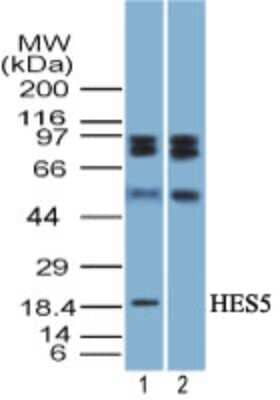
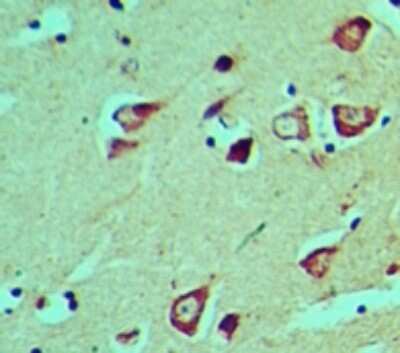
Secondary Antibodies |
Isotype Controls |
|
Notch1 - A multifunctional transmembrane receptor Notch1 is a member of the Notch family of Type 1 single-pass transmembrane proteins that share an extracellular domain of multiple epidermal growth factor-like (EGF) repeats. Notch family members play key roles in a variety of developmental process... Read full blog post. |
The concentration calculator allows you to quickly calculate the volume, mass or concentration of your vial. Simply enter your mass, volume, or concentration values for your reagent and the calculator will determine the rest.


![Immunocytochemistry Notch-4 Antibody [Unconjugated]](https://images.novusbio.com/images/antibody/af3847_human-notch-4-intracellular-domain-affinity-purified-pab-immunocytochemistry-3092021102949.jpg)
![Immunohistochemistry Notch-2 Antibody [Unconjugated]](https://images.novusbio.com/images/antibody/af3735_human-notch-2-intracellular-domain-affinity-purified-pab-immunohistochemistry-1862024111356..jpg)


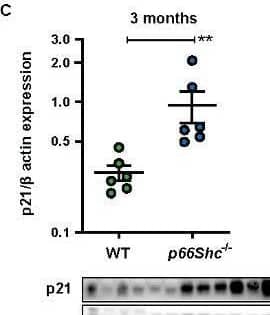
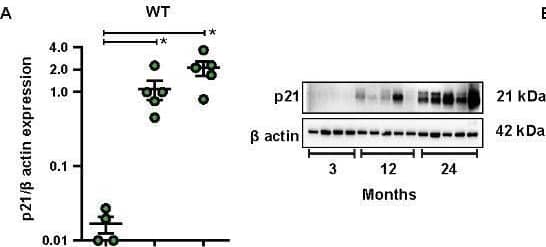


![Immunohistochemistry DLL4 Antibody [Unconjugated]](https://images.novusbio.com/images/af1389_mouse-dll4-affinity-purified-pab-8120255552822.jpg)
![Immunohistochemistry DLL4 Antibody [Unconjugated]](https://images.novusbio.com/images/af1389_mouse-dll4-affinity-purified-pab-8120255541739.jpg)
![Western Blot DLL4 Antibody [Unconjugated]](https://images.novusbio.com/images/af1389_mouse-dll4-affinity-purified-pab-1752025022480.jpg)
![N/A VEGF [HRP]](https://images.novusbio.com/images/elisa/VEGF_DVE00_ELISA_208.jpg)
![N/A VEGF [HRP]](https://images.novusbio.com/images/elisa/DATA_VEGF_DVE00_ELISA_871.jpg)
![N/A VEGF [HRP]](https://images.novusbio.com/images/elisa/DATA_VEGF_DVE00_ELISA_872.jpg)
![Jagged 2 [Unconjugated]](/sites/all/modules/enterprise-tech/et_datasheets/images/novus_guarantee.png "Jagged 2 [Unconjugated]")
![Bioactivity EGF [Unconjugated]](https://images.novusbio.com/images/protein/EGF_236EG_1570.jpg)
![Cell Culture EGF [Unconjugated]](https://images.novusbio.com/images/236-eg_recombinant-human-egf-protein-cf-25202394526.jpg)
![Cell Culture EGF [Unconjugated]](https://images.novusbio.com/images/236-eg_recombinant-human-egf-protein-cf-bioactivity-25202394053.jpg)
