| Reactivity | HuSpecies Glossary |
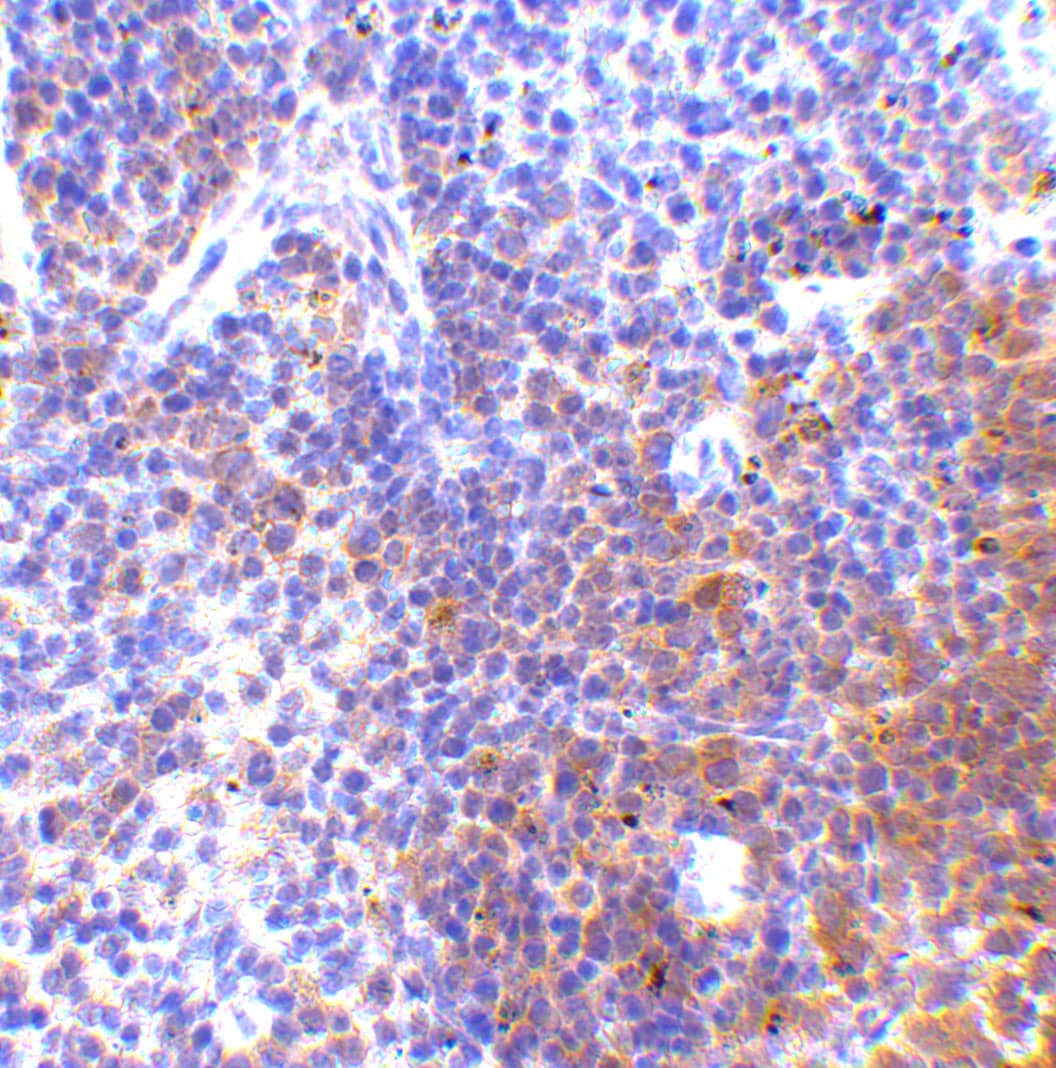
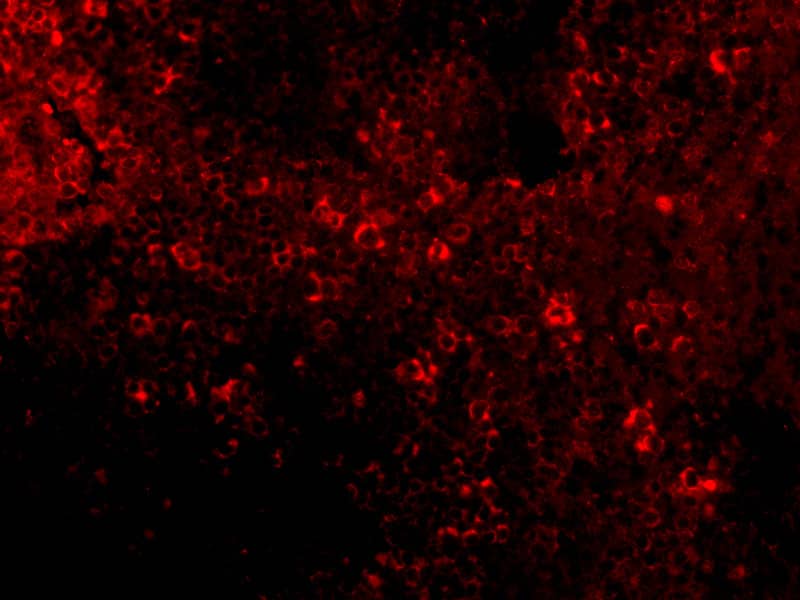
| Applications | IHC |
| Clone | 981240 |
| Clonality | Monoclonal |
| Host | Mouse |
| Conjugate | Alexa Fluor 532 |
| Immunogen | E.coli-derived recombinant human MAVS Arg37-Pro513 Accession # Q7Z434 |
| Specificity | Detects human MAVS in direct ELISAs. |
| Source | N/A |
| Isotype | IgG2b |
| Clonality | Monoclonal |
| Host | Mouse |
| Purity Statement | Protein A or G purified from hybridoma culture supernatant |
| Innovator's Reward | Test in a species/application not listed above to receive a full credit towards a future purchase. |
| Storage | Protect from light. Do not freeze. 12 months from date of receipt, 2 to 8 °C as supplied |
| Buffer | Supplied 0.2 mg/mL in a saline solution containing BSA and Sodium Azide. |
Mitochondrial antviral signaling protein (MAVS, also known as IPS-1, VISA, and CARDIF) is a ubiquitous, tail-anchored membrane protein inserted in the outer mitochondrial membrane (OMM), and is also found in the peroxisomal membrane and the mitochondrial associated membrane of the endoplasmic reticulum. Peroxisomal MAVS has been implicated in type II IFN-dependent antiviral response, while mitochondrial MAVS mediates longer lasting type I IFN dependent antiviral response. Mitochondrial reactive oxygen species (mROS) induce oligomerization of MAVS in the outer membrane plane of mitochondria to induce innate immunity to viral infection. MAVS undergoes RIG-I-like receptors (RLR)-induced formation of higher order structures ranging from dimers to prion-like aggregates that lead to the recruitment and activation of signaling proteins culminating in the activation of the transcription factors IRF-3 and NF-kappa B and transcription of IFNs



Secondary Antibodies |
Isotype Controls |
|
STING in Innate Immunity and Cancer: What’s the Buzz About? STING (STimulator of INterferon Genes protein) acts as a sensor of cytosolic DNA. Bacteria/Virus or self-derived DNA in the cytosol activates the STING pathway and promotes the production of type I interferons (IFN-alpha and IFN-beta). STING also ... Read full blog post. |
The concentration calculator allows you to quickly calculate the volume, mass or concentration of your vial. Simply enter your mass, volume, or concentration values for your reagent and the calculator will determine the rest.
| Uniprot |
|


![Binding Activity IFN-beta [Unconjugated]](https://images.novusbio.com/images/protein/IFNbeta_8499IF_1038.jpg)


![SDS-Page TNF-alpha [Unconjugated]](https://images.novusbio.com/images/protein/TNF-alpha_210-TA_256.jpg)
![Bioactivity TNF-alpha [Unconjugated]](https://images.novusbio.com/images/protein/TNFalpha_210TA_1658.jpg)
![SEC-MALS TNF-alpha [Unconjugated]](https://images.novusbio.com/images/210-ta_recombinant-human-tnf-alpha-protein-sec-mals-35202312244..jpg)