| Reactivity | Hu, MuSpecies Glossary |
| Applications | B/N |
| Clone | 930769 |
| Clonality | Monoclonal |
| Host | Rat |
| Conjugate | Alexa Fluor 350 |
| Immunogen | Chinese hamster ovary cell line CHO-derived recombinant mouse Wnt-3a Ser19-Lys352 Accession # P27467 |
| Specificity | Detects human and mouse Wnt-3a in direct ELISAs. |
| Source | N/A |
| Isotype | IgG1 |
| Clonality | Monoclonal |
| Host | Rat |
| Purity Statement | Protein A or G purified from hybridoma culture supernatant |
| Innovator's Reward | Test in a species/application not listed above to receive a full credit towards a future purchase. |
| Storage | Protect from light. Do not freeze. 12 months from date of receipt, 2 to 8 °C as supplied |
| Buffer | Supplied 0.2 mg/mL in a saline solution containing BSA and Sodium Azide. |
Wnt-3a is one of about 19 vertebrate members of the Wingless-type MMTV integration site (Wnt) family of highly conserved cysteine-rich secreted glycoproteins important for normal developmental processes (1‑3). Wnts bind to receptors of the Frizzled family in conjunction with a coreceptor of the low-density lipoprotein receptor-related protein family (LRP-5 or -6), or the Ryk atypical receptor tyrosine kinase (1, 4). Mouse Wnt-3a is a 44 kDa secreted hydrophobic glycoprotein containing a conserved pattern of 24 cysteine residues (5). Like other Wnts, Wnt-3a is modified by palmitate addition (at Cys 77) following glycosylation, which increases its hydrophobicity, secretion and activity (6, 7). A second site at Ser 209 is modified by palmitoleic acid and also contributes to activity and secretion (8). Mouse Wnt-3a shares 96% amino acid (aa) identity with human Wnt-3a, and 97% with bovine and canine Wnt-3a. The rat Wnt-3a precursor as it is apparently translated shares 100% aa identity with mouse Wnt-3a aa 63-352 (9). Wnt-3a also shares 87% aa identity with Wnt-3. During development, Wnt-3a is morphogen that is thought to coordinate somitogenesis and mesoderm boundary determination, and is expressed at the same locations and times as Wnt-2b and Wnt-5a (10). When Wnt-3a is deleted, mice fail to develop a hippocampus, and show defects in anterior-posterior patterning, somite development and tailbud formation (10-13). Recombinant Wnt-3a promotes proliferation of committed stem cell lineages in vitro, and may help maintain the cells in an undifferentiated state (6, 14) For example, Wnt-3a can induce self-renewal of hematopoietic stem cells, allowing expansion without further differentiation (6).


![Western Blot beta-Catenin Antibody [Unconjugated]](https://images.novusbio.com/images/af1329_human-mouse-rat-beta-catenin-affinity-purified-polyclonal-ab-western-blot-12122025922481.jpg)
![Western Blot beta-Catenin Antibody [Unconjugated]](https://images.novusbio.com/images/af2649_mouse-chitinase-3-like-1-affinity-purified-pab-western-blot-12122025848165.jpg)
![Western Blot beta-Catenin Antibody [Unconjugated]](https://images.novusbio.com/images/af1329_human-mouse-rat-beta-catenin-affinity-purified-polyclonal-ab-western-blot-121220258282812.jpg)



Secondary Antibodies |
Isotype Controls |
The concentration calculator allows you to quickly calculate the volume, mass or concentration of your vial. Simply enter your mass, volume, or concentration values for your reagent and the calculator will determine the rest.
| Uniprot |
|


![Bioactivity Dkk-1 [Unconjugated]](https://images.novusbio.com/images/5439-dk_recombinant-human-dkk-1-protein-bioactivity-135202491415..jpg)
![Cell Culture Dkk-1 [Unconjugated]](https://images.novusbio.com/images/5439-dk_recombinant-human-dkk-1-protein-cell-culture-105202416211..jpg)
![Cell Culture Dkk-1 [Unconjugated]](https://images.novusbio.com/images/5439-dk_recombinant-human-dkk-1-protein-105202416017.jpg)
![Bioactivity Wnt-5a [Unconjugated]](https://images.novusbio.com/images/protein/645-wn_recombinant-human-mouse-wnt-5a-protein-bioactivity-1612202094911.jpg)


![Bioactivity Wnt-3a [Unconjugated]](https://images.novusbio.com/images/5036-wn_recombinant-human-wnt-3a-protein-bioactivity-3112023115329.jpg)
![Cell Culture Wnt-3a [Unconjugated]](https://images.novusbio.com/images/5036-wn_recombinant-human-wnt-3a-protein-bioactivity-252023103514.jpg)
![Cell Culture Wnt-3a [Unconjugated]](https://images.novusbio.com/images/5036-wn_recombinant-human-wnt-3a-protein-cell-culture-252023103917..jpg)
![SDS-Page BMP-4 [Unconjugated]](https://images.novusbio.com/images/protein/BMP-4_314-BP_100.jpg)
![Bioactivity BMP-4 [Unconjugated]](https://images.novusbio.com/images/314-bp_recombinant-human-bmp-4-protein-1882021123744.jpg)


![Bioactivity BMP-2 [Unconjugated]](https://images.novusbio.com/images/protein/355-bm_recombinant-human-mouse-rat-bmp-2-protein-bioactivity-181120209742.jpg)
![Flow Cytometry LRP-6 Antibody (255302) [Unconjugated]](https://images.novusbio.com/images/antibody/LRP-6_MAB1505_Flow_Cytometry_11214.jpg)
![Immunocytochemistry LRP-6 Antibody (255302) [Unconjugated]](https://images.novusbio.com/images/antibody/LRP-6_MAB1505_Immunocytochemistry_11355.jpg)

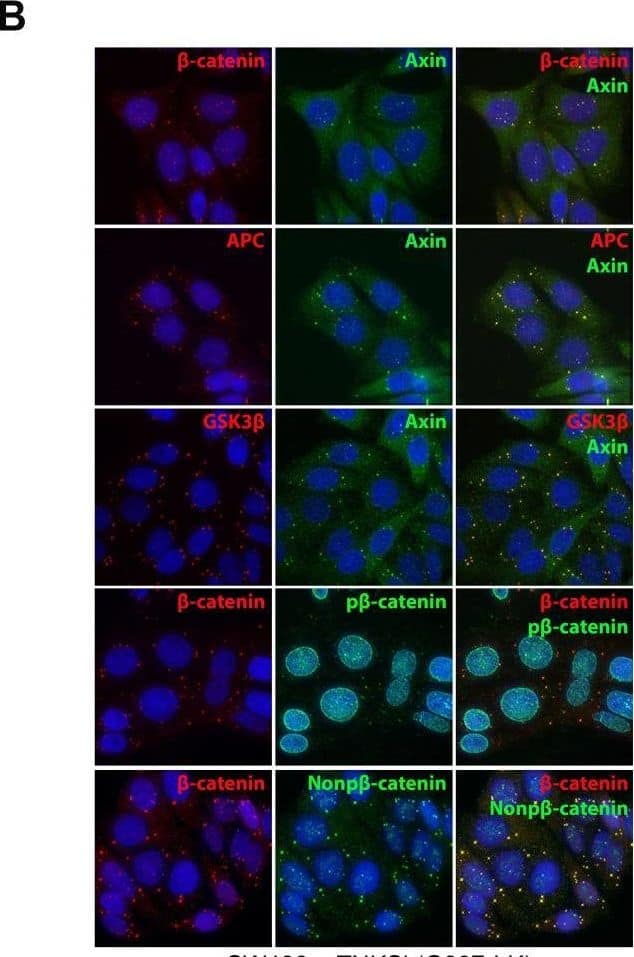
![Cell Culture FGF-8 [Unconjugated]](https://images.novusbio.com/images/423-f8_recombinant-human-mouse-fgf-8b-protein-cell-culture-1052024145159..jpg)
![Bioactivity FGF-8 [Unconjugated]](https://images.novusbio.com/images/protein/FGF8_423F8_1438.jpg)
![Cell Culture FGF-8 [Unconjugated]](https://images.novusbio.com/images/423-f8_recombinant-human-mouse-fgf-8b-protein-cell-culture-1052024145958..jpg)
![SDS-Page Sonic Hedgehog/Shh [Unconjugated]](https://images.novusbio.com/images/protein/Sonic_Hedgehog_464-SH_341.jpg)
![Cell Culture Sonic Hedgehog/Shh [Unconjugated]](https://images.novusbio.com/images/464-sh_recombinant-mouse-sonic-hedgehog-shh-c25ii-n-terminus-cell-culture-105202415719..jpg)
![SEC-MALS Sonic Hedgehog/Shh [Unconjugated]](https://images.novusbio.com/images/464-sh_recombinant-mouse-sonic-hedgehog-shh-c25ii-n-terminus-sec-mals-642023224324.jpg)