![Western Blot: TRPC4 Antibody [NB200-605] - Anti-TRPC4: Western blot analysis of Rat brain membranes. Lanes: 1. Anti-TRPC4 antibody; 2. Anti-TRPC4 antibody, preincubated with the control peptide antigen.](http://images.novusbio.com/fullsize/TRPC4-Antibody-Western-Blot-NB200-605-img0002.jpg "Western Blot: TRPC4 Antibody [NB200-605] - Anti-TRPC4: Western blot analysis of Rat brain membranes. Lanes: 1. Anti-TRPC4 antibody; 2. Anti-TRPC4 antibody, preincubated with the control peptide antigen.")
| Immunogen | Synthetic peptide: CKEKHAHEEDSSIDYDL, corresponding to amino acids 943-958 of Mouse TRPC4. |
| Specificity | TRPC4 |
| Isotype | IgG |
| Clonality | Polyclonal |
| Host | Rabbit |
| Gene | TRPC4 |
| Purity | Immunogen affinity purified |
| Innovator's Reward | Test in a species/application not listed above to receive a full credit towards a future purchase. |
| Dilutions |
|
| Application Notes | Predicted molecular weight: 117 kDa. Not tested in other applications. Optimal dilutions/concentrations should be determined by the end user. |
| Storage | Aliquot and store at -20C or -80C. Avoid freeze-thaw cycles. |
| Buffer | PBS (pH 7.4), 1.0% BSA and 5% Sucrose |
| Preservative | 0.025% Sodium Azide |
| Concentration | 1.0 mg/ml |
| Purity | Immunogen affinity purified |







Secondary Antibodies |
Isotype Controls |
Research Areas for TRPC4 Antibody (NB200-605)Find related products by research area.
|
The concentration calculator allows you to quickly calculate the volume, mass or concentration of your vial. Simply enter your mass, volume, or concentration values for your reagent and the calculator will determine the rest.


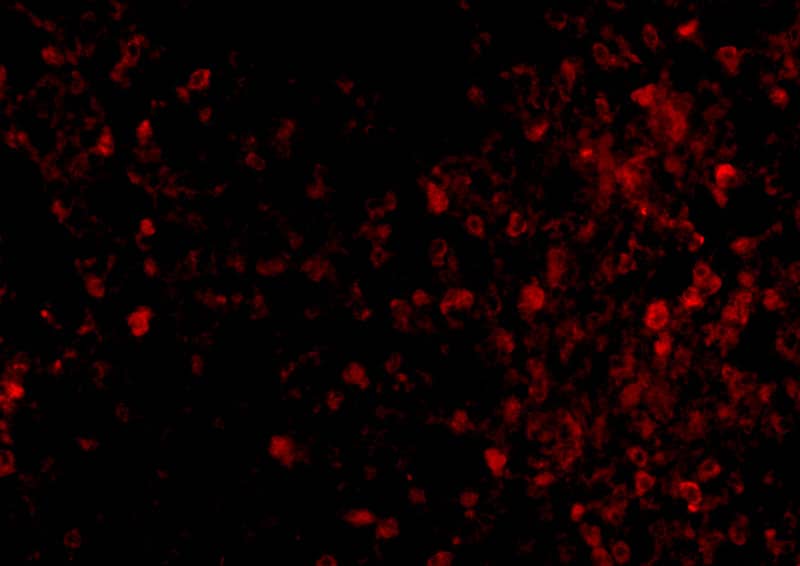
![Immunohistochemistry-Frozen: TRPC4 Antibody [NB200-605] - Anti-TRPC4: Immunohistochemical staining of Mouse cerebellum frozen sections with Anti-TRPC4 antibody. A. TRPC4 (red) appears in Purkinje cells (arrows) and in the molecular (Mol) layer. B. Staining with Mouse Anti-Parvalbumin (PV) in the same brain section. C. Confocal merge of TRPC4 and PV demonstrates partial co-localization in the Purkinje and the molecular layers.](http://images.novusbio.com/fullsize/TRPC4-Antibody-Immunohistochemistry-Frozen-NB200-605-img0001.jpg "Immunohistochemistry-Frozen: TRPC4 Antibody [NB200-605] - Anti-TRPC4: Immunohistochemical staining of Mouse cerebellum frozen sections with Anti-TRPC4 antibody. A. TRPC4 (red) appears in Purkinje cells (arrows) and in the molecular (Mol) layer. B. Staining with Mouse Anti-Parvalbumin (PV) in the same brain section. C. Confocal merge of TRPC4 and PV demonstrates partial co-localization in the Purkinje and the molecular layers.")




![Immunohistochemistry Clusterin/APOJ Antibody [Unconjugated]](https://images.novusbio.com/images2/Clusterin_AF2747_Immunohistochemistry_9945.jpg)
![Immunohistochemistry Clusterin/APOJ Antibody [Unconjugated]](https://images.novusbio.com/images2/Clusterin_AF2747_Immunohistochemistry_9946.jpg)
![Western Blot Clusterin/APOJ Antibody [Unconjugated]](https://images.novusbio.com/images/af2747_mouse-clusterin-affinity-purified-polyclonal-ab-4120241240247.jpg)


![Immunohistochemistry Trypsin 1/PRSS1 Antibody [Unconjugated]](https://images.novusbio.com/images2/Trypsin_1_AF3848_Immunohistochemistry_17574.jpg)


