Immunoblot Buffer Group 1." title="Western blot shows lysates of Jurkat human acute T cell leukemia cell line and DA3 mouse myeloma cell line. PVDF membrane was probed with 0.5 µg/mL of Goat Anti-Human/Mouse/Rat TC-PTP Antigen Affinity-purified Polyclonal Antibody (Catalog # AF1930) followed by HRP-conjugated Anti-Goat IgG Secondary Antibody (Catalog # HAF109). A specific band was detected for TC-PTP at approximately 45 to 48 kDa (as indicated). This experiment was conducted using Immunoblot Buffer Group 1." />
| Reactivity | Hu, Mu, RtSpecies Glossary |
| Applications | WB, Simple Western |
| Clonality | Polyclonal |
| Host | Goat |
| Conjugate | Unconjugated |
| Concentration | LYOPH |
| Immunogen | E. coli-derived recombinant human TC-PTP Pro2-Asn314 Accession # P17706 |
| Specificity | Detects human, mouse and rat TC-PTP in Western blots. |
| Source | N/A |
| Isotype | IgG |
| Clonality | Polyclonal |
| Host | Goat |
| Gene | PTPN2 |
| Purity Statement | Antigen Affinity-purified |
| Innovator's Reward | Test in a species/application not listed above to receive a full credit towards a future purchase. |
| Dilutions |
|
|
| Publications |
|
| Storage | Use a manual defrost freezer and avoid repeated freeze-thaw cycles.
|
| Buffer | Lyophilized from a 0.2 μm filtered solution in PBS with Trehalose. *Small pack size (SP) is supplied either lyophilized or as a 0.2 µm filtered solution in PBS. |
| Preservative | No Preservative |
| Concentration | LYOPH |
| Reconstitution Instructions | Reconstitute at 0.2 mg/mL in sterile PBS. |
T-cell protein tyrosine phosphatase (TC-PTP), also known as PTPT and PTPN2, is an enzyme that removes phosphate groups covalently attached to tyrosine residues in proteins. This enzyme has two C-terminal end splice variants with distinctly different subcellular localizations. The shorter 45 kDa isoform is exclusively nuclear in resting cells, but redistrubutes to the cytosol upon stimulation with growth factors (1) and cellular stress (2). The longer 48 kDa isoform is exclusively found in the endoplasmic reticulum (3) and seems to have distinctly different physiologic substrates from the smaller isoform (1, 4). Although found in many cell types and tissues, TC-PTP is particularly prominent in hemopoietic cell types (5, 6). Knockout mice lacking TC-PTP are born viable but die 3 to 5 weeks after birth of erythropoietic and lymphopoietic deficits (7), indicating a critical role for TC-PTP in bone marrow maturation. TC-PTP will dephosphorylate a wide range of phosphoproteins, such as p52Shc (6) and receptors for EGF (1), Insulin (8) and growth hormone (6). The recombinant protein lacks the C-terminal 100 amino acids that determine intracellular localization but is fully active (9).
![Immunocytochemistry EGFR Antibody [Unconjugated]](https://images.novusbio.com/images/antibody/EGF_R_AF231_Immunocytochemistry__Immunofluorescence_21143.jpg)
![Flow Cytometry EGFR Antibody [Unconjugated]](https://images.novusbio.com/images/antibody/EGF_R_AF231_Flow_Cytometry_20401.jpg)
![Western Blot EGFR Antibody [Unconjugated]](https://images.novusbio.com/images/antibody/EGF_R_AF231_Western_Blot_19925.jpg)
![Intracellular Staining by Flow Cytometry AKT [p Ser473] Antibody [Unconjugated] - Pan Specific](https://images.novusbio.com/images/antibody/Akt3_AF887_Flow_Cytometry_8283.jpg)
![Western Blot AKT [p Ser473] Antibody [Unconjugated] - Pan Specific](https://images.novusbio.com/images/af887_phospho-akt-s473-pan-specific-affinity-purified-pab-41202410485440.jpg)
![Western Blot AKT [p Ser473] Antibody [Unconjugated] - Pan Specific](https://images.novusbio.com/images/af887_phospho-akt-s473-pan-specific-affinity-purified-pab-8120255552843.jpg)
![Western Blot STAT1 [p Tyr701] Antibody [Unconjugated]](https://images.novusbio.com/images/antibody/STAT1_AF2894_Western_Blot_5226.jpg)
![Intracellular Staining by Flow Cytometry STAT1 [p Tyr701] Antibody [Unconjugated]](https://images.novusbio.com/images/antibody/STAT1_AF2894_Flow_Cytometry_8189.jpg)
![Western Blot STAT1 [p Tyr701] Antibody [Unconjugated]](https://images.novusbio.com/images/af2894_human-mouse-phospho-stat1-y701-affinity-purified-pab-western-blot-121220258554112.jpg)

![TC-PTP/PTPN2 Antibody [Unconjugated]](/sites/all/modules/enterprise-tech/et_datasheets/images/novus_guarantee.png "TC-PTP/PTPN2 Antibody [Unconjugated]")
Secondary Antibodies |
Isotype Controls |
The concentration calculator allows you to quickly calculate the volume, mass or concentration of your vial. Simply enter your mass, volume, or concentration values for your reagent and the calculator will determine the rest.


 HAF109). This experiment was conducted under reducing conditions and using the 12-230 kDa separation system." title="Simple Western lane view shows lysates of Jurkat human acute T cell leukemia cell line and DA3 mouse myeloma cell line, loaded at 0.2 mg/mL. A specific band was detected for TC-PTP at approximately 51 kDa (as indicated) using 5 µg/mL of Goat Anti-Human/Mouse/Rat TC-PTP Antigen Affinity-purified Polyclonal Antibody (Catalog # AF1930) followed by 1:50 dilution of HRP-conjugated Anti-Goat IgG Secondary Antibody (Catalog #
 ![Western Blot PTP1B/PTPN1 Antibody [Unconjugated]](https://images.novusbio.com/images/antibody/PTP1B_AF3954_Western_Blot_5368.jpg)
![Simple Western PTP1B/PTPN1 Antibody [Unconjugated]](https://images.novusbio.com/images/antibody/PTP1B_AF3954_Simple_Western_16943.jpg)




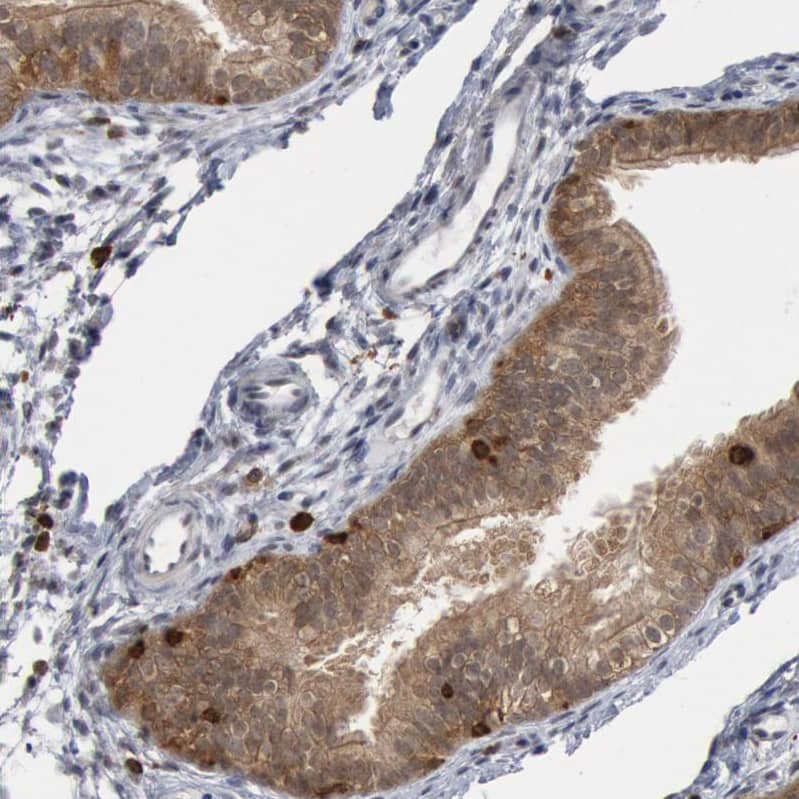
![Western Blot Src [p Tyr419] Antibody [Unconjugated]](https://images.novusbio.com/images/antibody/Src_AF2685_Western_Blot_5209.jpg)
![Immunohistochemistry Src [p Tyr419] Antibody [Unconjugated]](https://images.novusbio.com/images/af2685_human-phospho-src-y419-affinity-purified-polyclonal-ab-412024124022.jpg)
![Immunohistochemistry Src [p Tyr419] Antibody [Unconjugated]](https://images.novusbio.com/images/antibody/Src_AF2685_Immunohistochemistry_9943.jpg)
![Western Blot ERK2 Antibody [Unconjugated]](https://images.novusbio.com/images/antibody/ERK2_AF1230_Western_Blot_5097.jpg)
![Knockout Validated ERK2 Antibody [Unconjugated]](https://images.novusbio.com/images/antibody/ERK2_AF1230_Knockout_Validated_22864.jpg)
![Immunohistochemistry ERK2 Antibody [Unconjugated]](https://images.novusbio.com/images/antibody/ERK2_AF1230_Immunohistochemistry_20696.jpg)
![Western Blot STAT3 Antibody (232209) [Unconjugated]](https://images.novusbio.com/images/mab1799_human-mouse-rat-stat3-mab-clone-232209-8120255485714.jpg)
![Western Blot STAT3 Antibody (232209) [Unconjugated]](https://images.novusbio.com/images/mab1799_human-mouse-rat-stat3-mab-clone-232209-western-blot-121220259163816.jpg)
![Western Blot STAT3 Antibody (232209) [Unconjugated]](https://images.novusbio.com/images/mab1799_human-mouse-rat-stat3-mab-clone-232209-western-blot-121220259214823.jpg)
![Bioactivity EGF [Unconjugated]](https://images.novusbio.com/images/protein/EGF_236EG_1570.jpg)
![Cell Culture EGF [Unconjugated]](https://images.novusbio.com/images/236-eg_recombinant-human-egf-protein-cf-25202394526.jpg)
![Cell Culture EGF [Unconjugated]](https://images.novusbio.com/images/236-eg_recombinant-human-egf-protein-cf-bioactivity-25202394053.jpg)


![Western Blot Lyp/PTPN22 Antibody [Unconjugated]](https://images.novusbio.com/images/af3428_human-lyp-affinity-purified-polyclonal-ab-western-blot-12122025748131.jpg)
![Immunocytochemistry Lyp/PTPN22 Antibody [Unconjugated]](https://images.novusbio.com/images/antibody/Lyp_AF3428_Immunocytochemistry__Immunofluorescence_17421.jpg)
![Simple Western Lyp/PTPN22 Antibody [Unconjugated]](https://images.novusbio.com/images/antibody/Lyp_AF3428_Simple_Western_16762.jpg)
![Bioactivity IL-2 [Unconjugated]](https://images.novusbio.com/images/202-il_recombinant-human-il-2-protein-bioactivity-174202314946.jpg)
![N/A IL-6 [HRP]](https://images.novusbio.com/images/elisa/DATA_IL6_M6000_ELISA_936.jpg)
![N/A IL-6 [HRP]](https://images.novusbio.com/images/elisa/IL-6_M6000_ELISA_415.jpg)
![N/A IL-6 [HRP]](https://images.novusbio.com/images/m6000b_mouse-il-6-quantikine-elisa-kit-1752025024034.jpg)
![Immunohistochemistry CD45 Antibody [Unconjugated]](https://images.novusbio.com/images/antibody/CD45_AF114_Immunohistochemistry_23525.jpg)
![Immunocytochemistry CD45 Antibody [Unconjugated]](https://images.novusbio.com/images/antibody/af114_mouse-cd45-affinity-purified-polyclonal-ab-immunocytochemistry-6122021145449.jpg)