| Immunogen | Synthetic phosphopeptide derived from human SNAI 1 around the phosphorylation site of Serine 246. |
| Clonality | Polyclonal |
| Host | Rabbit |
| Gene | SNAI1 |
| Purity | Immunogen affinity purified |
| Innovator's Reward | Test in a species/application not listed above to receive a full credit towards a future purchase. |
| Dilutions |
|
|
| Application Notes | Western blot (WB) analyzes of SNAI 1 (A242) pAb in extracts from HT29 cells. Immunohistochemistry (IHC) analyzes of SNAI 1 (A242) pAb in paraffin-embedded human lung carcinoma tissue. |
|
| Theoretical MW | 29 kDa. Disclaimer note: The observed molecular weight of the protein may vary from the listed predicted molecular weight due to post translational modifications, post translation cleavages, relative charges, and other experimental factors. |
|
| Reviewed Applications |
|
|
| Publications |
|
| Storage | Store at 4C short term. Aliquot and store at -20C long term. Avoid freeze-thaw cycles. |
| Buffer | PBS (pH 7.2) |
| Preservative | 0.05% Sodium Azide |
| Concentration | 1.0 mg/ml |
| Purity | Immunogen affinity purified |
![Immunocytochemistry E-Cadherin Antibody [Unconjugated]](https://images.novusbio.com/images2/ECadherin_AF748_Immunocytochemistry_15885.jpg)
![Immunohistochemistry E-Cadherin Antibody [Unconjugated]](https://images.novusbio.com/images2/ECadherin_AF748_Immunohistochemistry_15886.jpg)
![Immunocytochemistry E-Cadherin Antibody [Unconjugated]](https://images.novusbio.com/images2/ECadherin_AF748_Immunocytochemistry_16572.jpg)


| Images | Ratings | Applications | Species | Date | Details | ||||||||
|---|---|---|---|---|---|---|---|---|---|---|---|---|---|
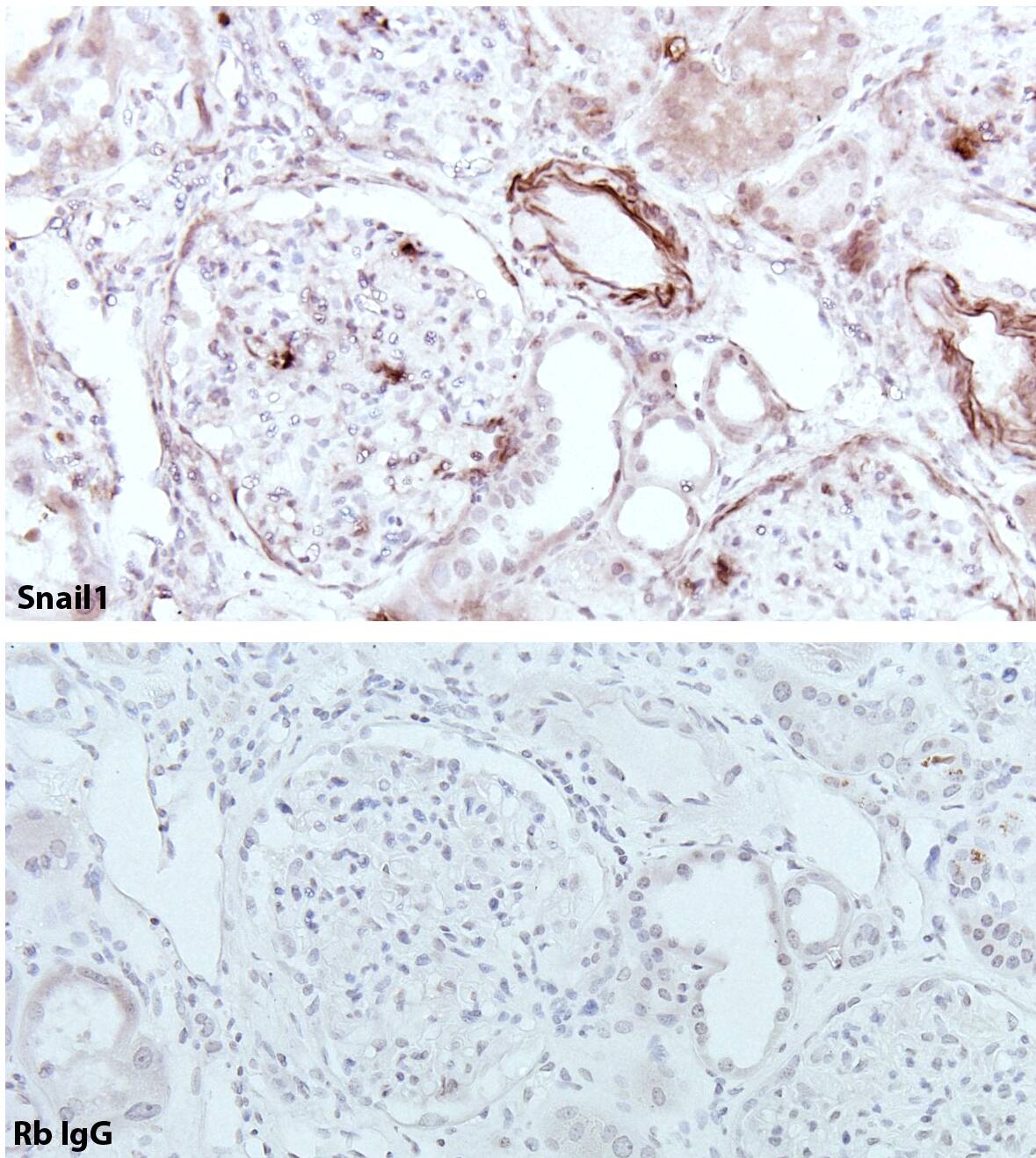
Enlarge |
reviewed by:
Mariya Sweetwyne |
IHC-P | Human | 01/31/2014 |
Summary
|
||||||||
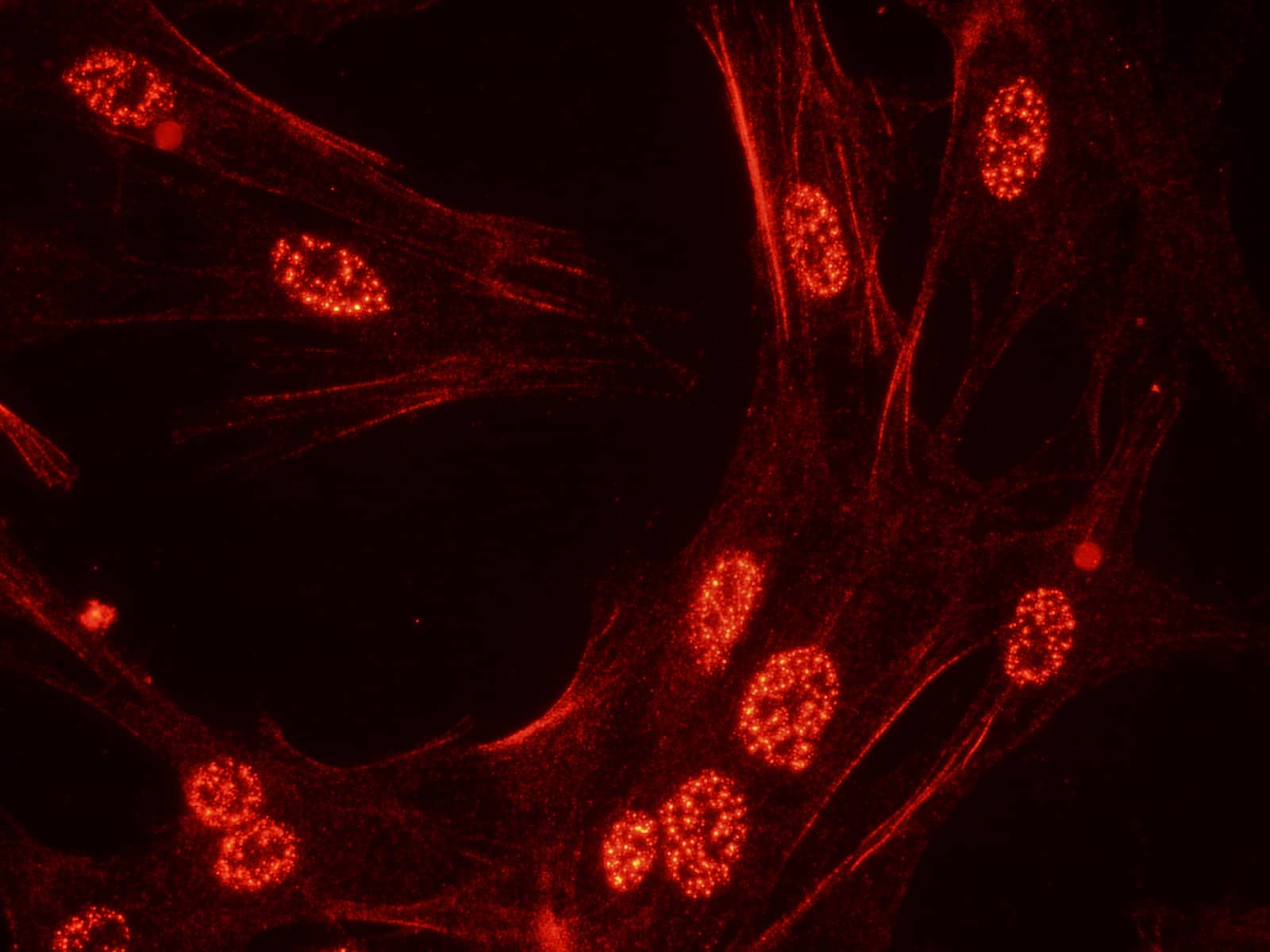
Enlarge |
reviewed by:
Mariya Sweetwyne |
IF | Mouse | 01/29/2014 |
Summary
|
||||||||
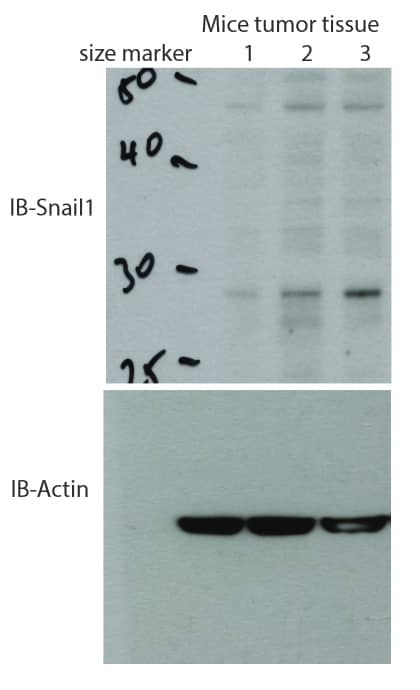
Enlarge |
reviewed by:
Shyam Gudey |
WB | Mouse | 01/17/2014 |
Summary
|
||||||||
|
reviewed by:
Shyam Gudey |
IF | Other | 01/10/2014 |
Summary
|
Secondary Antibodies |
Isotype Controls |
Research Areas for Snail Antibody (NBP1-19529)Find related products by research area.
|
|
Read full blog post. |
|
Epithelial-Mesenchymal Transition (EMT) Markers Epithelial-Mesenchymal Transition (EMT) is the trans-differentiation of stationary epithelial cells into motile mesenchymal cells. During EMT, epithelial cells lose their junctions and apical-basal polarity, reorganize their cytoskeleton, undergo a... Read full blog post. |
|
Understanding the relationship between HIF-1 alpha, Hypoxia and Epithelial-Mesenchymal Transition Epithelial-mesenchymal transition (EMT) is a natural process by which epithelial cells lose their polarity and intercellular adhesion, and gain the migratory invasive properties of mesenchymal stem cells that can differentiate into a variety of cel... Read full blog post. |
The concentration calculator allows you to quickly calculate the volume, mass or concentration of your vial. Simply enter your mass, volume, or concentration values for your reagent and the calculator will determine the rest.
5 | |
4 | |
3 | |
2 | |
1 |
| Mariya Sweetwyne 01/31/2014 |
||
| Application: | IHC-P | |
| Species: | Human |
| Mariya Sweetwyne 01/29/2014 |
||
| Application: | IF | |
| Species: | Mouse |
| Shyam Gudey 01/17/2014 |
||
| Application: | WB | |
| Species: | Mouse |