 1324-WN) induces a dose responsive increase in Wnt reporter activity in HEK293 cells (green circles). Recombinant Mouse Dkk-1 (Catalog # 1765-DK/CF) inhibits a constant dose of 100 ng/mL of Recombinant Mouse Wnt-3a. The ED50 for this effect is 30-180 ng/mL (orange circles)." title="Recombinant Mouse Wnt-3a (Catalog # 1324-WN) induces a dose responsive increase in Wnt reporter activity in HEK293 cells (green circles). Recombinant Mouse Dkk-1 (Catalog # 1765-DK/CF) inhibits a constant dose of 100 ng/mL of Recombinant Mouse Wnt-3a. The ED50 for this effect is 30-180 ng/mL (orange circles)." />
| Reactivity | MuSpecies Glossary |
| Applications | Bioactivity |
| Format | Carrier-Free |
| Additional Information | A New and Improved rm Dkk-1 is Available! It has a lower endotoxin specification, ~5 fold better activity, and no tag! |
| Details of Functionality | Measured by its ability to inhibit Wnt induced TCF reporter activity in HEK293 human embryonic kidney cells. Recombinant Mouse Dkk-1 inhibits a constant dose of 100 ng/mL of Recombinant Mouse Wnt-3a (Catalog # 1324-WN). The ED50 for this effect is 30-180 ng/mL. |
| Source | Mouse myeloma cell line, NS0-derived mouse Dkk-1 protein Ser30-His272, with a C-terminal 10-His tag |
| Accession # | |
| N-terminal Sequence | Ser30 |
| Protein/Peptide Type | Recombinant Proteins |
| Gene | Dkk1 |
| Purity | >95%, by SDS-PAGE under reducing conditions and visualized by silver stain |
| Endotoxin Note | <1.0 EU per 1 μg of the protein by the LAL method. |
| Dilutions |
|
|
| Theoretical MW | 27.6 kDa. Disclaimer note: The observed molecular weight of the protein may vary from the listed predicted molecular weight due to post translational modifications, post translation cleavages, relative charges, and other experimental factors. |
|
| SDS-PAGE | 38 kDa and 41 kDa, reducing conditions |
|
| Publications |
|
| Storage | Use a manual defrost freezer and avoid repeated freeze-thaw cycles.
|
| Buffer | Lyophilized from a 0.2 μm filtered solution in PBS with Trehalose. |
| Purity | >95%, by SDS-PAGE under reducing conditions and visualized by silver stain |
| Reconstitution Instructions | Reconstitute at 100 μg/mL in sterile PBS. |
![Western Blot beta-Catenin Antibody [Unconjugated]](https://images.novusbio.com/images/af1329_human-mouse-rat-beta-catenin-affinity-purified-polyclonal-ab-western-blot-12122025922481.jpg)
![Western Blot beta-Catenin Antibody [Unconjugated]](https://images.novusbio.com/images/af2649_mouse-chitinase-3-like-1-affinity-purified-pab-western-blot-12122025848165.jpg)
![Western Blot beta-Catenin Antibody [Unconjugated]](https://images.novusbio.com/images/af1329_human-mouse-rat-beta-catenin-affinity-purified-polyclonal-ab-western-blot-121220258282812.jpg)


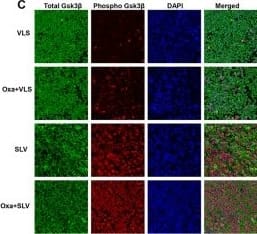


|
The role of Wnts in neuroinflammation By Michalina Hanzel, PhDThe multifaceted roles of the Wnt family of glycoproteins have been extensively characterized throughout embryonic development and adult homeostasis. The highly conserved, cell- and tissue- s... Read full blog post. |
The concentration calculator allows you to quickly calculate the volume, mass or concentration of your vial. Simply enter your mass, volume, or concentration values for your reagent and the calculator will determine the rest.


![N/A Osteoprotegerin/TNFRSF11B [Biotin]](https://images.novusbio.com/images/elisa/DATA_Osteoprotegerin_DY805_ELISA_2238.jpg)
![Bioactivity Wnt-3a [Unconjugated]](https://images.novusbio.com/images/5036-wn_recombinant-human-wnt-3a-protein-bioactivity-3112023115329.jpg)
![Cell Culture Wnt-3a [Unconjugated]](https://images.novusbio.com/images/5036-wn_recombinant-human-wnt-3a-protein-bioactivity-252023103514.jpg)
![Cell Culture Wnt-3a [Unconjugated]](https://images.novusbio.com/images/5036-wn_recombinant-human-wnt-3a-protein-cell-culture-252023103917..jpg)
![Western Blot SOST/Sclerostin Antibody [Unconjugated]](https://images.novusbio.com/images/af1589_mouse-sost-sclerostin-affinity-purified-polyclonal-ab-western-blot-12122025815215.jpg)
![Immunohistochemistry SOST/Sclerostin Antibody [Unconjugated]](https://images.novusbio.com/images/antibody/SOST_AF1589_Immunohistochemistry_7131.jpg)
![Immunohistochemistry SOST/Sclerostin Antibody [Unconjugated]](https://images.novusbio.com/images/af1589_mouse-sost-sclerostin-affinity-purified-polyclonal-ab-2282024172112.jpg)
![Flow Cytometry LRP-6 Antibody (255302) [Unconjugated]](https://images.novusbio.com/images/antibody/LRP-6_MAB1505_Flow_Cytometry_11214.jpg)
![Immunocytochemistry LRP-6 Antibody (255302) [Unconjugated]](https://images.novusbio.com/images/antibody/LRP-6_MAB1505_Immunocytochemistry_11355.jpg)
![SDS-Page TRANCE/TNFSF11/RANK L [Unconjugated]](https://images.novusbio.com/images/protein/TRANCE_462-TEC_442.jpg)
![Bioactivity TRANCE/TNFSF11/RANK L [Unconjugated]](https://images.novusbio.com/images/protein/TRANCE_462-TEC_556.jpg)
![Immunohistochemistry Dkk-3 Antibody [Unconjugated]](https://images.novusbio.com/images/af1118_human-dkk-3-affinity-purified-polyclonal-ab-8220249505930.jpg)
![Immunocytochemistry/ Immunofluorescence Dkk-3 Antibody [Unconjugated]](https://images.novusbio.com/images/af1118_human-dkk-3-affinity-purified-polyclonal-ab-8220249503213.jpg)
![Western Blot Dkk-3 Antibody [Unconjugated]](https://images.novusbio.com/images/af1118_human-dkk-3-affinity-purified-polyclonal-ab-44202415425069.jpg)
![SDS-Page BMP-4 [Unconjugated]](https://images.novusbio.com/images/protein/BMP-4_314-BP_100.jpg)
![Bioactivity BMP-4 [Unconjugated]](https://images.novusbio.com/images/314-bp_recombinant-human-bmp-4-protein-1882021123744.jpg)


![SDS-Page TNF-alpha [Unconjugated]](https://images.novusbio.com/images/protein/TNF-alpha_210-TA_256.jpg)
![Bioactivity TNF-alpha [Unconjugated]](https://images.novusbio.com/images/protein/TNFalpha_210TA_1658.jpg)
![SEC-MALS TNF-alpha [Unconjugated]](https://images.novusbio.com/images/210-ta_recombinant-human-tnf-alpha-protein-sec-mals-35202312244..jpg)
