| Reactivity | MuSpecies Glossary |
| Applications | Binding Activity |
| Format | Carrier-Free |
| Details of Functionality | Measured by its binding ability in a functional ELISA. Immobilized rmTie-2/Fc Chimera at 4 µg/mL (100 µL/well) can bind rmAngiopoietin-3 with a linear range of 5-100 ng/mL. |
||||||||
| Source | Mouse myeloma cell line, NS0-derived mouse Angiopoietin-3 protein
|
||||||||
| Accession # | |||||||||
| N-terminal Sequence | No results obtained: Gln22 predicted |
||||||||
| Structure / Form | Oligomer |
||||||||
| Protein/Peptide Type | Recombinant Proteins |
||||||||
| Gene | Angpt4 |
||||||||
| Purity | >90%, by SDS-PAGE under reducing conditions and visualized by silver stain |
||||||||
| Endotoxin Note | <0.10 EU per 1 μg of the protein by the LAL method. |
| Dilutions |
|
|
| Theoretical MW | 58 kDa. Disclaimer note: The observed molecular weight of the protein may vary from the listed predicted molecular weight due to post translational modifications, post translation cleavages, relative charges, and other experimental factors. |
|
| SDS-PAGE | 85-90 kDa, reducing conditions |
|
| Publications |
|
| Storage | Use a manual defrost freezer and avoid repeated freeze-thaw cycles.
|
| Buffer | Lyophilized from a 0.2 μm filtered solution in Tris-Citrate and NaCl. |
| Purity | >90%, by SDS-PAGE under reducing conditions and visualized by silver stain |
| Reconstitution Instructions | Reconstitute at 100 μg/mL in sterile PBS. |
Mouse angiopoietin-3 (ANG-3) (1), is a secreted glycoprotein belonging to the angiopoietin family. It has the characteristic structural motifs of angiopoietins including the coiled-coiled domain near the amino-terminus and a fibrinogen-like domain at the C-terminus. Mouse ANG-3 cDNA encodes a 509 amino acid (aa) precursor protein with a 21 aa signal peptide. It shares 47%, 46% and 54% aa sequence identity with mouse ANG-1, mouse ANG-2 and human ANG-4, respectively. Although the sequence homology is much higher between the human and mouse counterparts for ANG-1 (97%) and ANG-2 (85%), mouse ANG-3 is believed to be an ortholog of human ANG-4 based on chromosomal localization studies (1, 2). Human ANG-4 is highly expressed in lung and in cultured human umbilical vein endothelial cells (HUVECs). In contrast, mouse ANG-3 is expressed in multiple mouse tissues. Human ANG-4 is an agonist that can bind and activate Tie-2, a receptor tyrosine kinase with immunoglobulin and epidermal growth factor homology domains expressed primarily on endothelial cells and early hematopoietic cells (2, 3). Mouse ANG-3 has been reported to be a Tie-2 antagonist. It is likely that mouse ANG-3, like ANG-2, may exert agonist or antagonist activities depending on the cell context (1, 3, 4).
![Western Blot Angiopoietin-like Protein 4/ANGPTL4 Antibody [Unconjugated]](https://images.novusbio.com/images/af3485_human-primate-angiopoietin-like-4-affinity-purified-polyl-ab-western-blot-12122025555552.jpg)
![Western Blot Angiopoietin-like Protein 4/ANGPTL4 Antibody [Unconjugated]](https://images.novusbio.com/images/af3485_human-primate-angiopoietin-like-4-affinity-purified-polyl-ab-western-blot-121220258175720.jpg)
![Western Blot Angiopoietin-like Protein 4/ANGPTL4 Antibody [Unconjugated]](https://images.novusbio.com/images/af3485_human-primate-angiopoietin-like-4-affinity-purified-polyl-ab-western-blot-121220257534813.jpg)
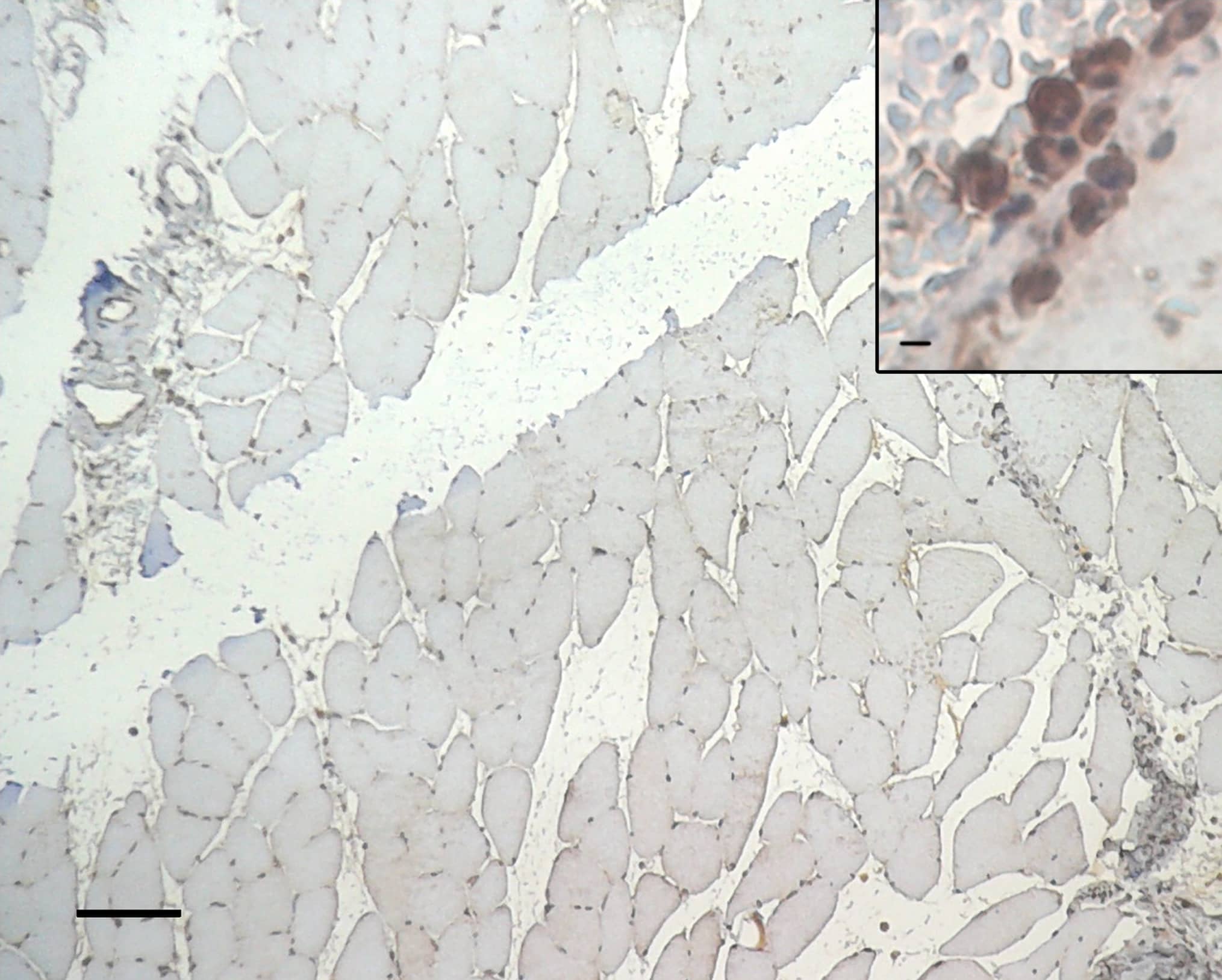
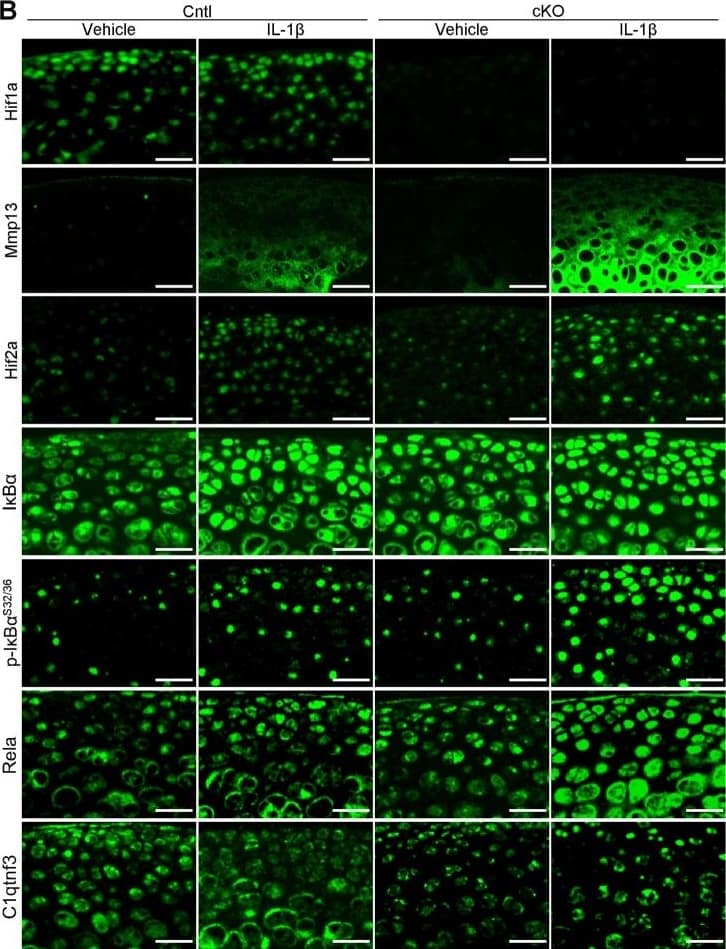
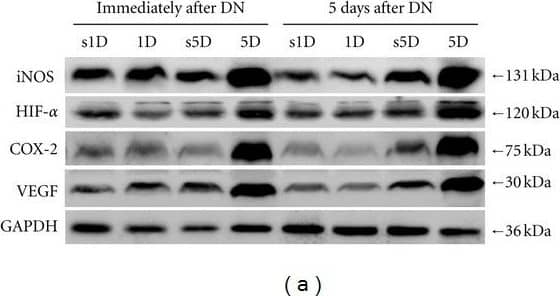
![Intracellular Staining by Flow Cytometry AKT [p Ser473] Antibody [Unconjugated] - Pan Specific](https://images.novusbio.com/images/antibody/Akt3_AF887_Flow_Cytometry_8283.jpg)
![Western Blot AKT [p Ser473] Antibody [Unconjugated] - Pan Specific](https://images.novusbio.com/images/af887_phospho-akt-s473-pan-specific-affinity-purified-pab-41202410485440.jpg)
![Western Blot AKT [p Ser473] Antibody [Unconjugated] - Pan Specific](https://images.novusbio.com/images/af887_phospho-akt-s473-pan-specific-affinity-purified-pab-8120255552843.jpg)

| Publication using 738-AN/CF | Applications | Species |
|---|---|---|
| H Elamaa, M Kihlström, E Kapiainen, M Kaakinen, I Miinalaine, S Ragauskas, M Cerrada-Gi, S Mering, M Nätynki, L Eklund Angiopoietin-4-dependent venous maturation and fluid drainage in the peripheral retina Elife, 2018-11-16;7(0):. 2018-11-16 [PMID: 30444491] (Bioassay, ELISA (Capture), Surface Plasmon Resonance, Human) | Bioassay, ELISA (Capture), Surface Plasmon Resonance | Human |
The concentration calculator allows you to quickly calculate the volume, mass or concentration of your vial. Simply enter your mass, volume, or concentration values for your reagent and the calculator will determine the rest.


![N/A Angiopoietin-2 [HRP]](https://images.novusbio.com/images/elisa/Angiopoietin-2_DANG20_ELISA_30.jpg)
![N/A Angiopoietin-2 [HRP]](https://images.novusbio.com/images/elisa/DATA_Angiopoietin2_DANG20_ELISA_574.jpg)
![N/A VEGF [HRP]](https://images.novusbio.com/images/elisa/VEGF_DVE00_ELISA_208.jpg)
![N/A VEGF [HRP]](https://images.novusbio.com/images/elisa/DATA_VEGF_DVE00_ELISA_871.jpg)
![N/A VEGF [HRP]](https://images.novusbio.com/images/elisa/DATA_VEGF_DVE00_ELISA_872.jpg)
![Simple Western Tie-2 Antibody [Unconjugated]](https://images.novusbio.com/images/antibody/Tie2_AF313_Simple_Western_18668.jpg)
![Western Blot Tie-2 Antibody [Unconjugated]](https://images.novusbio.com/images/antibody/Tie2_AF313_Western_Blot_17326.jpg)
![N/A Angiogenin [HRP]](https://images.novusbio.com/images/elisa/Angiogenin_DAN00_ELISA_28.jpg)
![N/A Angiogenin [HRP]](https://images.novusbio.com/images/elisa/DATA_Angiogenin_DAN00_ELISA_571.jpg)
![Immunohistochemistry Angiopoietin-like Protein 1/ANGPTL1 Antibody [Unconjugated]](https://images.novusbio.com/images/antibody/af2204_human-angiopoietin-like-1-affinity-purified-polyclonal-ab-immunohistochemistry-27122022161939.jpg)


![Flow Cytometry Tie-1 Antibody [Unconjugated]](https://images.novusbio.com/images/antibody/Tie-1_AF619_Flow_Cytometry_8278.jpg)
![Immunohistochemistry Tie-1 Antibody [Unconjugated]](https://images.novusbio.com/images/antibody/Tie-1_AF619_Immunohistochemistry_6883.jpg)


![Western Blot ERK2 Antibody [Unconjugated]](https://images.novusbio.com/images/antibody/ERK2_AF1230_Western_Blot_5097.jpg)
![Knockout Validated ERK2 Antibody [Unconjugated]](https://images.novusbio.com/images/antibody/ERK2_AF1230_Knockout_Validated_22864.jpg)
![Immunohistochemistry ERK2 Antibody [Unconjugated]](https://images.novusbio.com/images/antibody/ERK2_AF1230_Immunohistochemistry_20696.jpg)
![N/A Angiopoietin-like Protein 3/ANGPTL3 [HRP]](https://images.novusbio.com/images/elisa/DATA_Angiopoietinlike_Protein_3_DANL30_ELISA_575.jpg)
![N/A Angiopoietin-like Protein 3/ANGPTL3 [HRP]](https://images.novusbio.com/images/elisa/Angiopoietin-like_Protein_3_DANL30_ELISA_31.jpg)
![N/A IL-6 [HRP]](https://images.novusbio.com/images/elisa/DATA_IL6_M6000_ELISA_936.jpg)
![N/A IL-6 [HRP]](https://images.novusbio.com/images/elisa/IL-6_M6000_ELISA_415.jpg)
![N/A IL-6 [HRP]](https://images.novusbio.com/images/m6000b_mouse-il-6-quantikine-elisa-kit-1752025024034.jpg)
![Bioactivity CXCL12/SDF-1 alpha [Unconjugated]](https://images.novusbio.com/images/protein/CXCL12SDF1_alpha_350NS_1178.jpg)
![SDS-Page CXCL12/SDF-1 alpha [Unconjugated]](https://images.novusbio.com/images/protein/CXCL12_SDF-1_alpha_350-NS_308.jpg)