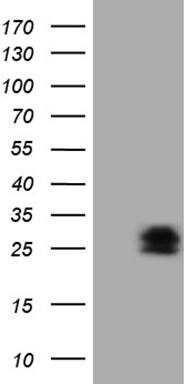
![Western Blot: PERP Antibody [NB100-2912] - (1ug/ml) staining of human liver lysate (35ug protein in RIPA buffer). Primary incubation was 1 hour. Detected by chemiluminescence.](http://images.novusbio.com/fullsize/PERP-Antibody-Western-Blot-NB100-2912-img0002.jpg "Western Blot: PERP Antibody [NB100-2912] - (1ug/ml) staining of human liver lysate (35ug protein in RIPA buffer). Primary incubation was 1 hour. Detected by chemiluminescence.")
| Reactivity | Hu, Mu, Rt, CaSpecies Glossary |
| Applications | WB, ELISA, IHC |
| Clonality | Polyclonal |
| Host | Goat |
| Conjugate | Unconjugated |
| Concentration | 0.5 mg/ml |
| Immunogen | Peptide with sequence CLPNYEDDLLGNAK corresponding to C-Terminus according to NP_071404.2. |
| Predicted Species | Mouse (100%), Rat (100%), Canine (100%). Backed by our 100% Guarantee. |
| Isotype | IgG |
| Clonality | Polyclonal |
| Host | Goat |
| Gene | PERP |
| Purity | Immunogen affinity purified |
| Innovator's Reward | Test in a species/application not listed above to receive a full credit towards a future purchase. |
| Dilutions |
|
||
| Application Notes | WB: Approx. 20 kDa band observed in human liver lysates (calculated MW of 21.4 kDa band according to NP_071404.2). |
||
| Control |
|
||
| Publications |
|
| Storage | Store at -20C. Avoid freeze-thaw cycles. |
| Buffer | Tris saline (20 mM Tris pH 7.3, 150 mM NaCl), 0.5% BSA |
| Preservative | 0.02% Sodium Azide |
| Concentration | 0.5 mg/ml |
| Purity | Immunogen affinity purified |






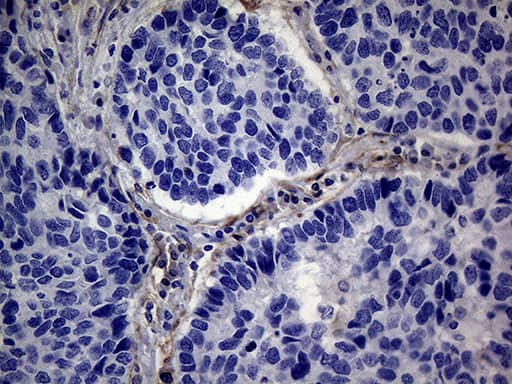
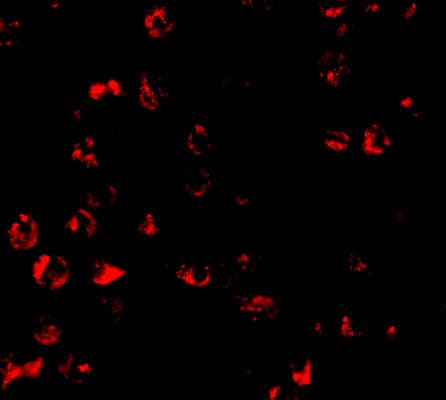
![Intracellular Staining by Flow Cytometry AKT [p Ser473] Antibody [Unconjugated] - Pan Specific](https://images.novusbio.com/images/antibody/Akt3_AF887_Flow_Cytometry_8283.jpg)
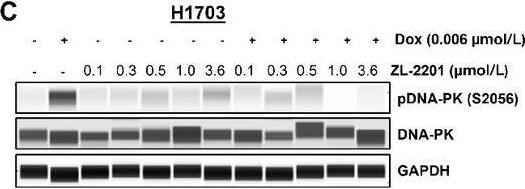
![Western Blot AKT [p Ser473] Antibody [Unconjugated] - Pan Specific](https://images.novusbio.com/images/af887_phospho-akt-s473-pan-specific-affinity-purified-pab-41202410485440.jpg)
![Western Blot AKT [p Ser473] Antibody [Unconjugated] - Pan Specific](https://images.novusbio.com/images/af887_phospho-akt-s473-pan-specific-affinity-purified-pab-8120255552843.jpg)


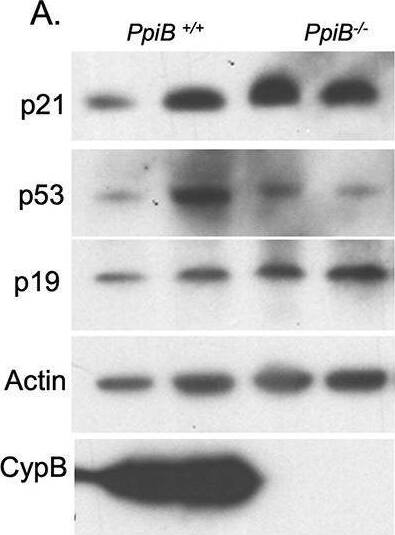

| Publication using NB100-2912 | Applications | Species |
|---|---|---|
| Ihrie RA, Marques MR, Nguyen BT et al. Perp is a p63-regulated gene essential for epithelial integrity. Cell 2005-03-25 [PMID: 15797384] |
Secondary Antibodies |
Isotype Controls |
Research Areas for PERP Antibody (NB100-2912)Find related products by research area.
|
The concentration calculator allows you to quickly calculate the volume, mass or concentration of your vial. Simply enter your mass, volume, or concentration values for your reagent and the calculator will determine the rest.
| Gene Symbol | PERP |
| Entrez | |
| Uniprot |
|


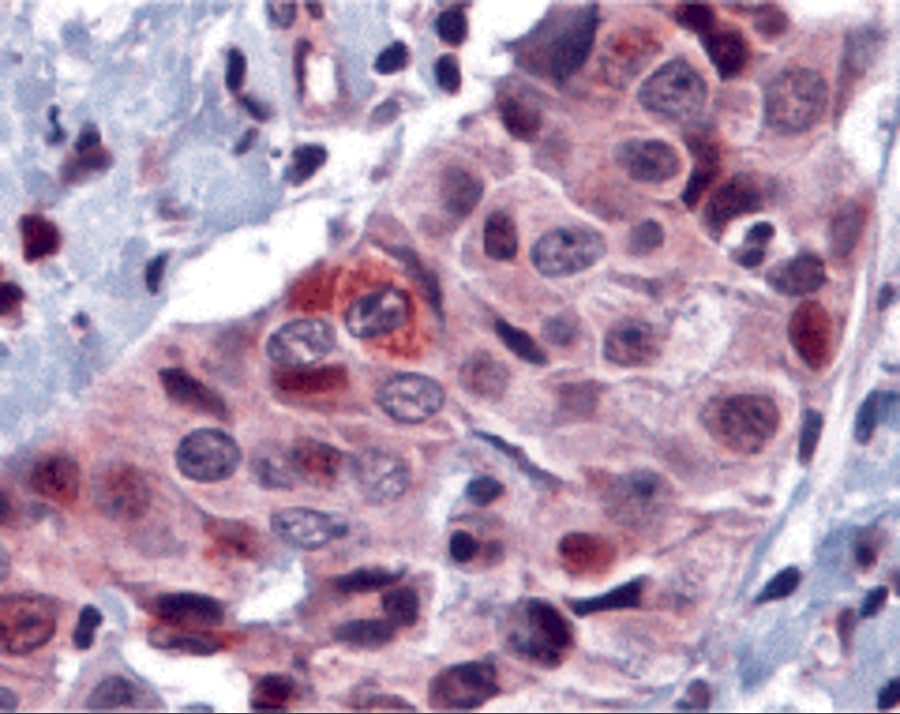
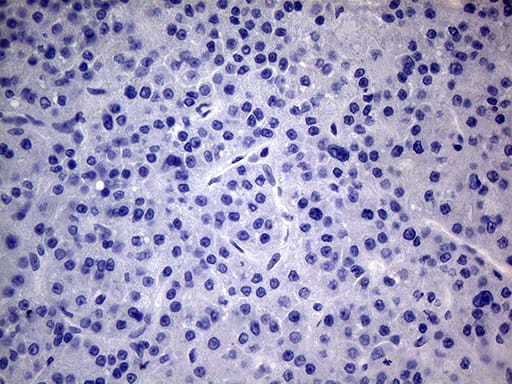
![Immunohistochemistry-Paraffin: PERP Antibody [NB100-2912] - Human Skin. Steamed antigen retrieval with citrate buffer pH 6, AP-staining.](http://images.novusbio.com/fullsize/PERP-Antibody-Immunohistochemistry-Paraffin-NB100-2912-img0003.jpg "Immunohistochemistry-Paraffin: PERP Antibody [NB100-2912] - Human Skin. Steamed antigen retrieval with citrate buffer pH 6, AP-staining.")
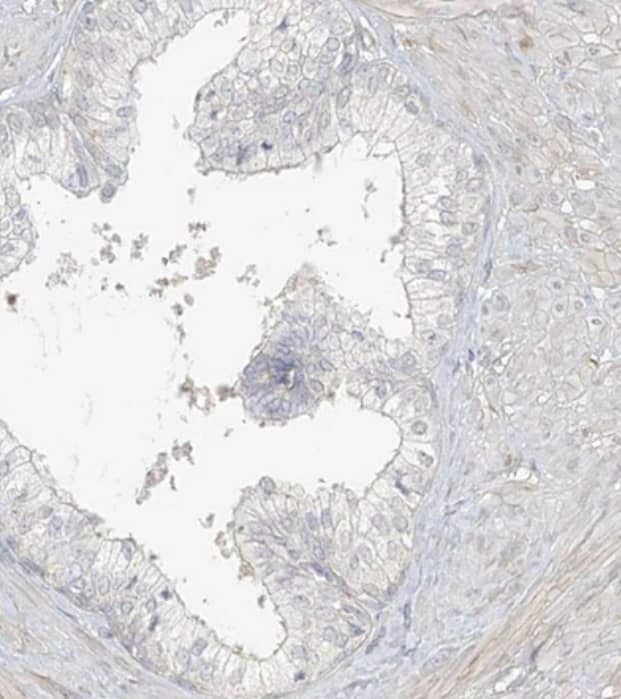
![Immunohistochemistry p63/TP73L Antibody [Unconjugated]](https://images.novusbio.com/images/antibody/p63_AF1916_Immunohistochemistry_16919.jpg)
![Immunocytochemistry/ Immunofluorescence p63/TP73L Antibody [Unconjugated]](https://images.novusbio.com/images/antibody/af1916_human-p63-tp73l-affinity-purified-polyclonal-ab-2362025103050.jpg)
![Western Blot p63/TP73L Antibody [Unconjugated]](https://images.novusbio.com/images/antibody/af1916_human-p63-tp73l-affinity-purified-polyclonal-ab-western-blot-41202413135..jpg)
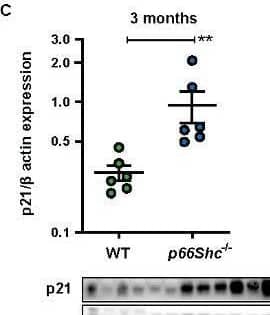
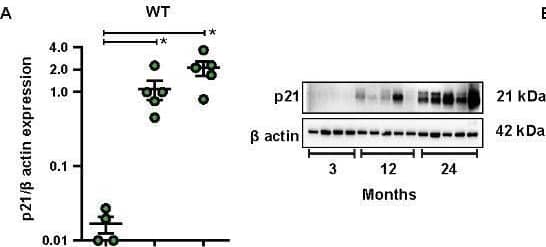
![Simple Western CKAP4/p63 Antibody [Unconjugated]](https://images.novusbio.com/images/antibody/af7355_human-ckap4-p63-affinity-purified-polyclonal-ab-simple-western-157202493849.jpg)
![Western Blot CKAP4/p63 Antibody [Unconjugated]](https://images.novusbio.com/images/antibody/CKAP4_AF7355_Western_Blot_11997.jpg)
![Immunocytochemistry CKAP4/p63 Antibody [Unconjugated]](https://images.novusbio.com/images/antibody/CKAP4_AF7355_Immunocytochemistry__Immunofluorescence_17000.jpg)