![Immunohistochemistry: p53 [p Ser392] Antibody (FP3.2 [FPS392]) [NB500-575] - Wild-type p53 expressed in human trophoblast (paraffin-embedded sections). 1A - anti-p53 (total).](http://images.novusbio.com/fullsize/p53-p-Ser392-Antibody-FP3-2-FPS392-Immunohistochemistry-NB500-575-img0005.jpg "Immunohistochemistry: p53 [p Ser392] Antibody (FP3.2 [FPS392]) [NB500-575] - Wild-type p53 expressed in human trophoblast (paraffin-embedded sections). 1A - anti-p53 (total).")
| Reactivity | HuSpecies Glossary |
| Applications | WB, IHC |
| Clone | FP3.2 [FPS392] |
| Clonality | Monoclonal |
| Host | Mouse |
| Conjugate | Unconjugated |
| Format | BSA Free |
| Concentration | 1.0 mg/ml |
| Immunogen | KLH-conjugated phosphopeptide RHKKLMFKTEGPDS[P]D, corresponding to amino acids 378-393 of human p53. |
| Modification | p Ser392 |
| Specificity | The antibody FP3.2 [FPS392] reacts with human p53 tumour suppressor protein phosphorylated at CKII site (Ser 392). |
| Isotype | IgG1 |
| Clonality | Monoclonal |
| Host | Mouse |
| Gene | TP53 |
| Purity | Protein A purified |
| Innovator's Reward | Test in a species/application not listed above to receive a full credit towards a future purchase. |
| Dilutions |
|
||
| Application Notes | Immunohistochemistry-Paraffin sections - Staining technique: standard ABC technique (DAB+) Pretreatment: high temperature antigen retrieval (microwave, pressure cooker) in 10 mM citrate buffer pH 6.0 or 1 mM EDTA-NaOH buffer pH 8.0 Recommended dilution: 10 ug/ml Incubation: 1 hour at RT; or overnight at 4C |
||
| Control |
|
| Storage | Store at 4C. Do not freeze. |
| Buffer | Phosphate buffered saline (PBS), pH 7.4 |
| Preservative | 15mM Sodium Azide |
| Concentration | 1.0 mg/ml |
| Purity | Protein A purified |


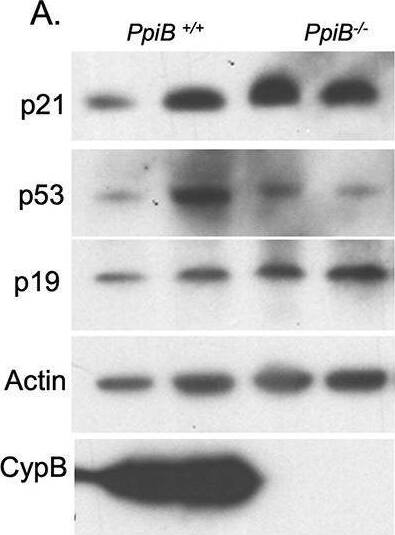


![Immunohistochemistry PAK3 Antibody [Unconjugated]](https://images.novusbio.com/images/antibody/PAK3_AF6897_Immunohistochemistry_11144.jpg)
![Simple Western PAK3 Antibody [Unconjugated]](https://images.novusbio.com/images/antibody/af6897_human-mouse-pak3-affinity-purified-polyclonal-ab-simple-western-245202494437..jpg)
![Immunohistochemistry PAK3 Antibody [Unconjugated]](https://images.novusbio.com/images/antibody/PAK3_AF6897_Immunohistochemistry_11480.jpg)


![Immunocytochemistry EGFR Antibody [Unconjugated]](https://images.novusbio.com/images/antibody/EGF_R_AF231_Immunocytochemistry__Immunofluorescence_21143.jpg)
![Flow Cytometry EGFR Antibody [Unconjugated]](https://images.novusbio.com/images/antibody/EGF_R_AF231_Flow_Cytometry_20401.jpg)
![Western Blot EGFR Antibody [Unconjugated]](https://images.novusbio.com/images/antibody/EGF_R_AF231_Western_Blot_19925.jpg)


Secondary Antibodies |
Isotype Controls |
Research Areas for p53 Antibody (NB500-575)Find related products by research area.
|
|
Developmental regulator Daam2 promotes glial cell tumors by degrading Von Hippel-Lindau protein By Jamshed Arslan Pharm.D. Glioblastoma is an aggressive type of cancer that forms from the star-shaped glial cells of the central nervous system, called astrocytes. Intriguingly, several genes linked to glioblasto... Read full blog post. |
|
Autophagy independent roles of the core ATG proteins By Christina Towers, PhD. Autophagy and ATG ProteinsAutophagy is a nutrient recycling process that cells use to fuel metabolism, particularly in response to nutrient deprivation. It is critical for removal of dam... Read full blog post. |
|
Killing two birds with one stone: Treating inflammation and cancer by inhibiting prolyl-4-hydroxylase-1 By Jamshed Arslan Pharm.D. The cell’s oxygen-sensing machinery comprises prolyl-4-hydroxylases (P4Hs 1-3, PHDs 1-3, or EGLN 1-3) and their canonical target hypoxia-inducible factors (HIFs). When oxygen levels ... Read full blog post. |
|
Pathway Highlight: Which caspase substrates contribute to the morphological features associated with apoptosis? Apoptosis, or programmed cell death, is controlled by a caspase signal cascade that activates downstream signals to induce the morphological changes used to differentiate apoptosis from other forms of cell death. Novus Biologicals offers a variet... Read full blog post. |
|
The role of p53 in UV radiation DNA damage and subsequent tumorogenesis p53, the protein product of the tp53 gene, is one of the most widely studied tumor suppressor proteins in cancer research. p53 is unique in that it demonstrates both tumor suppressive and tumor progressive properties depending on whether it is fu... Read full blog post. |
|
MAPK8/JNK1 - A multifunctional kinase and drug target for cancer therapeutics The c-Jun N-terminal kinase (JNK) family is a group of regulatory kinases with important functions in cell morphogenesis, inflammation, differentiation, and cell death (1). Aberrant activation of JNK family proteins in cancers has led to interest i... Read full blog post. |
|
p53 - Investigating an important tumor suppressor p53 is a tumor suppressor that has a central role in regulating cell cycle arrest, DNA repair, and apoptosis. p53 is widely studied for its role in cancer and is mutated or altered in more than half of all cancers (1). This widespread role in tumor... Read full blog post. |
|
ATM - detecting and responding to DNA damage Ataxia telangiectasia mutated (ATM) is essential for the maintenance of genomic stability. ATM is a 370 kDa serine-threonine kinase that is constitutively expressed in various tissues. Although primarily nuclear, ATM is also found at lower levels ... Read full blog post. |
|
NOXA - a BH3-only protein balancing cell death decisions Noxa is a BH3-only protein involved in regulating cell death decisions. Noxa is a primary p53-response gene and is upregulated in response to p53 overexpression or DNA damage. Noxa can also be induced by alternative mechanisms including through a ... Read full blog post. |
|
p73: An Important Tumor Suppressor Cousin of p53 p73 has been identified as a long-lost cousin of the p53 tumor suppressor protein. It has high homology with both p53 and with p63, a gene implicated in the maintenance of epithelial stem cells. The presence of significant homology between the DNA-bin... Read full blog post. |
The concentration calculator allows you to quickly calculate the volume, mass or concentration of your vial. Simply enter your mass, volume, or concentration values for your reagent and the calculator will determine the rest.


![Immunohistochemistry: p53 [p Ser392] Antibody (FP3.2 [FPS392]) [NB500-575] - 1B anti-P53 (phospho Ser392) Note that some of total p53 positive nuclei are also FP3.2 (phospho p53) positive.](http://images.novusbio.com/fullsize/p53-p-Ser392-Antibody-FP3-2-FPS392-Immunohistochemistry-NB500-575-img0004.jpg "Immunohistochemistry: p53 [p Ser392] Antibody (FP3.2 [FPS392]) [NB500-575] - 1B anti-P53 (phospho Ser392) Note that some of total p53 positive nuclei are also FP3.2 (phospho p53) positive.")
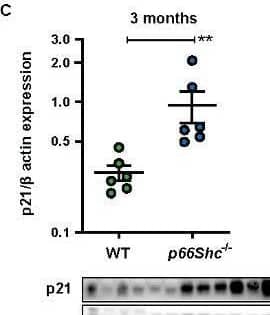
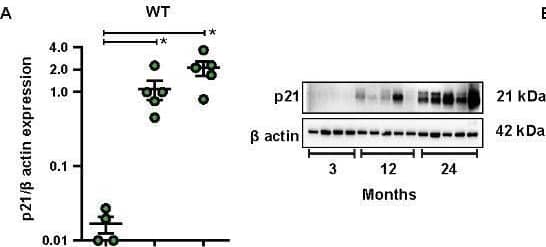
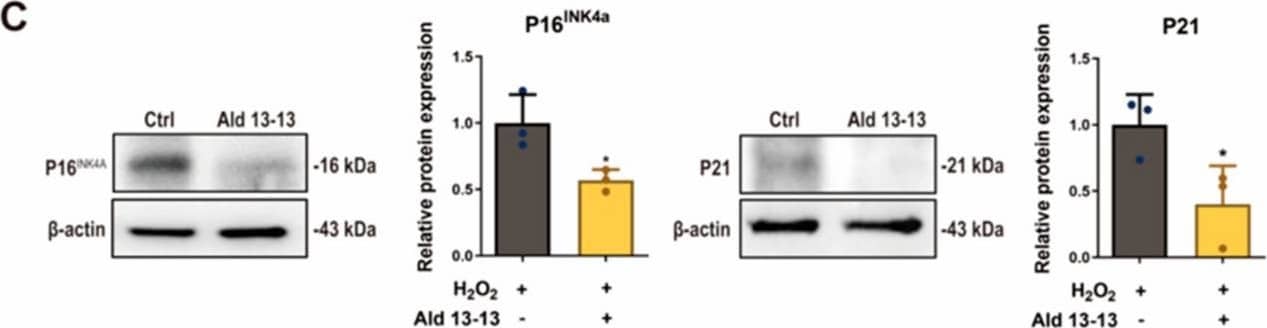


![Western Blot RB1 Antibody (607121) [Unconjugated]](https://images.novusbio.com/images/mab6495_human-rb1-mab-clone-607121-812025548577.jpg)
![Simple Western RB1 Antibody (607121) [Unconjugated]](https://images.novusbio.com/images/antibody/RB1_MAB6495_Simple_Western_16629.jpg)
![Western Blot RB1 Antibody (607121) [Unconjugated]](https://images.novusbio.com/images/antibody/RB1_MAB6495_Western_Blot_10216.jpg)
![Immunohistochemistry Caspase-3 Antibody [Unconjugated] - Active](https://images.novusbio.com/images/af835_human-mouse-active-caspase-3-affinity-purified-pab-41202410331943.jpg)
![Western Blot Caspase-3 Antibody [Unconjugated] - Active](https://images.novusbio.com/images/af835_human-mouse-active-caspase-3-affinity-purified-pab-812025554170.jpg)
![Western Blot Caspase-3 Antibody [Unconjugated] - Active](https://images.novusbio.com/images/af835_human-mouse-active-caspase-3-affinity-purified-pab-8120255534731.jpg)
![Bioactivity ErbB2/Her2 [Unconjugated]](https://images.novusbio.com/images/protein/1129-er_recombinant-human-erbb2-her2-fc-chimera-protein-cf-bioactivity-7122020142841.jpg)
![SDS-Page ErbB2/Her2 [Unconjugated]](https://images.novusbio.com/images/protein/ErbB2_1129-ER_70.jpg)
![Immunoprecipitation bcl-x Antibody [Unconjugated]](https://images.novusbio.com/images/antibody/Bcl-x_AF800_Immunoprecipitation_1612.jpg)
![Simple Western bcl-x Antibody [Unconjugated]](https://images.novusbio.com/images/antibody/Bclx_AF800_Simple_Western_16514.jpg)
![Western Blot bcl-x Antibody [Unconjugated]](https://images.novusbio.com/images/af800_human-mouse-bcl-x-affinity-purified-polyclonal-ab-western-blot-12122025825244.jpg)

![SDS-Page: Mouse IgG1 Isotype Control (MG1) [NBP1-97005] - Lane 1: , Non-reduced. M: Opal Pre-stained Ladder. Lane 2: , Reduced. Load: 1.0 ug per lane. Predicted/Observed: 120 kDa Non-reduced, 55 and 25 Reduced.](https://images.novusbio.com/images/Mouse-IgG1-Isotype-Control-MG1-SDS-Page-NBP1-97005-img0002.jpg "SDS-Page: Mouse IgG1 Isotype Control (MG1) [NBP1-97005] - Lane 1: , Non-reduced. M: Opal Pre-stained Ladder. Lane 2: , Reduced. Load: 1.0 ug per lane. Predicted/Observed: 120 kDa Non-reduced, 55 and 25 Reduced.")