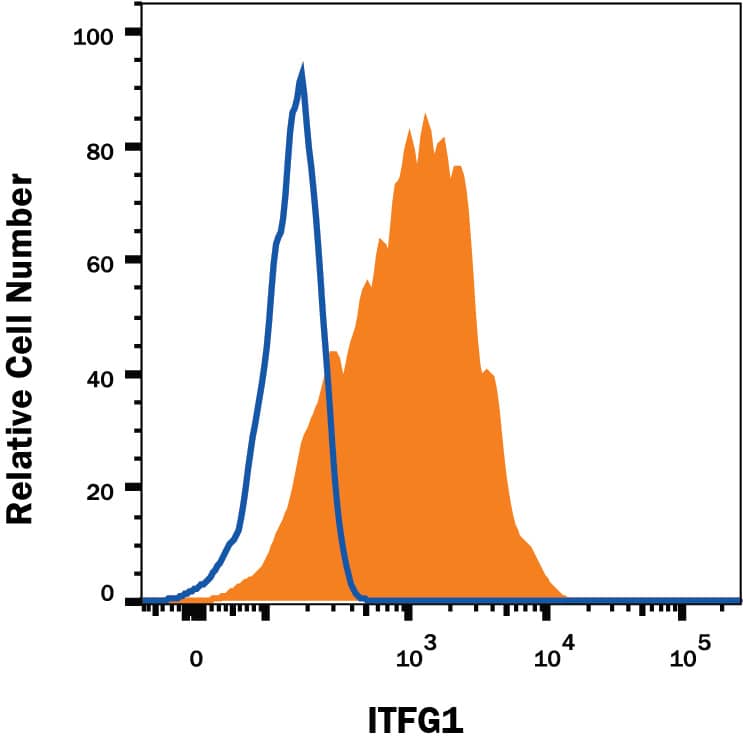
MAB0041, open histogram), followed by Allophycocyanin-conjugated Anti-Mouse IgG F(ab')2Secondary Antibody (Catalog # F0101B)." title="THP-1 human acute monocytic leukemia cell line were treated for 72 hours with 50 ng/mL PMA then stained with Mouse Anti-Human LOX-1/OLR1 Monoclonal Antibody (Catalog # MAB1798, filled histogram) or isotype control antibody (Catalog # MAB0041, open histogram), followed by Allophycocyanin-conjugated Anti-Mouse IgG F(ab')2Secondary Antibody (Catalog # F0101B)." />
| Reactivity | HuSpecies Glossary |
| Applications | WB, Flow, B/N, CyTOF-ready |
| Clone | 331212 |
| Clonality | Monoclonal |
| Host | Mouse |
| Conjugate | Unconjugated |
| Concentration | LYOPH |
| Immunogen | Mouse myeloma cell line NS0-derived recombinant human LOX-1/OLR1 Ser61-Gln273 Accession # P78380 |
| Specificity | Detects human LOX-1 in direct ELISAs and Western blots. In direct ELISAs and Western blots, this antibody does not cross-react with recombinant mouse LOX‑1. |
| Source | N/A |
| Isotype | IgG2b |
| Clonality | Monoclonal |
| Host | Mouse |
| Gene | OLR1 |
| Purity Statement | Protein A or G purified from hybridoma culture supernatant |
| Endotoxin Note | <0.10 EU per 1 μg of the antibody by the LAL method. |
| Innovator's Reward | Test in a species/application not listed above to receive a full credit towards a future purchase. |
| Dilutions |
|
|
| Publications |
|
| Storage | Use a manual defrost freezer and avoid repeated freeze-thaw cycles.
|
| Buffer | Lyophilized from a 0.2 μm filtered solution in PBS with Trehalose. *Small pack size (SP) is supplied either lyophilized or as a 0.2 µm filtered solution in PBS. |
| Preservative | No Preservative |
| Concentration | LYOPH |
| Reconstitution Instructions | Reconstitute at 0.5 mg/mL in sterile PBS. |
Lectin-like oxidized low-density-lipoprotein receptor-1 (LOX-1), also known as oxidized low-density-lipoprotein receptor-1 (OLR-1), is a type II transmembrane receptor belonging to the C-type lectin family (1). It also belongs to the functionally defined scavenger receptor (SR) superfamily, whose members share the common ability to bind and internalize modified forms of Low Density Lipoproteins (LDL) (2-4). LOX-1 is the first member of the class E scavenger receptor subfamily (SR-E). It binds and supports the internalization of multiple structurally unrelated macromolecules including oxidized LDL, advanced glycation end products (AGE), activated platelets, bacteria, apoptotic or aged cells, and heat shock proteins (5-7). LOX-1 has also been implicated as an intestinal receptor involved in the transcytosis of pancreatic bile salt-dependent lipase (8). The human LOX-1 gene encodes a 273 amino acid (aa) residue protein with a short N-terminal intracellular domain, a transmembrane domain, an extracellular stalk/neck region followed by a C-type lectin-like domain (CTLD) (1, 6). The CTLD, which is required for ligand recognition, contains the six conserved cysteine residues present in all C-type lectins, but lacks the Ca2+-binding residues found in classical C-type lectins. LOX-1 can be detected on activated endothelial cells, vascular smooth muscle cells, macrophages, intestinal cells, and dendritic cells (6-8). The expression of LOX-1 is induced by proinflammatory or proatherogenic stimuli, as well as by oxidized LDL itself and hemodynamic or oxidative stress. Human LOX-1 exists on the cell surface as covalent homodimers, which can further associate into non-covalent-linked oligomers (9). Cell surface LOX-1 can also be cleaved by yet unidentified proteases to release the soluble LOX-1 extracellular domain (6). Binding and endocytosis of oxidized LDL by LOX-1 induces oxidative stress, activates NF kappa B, and upregulates the expression of monocyte chemoattractant protein-1 and matrix metalloproteases (5-9). LOX-1-dependent oxidized LDL uptake also induces apoptosis by inducing the expression of the pro-apoptotic Bax and downregulation of the anti-apoptotic Bcl-2 (10). Oxidized LDL plays a key role in the pathogenesis of atherosclerosis and endothelial dysfunction. Blockade of LOX-1 functions may turn out to be a suitable target for the therapeutic intervention of atherosclerosis.


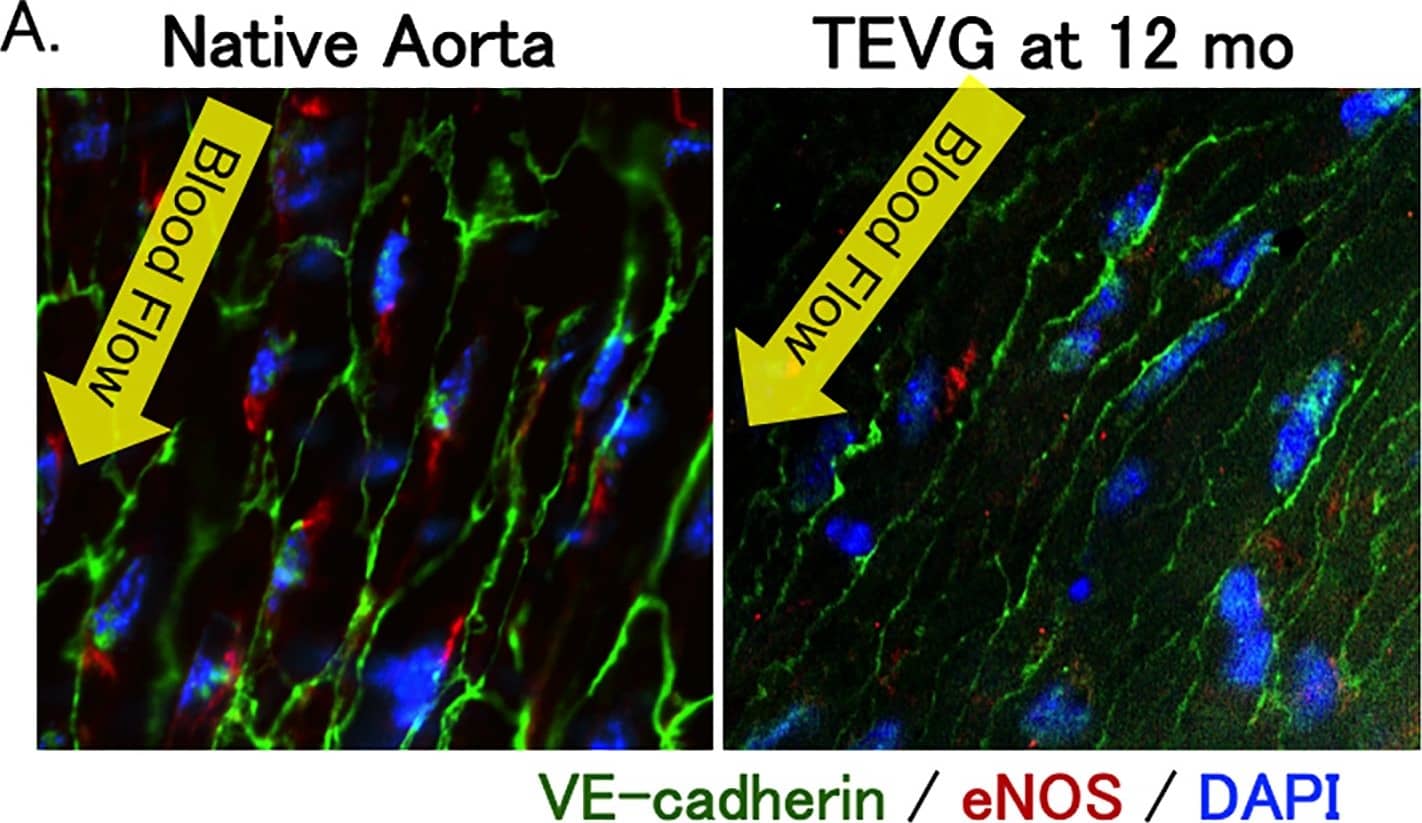
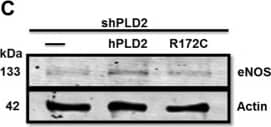


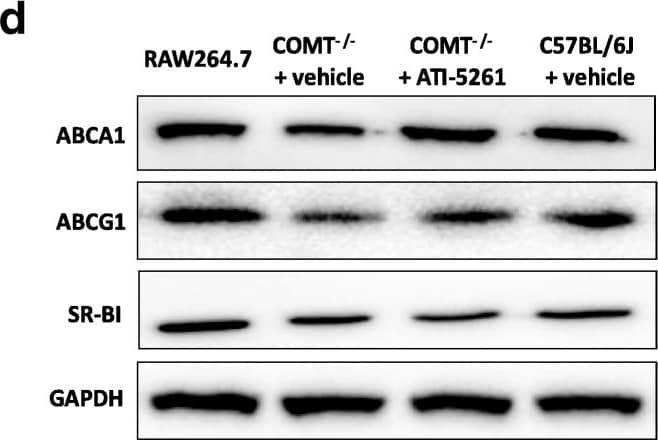


![LOX-1/OLR1 Antibody (331212) [Unconjugated]](/sites/all/modules/enterprise-tech/et_datasheets/images/novus_guarantee.png "LOX-1/OLR1 Antibody (331212) [Unconjugated]")
Secondary Antibodies |
Isotype Controls |
The concentration calculator allows you to quickly calculate the volume, mass or concentration of your vial. Simply enter your mass, volume, or concentration values for your reagent and the calculator will determine the rest.


![Western Blot LDLR Antibody [Unconjugated]](https://images.novusbio.com/images/af2255_mouse-ldl-r-affinity-purified-polyclonal-ab-8120255541738.jpg)
![Western Blot LDLR Antibody [Unconjugated]](https://images.novusbio.com/images/af2255_mouse-ldl-r-affinity-purified-polyclonal-ab-8120255541731.jpg)
![Western Blot LDLR Antibody [Unconjugated]](https://images.novusbio.com/images/af2255_mouse-ldl-r-affinity-purified-polyclonal-ab-4120241240515.jpg)
![SDS-Page TNF-alpha [Unconjugated]](https://images.novusbio.com/images/protein/TNF-alpha_210-TA_256.jpg)
![Bioactivity TNF-alpha [Unconjugated]](https://images.novusbio.com/images/protein/TNFalpha_210TA_1658.jpg)
![SEC-MALS TNF-alpha [Unconjugated]](https://images.novusbio.com/images/210-ta_recombinant-human-tnf-alpha-protein-sec-mals-35202312244..jpg)


![N/A CCL2/JE/MCP-1 [HRP]](https://images.novusbio.com/images/elisa/CCL2_DCP00_ELISA_67.jpg)
![N/A CCL2/JE/MCP-1 [HRP]](https://images.novusbio.com/images/elisa/DATA_CCL2_DCP00_ELISA_633.jpg)
![N/A CCL2/JE/MCP-1 [HRP]](https://images.novusbio.com/images/elisa/DATA_CCL2_DCP00_ELISA_634.jpg)
![N/A C-Reactive Protein/CRP [Biotin]](https://images.novusbio.com/images/elisa/DATA_CReactive_Protein_DY1707_ELISA_1701.jpg)
![Bioactivity CTLA-4 [Unconjugated]](https://images.novusbio.com/images/protein/CTLA4_7268CT_2293.jpg)
![Western Blot ERK2 Antibody [Unconjugated]](https://images.novusbio.com/images/antibody/ERK2_AF1230_Western_Blot_5097.jpg)
![Knockout Validated ERK2 Antibody [Unconjugated]](https://images.novusbio.com/images/antibody/ERK2_AF1230_Knockout_Validated_22864.jpg)
![Immunohistochemistry ERK2 Antibody [Unconjugated]](https://images.novusbio.com/images/antibody/ERK2_AF1230_Immunohistochemistry_20696.jpg)
![Western Blot ICAM-1/CD54 Antibody [Unconjugated]](https://images.novusbio.com/images/af796_mouse-icam-1-cd54-affinity-purified-polyclonal-ab-41202410481192.jpg)
![Western Blot ICAM-1/CD54 Antibody [Unconjugated]](https://images.novusbio.com/images/af796_mouse-icam-1-cd54-affinity-purified-polyclonal-ab-4120241048112.jpg)
![Western Blot ICAM-1/CD54 Antibody [Unconjugated]](https://images.novusbio.com/images/af796_mouse-icam-1-cd54-affinity-purified-polyclonal-ab-4120241049436.jpg)