![SDS-Page: Recombinant Human LC3A Protein [H00084557-P01] - 12.5% SDS-PAGE Stained with Coomassie Blue.](http://images.novusbio.com/fullsize/Recombinant-Human-LC3A-Protein-SDS-Page-H00084557-P01-img0002.jpg "SDS-Page: Recombinant Human LC3A Protein [H00084557-P01] - 12.5% SDS-PAGE Stained with Coomassie Blue.")
| Description | Recombinant protein with GST-tag at N-terminal corresponding to the amino acids 1 - 121 of Human MAP1LC3A full-length ORF Source: Wheat Germ (in vitro) Amino Acid Sequence: MPSDRPFKQRRSFADRCKEVQQIRDQHPSKIPVIIERYKGEKQLPVLDKTKFLVPDHVNMSELVKIIRRRLQLNPTQAFFLLVNQHSMVSVSTPIADIYEQEKDEDGFLYMVYASQETFGF |
| Preparation Method |
in vitro wheat germ expression system |
| Details of Functionality | This protein was produced in an in vitro wheat germ expression system that should preserve correct conformational folding that is necessary for biological function. While it is possible that this protein could display some level of activity, the functionality of this protein has not been explicitly measured or validated. |
| Source | Wheat germ |
| Protein/Peptide Type | Full Length Recombinant Protein |
| Gene | MAP1LC3A |
| Purity | >80% by SDS-PAGE and Coomassie blue staining |
| Dilutions |
|
|
| Theoretical MW | 38.94 kDa. Disclaimer note: The observed molecular weight of the protein may vary from the listed predicted molecular weight due to post translational modifications, post translation cleavages, relative charges, and other experimental factors. |
|
| Publications |
|
| Storage | Store at -80C. Avoid freeze-thaw cycles. |
| Buffer | 50 mM Tris-HCl, 10 mM reduced Glutathione, pH 8.0 in the elution buffer. |
| Preservative | No Preservative |
| Purity | >80% by SDS-PAGE and Coomassie blue staining |


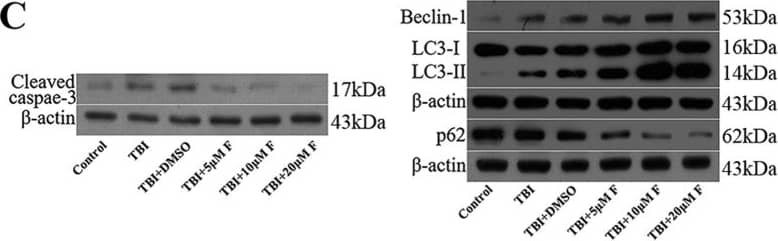
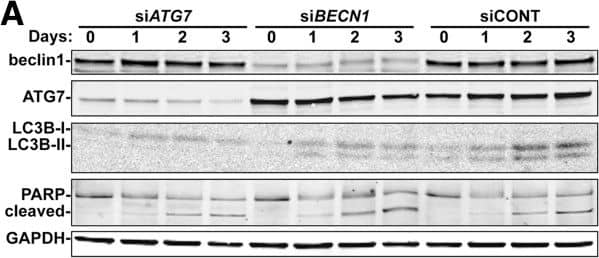


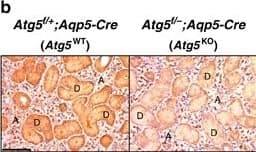
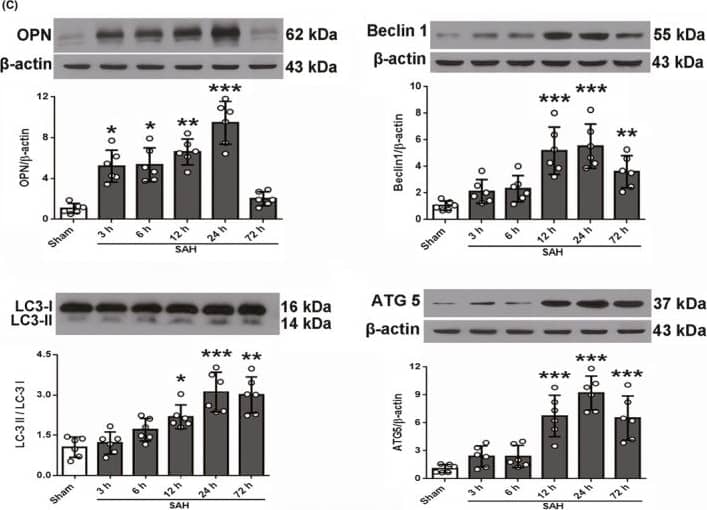


![Intracellular Staining by Flow Cytometry AKT [p Ser473] Antibody [Unconjugated] - Pan Specific](https://images.novusbio.com/images/antibody/Akt3_AF887_Flow_Cytometry_8283.jpg)
![Western Blot AKT [p Ser473] Antibody [Unconjugated] - Pan Specific](https://images.novusbio.com/images/af887_phospho-akt-s473-pan-specific-affinity-purified-pab-41202410485440.jpg)
![Western Blot AKT [p Ser473] Antibody [Unconjugated] - Pan Specific](https://images.novusbio.com/images/af887_phospho-akt-s473-pan-specific-affinity-purified-pab-8120255552843.jpg)
![Immunohistochemistry ATG7 Antibody (683906) [Unconjugated]](https://images.novusbio.com/images/antibody/ATG7_MAB6608_Immunohistochemistry_10631.jpg)
![Simple Western ATG7 Antibody (683906) [Unconjugated]](https://images.novusbio.com/images/antibody/ATG7_MAB6608_Simple_Western_16409.jpg)


Research Areas for LC3A Full Length Recombinant Protein (H00084557-P01)Find related products by research area.
|
|
Read full blog post. |
|
Losing memory: Toxicity from mutant APP and amyloid beta explain the hippocampal neuronal damage in Alzheimer's disease By Jamshed Arslan Pharm.D. Alzheimer's disease (AD) is an irreversible brain disorder that destroys memory and thinking skills. The telltale signs of AD brains are extracellular deposits of amy... Read full blog post. |
|
Nuclear LC3: Why is it there and what is it doing? By Christina Towers, PhD. Cells use the complex process of autophagy to degrade and recycle cytoplasmic material. There are over 20 proteins that have been implicated in this process and appropriately named core ... Read full blog post. |
|
Why LC3B Antibodies Make Ideal Autophagosomes Membrane Markers The human form of microtubule-associated protein light chain 3 (LC3) is expressed as 3 splice variants LC3A, LC3B, and LC3C.1 LC3B is a subunit of the MAP1A and MAP1B microtubule-binding proteins and plays a central role in autophagosome membrane stru... Read full blog post. |
The concentration calculator allows you to quickly calculate the volume, mass or concentration of your vial. Simply enter your mass, volume, or concentration values for your reagent and the calculator will determine the rest.
| Gene Symbol | MAP1LC3A |


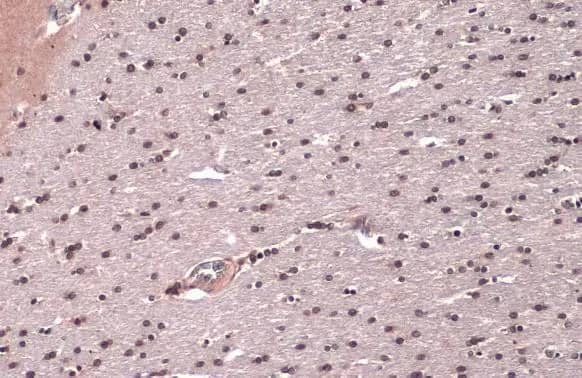


![Immunohistochemistry TOR/mTOR [p Ser2448] Antibody - BSA Free](https://images.novusbio.com/images/nb600-607_rabbit-polyclonal-tor-mtor-p-ser2448-antibody-235202318143142.jpg)
![Western Blot TOR/mTOR [p Ser2448] Antibody - BSA Free](https://images.novusbio.com/images/nb600-607_rabbit-polyclonal-tor-mtor-p-ser2448-antibody-31020241535647.jpg)
![Data TOR/mTOR [p Ser2448] Antibody - BSA Free](https://images.novusbio.com/images/TOR-mTOR-[p-Ser2448]-Antibody-N-A-NB600-607-img0008.jpg)
![Immunohistochemistry Caspase-3 Antibody [Unconjugated] - Active](https://images.novusbio.com/images/af835_human-mouse-active-caspase-3-affinity-purified-pab-41202410331943.jpg)
![Western Blot Caspase-3 Antibody [Unconjugated] - Active](https://images.novusbio.com/images/af835_human-mouse-active-caspase-3-affinity-purified-pab-812025554170.jpg)
![Western Blot Caspase-3 Antibody [Unconjugated] - Active](https://images.novusbio.com/images/af835_human-mouse-active-caspase-3-affinity-purified-pab-8120255534731.jpg)


![Western Blot ERK2 Antibody [Unconjugated]](https://images.novusbio.com/images/antibody/ERK2_AF1230_Western_Blot_5097.jpg)
![Knockout Validated ERK2 Antibody [Unconjugated]](https://images.novusbio.com/images/antibody/ERK2_AF1230_Knockout_Validated_22864.jpg)
![Immunohistochemistry ERK2 Antibody [Unconjugated]](https://images.novusbio.com/images/antibody/ERK2_AF1230_Immunohistochemistry_20696.jpg)


