273-F9) stimulates proliferation in the Balb/3T3 mouse embryonic fibroblast cell line in a dose-dependent manner (orange line). Proliferation elicited by Recombinant Human FGF-9 (10 ng/mL) is neutralized (green line) by increasing concentrations of Mouse Anti-Human FGF-9 Monoclonal Antibody (Catalog # MAB273). The ND50 is typically 0.1-0.6 µg/mL." title="Recombinant Human FGF-9 (Catalog # 273-F9) stimulates proliferation in the Balb/3T3 mouse embryonic fibroblast cell line in a dose-dependent manner (orange line). Proliferation elicited by Recombinant Human FGF-9 (10 ng/mL) is neutralized (green line) by increasing concentrations of Mouse Anti-Human FGF-9 Monoclonal Antibody (Catalog # MAB273). The ND50 is typically 0.1-0.6 µg/mL." />
| Reactivity | HuSpecies Glossary |
| Applications | B/N, ELISA(Cap) |
| Clone | 36912 |
| Clonality | Monoclonal |
| Host | Mouse |
| Conjugate | Unconjugated |
| Immunogen | S. frugiperda insect ovarian cell line Sf 21-derived recombinant human FGF-9 Met1-Ser208 Accession # P31371 |
| Specificity | Detects human FGF-9 in ELISAs. In sandwich immunoassays, no cross-reactivity or interference with recombinant human (rh) FGF-4, 5, 6, 7, 16, rhFGF acidic, or rhFGF basic is observed. |
| Source | N/A |
| Isotype | IgG2a |
| Clonality | Monoclonal |
| Host | Mouse |
| Gene | FGF9 |
| Purity Statement | Protein A or G purified from ascites |
| Endotoxin Note | <0.10 EU per 1 μg of the antibody by the LAL method. |
| Innovator's Reward | Test in a species/application not listed above to receive a full credit towards a future purchase. |
| Dilutions |
|
|
| Application Notes | ELISA Detection: Human FGF-9 Biotinylated Antibody (Catalog number BAF273) Standard: Recombinant Human FGF-9 (Catalog number 273-F9) |
|
| Publications |
|
| Storage | Use a manual defrost freezer and avoid repeated freeze-thaw cycles.
|
| Buffer | Lyophilized from a 0.2 μm filtered solution in PBS with Trehalose. *Small pack size (SP) is supplied either lyophilized or as a 0.2 µm filtered solution in PBS. |
| Preservative | No Preservative |
| Reconstitution Instructions | Reconstitute at 0.5 mg/mL in sterile PBS. |
The FGF family is comprised of at least nine polypeptides that show a variety of biological activities toward cells of mesenchymal, neuronal and epithelial origin. All FGFs have two conserved cysteine residues and share 30‑50% sequence identity at the amino acid level. FGF-9, also named glia-activating factor, was originally identified and purified from the supernatant of a human glioma cell line as a heparin-binding mitogenic growth factor for glial cells. FGF-9 has also been shown to stimulate the proliferation of oligodendrocyte type 2 astrocyte progenitor cells, Balb/c3T3 fibroblasts and PC-12 cells. However, unlike FGF acidic and basic, FGF-9 is not a mitogen for human umbilical vein endothelial cells.
The human FGF-9 cDNA encodes a 208 amino acid residue protein that contains a potential N-linked glycosylation site. The native protein is glycosylated. FGF-9 exhibits approximately 30% sequence similarity to other members of the FGF family. Although FGF-9 lacks a typical secretion signal, the protein is secreted efficiently after synthesis. Rat FGF-9 cDNA has been cloned and shown to be highly homologous to human FGF-9. The two proteins differ only in one amino acid residue. The expression of the FGF-9 transcripts has been shown to be restricted to the brain and the kidney.


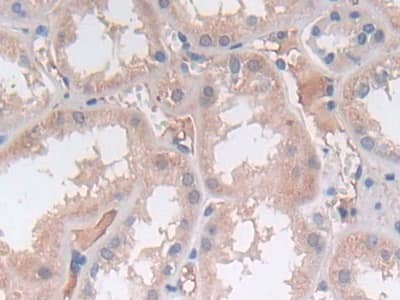
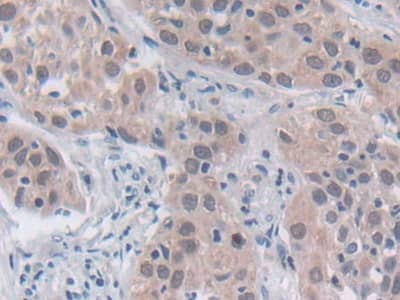
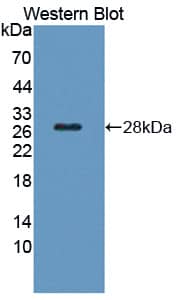
![Neutralization FGF-16 Antibody [Unconjugated]](https://images.novusbio.com/images/antibody/FGF-16_AF1212_Block_Neutralize_8768.jpg)
![Immunohistochemistry FGF-16 Antibody [Unconjugated]](https://images.novusbio.com/images/antibody/FGF16_AF1212_Immunohistochemistry_19377.jpg)
![Immunohistochemistry FGF-16 Antibody [Unconjugated]](https://images.novusbio.com/images/antibody/FGF16_AF1212_Immunohistochemistry_19378.jpg)

Secondary Antibodies |
Isotype Controls |
The concentration calculator allows you to quickly calculate the volume, mass or concentration of your vial. Simply enter your mass, volume, or concentration values for your reagent and the calculator will determine the rest.


 273-F9) was serially diluted and captured by Mouse Anti-Human FGF‑9 Monoclonal Antibody (Catalog # MAB273) coated on a Clear Polystyrene Microplate (Catalog #


![SDS-Page FGF-10 [Unconjugated]](https://images.novusbio.com/images/protein/FGF-10_345-FG_557.jpg)
![Bioactivity FGF-10 [Unconjugated]](https://images.novusbio.com/images/345-fg_recombinant-human-fgf-10-protein-bioactivity-2520239220..jpg)
![Bioactivity FGF-10 [Unconjugated]](https://images.novusbio.com/images/protein/FGF-10_345-FG_559.jpg)
![Bioactivity KGF/FGF-7 [Unconjugated]](https://images.novusbio.com/images/protein/KGF_251KG_2860.jpg)
![Bioactivity KGF/FGF-7 [Unconjugated]](https://images.novusbio.com/images/251-kg_recombinant-human-kgf-fgf-7-protein-bioactivity-2520239811.jpg)
![Cell Culture FGF-8 [Unconjugated]](https://images.novusbio.com/images/423-f8_recombinant-human-mouse-fgf-8b-protein-cell-culture-1052024145159..jpg)
![Bioactivity FGF-8 [Unconjugated]](https://images.novusbio.com/images/protein/FGF8_423F8_1438.jpg)
![Cell Culture FGF-8 [Unconjugated]](https://images.novusbio.com/images/423-f8_recombinant-human-mouse-fgf-8b-protein-cell-culture-1052024145958..jpg)
![Neutralization FGF acidic/FGF1 Antibody [Unconjugated]](https://images.novusbio.com/images/antibody/FGF_acidic_AF232_Block_Neutralize_8822.jpg)
![Immunohistochemistry FGF acidic/FGF1 Antibody [Unconjugated]](https://images.novusbio.com/images/antibody/FGF_acidic_AF232_Immunohistochemistry_17183.jpg)
![Western Blot FGF acidic/FGF1 Antibody [Unconjugated]](https://images.novusbio.com/images/antibody/FGF_acidic_AF232_Western_Blot_18640.jpg)
![Bioactivity FGF-4 [Unconjugated]](https://images.novusbio.com/images/protein/FGF-4_235-F4_483.jpg)
![SDS-Page FGF-4 [Unconjugated]](https://images.novusbio.com/images/protein/FGF-4_235-F4_472.jpg)
![Immunohistochemistry SOX9 Antibody [Unconjugated]](https://images.novusbio.com/images/af3075_human-sox9-affinity-purified-polyclonal-ab-22820241723625.jpg)
![Immunocytochemistry/ Immunofluorescence SOX9 Antibody [Unconjugated]](https://images.novusbio.com/images/af3075_human-sox9-affinity-purified-polyclonal-ab-41202410325582.jpg)
![Immunohistochemistry SOX9 Antibody [Unconjugated]](https://images.novusbio.com/images/af3075_human-sox9-affinity-purified-polyclonal-ab-22820241721165.jpg)


![N/A VEGF [HRP]](https://images.novusbio.com/images/elisa/VEGF_DVE00_ELISA_208.jpg)
![N/A VEGF [HRP]](https://images.novusbio.com/images/elisa/DATA_VEGF_DVE00_ELISA_871.jpg)
![N/A VEGF [HRP]](https://images.novusbio.com/images/elisa/DATA_VEGF_DVE00_ELISA_872.jpg)
![SDS-Page Sonic Hedgehog/Shh [Unconjugated]](https://images.novusbio.com/images/protein/Sonic_Hedgehog_464-SH_341.jpg)
![Cell Culture Sonic Hedgehog/Shh [Unconjugated]](https://images.novusbio.com/images/464-sh_recombinant-mouse-sonic-hedgehog-shh-c25ii-n-terminus-cell-culture-105202415719..jpg)
![SEC-MALS Sonic Hedgehog/Shh [Unconjugated]](https://images.novusbio.com/images/464-sh_recombinant-mouse-sonic-hedgehog-shh-c25ii-n-terminus-sec-mals-642023224324.jpg)
![N/A IL-6 [HRP]](https://images.novusbio.com/images/elisa/DATA_IL6_M6000_ELISA_936.jpg)
![N/A IL-6 [HRP]](https://images.novusbio.com/images/elisa/IL-6_M6000_ELISA_415.jpg)
![N/A IL-6 [HRP]](https://images.novusbio.com/images/m6000b_mouse-il-6-quantikine-elisa-kit-1752025024034.jpg)


![SDS-Page BMP-4 [Unconjugated]](https://images.novusbio.com/images/protein/BMP-4_314-BP_100.jpg)
![Bioactivity BMP-4 [Unconjugated]](https://images.novusbio.com/images/314-bp_recombinant-human-bmp-4-protein-1882021123744.jpg)