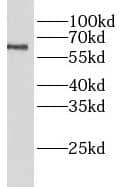
 HAF018). A specific band was detected for SR-BI at approximately 80 kDa (as indicated). This experiment was conducted under reducing conditions and using Immunoblot Buffer Group 1." title="Western blot shows lysates of human liver tissue and human adrenal gland tissue. PVDF membrane was probed with 2 µg/mL of Mouse Anti-Human SR-BI Monoclonal Antibody (Catalog # MAB8114) followed by HRP-conjugated Anti-Mouse IgG Secondary Antibody (Catalog # HAF018). A specific band was detected for SR-BI at approximately 80 kDa (as indicated). This experiment was conducted under reducing conditions and using Immunoblot Buffer Group 1." />
| Reactivity | HuSpecies Glossary |
| Applications | WB, IHC |
| Clone | 947007 |
| Clonality | Monoclonal |
| Host | Mouse |
| Conjugate | Unconjugated |
| Immunogen | Human embryonic kidney cell line HEK293-derived human SR-BI |
| Specificity | Detects human SR-BI in direct ELISAs and Western blots. |
| Source | N/A |
| Isotype | IgG1 |
| Clonality | Monoclonal |
| Host | Mouse |
| Gene | SCARB1 |
| Purity Statement | Protein A or G purified from hybridoma culture supernatant |
| Innovator's Reward | Test in a species/application not listed above to receive a full credit towards a future purchase. |
| Dilutions |
|
|
| Publications |
|
| Storage | Use a manual defrost freezer and avoid repeated freeze-thaw cycles.
|
| Buffer | Lyophilized from a 0.2 μm filtered solution in PBS with Trehalose. *Small pack size (SP) is supplied either lyophilized or as a 0.2 µm filtered solution in PBS. |
| Preservative | No Preservative |
| Reconstitution Instructions | Reconstitute at 0.5 mg/mL in sterile PBS. |
Scavenger Receptor, class B, member 1 (SR-B1), gene name SCARB1, is also known as CD36L1 (CD36-like 1) or CLA-1 (CD36 and LIMPII analogous 1) (1-5). SR-B1 is a transmembrane glycoprotein found on macrophages, liver cells and other steroidogenic cells as a lipoprotein receptor. The 552 amino acid (aa) human SR-B1 contains a central extracellular domain (ECD), flanked by N- and C-terminal transmembrane domains. Human splice variants differ at the N-terminal cytoplasmic and transmembrane domains (SR-BIII, 474 aa), the N-terminal end of the ECD (SR-BII, 409 aa), or the C-terminal cytoplasmic domain (isoform 3, 552 aa) (2). The human SR-B1 ECD shares 80%, 80%, 89%, 86% and 84% aa sequence identity with mouse, rat, porcine, rabbit, and bovine SR-B1, respectively. SR-B1 functions in reverse cholesterol transport (RCT), which is thought to be anti-atherogenic by facilitating transport of cholesteryl esters from macrophages back to the liver for degradation (3). In rodent hepatocytes, SR-B1 is the main receptor mediating RCT, while human hepatocytes also express a second mediator, CETP (cholesteryl ester transfer protein) (3-5). The importance of SR-B1 in humans is shown by human SR-B1 genetic variants that alter lipid metabolism (3-7). For example, the P297S polymorphism lowers uptake of high-density lipoprotein (HDL) cholesterol in the liver and increases plasma HDL cholesterol (3-5). On endothelial cells, signaling through SR-B1 activates nitric oxide production, which attenuates monocyte adhesion (6). On adrenocortical cells, SR-B1 mediates uptake of cholesteryl esters from HDL for the synthesis of glucocorticoid hormones such as cortisol (3-5). On platelets, HDL binding to surface SR-B1 inhibits aggregation and increases platelet survival time (3-5). On human ovarian granulosa cells, deficiency of SR-B1 correlates with low fertility (3). SR-B1 and its SR-BII isoform also bind bacterial lipopolysaccharides, facilitating uptake of various bacteria by cells such as peritoneal macrophages (8, 9). This uptake enhances inflammatory responses which, unless properly controlled, can result in sepsis (9-11).






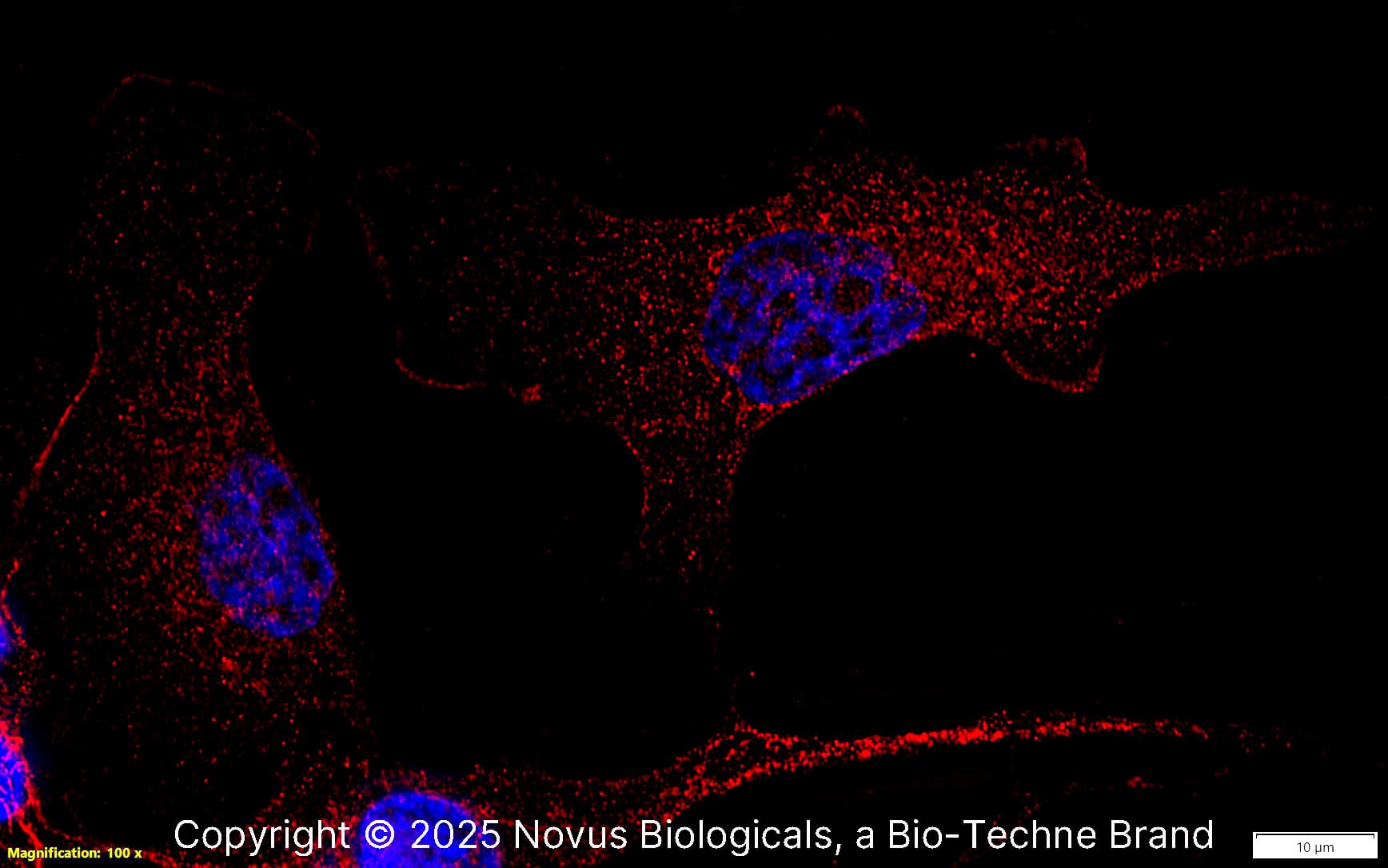
![SR-BI Antibody (947007) [Unconjugated]](/sites/all/modules/enterprise-tech/et_datasheets/images/novus_guarantee.png "SR-BI Antibody (947007) [Unconjugated]")
Secondary Antibodies |
Isotype Controls |
|
ABCA1 (ATP-binding cassette transporter A1) The ABCA1 molecule is a primary gatekeeper for regulating the intracellular transport of cholesterol. It belongs to a larger related multifamily of cAMP-dependent anion transporter cell membrane molecules. These key proteins are responsible for tr... Read full blog post. |
|
ABCA1 - The Caretaker for Cholesterol Transportation The ATP-binding cassette transporter A1 (ABCA1) protein is a key gatekeeper for regulating intracellular cholesterol transport. It is one member of a large family of genes comprised of cAMP-dependent anion transporter cell membrane proteins. These imp... Read full blog post. |
|
Scavenger's Helper - SR-BI (scavenger receptor class B member 1, SCARB1) SR-B1 belongs to the CD36 scavenger receptor family and serves as a receptor for several ligands including phospholipids, cholesterol ester, lipoproteins, phosphatidylserine, and caveolae localized HDL. It is expressed in endothelial cells, macrophage... Read full blog post. |
The concentration calculator allows you to quickly calculate the volume, mass or concentration of your vial. Simply enter your mass, volume, or concentration values for your reagent and the calculator will determine the rest.
| Gene Symbol | SCARB1 |


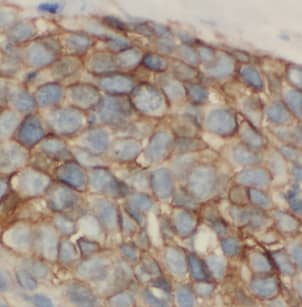
 CTS002) and counterstained with hematoxylin (blue). Specific staining was localized to cell membranes in hepatocytes. View our protocol for
![Western Blot LDLR Antibody [Unconjugated]](https://images.novusbio.com/images/af2255_mouse-ldl-r-affinity-purified-polyclonal-ab-8120255541738.jpg)
![Western Blot LDLR Antibody [Unconjugated]](https://images.novusbio.com/images/af2255_mouse-ldl-r-affinity-purified-polyclonal-ab-8120255541731.jpg)
![Western Blot LDLR Antibody [Unconjugated]](https://images.novusbio.com/images/af2255_mouse-ldl-r-affinity-purified-polyclonal-ab-4120241240515.jpg)
![Bioactivity CTLA-4 [Unconjugated]](https://images.novusbio.com/images/protein/CTLA4_7268CT_2293.jpg)
![SDS-Page TNF-alpha [Unconjugated]](https://images.novusbio.com/images/protein/TNF-alpha_210-TA_256.jpg)
![Bioactivity TNF-alpha [Unconjugated]](https://images.novusbio.com/images/protein/TNFalpha_210TA_1658.jpg)
![SEC-MALS TNF-alpha [Unconjugated]](https://images.novusbio.com/images/210-ta_recombinant-human-tnf-alpha-protein-sec-mals-35202312244..jpg)


