
| Immunogen | E. coli-derived recombinant human SOX1 Asn242-Gly379 (Leu276Ile) Accession # O00570 |
| Specificity | Detects endogenous human and mouse SOX1 in Western blots. In Western blots, this antibody shows approximately 10% cross-reactivity with rhSOX-2, and no cross-reactivity with rhSOX-3, -5, -6, -7, -9, -10, -11, -15, -17, or rmSOX-21. |
| Source | N/A |
| Isotype | IgG1 |
| Clonality | Monoclonal |
| Host | Mouse |
| Gene | SOX1 |
| Purity Statement | Protein A or G purified from hybridoma culture supernatant |
| Innovator's Reward | Test in a species/application not listed above to receive a full credit towards a future purchase. |
| Dilutions |
|
|
| Publications |
|
| Storage | Use a manual defrost freezer and avoid repeated freeze-thaw cycles.
|
| Buffer | Lyophilized from a 0.2 μm filtered solution in PBS with Trehalose. *Small pack size (SP) is supplied either lyophilized or as a 0.2 µm filtered solution in PBS. |
| Preservative | No Preservative |
| Concentration | LYOPH |
| Reconstitution Instructions | Reconstitute at 0.5 mg/mL in sterile PBS. |
SOX1 (SRY-related HMG box 1) is a 39 kDa transcription factor that belongs to the SRY family of HMG box proteins of which there are 30 members in vertebrates. Group B contains SOX1 along with SOX2, SOX3, SOX14 and SOX21; each of these factors share greater than 90% homology in their respective HMG box region. SOX1 maintains neural cells in an undifferentiated state and has been used as a marker for neural stem cells. Human and mouse SOX1 share 97% amino acid sequence identity.
![Western Blot SOX2 Antibody [Unconjugated]](https://images.novusbio.com/images2/SOX2_AF2018_Western_Blot_5161.jpg)
![Chromatin Immunoprecipitation (ChIP) SOX2 Antibody [Unconjugated]](https://images.novusbio.com/images2/SOX2_AF2018_Chromatin_Immunoprecipitation_11224.jpg)
![Simple Western SOX2 Antibody [Unconjugated]](https://images.novusbio.com/images2/SOX2_AF2018_Simple_Western_16676.jpg)
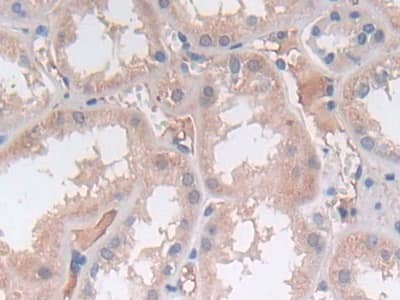
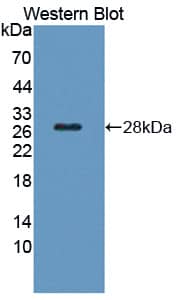
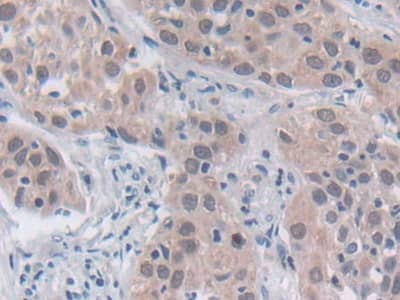


Secondary Antibodies |
Isotype Controls |
|
Deriving neural precursor cells from human induced pluripotent stem cells By Jennifer Sokolowski, MD, PhD.Human induced pluripotent stem cells (iPSCs) can be used to create models of human organ systems and are useful for a) ascertaining the mechanisms underlying pathological conditions... Read full blog post. |
The concentration calculator allows you to quickly calculate the volume, mass or concentration of your vial. Simply enter your mass, volume, or concentration values for your reagent and the calculator will determine the rest.


![Immunocytochemistry SOX3 Antibody [Unconjugated]](https://images.novusbio.com/images2/SOX3_AF2569_Immunocytochemistry_9767.jpg)
![Immunocytochemistry SOX3 Antibody [Unconjugated]](https://images.novusbio.com/images/antibody/af2569_human-sox3-affinity-purified-polyclonal-ab-immunocytochemistry-2010202310230.jpg)
![Western Blot SOX3 Antibody [Unconjugated]](https://images.novusbio.com/images/af2569_human-sox3-affinity-purified-polyclonal-ab-8120255534744.jpg)
![Simple Western Pax6 Antibody [Unconjugated]](https://images.novusbio.com/images2/Pax6_AF8150_Simple_Western_17126.jpg)
![Immunocytochemistry Pax6 Antibody [Unconjugated]](https://images.novusbio.com/images2/Pax6_AF8150_Immunocytochemistry_14427.jpg)
![Western Blot Pax6 Antibody [Unconjugated]](https://images.novusbio.com/images2/Pax6_AF8150_Western_Blot_14743.jpg)
![Chromatin Immunoprecipitation (ChIP) Oct-3/4 Antibody [Unconjugated]](https://images.novusbio.com/images2/Oct-3_4_AF1759_Chromatin_Immunoprecipitation_11218.jpg)
![Immunocytochemistry Oct-3/4 Antibody [Unconjugated]](https://images.novusbio.com/images2/Oct-3_4_AF1759_Immunocytochemistry_7093.jpg)
![Simple Western Oct-3/4 Antibody [Unconjugated]](https://images.novusbio.com/images2/Oct3_4_AF1759_Simple_Western_20183.jpg)
![Immunocytochemistry Nestin Antibody (196908) [Unconjugated]](https://images.novusbio.com/images2/Nestin_MAB1259_Immunocytochemistry_6561.jpg)
![Intracellular Staining by Flow Cytometry Nestin Antibody (196908) [Unconjugated]](https://images.novusbio.com/images/antibody/mab1259_human-nestin-mab-clone-196908-intracellular-staining-by-flow-cytometry-24120239959.jpg)
![Western Blot Nestin Antibody (196908) [Unconjugated]](https://images.novusbio.com/images/mab1259_human-nestin-mab-clone-196908-41202410481129.jpg)
![Bioactivity Sonic Hedgehog/Shh [Unconjugated]](https://images.novusbio.com/images2/Sonic_Hedgehog_464SH_2840.jpg)
![SDS-PAGE Sonic Hedgehog/Shh [Unconjugated]](https://images.novusbio.com/images2/Sonic_Hedgehog_464-SH_341.jpg)
![SEC-MALS Sonic Hedgehog/Shh [Unconjugated]](https://images.novusbio.com/images/464-sh_recombinant-mouse-sonic-hedgehog-shh-c25ii-n-terminus-sec-mals-642023224324.jpg)


![FGF basic/FGF2/bFGF [Unconjugated]](/sites/all/modules/enterprise-tech/et_datasheets/images/novus_guarantee.png "FGF basic/FGF2/bFGF [Unconjugated]")
![Immunocytochemistry SOX9 Antibody [Unconjugated]](https://images.novusbio.com/images2/SOX9_AF3075_Immunocytochemistry_15995.jpg)
![Western Blot SOX9 Antibody [Unconjugated]](https://images.novusbio.com/images2/SOX9_AF3075_Western_Blot_21580.jpg)
![Simple Western SOX9 Antibody [Unconjugated]](https://images.novusbio.com/images2/SOX9_AF3075_Simple_Western_22563.jpg)
![SDS-PAGE BMP-4 [Unconjugated]](https://images.novusbio.com/images2/BMP-4_314-BP_100.jpg)
![Bioactivity BMP-4 [Unconjugated]](https://images.novusbio.com/images2/314-bp_recombinant-human-bmp-4-protein-1882021123744.jpg)
![Immunocytochemistry SOX21 Antibody [Unconjugated]](https://images.novusbio.com/images2/SOX21_AF3538_Immunocytochemistry__Immunofluorescence_17801.jpg)
![Immunohistochemistry SOX21 Antibody [Unconjugated]](https://images.novusbio.com/images/antibody/af3538_human-sox21-affinity-purified-polyclonal-ab-immunohistochemistry-442024145721..jpg)


![SDS-PAGE FGF-8 [Unconjugated]](https://images.novusbio.com/images2/FGF-8_423-F8_332.jpg)
![Bioactivity FGF-8 [Unconjugated]](https://images.novusbio.com/images2/FGF8_423F8_1438.jpg)
![Cell Culture FGF-8 [Unconjugated]](https://images.novusbio.com/images/423-f8_recombinant-human-mouse-fgf-8b-protein-cell-culture-1052024145159..jpg)