 HAF016). A specific band was detected for S100A4 at approximately 11 kDa (as indicated). This experiment was conducted under reducing conditions and using Immunoblot Buffer Group 2." title="Western blot shows lysates of 3T3-L1 mouse embryonic fibroblast adipose-like cell line. PVDF membrane was probed with 1 µg/mL of Sheep Anti-Human/Mouse S100A4 Antigen Affinity-purified Polyclonal Antibody (Catalog # AF4138) followed by HRP-conjugated Anti-Sheep IgG Secondary Antibody (Catalog # HAF016). A specific band was detected for S100A4 at approximately 11 kDa (as indicated). This experiment was conducted under reducing conditions and using Immunoblot Buffer Group 2." />
| Applications | WB, Simple Western, KO |
| Clonality | Polyclonal |
| Host | Sheep |
| Conjugate | Unconjugated |
| Concentration | LYOPH |
| Immunogen | E. coli-derived recombinant mouse S100A4 Ala2-Lys101 Accession # P07091 |
| Specificity | Detects human and mouse S100A4 in direct ELISAs and Western blots. In direct ELISAs, less than 1% cross-reactivity with recombinant mouse (rm) S100A8, rmS100A6, rmS100A9, rmS100A10, rmS100A13, rmS100A16, recombinant human (rh) S100A1, rhS100A7, rhS100A11, rhS100B, and rhS100P is observed. |
| Source | N/A |
| Isotype | IgG |
| Clonality | Polyclonal |
| Host | Sheep |
| Gene | S100A4 |
| Purity Statement | Antigen Affinity-purified |
| Innovator's Reward | Test in a species/application not listed above to receive a full credit towards a future purchase. |
| Dilutions |
|
|
| Publications |
|
| Storage | Use a manual defrost freezer and avoid repeated freeze-thaw cycles.
|
| Buffer | Lyophilized from a 0.2 μm filtered solution in PBS with Trehalose. *Small pack size (SP) is supplied either lyophilized or as a 0.2 µm filtered solution in PBS. |
| Preservative | No Preservative |
| Concentration | LYOPH |
| Reconstitution Instructions | Reconstitute at 0.2 mg/mL in sterile PBS. |
S100A4 (also named metastasin, Mtsl and calvasculin) is an 11 kDa member of the S100 (soluble in 100% saturated ammonium sulfate) family of proteins (1‑5). The S100 family is a further classified as a member of the EF-hand superfamily of Ca++-binding proteins. These participate in both calcium‑dependent and calcium‑independent protein-protein interactions. The hallmark of this superfamily is the EF-hand motif that consists of a Ca++-binding site flanked by two alpha -helices (helix E and helix F) that were originally identified in a right-handed model of carp muscle calcium‑binding protein (6). Mouse S100A4 is 101 amino acids (aa) in length (1, 2). It contains two EF hand domains, one between aa 12‑47, and a second between aa 50‑85. The first domain has a 14 aa cation-binding motif and binds Ca++ with low affinity. The second Ca++-binding motif is 12 aa in length and binds Ca++ with high affinity. S100A4 has no classical signal sequence but is secreted from cells (3, 7). Mouse S100A4 shares 93%, 96% and 89% aa identity with human, rat and canine S100A4, respectively. S100A4 exists as dimer (8, 9, 10). Extracellular S100A4 is reported to induce MMP production, activate MMPs, promote neurite outgrowth and stimulate cardiomyocyte proliferation (4, 10, 11, 12, 13). Within the cell, dimers are likely the functional unit. Here, they are constitutive homo- or heterodimers (with S100A1) that interact with Ca++, undergo a conformational change, and subsequently bind to cytoplasmic targets. Known targets include p53, myosin heavy chain II, F-actin and liprin beta 1 (4, 14). In general, it can be said that S100A4 blocks target phosphorylation and multimerization (4, 7, 14). S100A4 activity has been associated with cell transformation. It seems likely this is either coincidental, or a consequence, rather than a cause of transformation (3).





![Immunocytochemistry E-Cadherin Antibody [Unconjugated]](https://images.novusbio.com/images/antibody/ECadherin_AF748_Immunocytochemistry_16573.jpg)
![Western Blot E-Cadherin Antibody [Unconjugated]](https://images.novusbio.com/images/antibody/ECadherin_AF748_Western_Blot_19846.jpg)
![Immunocytochemistry E-Cadherin Antibody [Unconjugated]](https://images.novusbio.com/images/antibody/ECadherin_AF748_Immunocytochemistry_16572.jpg)



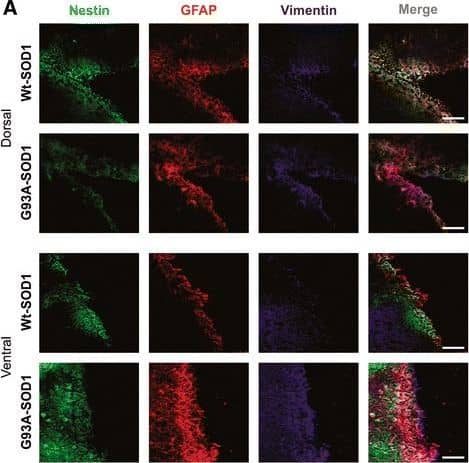

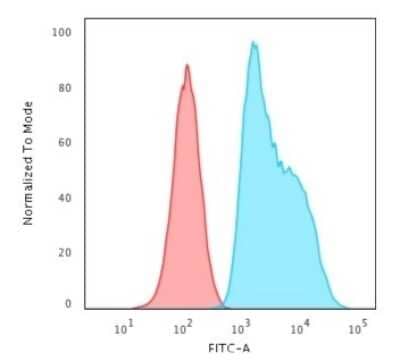
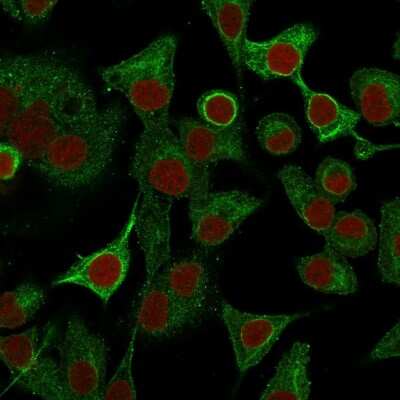
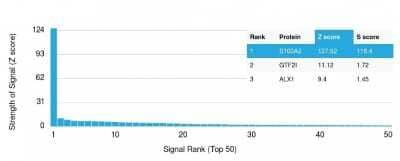



Secondary Antibodies |
Isotype Controls |
|
Epithelial-Mesenchymal Transition (EMT) Markers Epithelial-Mesenchymal Transition (EMT) is the trans-differentiation of stationary epithelial cells into motile mesenchymal cells. During EMT, epithelial cells lose their junctions and apical-basal polarity, reorganize their cytoskeleton, undergo a... Read full blog post. |
The concentration calculator allows you to quickly calculate the volume, mass or concentration of your vial. Simply enter your mass, volume, or concentration values for your reagent and the calculator will determine the rest.


 HAF016). This experiment was conducted under reducing conditions and using the 12-230 kDa separation system." title="Simple Western lane view shows lysates of 3T3-L1 mouse embryonic fibroblast adipose-like cell line, loaded at 0.2 mg/mL. A specific band was detected for S100A4 at approximately 12 kDa (as indicated) using 10 µg/mL of Sheep Anti-Human/Mouse S100A4 Antigen Affinity-purified Polyclonal Antibody (Catalog # AF4138) followed by 1:50 dilution of HRP-conjugated Anti-Sheep IgG Secondary Antibody (Catalog #
  HAF016). A specific band was detected for S100A4 at approximately 12 kDa (as indicated) in the parental HeLa cell line, but is not detectable in knockout HeLa cell line. GAPDH (Catalog #




![Western Blot RB1 Antibody (607121) [Unconjugated]](https://images.novusbio.com/images/mab6495_human-rb1-mab-clone-607121-812025548577.jpg)
![Simple Western RB1 Antibody (607121) [Unconjugated]](https://images.novusbio.com/images/antibody/RB1_MAB6495_Simple_Western_16629.jpg)
![Western Blot RB1 Antibody (607121) [Unconjugated]](https://images.novusbio.com/images/antibody/RB1_MAB6495_Western_Blot_10216.jpg)


![N/A MMP-9 [HRP]](https://images.novusbio.com/images/elisa/DATA_MMP9_DMP900_ELISA_770.jpg)
![N/A MMP-9 [HRP]](https://images.novusbio.com/images/elisa/MMP-9_DMP900_ELISA_148.jpg)
![N/A MMP-2 [HRP]](https://images.novusbio.com/images/elisa/DATA_MMP2_MMP200_ELISA_1003.jpg)
![N/A MMP-2 [HRP]](https://images.novusbio.com/images/elisa/MMP2_MMP200_ELISA_474.jpg)


