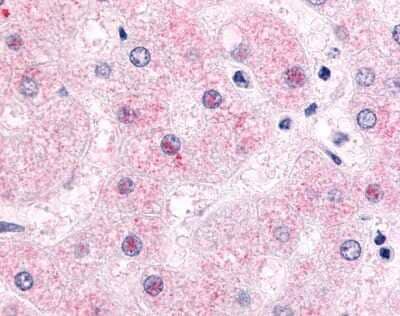
| Reactivity | MuSpecies Glossary |
| Applications | Binding Activity |
| Format | Carrier-Free |
| Details of Functionality | Measured by its ability to bind Recombinant Mouse CD99 Fc Chimera (Catalog # 3905-CD) in a functional ELISA. Shiratori, I. et al. (2004) J Exp. Med. 199:525. |
| Source | Mouse myeloma cell line, NS0-derived mouse PILR-alpha protein Leu21-Val197, with a C-terminal 6-His tag |
| Accession # | |
| N-terminal Sequence | Leu21 |
| Protein/Peptide Type | Recombinant Proteins |
| Gene | Pilra |
| Purity | >95%, by SDS-PAGE visualized with Silver Staining and quantitative densitometry by Coomassie® Blue Staining |
| Endotoxin Note | <0.10 EU per 1 μg of the protein by the LAL method. |
| Dilutions |
|
| Theoretical MW | 20.5 kDa. Disclaimer note: The observed molecular weight of the protein may vary from the listed predicted molecular weight due to post translational modifications, post translation cleavages, relative charges, and other experimental factors. |
| SDS-PAGE | 35-50 kDa, reducing conditions |
| Storage | Use a manual defrost freezer and avoid repeated freeze-thaw cycles.
|
| Buffer | Lyophilized from a 0.2 μm filtered solution in PBS with Trehalose. |
| Purity | >95%, by SDS-PAGE visualized with Silver Staining and quantitative densitometry by Coomassie® Blue Staining |
| Reconstitution Instructions | Reconstitute at 100 μg/mL in sterile PBS. |
PILR-alpha (paired immunoglobulin-like type 2 receptor-alpha; also FDF03) is one of two members that belong to a small family of immunoregulatory Ig-superfamily receptors (1-4). It is a counterpart to PILR-beta and likely gave rise to the PILR-beta gene through duplication and rearrangement (1). The PILRs represent one of many pairs of Ig-like domain-containing receptors that participate in immune regulation. PILR-alpha and -beta should not be confused with the similarly named PIRs (also paired immunoglobulin-like receptors ), or the functionally-related SIRP and ILT/LILR/CD85/LIR family of receptors (2). While PIRs, ILTs and SIRPs contain three to six Ig‑like domains in their extracellular region, PILR-alpha and -beta show only one Ig-like region in their extracellular domain (ECD) (1-5). Mouse PILR-alpha is a monomeric, 274 amino acid (aa) type I transmembrane (TM) glycoprotein (3, 4). It contains a 167 aa ECD (aa 32-198), a 21 aa TM segment, and a long, 83 aa cytoplasmic region (aa 220-302). Based on human, the ECD shows one V-type Ig-like domain between aa 40-134, while the cytoplasmic region contains two ITIMs (immunoreceptor Tyr‑based inhibitory motifs) between aa 265-270 and 294-299. Given that ITIMs are known to interact with phosphatases such as PTPN6 and PTPN11, the presence of these motifs make mouse PILR-alpha an inhibitory receptor. One potential isoform for mouse PILR-alpha has been reported. It varies only within the first 28 aa of the signal sequence (6). Mouse PILR-alpha ECD shares 43% and 69% aa sequence identity with human and rat PILR-alpha ECD, respectively; it shares 75% aa sequence identity with the ECD of mouse PILR-beta (3, 4).
PILR-alpha is expressed by neutrophils, macrophages, monocytes, mast cells, APCs, microglia, neurons, cardiac muscle and renal proximal plus pancreatic duct eipthelium (4, 7, 8). It has multiple binding partners, including CD99 (4, 9), glycoprotein B/gB of HSV1 (in human) (7), PANP (PILR-associated neural protein) (8) and NPDC1 plus collectin-12 (10). Although PILR-alpha and -beta are related through gene duplication and highly similar in their ECD aa sequence, they do not necessarily share the same ligands, as PILR-beta fails to bind to gB and PANP (8, 10). Notably, PILR-alpha binding appears to be dependent upon the presence of a poorly-defined peptide sequence coupled to a sialylated, O-linked carbohydrate motif (5, 9-12). It is unclear what function(s) can be attributed to PILR-alpha . One possibility suggests that in the early stage of an immune response, PILR-beta predominates over PILR-alpha on the APC surface. Ligation of PILR-beta by CD99 induces IL-12 production and immune cell activation. But this ligation also upregulates PILR-alpha expression, and subsequent CD99:PILR-alpha engagement now promotes IL-27 production, with a concomitant increase in T cell IL-10 production and a downregulation of the inflammatory response (10).
![Flow Cytometry HVEM/TNFRSF14 Antibody (94801) [Unconjugated]](https://images.novusbio.com/images/antibody/HVEM_MAB356_Flow_Cytometry_19907.jpg)
![Block/ Neutralize HVEM/TNFRSF14 Antibody (94801) [Unconjugated]](https://images.novusbio.com/images/mab356_human-hvem-tnfrsf14-mab-clone-94801-41202412514828.jpg)
![ELISA HVEM/TNFRSF14 Antibody (94801) [Unconjugated]](https://images.novusbio.com/images/mab356_human-hvem-tnfrsf14-mab-clone-94801-elisa-639201778069460198.jpg)


![Flow Cytometry PILR-beta Antibody [Unconjugated]](https://images.novusbio.com/images/antibody/PILR-beta_AF4189_Flow_Cytometry_10777.jpg)



The concentration calculator allows you to quickly calculate the volume, mass or concentration of your vial. Simply enter your mass, volume, or concentration values for your reagent and the calculator will determine the rest.


![Western Blot CD99 Antibody [Unconjugated]](https://images.novusbio.com/images/antibody/CD99_AF3968_Western_Blot_23993.jpg)
![Simple Western CD99 Antibody [Unconjugated]](https://images.novusbio.com/images/antibody/CD99_AF3968_Simple_Western_24089.jpg)
![Flow Cytometry CD99 Antibody [Unconjugated]](https://images.novusbio.com/images/antibody/CD99_AF3968_Flow_Cytometry_8220.jpg)
![N/A CD14 [HRP]](https://images.novusbio.com/images/elisa/DATA_CD14_DC140_ELISA_597.jpg)
![N/A CD14 [HRP]](https://images.novusbio.com/images/elisa/CD14_DC140_ELISA_42.jpg)

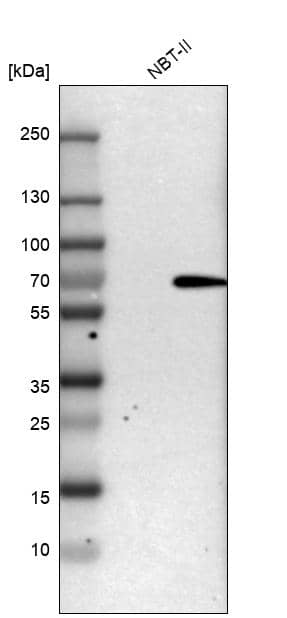
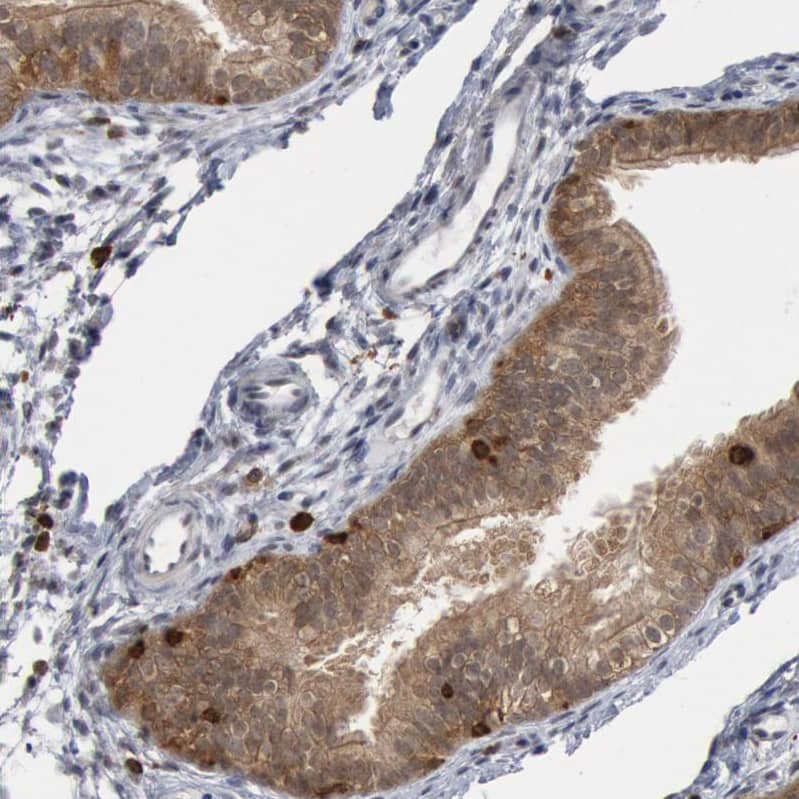
![N/A IL-11 [HRP]](https://images.novusbio.com/images/elisa/DATA_IL11_D1100_ELISA_529.jpg)
![N/A IL-11 [HRP]](https://images.novusbio.com/images/elisa/DATA_IL11_D1100_ELISA_530.jpg)
![N/A IL-11 [HRP]](https://images.novusbio.com/images/elisa/IL-11_D1100_ELISA_10.jpg)
![Bioactivity CTLA-4 [Unconjugated]](https://images.novusbio.com/images/protein/CTLA4_7268CT_2293.jpg)


![Western Blot Src [p Tyr419] Antibody [Unconjugated]](https://images.novusbio.com/images/antibody/Src_AF2685_Western_Blot_5209.jpg)
![Immunohistochemistry Src [p Tyr419] Antibody [Unconjugated]](https://images.novusbio.com/images/af2685_human-phospho-src-y419-affinity-purified-polyclonal-ab-412024124022.jpg)
![Immunohistochemistry Src [p Tyr419] Antibody [Unconjugated]](https://images.novusbio.com/images/antibody/Src_AF2685_Immunohistochemistry_9943.jpg)
![Western Blot SHP-2/PTPN11 [p Tyr542] Antibody [Unconjugated]](https://images.novusbio.com/images/antibody/SHP-2_AF3790_Western_Blot_5344.jpg)
![Immunocytochemistry SHP-2/PTPN11 [p Tyr542] Antibody [Unconjugated]](https://images.novusbio.com/images/antibody/af3790_human-mouse-phospho-shp-2-y542-affinity-purified-pab-immunocytochemistry-243202212955.jpg)
![Simple Western SHP-2/PTPN11 [p Tyr542] Antibody [Unconjugated]](https://images.novusbio.com/images/antibody/16330.jpg)