| Reactivity | HuSpecies Glossary |
| Applications | Bioactivity |
| Format | Carrier-Free |
| Details of Functionality | Measured by the ability of the
immobilized protein to support the adhesion of BUD‑8 human fibroblast cells at 10 µg/mL. Optimal dilutions should be determined by each laboratory for each application. |
| Source | Mouse myeloma cell line, NS0-derived human MAGP-2/MFAP5 protein Ile22-Leu173 with a C-terminal 6-His tag |
| Accession # | |
| N-terminal Sequence | Ile22 & Ser154 |
| Structure / Form | Monomer |
| Protein/Peptide Type | Recombinant Proteins |
| Gene | MFAP5 |
| Purity | >95%, by SDS-PAGE under reducing conditions and visualized by silver stain |
| Endotoxin Note | <0.10 EU per 1 μg of the protein by the LAL method. |
| Dilutions |
|
|
| Theoretical MW | 18.1 kDa. Disclaimer note: The observed molecular weight of the protein may vary from the listed predicted molecular weight due to post translational modifications, post translation cleavages, relative charges, and other experimental factors. |
|
| SDS-PAGE | 25-35 kDa, reducing conditions |
|
| Publications |
|
| Storage | Use a manual defrost freezer and avoid repeated freeze-thaw cycles.
|
| Buffer | Lyophilized from a 0.2 μm filtered solution in PBS. |
| Purity | >95%, by SDS-PAGE under reducing conditions and visualized by silver stain |
| Reconstitution Instructions | Reconstitute at 400 μg/mL in PBS. |
MAGP-2 (Microfibril-associated glycoprotein 2), also called MFAP5 (microfibril associated protein 5) is a secreted, cell-associated 25 kDa mammalian member of the MFAP family of proteins (1). Human MAGP-2 cDNA encodes 173 amino acids (aa) including a 21 aa signal sequence, an RDG motif (aa 30‑32; absent in MAGP-1) and a central cysteine‑rich binding domain (aa 84‑140) (1‑3). One potential splice variant shows a 10 aa deletion between aa 73‑82 that includes the only potential glycosylation site (4). Mature human MAGP-2 shares 80%, 82%, 82%, 84% and 85% aa identity with mouse, rat, bovine, porcine and canine MAGP-2, respectively. Both MAGP-1 and MAGP-2 bind and covalently crosslink fibrillins 1 and 2 through the binding domain, but MAGP-2 has more limited distribution and binds a more limited set of extracellular matrix proteins (1‑3). However, the MAGP-2 RGD motif binds to the integrin alpha v beta 3, allowing cell attachment to microfibrils (5). MAGP‑2 is thought to facilitate microfibril assembly and induce elastin fiber formation (1‑3, 6). Through its binding to EGF repeats, MAGP-2 mediates the metalloproteinase-dependent release of Jagged1 and the metalloproteinase-independent release of Notch extracellular domains (7, 8). In endothelial cells, MAGP-2 promotes angiogenic sprouting through inhibiting Notch signaling, binding integrin alpha v beta 3 (which then enhances VEGF signaling), and/or enhancing endothelial cell response to FGF basic and EGF (9, 10). In ovarian cancer, MAGP-2 expression is associated with cancer cell survival, increased microvessel density, and poor prognosis (11). Skin MAGP-2 expression is increased in human scleroderma and the tight skin (TSK) mouse; MAGP‑2 may contribute to abnormal collagen accumulation in these conditions by increasing the half-life of type I collagen (12, 13). Fibrillin-1 mutations within the region that binds MAGP-2 can be found in Marfan syndrome (6).


![Western Blot Decorin Antibody [Unconjugated]](https://images.novusbio.com/images/antibody/Decorin_AF1060_Western_Blot_19006.jpg)




The concentration calculator allows you to quickly calculate the volume, mass or concentration of your vial. Simply enter your mass, volume, or concentration values for your reagent and the calculator will determine the rest.







![Bioactivity EGF [Unconjugated]](https://images.novusbio.com/images/protein/EGF_236EG_1570.jpg)
![Cell Culture EGF [Unconjugated]](https://images.novusbio.com/images/236-eg_recombinant-human-egf-protein-cf-25202394526.jpg)
![Cell Culture EGF [Unconjugated]](https://images.novusbio.com/images/236-eg_recombinant-human-egf-protein-cf-bioactivity-25202394053.jpg)


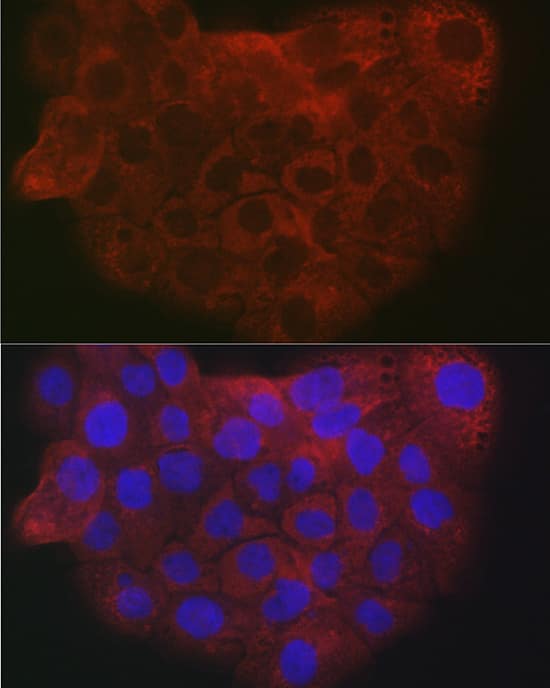

![Immunohistochemistry Lumican Antibody [Unconjugated]](https://images.novusbio.com/images/antibody/Lumican_AF2846_Immunohistochemistry_17809.jpg)
![Western Blot Lumican Antibody [Unconjugated]](https://images.novusbio.com/images/antibody/Lumican_AF2846_Western_Blot_17014.jpg)
![Simple Western Lumican Antibody [Unconjugated]](https://images.novusbio.com/images/antibody/af2846_human-lumican-affinity-purified-polyclonal-ab-simple-western-332025105038..jpg)
![Western Blot RUNX2/CBFA1 Antibody (232902) [Unconjugated]](https://images.novusbio.com/images/mab2006_human-runx2-cbfa1-mab-clone-232902-western-blot-1212202597422.jpg)
![Western Blot RUNX2/CBFA1 Antibody (232902) [Unconjugated]](https://images.novusbio.com/images/mab2006_human-runx2-cbfa1-mab-clone-232902-western-blot-121220259172010.jpg)
![Immunocytochemistry RUNX2/CBFA1 Antibody (232902) [Unconjugated]](https://images.novusbio.com/images/antibody/RUNX2_MAB2006_Immunocytochemistry_13309.jpg)