| Reactivity | HuSpecies Glossary |
| Applications | Enzyme Activity |
| Format | Carrier-Free |
| Details of Functionality | Measured by its ability to cleave the fluorogenic peptide substrate, Arg-Arg-7-amido-4-methylcoumarin (RR-AMC). The specific activity is >2,300 pmol/min/μg, as measured under the described conditions. |
| Source | E. coli-derived human DPP3 protein Ala2-Ala737, with an N-terminal Met and 6-His tag |
| Accession # | |
| N-terminal Sequence | Met |
| Protein/Peptide Type | Recombinant Enzymes |
| Gene | DPP3 |
| Purity | >90%, by SDS-PAGE under reducing conditions and visualized by Colloidal Coomassie® Blue stain at 5 μg per lane |
| Endotoxin Note | <0.01 EU per 1 μg of the protein by the LAL method. |
| Dilutions |
|
| Theoretical MW | 83 kDa. Disclaimer note: The observed molecular weight of the protein may vary from the listed predicted molecular weight due to post translational modifications, post translation cleavages, relative charges, and other experimental factors. |
| SDS-PAGE | 68-75 kDa, reducing conditions |
| Storage | Use a manual defrost freezer and avoid repeated freeze-thaw cycles.
|
|||
| Buffer | Supplied as a 0.2 μm filtered solution in MES, NaCl and Glycerol. |
|||
| Purity | >90%, by SDS-PAGE under reducing conditions and visualized by Colloidal Coomassie® Blue stain at 5 μg per lane |
|||
| Assay Procedure |
*Adjusted for Substrate Blank
|
DPP3 (DiPeptidyl Peptidase III; also known as Dipeptidyl arylamidase III and Enkephalinase B) is a cytosolic member of the metallopeptidase family of proteins (1, 2). More specifically, it is classified as the singular member of the M49/Clan M- family of enzymes that possesses an unusual six-amino acid, zinc-binding motif (HExxGH) (1, 3). Notably, DPP # 3 is the only DPP that qualifies as a metallopeptidase, as all other DPPs belong to either the cysteine or serine class of peptidases. DPP3 is widely expressed, being found in numerous hematopoietic cells (RBCs, neutrophils, monocytes) and epithelium-dominated tissues (1, 4, 5). Although DPP3 was initially reported to be an Arg-Arg dipeptidase for non-N-terminally substituted peptides, it is now known to be active on a wide range of amino acid combinations, and thus qualifies as a non-specific peptidase. DPP3 does show restriction when it comes to peptide length, however; peptides shorter than three and longer than ten amino acids are very poor substrates for DPP3. Consistent with its broad range of substrates, DPP3 likely has multiple functions. It has been suggested to be a general mediator of peptidome degradation (i.e. the three-to-24 amino acid cytoplasmic fragments that result from initial proteasome degradation), and is considered particularly important in the degradation of proline-containing peptides (1, 6). Conversely, elevated levels of DDP3 activity will reduce the availability of eight-to-ten amino acid length peptides that are used for MHC presentation, adversely affect this crucial immune surveillance activity. DDP3 is also found extracellularly, and has documented activity against angiotensin II-IV and opioids, suggesting a role for DPP3 in both blood pressure regulation and pain modulation (1, 6-8). Finally, DPP3 appears to play a protective role in oxidative stress. Nrf2 is a Zn-finger transcription factor that stimulates antioxidant enzyme production. Normally, it is sequestered in the cytosol through complex formation with Keap I. Though the details are somewhat unclear, under oxidative stress, DPP3 appears to promote the dissociation of Nrf2 and Keap I, directing Nrf2 into the nucleus with subsequent antioxidant enzyme transcription (1). Human DPP3 is 737 amino acids in length, contains a peptidase region over aa 143-705, and is reported to run as a 93-94 kDa protein on SDS-PAGE (2). Although there is no canonical signal sequence, as noted, it is found extracellularly. Potential sites for myristoylation are known and, if utilized, may account for reports of a DPP3 presence in membranes (1). There are potential isoform variants. One shows a deletion of aa 182-601, while another shows a deletion of aa 91-120. Mouse and rat DPP3 share 93% aa sequence identity with human DPP3.




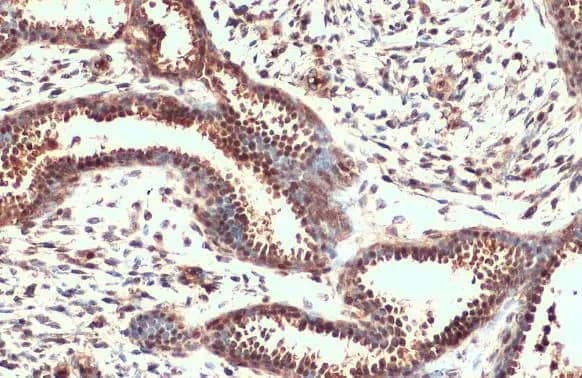
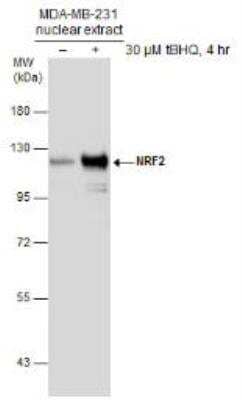
![Immunohistochemistry ACE/CD143 Antibody [Unconjugated]](https://images.novusbio.com/images/antibody/ACE_AF1513_Immunohistochemistry_6703.jpg)
![Western Blot ACE/CD143 Antibody [Unconjugated]](https://images.novusbio.com/images/antibody/ACE_AF1513_Flow_Cytometry_20028.jpg)
![Simple Western ACE/CD143 Antibody [Unconjugated]](https://images.novusbio.com/images/antibody/ACE_AF1513_Simple_Western_20109.jpg)
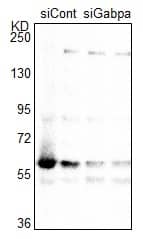
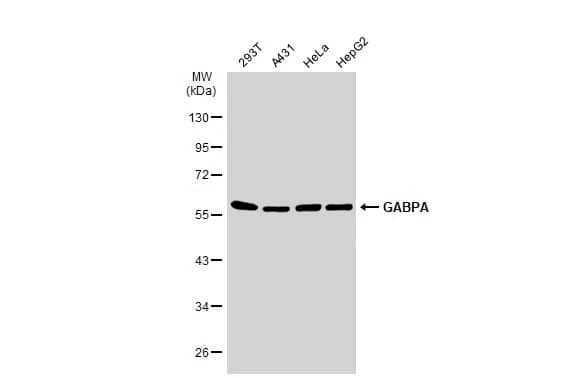


The concentration calculator allows you to quickly calculate the volume, mass or concentration of your vial. Simply enter your mass, volume, or concentration values for your reagent and the calculator will determine the rest.



![Immunocytochemistry Catalase Antibody [Unconjugated]](https://images.novusbio.com/images/antibody/Catalase_AF3398_Immunocytochemistry__Immunofluorescence_19451.jpg)
![Simple Western Catalase Antibody [Unconjugated]](https://images.novusbio.com/images/antibody/Catalase_AF3398_Simple_Western_16990.jpg)

![Immunohistochemistry Aminopeptidase N/CD13 Antibody [Unconjugated]](https://images.novusbio.com/images/antibody/Aminopeptidase_N_AF2335_Immunohistochemistry_23316.jpg)
![Immunocytochemistry Aminopeptidase N/CD13 Antibody [Unconjugated]](https://images.novusbio.com/images/antibody/Aminopeptidase_N_AF2335_Immunocytochemistry__Immunofluorescence_17382.jpg)


![Immunocytochemistry/ Immunofluorescence DPPIV/CD26 Antibody [Unconjugated]](https://images.novusbio.com/images/af1180_human-dppiv-cd26-affinity-purified-polyclonal-ab-44202415425025.jpg)
![Western Blot DPPIV/CD26 Antibody [Unconjugated]](https://images.novusbio.com/images/af1180_human-dppiv-cd26-affinity-purified-polyclonal-ab-812025555283.jpg)
![Immunohistochemistry DPPIV/CD26 Antibody [Unconjugated]](https://images.novusbio.com/images/antibody/DPPIV_AF1180_Immunohistochemistry_17209.jpg)
![Western Blot Cathepsin C/DPPI Antibody [Unconjugated]](https://images.novusbio.com/images/antibody/Cathepsin_C_AF1034_Western_Blot_16948.jpg)
![Western Blot Cathepsin C/DPPI Antibody [Unconjugated]](https://images.novusbio.com/images/antibody/Cathepsin_C_AF1034_Western_Blot_21534.jpg)
![Immunohistochemistry Cathepsin C/DPPI Antibody [Unconjugated]](https://images.novusbio.com/images/af1034_mouse-rat-cathepsin-c-dppi-affinity-purified-polyclonal-ab-8220249505949.jpg)
![Immunohistochemistry Neprilysin/CD10 Antibody [Unconjugated]](https://images.novusbio.com/images/antibody/Neprilysin_AF1126_Immunohistochemistry_6679.jpg)
![Immunohistochemistry Neprilysin/CD10 Antibody [Unconjugated]](https://images.novusbio.com/images/antibody/af1126_mouse-neprilysin-affinity-purified-polyclonal-ab-immunohistochemistry-7520268331.png)
![N/A Neprilysin/CD10 Antibody [Unconjugated]](https://images.novusbio.com/images/antibody/af1126_mouse-neprilysin-affinity-purified-polyclonal-ab-7520268433.png)


