PLVAP Overexpression Lysate

Images

 
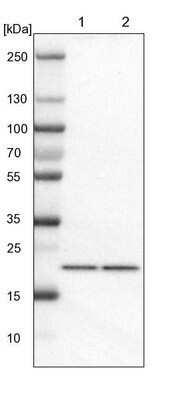
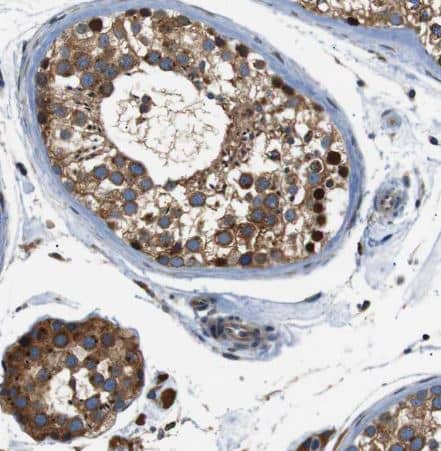
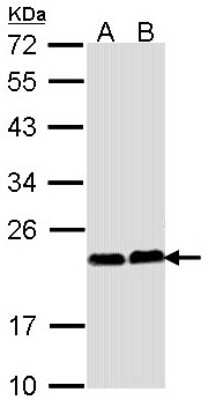
Western Blot: PLVAP Overexpression Lysate (Adult Normal) [NBP2-06137] Left-Empty vector transfected control cell lysate (HEK293 cell lysate); Right -Over-expression Lysate for PLVAP.

Product Details

Summary
Reactivity HuSpecies Glossary
Applications WB

Order Details

PLVAP Overexpression Lysate Summary

Description

PLVAP Transient Overexpression Lysate


Expression Host: HEK293T

Plasmid: RC208914

Accession#: NM_031310

Protein Tag: C-MYC/DDK

You will receive 1 vial of lysate (100ug), 1 vial of empty vector negative control (100ug), and 1 vial of 2xSDS sample buffer (250ul). Each vial of cell lysate contains 100ug of total protein (at 1 mg/ml). The 2xSDS Sample Buffer consists of 4% SDS, 125mM Tris-HCl pH6.8, 10% Glycerol, 0.002% Bromophenol blue, 100mM DTT.
Gene
PLVAP

Applications/Dilutions

Dilutions
  • Western Blot
Application Notes
This product is intended for use as a positive control in Western Blot. Overexpression of the target protein was confirmed using an antibody to DDK (FLAG) epitope tag (NBP1-71705) present on the protein construct.

Each vial of cell lysate contains 100ug of total protein which should be sufficient for 20-50 reactions. Depending on over-expression level, antibody affinity and detection system, some lysates can go as low as 0.1 ug per load. We recommend starting with 5ug of cell lysate. Add an equal amount of cell lysate and 2X SDS Sample buffer and boil the SDS samples for 10 minutes before loading.
Theoretical MW
50.4 kDa.
Disclaimer note: The observed molecular weight of the protein may vary from the listed predicted molecular weight due to post translational modifications, post translation cleavages, relative charges, and other experimental factors.

Packaging, Storage & Formulations

Storage
Store at -80C. Avoid freeze-thaw cycles.
Buffer
RIPA buffer

Lysate Details for Array

Type
Overexpression

Notes

HEK293T cells in 10-cm dishes were transiently transfected with a non-lipid polymer transfection reagent specially designed and manufactured for large volume DNA transfection. Transfected cells were cultured for 48hrs before collection. The cells were lysed in modified RIPA buffer (25mM Tris-HCl pH7.6, 150mM NaCl, 1% NP-40, 1mM EDTA, 1xProteinase inhibitor cocktail mix, 1mM PMSF and 1mM Na3VO4, and then centrifuged to clarify the lysate. Protein concentration was measured by BCA protein assay kit.

Alternate Names for PLVAP Overexpression Lysate

  • FELS
  • FELSfenestrated-endothelial linked structure protein; PV-1 protein
  • Fenestrated endothelial-linked structure protein
  • gp68
  • plasmalemma vesicle associated protein
  • PLVAP
  • PV1
  • PV-1
  • PV1Plasmalemma vesicle protein 1
  • PV-1plasmalemma vesicle-associated protein

Background

PLVAP (Plasmalemma vesicle associated protein) is a membrane associated protein of caveolae and is found in fenestral and stomatal diaphragms in fenestrated endothelia and transendothelial channels. Normally in skeletal and cardiac muscle, PLVAP expression is limited to small arterioles and venules; however, under conditions of inflammation, it can be induced on previously non expressing vessels in cardiac muscle. In the central nervous system (CNS), the panendothelial cell antigen expression is developmentally regulated. During embryonic development, the antigen is found on brain vasculature up to day 16 of gestation, after which it disappears. The cessation of PLVAP expression in the CNS may be associated with the establishment of the blood brain barrier, which begins on day 16 of gestation. In the adult mouse, inflammation in the CNS can lead to re expression of the panendothelial cell antigen. This antibody was raised by a genetic immunization technique. Genetic immunization can be used to generate antibodies by directly delivering antigen-coding DNA into the animal, rather than injecting a protein or peptide (Tang et al. PubMed: 1545867; Chambers and Johnston PubMed: 12910245; Barry and Johnston PubMed: 9234514). The animal`s cells produce the protein, which stimulates the animal`s immune system to produce antibodies against that particular protein. A vector coding for a partial fusion protein was used for genetic immunisation of a mouse and the resulting serum was tested in Western blot against an E.coli lysate containing that partial fusion protein. Genetic immunization offers enormous advantages over the traditional protein-based immunization method. DNA is faster, cheaper and easier to produce and can be produced by standard techniques readily amenable to automation. Furthermore, the antibodies generated by genetic immunization are usually of superior quality with regard to specificity, affinity and recognizing the native protein.

Limitations

This product is for research use only and is not approved for use in humans or in clinical diagnosis. Lysates are guaranteed for 6 months from date of receipt.

Customers Who Viewed This Item Also Viewed...

DVE00
Species: Hu
Applications: ELISA
NBP1-80963
Species: Hu, Mu, Rt
Applications: ICC/IF, IHC,  IHC-P, WB
NBP1-33736
Species: Hu, Mu, Rt
Applications: ICC/IF, IHC,  IHC-P, IP, WB
NBP2-34031
Species: Hu
Applications: ICC/IF, IHC,  IHC-P, WB
NBP2-31844
Species: Hu
Applications: ICC/IF, IHC,  IHC-P
NBP3-11884
Species: Hu
Applications: ELISA, ICC/IF, IHC,  IHC-P, RIA, WB
NB200-106
Species: Mu, Rt
Applications: ELISA, ICC/IF, IHC, IHC-Fr,  IHC-P, WB
1290-IL
Species: Hu
Applications: BA
NBP1-33581
Species: Hu, Mu, Rt
Applications: ELISA, ICC/IF, IHC,  IHC-P, WB
MAB4937
Species: Hu
Applications: CyTOF-ready, ICFlow, WB
MAB25301
Species: Hu
Applications: CyTOF-ready, Flow, ICC, WB
NBP1-97491
Species: Bv, Ca, Ch, Gp, Ha, Hu, Pm, Mu, Po, Rb, Rt, Sh
Applications: Flow, ICC/IF, IHC, IHC-Fr,  IHC-P, IP, KD, Simple Western, WB
NB100-615
Species: Hu, Mu, Rt, Sh
Applications: Flow, IB, ICC/IF, IHC, IHC-Fr,  IHC-P, IP, WB
NBP1-31116
Species: Hu, Mu, Rt
Applications: ICC/IF, IHC,  IHC-P, IP, WB
NBP2-44520
Species: Ca(-), Hu, Rt(-)
Applications: Flow-IC, Flow, ICC/IF, IF, IHC,  IHC-P, MI, WB
AF3014
Species: Hu
Applications: Block, IHC, WB
NB300-223
Species: Bv, Ca, Ch, Eq, Hu, Mu, Po, Rt
Applications: ICC/IF, IHC, IHC-Fr,  IHC-P, WB
NBP1-87402
Species: Hu, Mu, Rt
Applications: ELISA, IHC,  IHC-P, KD, WB
NBP1-87679
Species: Bv, Hu, Mu, Rt
Applications: IHC, IHC-Fr,  IHC-P, IP, WB
NBP2-06137
Species: Hu
Applications: WB

Publications for PLVAP Lysate (NBP2-06137) (0)

There are no publications for PLVAP Lysate (NBP2-06137).
By submitting your publication information earn gift cards and discounts for future purchases.

Reviews for PLVAP Lysate (NBP2-06137) (0)

There are no reviews for PLVAP Lysate (NBP2-06137). By submitting a review you will receive an Amazon e-Gift Card or Novus Product Discount.
  • Review with no image -- $10/€7/£6/$10 CAD/¥70 Yuan/¥1110 Yen
  • Review with an image -- $25/€18/£15/$25 CAD/¥150 Yuan/¥2500 Yen

Product General Protocols

Find general support by application which include: protocols, troubleshooting, illustrated assays, videos and webinars.

Video Protocols

WB Video Protocol

FAQs for PLVAP Lysate (NBP2-06137) (0)

There are no specific FAQs related to this product. Read our general customer & technical service FAQs.

Additional PLVAP Products

Research Areas for PLVAP Lysate (NBP2-06137)

Find related products by research area.

Blogs on PLVAP

There are no specific blogs for PLVAP, but you can read our latest blog posts.

Customers Who Bought This Also Bought

Contact Information

Product PDFs

Calculators

Concentration Calculator

The concentration calculator allows you to quickly calculate the volume, mass or concentration of your vial. Simply enter your mass, volume, or concentration values for your reagent and the calculator will determine the rest.

=
÷

Review this Product

Be the first to review our PLVAP Overexpression Lysate and receive a gift card or discount.

Bioinformatics

Gene Symbol PLVAP