| Reactivity | HuSpecies Glossary |
| Applications | ICC/IF |
| Clone | 577238 |
| Clonality | Monoclonal |
| Host | Mouse |
| Conjugate | Alexa Fluor 700 |
| Immunogen | Mouse myeloma cell line NS0-derived recombinant human Collagen IV alpha 1 Ser1441-Thr1669 Accession # P02462 |
| Specificity | Detects human Collagen IV alpha 1 in direct ELISAs. In direct ELISAs, no cross-reactivity with recombinant human Collagen I alpha 1, III alpha 1, XIII alpha 1v4, XXIII alpha 1, or recombinant mouse Collagen XXV alpha 1 is observed. |
| Source | N/A |
| Isotype | IgG1 |
| Clonality | Monoclonal |
| Host | Mouse |
| Purity Statement | Protein A or G purified from hybridoma culture supernatant |
| Innovator's Reward | Test in a species/application not listed above to receive a full credit towards a future purchase. |
| Storage | Protect from light. Do not freeze. 12 months from date of receipt, 2 to 8 °C as supplied |
| Buffer | Supplied 0.2 mg/mL in a saline solution containing BSA and Sodium Azide. |
COL4A1 (collagen IV alpha 1) is a 185 kDa member of the type IV collagen family. It is a secreted glycoprotein that is expressed by multiple cell types, including fibroblasts, keratinocytes and endothelial cells. Two COL4A1 molecules interact with a 170 kDa alpha 2 chain to form a collagen IV triple helix. This helix further interacts with other helices to generate covalent oligomers that form a scaffold in the basement membrane. Mature human COL4A1 is 1642 amino acids (aa) in length. It has an N-terminal “7S” proregion (aa 28-172), a central collagenous domain that contains multiple Gly-based repeats (aa 173-1440), and a C-terminal domain that is proteolytically cleaved to generate a 25-28 kDa NC1 globular segment that has potent antiangiogenic activity (aa 1441-1669). Multiple splice forms exist. One shows a deletion of aa 499-849, a second shows a seven aa substitution for aa 513-1669, and a third shows a seven aa substitution for aa 958-1669. Over aa 1441-1669, human COL4A1 is 97% aa identical to mouse COL4A1.







Secondary Antibodies |
Isotype Controls |
|
Epithelial-Mesenchymal Transition (EMT) Markers Epithelial-Mesenchymal Transition (EMT) is the trans-differentiation of stationary epithelial cells into motile mesenchymal cells. During EMT, epithelial cells lose their junctions and apical-basal polarity, reorganize their cytoskeleton, undergo a... Read full blog post. |
The concentration calculator allows you to quickly calculate the volume, mass or concentration of your vial. Simply enter your mass, volume, or concentration values for your reagent and the calculator will determine the rest.
| Uniprot |
|


![Bioactivity TGF-beta 1 [Unconjugated]](https://images.novusbio.com/images/protein/7754-bhcf_recombinant-human-tgf-beta-1-human-cell-expressed-cf-bioactivity-1811202013946.jpg)
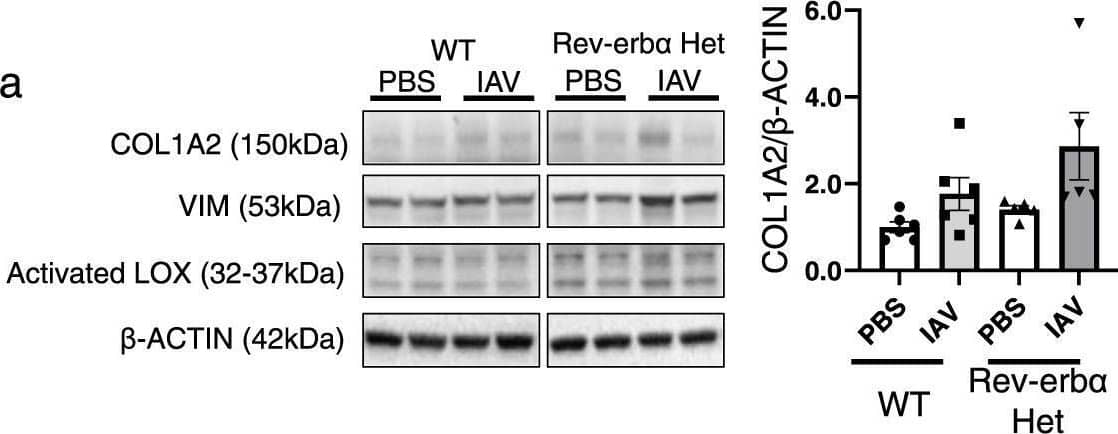
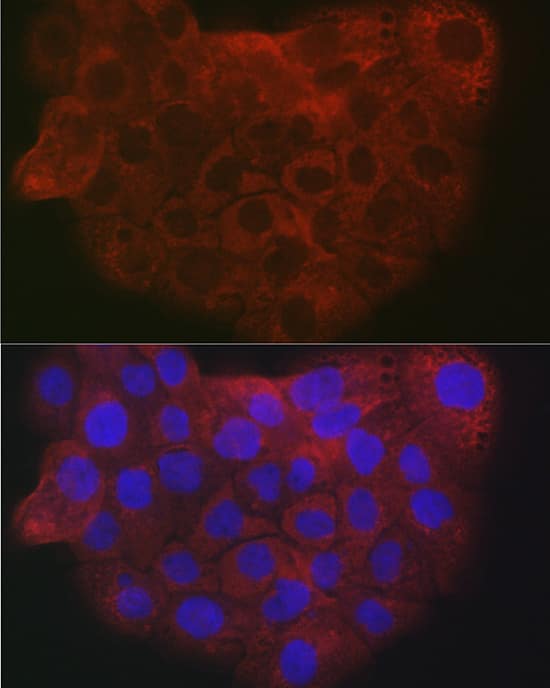

![Immunocytochemistry SPARC Antibody [Unconjugated]](https://images.novusbio.com/images/antibody/SPARC_AF942_Immunocytochemistry__Immunofluorescence_23321.jpg)
![Intracellular Staining by Flow Cytometry SPARC Antibody [Unconjugated]](https://images.novusbio.com/images/antibody/af942_mouse-sparc-affinity-purified-polyclonal-ab-intracellular-staining-by-flow-cytometry-22122020141853.jpg)
![Immunohistochemistry SPARC Antibody [Unconjugated]](https://images.novusbio.com/images/antibody/SPARC_AF942_Immunohistochemistry_10419.jpg)
![N/A MMP-2 [HRP]](https://images.novusbio.com/images/elisa/DATA_MMP2_MMP200_ELISA_1003.jpg)
![N/A MMP-2 [HRP]](https://images.novusbio.com/images/elisa/MMP2_MMP200_ELISA_474.jpg)
![N/A VEGF [HRP]](https://images.novusbio.com/images/elisa/VEGF_DVE00_ELISA_208.jpg)
![N/A VEGF [HRP]](https://images.novusbio.com/images/elisa/DATA_VEGF_DVE00_ELISA_871.jpg)
![N/A VEGF [HRP]](https://images.novusbio.com/images/elisa/DATA_VEGF_DVE00_ELISA_872.jpg)
![N/A Follistatin [HRP]](https://images.novusbio.com/images/elisa/DATA_Follistatin_DFN00_ELISA_681.jpg)
![N/A Follistatin [HRP]](https://images.novusbio.com/images/elisa/DATA_Follistatin_DFN00_ELISA_682.jpg)
![N/A Follistatin [HRP]](https://images.novusbio.com/images/elisa/Follistatin_DFN00_ELISA_97.jpg)