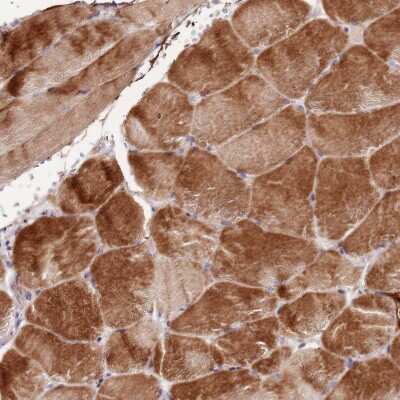
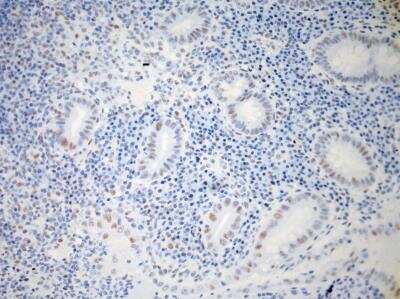
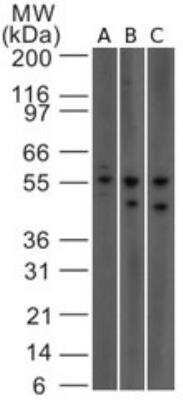
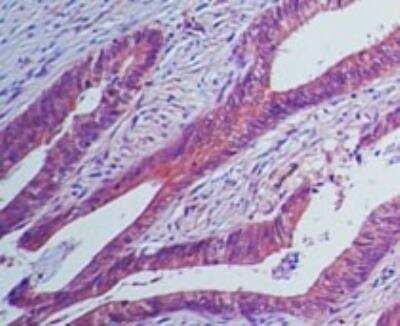
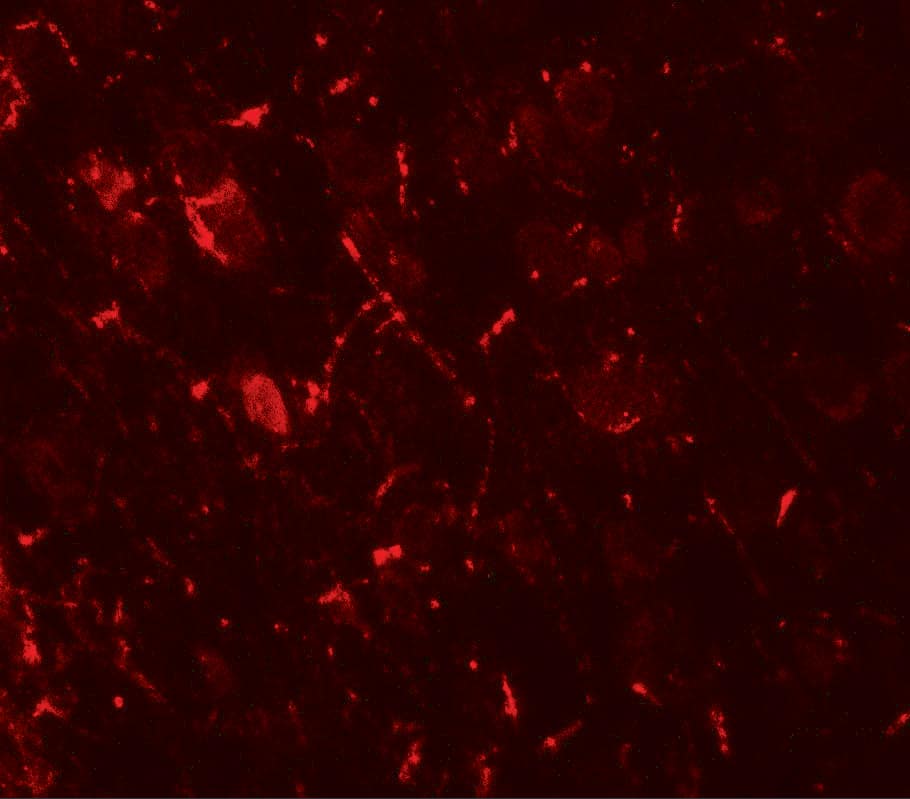
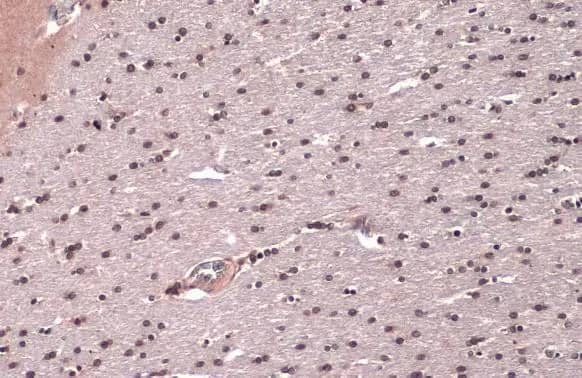
ATG16L1 Antibody Blocking Peptide

Images


Product Details

Summary
Product Discontinued
View other related ATG16L1 Peptides and Proteins

Order Details


    • Catalog Number
      NBP1-76862PEP
    • Availability
      Product Discontinued

    Can't find what you are looking for? Use our Antibody Concierge Service & we will help you locate your antibody!

    Or feel free to contact us for alternative products.

ATG16L1 Antibody Blocking Peptide Summary

Description
A blocking peptide containing 18 amino acids near the amino terminus of human ATG16.

Source: Synthetic

(Accession #: NP_110430)

Source
Synthetic
Protein/Peptide Type
Antibody Blocking Peptide
Gene
ATG16L1
Purity
N/A

Applications/Dilutions

Dilutions
  • Antibody Competition
Application Notes
This peptide is useful as a blocking peptide for NBP1-76862.

For further blocking peptide related protocol, click here.

Packaging, Storage & Formulations

Storage
Store at -20C. Avoid freeze-thaw cycles.
Buffer
PBS pH 7.2 (10 mM NaH2PO4, 10 mM Na2HPO4, 130 mM NaCl) containing 0.1% bovine serum albumin.
Preservative
0.02% Sodium Azide
Concentration
0.2 mg/ml
Purity
N/A

Alternate Names for ATG16L1 Antibody Blocking Peptide

  • APG16 autophagy 16-like (S. cerevisiae)
  • APG16L beta
  • APG16LFLJ10828
  • APG16-like 1
  • ATG16 autophagy related 16-like (S. cerevisiae)
  • ATG16 autophagy related 16-like 1 (S. cerevisiae)
  • ATG16A
  • ATG16L
  • autophagy-related protein 16-1
  • FLJ00045
  • FLJ10035
  • FLJ22677
  • IBD10
  • WD repeat domain 30
  • WDR30

Background

Macroautophagy is the major inducible pathway for the general turnover of cytoplasmic constituents in eukaryotic cells, it is also responsible for the degradation of active cytoplasmic enzymes and organelles during nutrient starvation. Macroautophagy involves the formation of double-membrane bound autophagosomes which enclose the cytoplasmic constituent targeted for degradation in a membrane bound structure, which then fuse with the lysosome (or vacuole) releasing a single-membrane bound autophagic bodies which are then degraded within the lysosome (or vacuole). The APG12-APG5-APG16L complex is essential for the elongation of autophagic isolation membranes. This complex initially associates in uniform distribution with small vesicle membranes. During membrane elongation, the complex partitions, with a great concentration building on the outer side of the isolation membrane. Upon completion of the formation of the autophagosome, the APG12-APG5-APG16L dissociates from the membrane. There are 5 isoforms of this protein (in human), with theoretical molecular weights ranging from ~19-68 kDa.

Mutations in the ATG16L1 proitein have been associated with Crohn's disease.

Limitations

This product is for research use only and is not approved for use in humans or in clinical diagnosis. Peptides and proteins are guaranteed for 3 months from date of receipt.

Customers Who Viewed This Item Also Viewed...

NB100-524
Species: Hu, Mu
Applications: Flow-IC, Flow, ICC/IF, IHC, IHC-Fr,  IHC-P, IP, WB
MAB1686
Species: Mu
Applications: Neut, WB
NBP1-76377
Species: Hu, Mu, Rt
Applications: ELISA, ICC/IF, IHC,  IHC-P, WB
NB100-2331
Species: Am, Ca, Fi, Hu, Mu, Pl, Rt, Ze
Applications: ChIP, ChIP, ELISA, Flow, IB, ICC/IF, IHC-WhMt, IHC, IHC-Fr,  IHC-P, IP, Simple Western, SB, WB
NB110-53818
Species: Al, Bv, Dr, Fi, Gp, Hu, Mu, Po, Pm, Rt, Xp, Ze
Applications: EM, ELISA, Flow, IB, ICC/IF, IHC,  IHC-P, IP, KD, KO, PLA, RIA, Simple Western, WB
NBP2-15501
Species: Hu, Mu, Rt
Applications: ICC/IF, IHC,  IHC-P, IP, WB
NBP2-94796
Species: Hu, Mu, Rt
Applications: ELISA, ICC/IF, WB
H00006583-A01
Species: Ca, Hu, Mu, Rt
Applications: ELISA, ICC/IF, IHC-WhMt, IHC, IHC-Fr, WB
H00008878-M01
Species: Bv, Ha, Hu, Mu, Rb, Rt
Applications: ELISA, ICC/IF, IHC, IHC-Fr,  IHC-P, IP, WB
MAB7442
Species: Hu
Applications: B/N, WB
NBP2-47559
Species: Hu
Applications: IHC,  IHC-P, WB
NBP2-85385
Species: Hu, Mu
Applications: WB
NBP2-41217
Species: Hu, Mu, Rt
Applications: ELISA, ICC/IF, IHC,  IHC-P, WB
NBP1-31381
Species: Hu, Mu, Rt
Applications: ICC/IF, IHC,  IHC-P, IP, WB
NBP2-37399
Species: Hu
Applications: CyTOF-ready, ELISA, Flow, ICC/IF, IHC,  IHC-P, WB
H00002965-M01
Species: Hu
Applications: ELISA, ICC/IF, IHC,  IHC-P, KD, S-ELISA, WB
NBP2-02627
Species: Ca, Hu, Pm, Mu, Rt
Applications: Flow, ICC/IF, IHC,  IHC-P, WB
NBP1-19151
Species: Bv, Hu, Ma
Applications: ICC/IF, IHC,  IHC-P, IP, WB
NBP1-76862PEP
Species: Hu
Applications: AC

Publications for ATG16L1 Peptide (NBP1-76862PEP) (0)

There are no publications for ATG16L1 Peptide (NBP1-76862PEP).
By submitting your publication information earn gift cards and discounts for future purchases.

Reviews for ATG16L1 Peptide (NBP1-76862PEP) (0)

There are no reviews for ATG16L1 Peptide (NBP1-76862PEP). By submitting a review you will receive an Amazon e-Gift Card or Novus Product Discount.
  • Review with no image -- $10/€7/£6/$10 CAD/¥70 Yuan/¥1110 Yen
  • Review with an image -- $25/€18/£15/$25 CAD/¥150 Yuan/¥2500 Yen

FAQs for ATG16L1 Peptide (NBP1-76862PEP) (0)

There are no specific FAQs related to this product. Read our general customer & technical service FAQs.

Additional ATG16L1 Products

Research Areas for ATG16L1 Peptide (NBP1-76862PEP)

Find related products by research area.

Blogs on ATG16L1.

Liver ASK1 activates autophagy to protect against hepatic fat accumulation, non-alcoholic steatohepatitis and fibrosis
By Jamshed Arslan, Pharm. D., PhD. The most common chronic liver disorder worldwide is non-alcoholic fatty liver disease (NAFLD). This obesity-linked disorder can manifest as hepatic fat accumulation (steatosis) wit...  Read full blog post.

ATG16L1 - a key player in the development of the autophagosome
Like apoptosis, autophagy is a highly regulated physiologic process that involves cellular degradation and recycling of organelles and macromolecules. Autophagy is a survival mechanism induced by states of stress, starvation, and infection. A do...  Read full blog post.

Contact Information

Product PDFs

Calculators

Concentration Calculator

The concentration calculator allows you to quickly calculate the volume, mass or concentration of your vial. Simply enter your mass, volume, or concentration values for your reagent and the calculator will determine the rest.

=
÷

Molarity Calculator

Calculate the mass, volume, or concentration required for a solution.

The molarity calculator is based on the following equation:

Mass (g) = Concentration (mol/L) x Volume (L) x Molecular Weight (g/mol)

As an example, if the molecular weight of a compound is 197.13 g/mol and the desired concentration is 10 mM for 10 ml of water based stock solution, the required mass would be = 19.713 (value determined by this calculator).

=
x
x
g/mol

Review this Product

Be the first to review our ATG16L1 Antibody Blocking Peptide and receive a gift card or discount.

Bioinformatics

Gene Symbol ATG16L1