| Details of Functionality | Ubiquitin chains vary in length, linkage, and function. K48-linked Poly-Ubiquitin Chains (Ub1-7) are ideal for investigating Ubiquitin-binding proteins and as substrates for Ubiquitin-specific isopeptidases. Reaction conditions will need to be optimized for each specific application. IMPORTANT: Heating this product in SDS-PAGE buffer or terminating reactions containing this product with heated SDS-PAGE buffer could lead to unexpected, high apparent molecular weight banding or smearing on gels that is not representative of product purity. For optimal results, we recommend incubation in SDS-PAGE buffer + DTT at <40 °C for 20 minutes prior to gel electrophoresis. |
| Source | E. coli-derived human Poly-Ubiquitin protein P0CG47 |
| Protein/Peptide Type | Recombinant Proteins |
| Purity | >95%, by SDS-PAGE under reducing conditions and visualized by Colloidal Coomassie® Blue stain |
| Dilutions |
|
| Theoretical MW | 8.6 kDa (Ub), 17 kDa (Ub2), 26 kDa (Ub3), 34 kDa (Ub4), 43 kDa (Ub5), 52 kDa (Ub6), and 60 kDa (Ub7) .Disclaimer note: The observed molecular weight of the protein may vary from the listed predicted molecular weight due to post translational modifications, post translation cleavages, relative charges, and other experimental factors. |
| Storage | Use a manual defrost freezer and avoid repeated freeze-thaw cycles.
|
| Buffer | Lyophilized from a solution in deionized water. |
| Purity | >95%, by SDS-PAGE under reducing conditions and visualized by Colloidal Coomassie® Blue stain |
| Reconstitution Instructions | Reconstitute at 5 mg/mL in an aqueous solution. |
Poly-Ubiquitin chains are composed of Ubiquitin monomers that are covalently linked through isopeptide bonds, which typically form between a lysine residue of one Ubiquitin molecule and the C-terminal glycine residue of another Ubiquitin molecule (1). Each human Ubiquitin monomer is 76 amino acids (aa) in length and shares 96% and 100% aa identity with yeast and mouse Ubiquitin, respectively (2). Seven of the 76 aa in Ubiquitin are lysine residues that can participate in poly-Ubiquitin chain formation. Linkage through specific lysine residues is thought to serve as a signal that affects protein degradation, signaling, trafficking, and other cellular processes (3-8).
Linkage specific poly-Ubiquitin chains are used to investigate mechanisms of chain recognition,binding and hydrolysis by the proteasome, deubiquitinating enzymes, E3 ligases or other proteinsthat contain ubiquitin-associated domains (UBAs) or ubiquitin-interacting motifs (UIMs). Lys48-linked chains are abundant in vivo and act as a universal signal for proteasomal degradation. This product is formed with wild-type human recombinant Ubiquitin and linkage-specific enzymes.The poly-Ubiquitin chain mixture contains mono-Ubiquitin and higher MW species up to hepta-Ubiquitin.






The concentration calculator allows you to quickly calculate the volume, mass or concentration of your vial. Simply enter your mass, volume, or concentration values for your reagent and the calculator will determine the rest.






![Western Blot Butyrylcholinesterase/BCHE Antibody [Unconjugated]](https://images.novusbio.com/images2/Butyrylcholinesterase_AF9024_Western_Blot_19121.jpg)
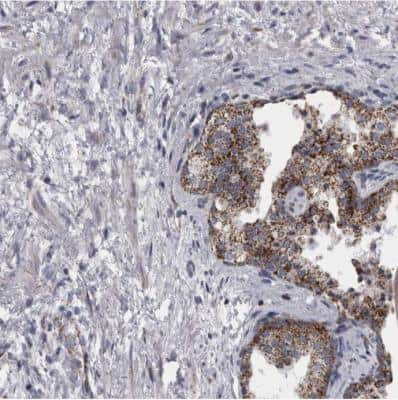
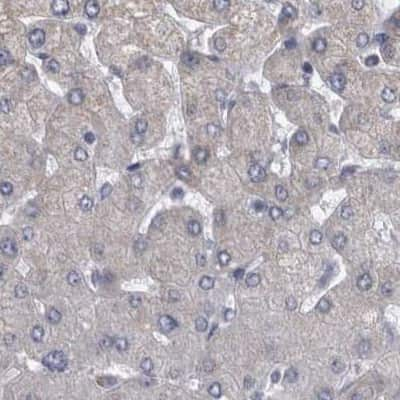
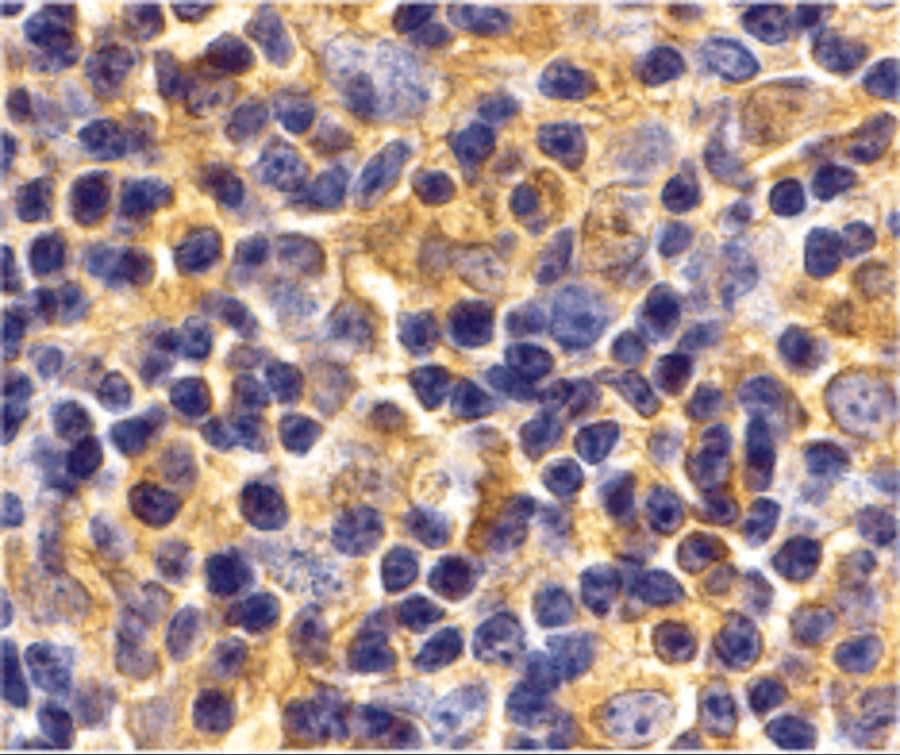
![Immunohistochemistry Butyrylcholinesterase/BCHE Antibody [Unconjugated]](https://images.novusbio.com/images2/Butyrylcholinesterase_AF9024_Immunohistochemistry_19158.jpg)