| Reactivity | HuSpecies Glossary |
| Applications | Bioactivity |
| Format | Carrier-Free |
| Additional Information | Analyzed by SEC-MALS |
||||||
| Details of Functionality | Measured by its binding ability in a functional ELISA. Recombinant Human DLL4 Fc Chimera (Catalog
# BT-DLL4) binds to Recombinant Human Notch-1 Fc Chimera (Catalog #
3647-TK) with
an ED50 of 2.00-20.0 ng/mL. |
||||||
| Source | Chinese Hamster Ovary cell line, CHO-derived human DLL4 protein
|
||||||
| N-terminal Sequence | Ser 27 |
||||||
| Structure / Form | Disulfide-linked homodimer |
||||||
| Protein/Peptide Type | Recombinant Proteins |
||||||
| Purity | >95%, by SDS-PAGE with quantitative densitometry by Coomassie® Blue Staining |
||||||
| Endotoxin Note | <0.10 EU per 1 μg of the protein by the LAL method. |
| Dilutions |
|
| Theoretical MW | 81 kDa. Disclaimer note: The observed molecular weight of the protein may vary from the listed predicted molecular weight due to post translational modifications, post translation cleavages, relative charges, and other experimental factors. |
| SDS-PAGE | 89-98 kDa, under reducing conditions. |
| Storage | Use a manual defrost freezer and avoid repeated freeze-thaw cycles.
|
| Buffer | Lyophilized from a 0.2 μm filtered solution in HBS and Tween®-80 with Trehalose. |
| Purity | >95%, by SDS-PAGE with quantitative densitometry by Coomassie® Blue Staining |
| Reconstitution Instructions | Reconstitute the 20 μg size at 100 μg/mL in water. Reconstitute all other sizes at 500 μg/mL in water. |


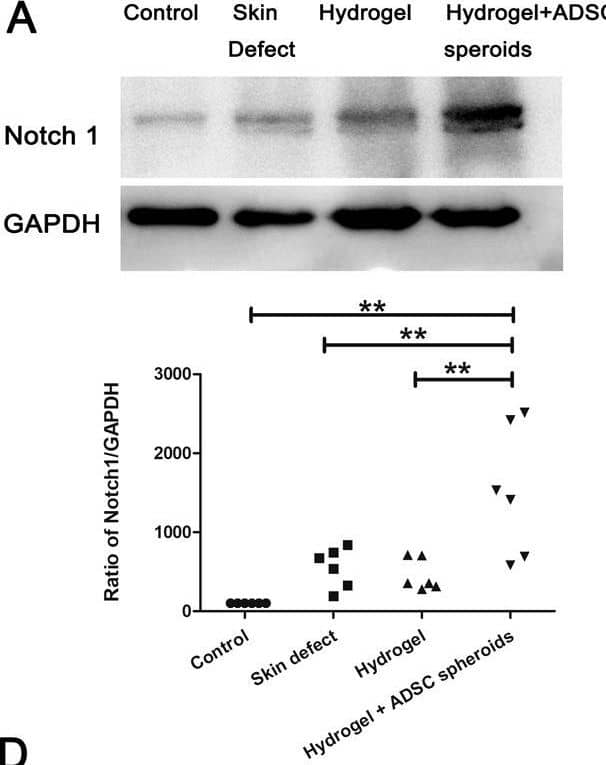
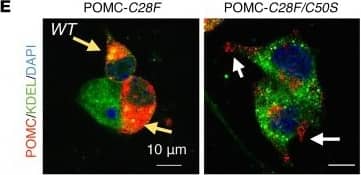


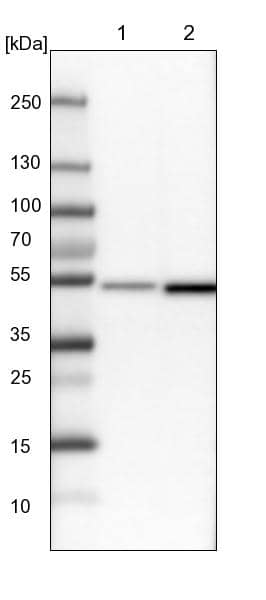



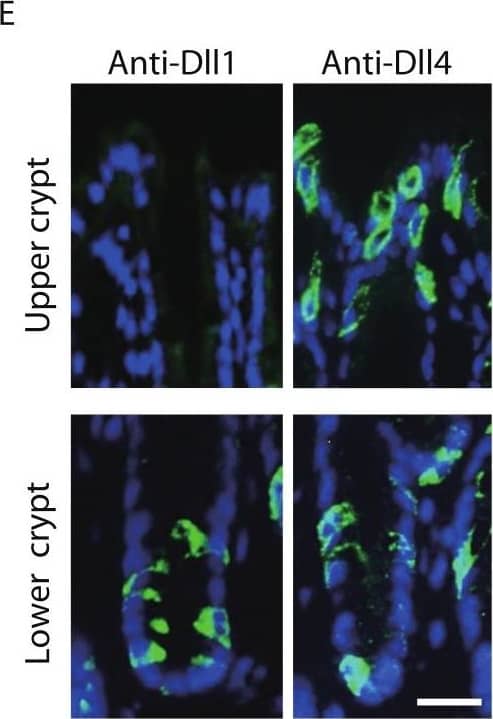
|
New DLL4 Vaccine May Prevent Breast Tumors We at Novus Biologicals have a large antibody database devoted to signalling pathways. These underpin every area of molecular biological research, including cancer. Among our cell signalling antibodies is one targeted to DLL4 (Delta-like protein 4). D... Read full blog post. |
The concentration calculator allows you to quickly calculate the volume, mass or concentration of your vial. Simply enter your mass, volume, or concentration values for your reagent and the calculator will determine the rest.


 BT-DLL4-GMP) and RUO (Catalog # BT-DLL4) grades of RecombinantHuman DLL4 as measured in a functional ELISA with Recombinant Human Notch-1 Protein (orange and red, respectively)." title="Equivalent binding activity of GMP (
 3647-TK) with an ED50 of 2.00-20.0 ng/mL." title="In a functional ELISA, Recombinant Human DLL4 Fc Chimera Protein (Catalog # BT-DLL4) binds to Recombinant Human Notch-1 Fc Chimera (
![N/A VEGF [HRP]](https://images.novusbio.com/images/elisa/VEGF_DVE00_ELISA_208.jpg)
![N/A VEGF [HRP]](https://images.novusbio.com/images/elisa/DATA_VEGF_DVE00_ELISA_871.jpg)
![N/A VEGF [HRP]](https://images.novusbio.com/images/elisa/DATA_VEGF_DVE00_ELISA_872.jpg)
![Immunocytochemistry Notch-4 Antibody [Unconjugated]](https://images.novusbio.com/images/antibody/af3847_human-notch-4-intracellular-domain-affinity-purified-pab-immunocytochemistry-3092021102949.jpg)


![Immunohistochemistry Pref-1/DLK1/FA1 Antibody [Unconjugated]](https://images.novusbio.com/images/antibody/Pref1_AF8277_Immunohistochemistry_15186.jpg)
![Western Blot Pref-1/DLK1/FA1 Antibody [Unconjugated]](https://images.novusbio.com/images/antibody/Pref1_AF8277_Flow_Cytometry_15135.jpg)
![Flow Cytometry Pref-1/DLK1/FA1 Antibody [Unconjugated]](https://images.novusbio.com/images/antibody/Pref1_AF8277_Flow_Cytometry_15223.jpg)


![Immunohistochemistry Butyrylcholinesterase/BCHE Antibody [Unconjugated]](https://images.novusbio.com/images/antibody/Butyrylcholinesterase_AF9024_Immunohistochemistry_19158.jpg)
![Western Blot Butyrylcholinesterase/BCHE Antibody [Unconjugated]](https://images.novusbio.com/images/antibody/Butyrylcholinesterase_AF9024_Western_Blot_19121.jpg)
![Immunohistochemistry Notch-2 Antibody [Unconjugated]](https://images.novusbio.com/images/antibody/af3735_human-notch-2-intracellular-domain-affinity-purified-pab-immunohistochemistry-1862024111356..jpg)