 HAF018). A specific band was detected for pIgR at approximately 85-100 kDa (as indicated). This experiment was conducted under reducing conditions and using Immunoblot Buffer Group 1." title="Western blot shows lysates of human stomach tissue. PVDF membrane was probed with 2.0 µg/mL of Mouse Anti-Human pIgR Monoclonal Antibody (Catalog # MAB2717) followed by HRP-conjugated Anti-Mouse IgG Secondary Antibody (Catalog # HAF018). A specific band was detected for pIgR at approximately 85-100 kDa (as indicated). This experiment was conducted under reducing conditions and using Immunoblot Buffer Group 1." />
| Reactivity | HuSpecies Glossary |
| Applications | WB, Simple Western |
| Clone | 825724 |
| Clonality | Monoclonal |
| Host | Mouse |
| Conjugate | Unconjugated |
| Concentration | LYOPH |
| Immunogen | Mouse myeloma cell line NS0-derived recombinant human pIgR Lys19-Arg638 Accession # CAA51532 |
| Specificity | Detects human pIgR in direct ELISAs and Western blots. In direct ELISAs, no cross-reactivity with recombinant
mouse pIgR is observed. |
| Source | N/A |
| Isotype | IgG3 |
| Clonality | Monoclonal |
| Host | Mouse |
| Gene | PIGR |
| Purity Statement | Protein A or G purified from hybridoma culture supernatant |
| Innovator's Reward | Test in a species/application not listed above to receive a full credit towards a future purchase. |
| Dilutions |
|
|
| Application Notes | In Simple Western only 10-15 uL of the recommended dilution is used per data point. |
|
| Publications |
|
| Storage | Use a manual defrost freezer and avoid repeated freeze-thaw cycles.
|
| Buffer | Lyophilized from a 0.2 μm filtered solution in PBS with Trehalose. See Certificate of Analysis for details. *Small pack size (-SP) is supplied either lyophilized or as a 0.2 µm filtered solution in PBS. |
| Preservative | No Preservative |
| Concentration | LYOPH |
| Reconstitution Instructions | Sterile PBS to a final concentration of 0.5 mg/mL. For liquid material, refer to CoA for concentration. |
The human polymeric immunoglobulin receptor (pIgR; also known as membrane secretory component) is an approximately 100 kDa type I transmembrane glycoprotein that is synthesized as a 764 amino acid (aa) precursor. It includes a signal sequence (aa 1-18), an extracellular region (aa 19-638), a transmembrane segment (aa 639-661), and a cytoplasmic domain (aa 662-764) (1-3). The extracellular region consists of five Ig-like domains and a sixth non-Ig domain that connects to the membrane region. pIgR is expressed on secretory epithelial cells of exocrine tissues. Immunoglobulin isotypes consist of two heavy (H) and two light (L) chains. For IgA and IgM, this H2L2 monomer can form larger polymers through association with a joining chain (J chain). The Fc regions of IgA and IgM have a carboxy-terminal extension called a secretory tailpiece that binds the J chain (4). pIgR functions as a carrier that transports IgA and IgM across epithelium (5). On the basolateral surface of epithelial cells, the receptor initially binds non-covalently to IgA via a docking site on the J chain. This initiates a rearrangement in which a disulfide bond forms between pIgR and an IgA heavy chain (2). The complexes are then internalized and transcytosed to the apical surface. A soluble covalent complex called secretory IgA (SIgA) is now generated by proteolytic cleavage of the sixth extracellular domain of pIgR and released into the lumen (6). This IgA-bound and proteolytically generated pIgR fragment is referred to as secretory component (SC). Notably, human pIgR transcytoses constitutively, with or without ligand, creating both bound and free, 78 kDa SC following cleavage (3). The extracellular region of pIgR shares 64%, 65%, and 70% aa sequence identity with the equivalent region of rat, mouse and porcine pIgR, respectively. The receptor component of the complex anchors the SIgA molecule to mucous (7). SIgA is a crucial component of the mucosal immune system serving to protect the large expanse of mucous membranes that form a barrier between the interior of the body and the external environment (8).
![Flow Cytometry ERMAP Antibody [Unconjugated]](https://images.novusbio.com/images/antibody/ERMAP_AF4928_Flow_Cytometry_11957.jpg)

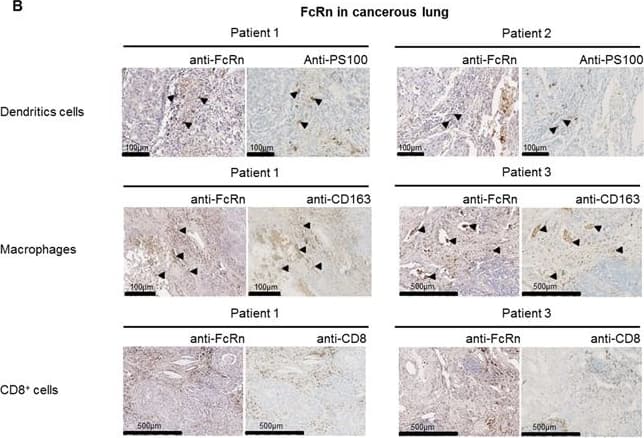
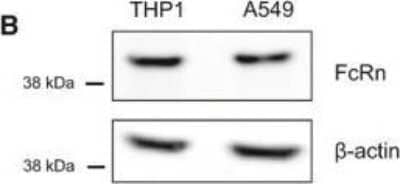


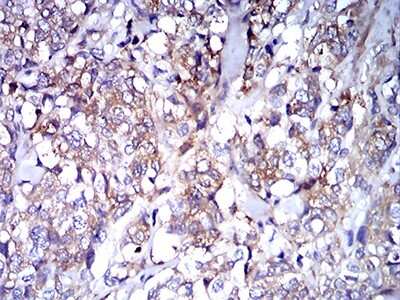


![Immunohistochemistry Albumin Antibody (188835) [Unconjugated] - Serum](https://images.novusbio.com/images/antibody/Albumin_MAB1455_Immunohistochemistry_23317.jpg)
![Immunocytochemistry Albumin Antibody (188835) [Unconjugated] - Serum](https://images.novusbio.com/images/antibody/Albumin_MAB1455_Immunocytochemistry__Immunofluorescence_17777.jpg)
![Intracellular Staining by Flow Cytometry Albumin Antibody (188835) [Unconjugated] - Serum](https://images.novusbio.com/images/antibody/Albumin_MAB1455_Flow_Cytometry_15110.jpg)


Secondary Antibodies |
Isotype Controls |
The concentration calculator allows you to quickly calculate the volume, mass or concentration of your vial. Simply enter your mass, volume, or concentration values for your reagent and the calculator will determine the rest.


![SDS-Page TNF-alpha [Unconjugated]](https://images.novusbio.com/images/protein/TNF-alpha_210-TA_256.jpg)
![Bioactivity TNF-alpha [Unconjugated]](https://images.novusbio.com/images/protein/TNFalpha_210TA_1658.jpg)
![SEC-MALS TNF-alpha [Unconjugated]](https://images.novusbio.com/images/210-ta_recombinant-human-tnf-alpha-protein-sec-mals-35202312244..jpg)
![Bioactivity IL-4 [Unconjugated]](https://images.novusbio.com/images/protein/6507-ilcf_recombinant-human-il-4-cho-expressed-protein-cf-bioactivity-272020133214.jpg)
![SEC-MALS IFN-gamma [Unconjugated]](https://images.novusbio.com/images/485-mi_recombinant-mouse-ifn-gamma-protein-sec-mals-1612202583245.jpg)
![Bioactivity IFN-gamma [Unconjugated]](https://images.novusbio.com/images/protein/IFN-gamma_485-MI_455.jpg)
![SDS-Page IFN-gamma [Unconjugated]](https://images.novusbio.com/images/protein/IFN-gamma_485-MI_407.jpg)
![Holo-Transferrin [Unconjugated]](/sites/all/modules/enterprise-tech/et_datasheets/images/novus_guarantee.png "Holo-Transferrin [Unconjugated]")
![N/A IL-6 [HRP]](https://images.novusbio.com/images/elisa/DATA_IL6_M6000_ELISA_936.jpg)
![N/A IL-6 [HRP]](https://images.novusbio.com/images/elisa/IL-6_M6000_ELISA_415.jpg)
![N/A IL-6 [HRP]](https://images.novusbio.com/images/m6000b_mouse-il-6-quantikine-elisa-kit-1752025024034.jpg)
![N/A IL-10 [Biotin]](https://images.novusbio.com/images/elisa/DATA_IL10_DY417_ELISA_2014.jpg)


![Western Blot LDLR Antibody [Unconjugated]](https://images.novusbio.com/images/af2255_mouse-ldl-r-affinity-purified-polyclonal-ab-8120255541738.jpg)
![Western Blot LDLR Antibody [Unconjugated]](https://images.novusbio.com/images/af2255_mouse-ldl-r-affinity-purified-polyclonal-ab-8120255541731.jpg)
![Western Blot LDLR Antibody [Unconjugated]](https://images.novusbio.com/images/af2255_mouse-ldl-r-affinity-purified-polyclonal-ab-4120241240515.jpg)
![Bioactivity CTLA-4 [Unconjugated]](https://images.novusbio.com/images/protein/CTLA4_7268CT_2293.jpg)
