| Reactivity | MuSpecies Glossary |
| Applications | WB, ELISA(Det) |
| Clonality | Polyclonal |
| Host | Goat |
| Conjugate | Biotin |
| Concentration | LYOPH |
| Immunogen | Mouse myeloma cell line NS0-derived recombinant mouse Osteoactivin/GPNMB Lys23-Asn502 Accession # NP_444340 |
| Specificity | Detects mouse Osteoactivin/GPNMB in ELISAs and Western blots. In sandwich immunoassays, less than 0.2% cross-reactivity with recombinant human (rh) Osteoactivin, rhSyndecan-4, and recombinant mouse Syndecan-4 is observed. |
| Source | N/A |
| Isotype | IgG |
| Clonality | Polyclonal |
| Host | Goat |
| Gene | GPNMB |
| Purity Statement | Antigen Affinity-purified |
| Innovator's Reward | Test in a species/application not listed above to receive a full credit towards a future purchase. |
| Dilutions |
|
|
| Application Notes | ELISA Capture: Mouse Osteoactivin/GPNMB Antibody (Catalog # AF2330) Standard: Recombinant Mouse Osteoactivin/GPNMB Fc Chimera (Catalog # 2330-AC) |
|
| Readout System | ||
| Publications |
|
| Storage | Use a manual defrost freezer and avoid repeated freeze-thaw cycles.
|
| Buffer | Lyophilized from a 0.2 μm filtered solution in PBS with BSA as a carrier protein. |
| Preservative | No Preservative |
| Concentration | LYOPH |
| Reconstitution Instructions | Reconstitute at 0.2 mg/mL in sterile PBS. |
Osteoactivin (also named GPNMB and DC-HIL) is a 125 kDa, intracellular glycoprotein that is associated with cell endosomal/lysosomal compartments (1, 2). Mouse osteoactivin is synthesized as a type I, transmembrane, 574 amino acid (aa) precursor that contains a 22 aa signal sequence, a 478 aa luminal/extracellular domain, a 23 aa transmembrane segment and a 51 aa cytoplasmic tail. The luminal region contains an N-terminal heparin-binding motif, multiple glycosylation sites, an RGD motif and a 130 aa PKD domain. The intracellular tail also has an RGD motif, plus an ITAM (Y-x-x-I) and lysosomal targeting (L-L) motif. The extracellular/luminal region is 89% and 74% aa identical to the equivalent regions in rat and human, respectively. Cells known to express osteoactivin include osteoblasts, dendritic cells, and melanocytes, plus fetal chondrocytes and stratum basale keratinocytes (2, 3). Osteoactivin is reported to bind to heparan sulfate-proteoglycan, possibly on the surface of fibroblasts and endothelial cells (2). It may also interact with integrins.




![Western Blot Osteopontin/OPN Antibody [Unconjugated]](https://images.novusbio.com/images/af808_mouse-osteopontin-opn-affinity-purified-polyclonal-ab-western-blot-121220259133019.jpg)
![Western Blot Osteopontin/OPN Antibody [Unconjugated]](https://images.novusbio.com/images/af808_mouse-osteopontin-opn-affinity-purified-polyclonal-ab-western-blot-12122025932150.jpg)
![Western Blot Osteopontin/OPN Antibody [Unconjugated]](https://images.novusbio.com/images/af808_mouse-osteopontin-opn-affinity-purified-polyclonal-ab-western-blot-121220259224819.jpg)




Secondary Antibodies |
Isotype Controls |
The concentration calculator allows you to quickly calculate the volume, mass or concentration of your vial. Simply enter your mass, volume, or concentration values for your reagent and the calculator will determine the rest.


 2330-AC) was serially diluted and captured by Goat Anti-Mouse Osteoactivin/GPNMB Antigen Affinity-purified Polyclonal Antibody (Catalog #




![Western Blot ERK2 Antibody [Unconjugated]](https://images.novusbio.com/images/antibody/ERK2_AF1230_Western_Blot_5097.jpg)
![Knockout Validated ERK2 Antibody [Unconjugated]](https://images.novusbio.com/images/antibody/ERK2_AF1230_Knockout_Validated_22864.jpg)
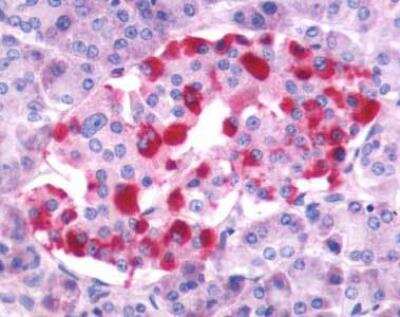
![Immunohistochemistry ERK2 Antibody [Unconjugated]](https://images.novusbio.com/images/antibody/ERK2_AF1230_Immunohistochemistry_20696.jpg)