| Reactivity | HuSpecies Glossary |
| Applications | WB |
| Clonality | Polyclonal |
| Host | Sheep |
| Conjugate | Alexa Fluor 647 |
| Immunogen | E. coli-derived recombinant human LAT His30-Glu113 Accession # O43561 |
| Specificity | Detects human LAT in Western blots. |
| Isotype | IgG |
| Clonality | Polyclonal |
| Host | Sheep |
| Purity Statement | Antigen Affinity-purified |
| Innovator's Reward | Test in a species/application not listed above to receive a full credit towards a future purchase. |
| Storage | Protect from light. Do not freeze. 12 months from date of receipt, 2 to 8 °C as supplied |
| Buffer | Supplied 0.2 mg/mL in a saline solution containing BSA and Sodium Azide. |
LAT (Linker for activation of T cells; also pp36) is a 36‑38 kDa type III (no signal sequence; extracellular N-terminus) transmembrane adaptor phosphoprotein. It is expressed on mast cells, NK cells, monocytes (but not macrophages), platelets and T cells. LAT is phosphorylated upon ligation of the TcR, GPVI, and Fc epsilon RI, and serves as an anchor for several SH2-domain containing signaling proteins, including PLC gamma 1, SLP76 and Grb2. Human LAT is 262 amino acids (aa) in length. It contains a four aa extracellular segment with a 235 aa cytoplasmic domain (aa 28‑262). Palmitoylation occurs on Cys26 and 29. There are 13 Ser/Thr phosphorylation sites plus five Tyr sites. Multiple potential splice variants are reported. There is an alternative start site 36 aa upstream of the standard site that may be accompanied by a deletion of aa 114‑142. There is also a deletion of aa 88‑97, and three substitutions: two aa for aa 215‑262, 38 aa for aa 55‑262, and 50 aa for aa 35‑262. Over aa 30‑113, human LAT shares 73% aa identity with mouse LAT.
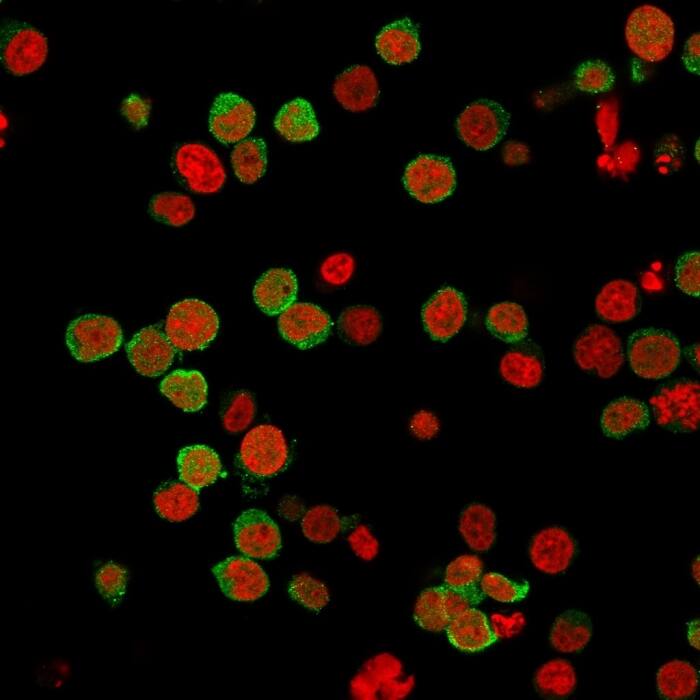
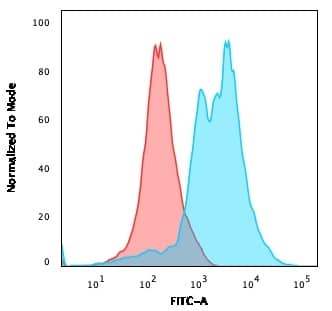
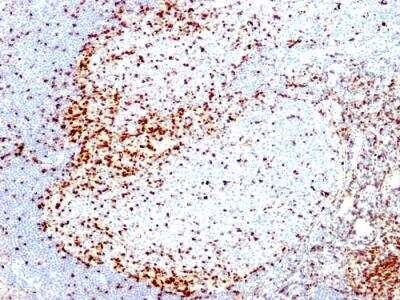
![Intracellular Staining by Flow Cytometry NTAL Antibody [Unconjugated]](https://images.novusbio.com/images/antibody/NTAL_AF4066_Flow_Cytometry_8223.jpg)
![Western Blot NTAL Antibody [Unconjugated]](https://images.novusbio.com/images/antibody/NTAL_AF4066_Western_Blot_5396.jpg)
![Immunocytochemistry SLP-76/LCP2 [p Tyr145] Antibody (776503) [Unconjugated]](https://images.novusbio.com/images/antibody/SLP-76_MAB7474_Immunocytochemistry_12318.jpg)
![Western Blot SLP-76/LCP2 [p Tyr145] Antibody (776503) [Unconjugated]](https://images.novusbio.com/images/antibody/SLP-76_MAB7474_Western_Blot_12293.jpg)
![Simple Western SLP-76/LCP2 [p Tyr145] Antibody (776503) [Unconjugated]](https://images.novusbio.com/images/antibody/SLP76_MAB7474_Simple_Western_16628.jpg)


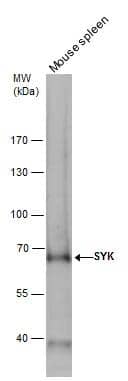

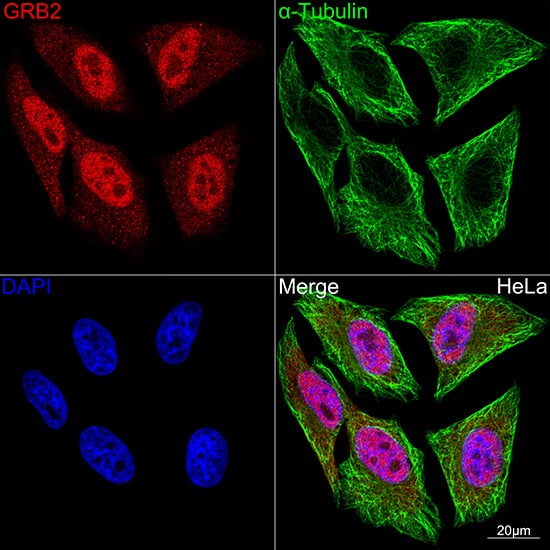
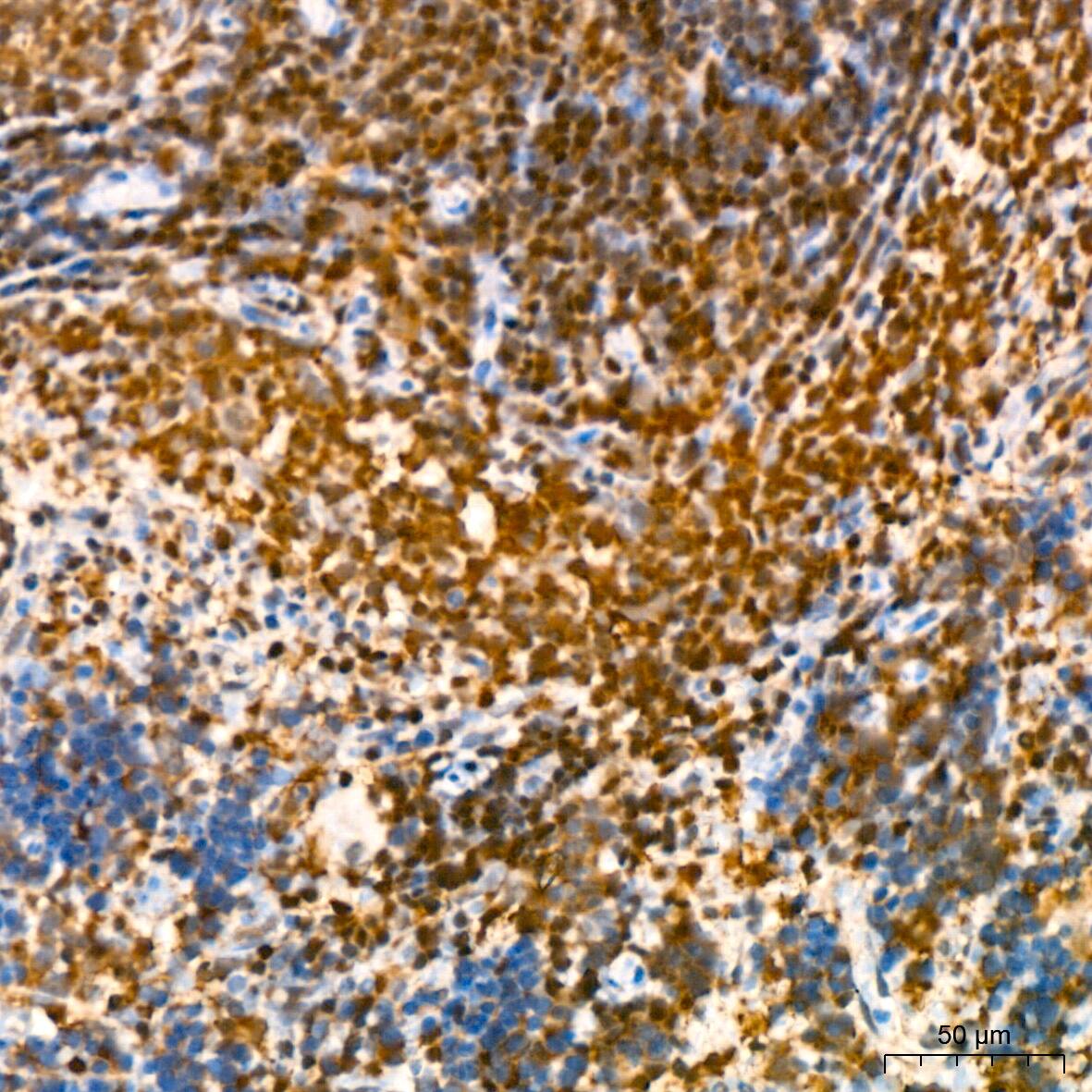


![Western Blot EphB2 Antibody [Unconjugated]](https://images.novusbio.com/images/af467_human-mouse-ephb2-affinity-purified-polyclonal-ab-41202410485412.jpg)
![Immunohistochemistry EphB2 Antibody [Unconjugated]](https://images.novusbio.com/images/antibody/EphB2_AF467_Immunohistochemistry_20369.jpg)
![Western Blot EphB2 Antibody [Unconjugated]](https://images.novusbio.com/images/antibody/EphB2_AF467_Western_Blot_21511.jpg)
Secondary Antibodies |
Isotype Controls |
|
Cluster of Differentiation 3 (CD3) (OKT3 clone) as a Marker of Immune Response Efficiency Our immune system is a powerful defense mechanism against infection, however different variables can cause our immune response to work for or against us. CD3 (cluster of differentiation 3) is one component of our immune signal response that is co... Read full blog post. |
The concentration calculator allows you to quickly calculate the volume, mass or concentration of your vial. Simply enter your mass, volume, or concentration values for your reagent and the calculator will determine the rest.
| Uniprot |
|


![Western Blot ERK2 Antibody [Unconjugated]](https://images.novusbio.com/images/antibody/ERK2_AF1230_Western_Blot_5097.jpg)
![Knockout Validated ERK2 Antibody [Unconjugated]](https://images.novusbio.com/images/antibody/ERK2_AF1230_Knockout_Validated_22864.jpg)
![Immunohistochemistry ERK2 Antibody [Unconjugated]](https://images.novusbio.com/images/antibody/ERK2_AF1230_Immunohistochemistry_20696.jpg)


![Bioactivity IL-2 [Unconjugated]](https://images.novusbio.com/images/202-il_recombinant-human-il-2-protein-bioactivity-174202314946.jpg)
![Immunocytochemistry Lck [p Tyr394] Antibody (755103)](https://images.novusbio.com/images/antibody/Lck_MAB7500_Immunocytochemistry_12319.jpg)
![Western Blot Lck [p Tyr394] Antibody (755103)](https://images.novusbio.com/images/antibody/Lck_MAB7500_Western_Blot_12455.jpg)
![Western Blot Src [p Tyr419] Antibody [Unconjugated]](https://images.novusbio.com/images/antibody/Src_AF2685_Western_Blot_5209.jpg)
![Immunohistochemistry Src [p Tyr419] Antibody [Unconjugated]](https://images.novusbio.com/images/af2685_human-phospho-src-y419-affinity-purified-polyclonal-ab-412024124022.jpg)
![Immunohistochemistry Src [p Tyr419] Antibody [Unconjugated]](https://images.novusbio.com/images/antibody/Src_AF2685_Immunohistochemistry_9943.jpg)
![Bioactivity CTLA-4 [Unconjugated]](https://images.novusbio.com/images/protein/CTLA4_7268CT_2293.jpg)