| Reactivity | HuSpecies Glossary |
| Applications | WB, IHC, B/N |
| Clonality | Polyclonal |
| Host | Goat |
| Conjugate | Alexa Fluor 750 |
| Immunogen | S. frugiperda insect ovarian cell line Sf 21-derived recombinant human DcR3/TNFRSF6B Val24-His300 Accession # O95407 |
| Specificity | Detects human DcR3/TNFRSF6B in ELISAs and Western blots. In direct ELISAs, less than 1% cross-reactivity with recombinant human (rh) TRAIL R1, rhTRAIL R2, rhTRAIL R3, and rhTRAIL R4 is observed. |
| Isotype | IgG |
| Clonality | Polyclonal |
| Host | Goat |
| Purity Statement | Antigen Affinity-purified |
| Innovator's Reward | Test in a species/application not listed above to receive a full credit towards a future purchase. |
| Storage | Protect from light. Do not freeze. 12 months from date of receipt, 2 to 8 °C as supplied |
| Buffer | Supplied 0.2 mg/mL in a saline solution containing BSA and Sodium Azide. |
Human decoy receptor 3 (DcR3), also called TNFRSF6B, TR6, and M68, is a member of the TNF receptor superfamily. The cDNA of DcR3 encodes a 300 amino acid (aa) polypeptide with a putative 23 aa signal peptide. Like osteoprotegerin (OPG), DcR3 lacks a transmembrane sequence and is a secreted protein. DcR3 shares sequence identity with OPG (31%), TNF RII (29%), and Fas (17%). It was found to be expressed in a variety of different tissues and at high levels in many malignant tumors. Among TNF family members, DcR3 was shown to bind with Fas ligand (FasL) and LIGHT and inhibit FasL- and LIGHT-induced apoptosis. Thus, in addition to DcR1, DcR2, and OPG, DcR3 is another TNFR family molecule which modulates ligands that induce apoptosis. Over-expression of DcR3 might be a mechanism by which certain tumors escape immune-cytotoxic attack.
![Flow Cytometry HVEM/TNFRSF14 Antibody (94801) [Unconjugated]](https://images.novusbio.com/images/antibody/HVEM_MAB356_Flow_Cytometry_19907.jpg)
![Block/ Neutralize HVEM/TNFRSF14 Antibody (94801) [Unconjugated]](https://images.novusbio.com/images/mab356_human-hvem-tnfrsf14-mab-clone-94801-41202412514828.jpg)
![ELISA HVEM/TNFRSF14 Antibody (94801) [Unconjugated]](https://images.novusbio.com/images/mab356_human-hvem-tnfrsf14-mab-clone-94801-elisa-639201778069460198.jpg)
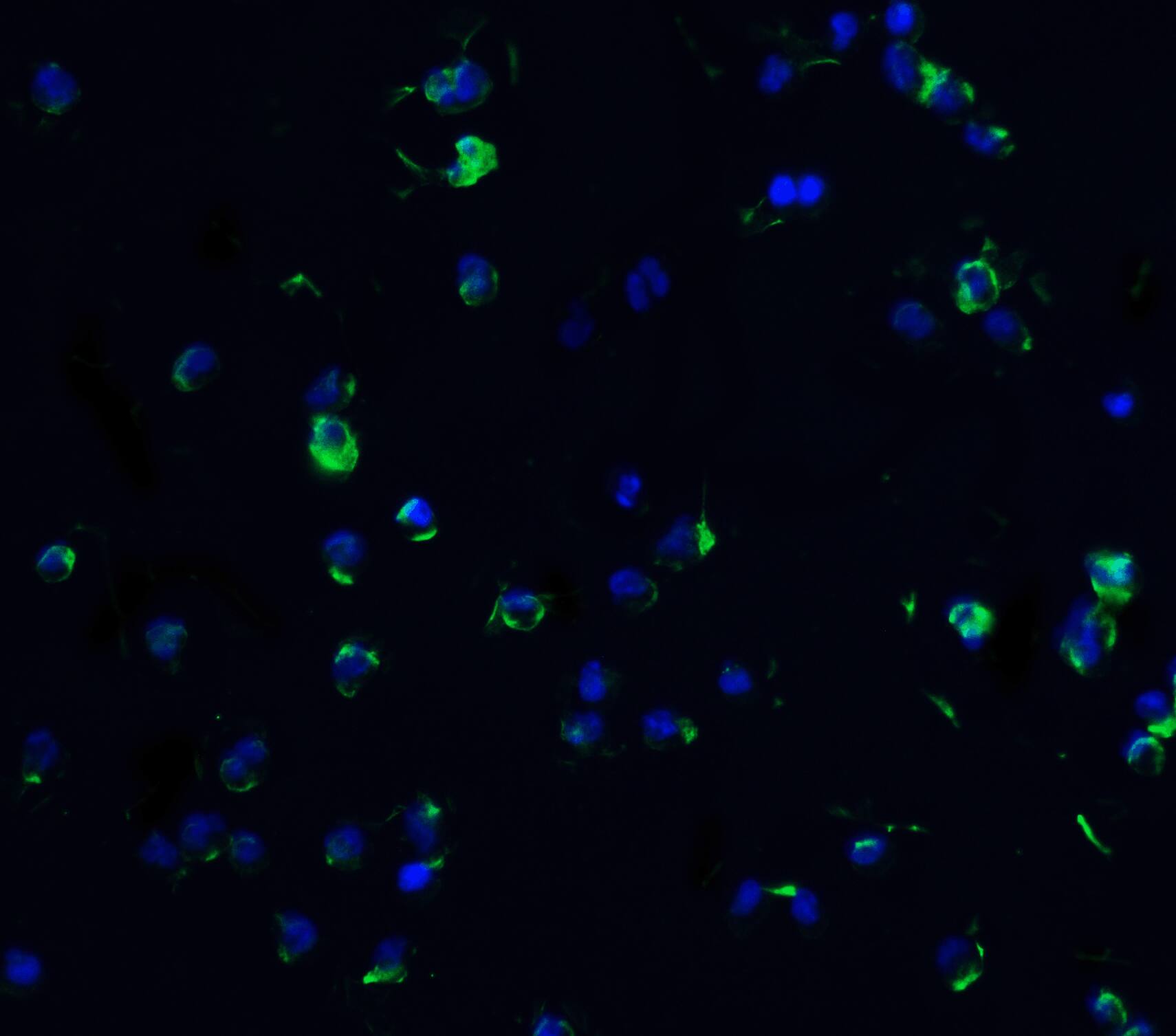

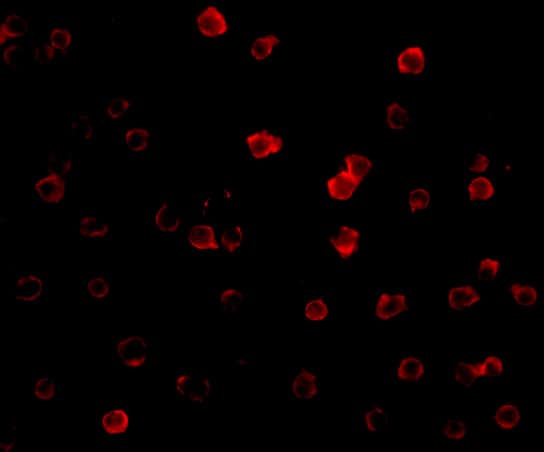


![DcR3/TNFRSF6B Antibody [Alexa Fluor® 750]](/sites/all/modules/enterprise-tech/et_datasheets/images/novus_guarantee.png "DcR3/TNFRSF6B Antibody [Alexa Fluor® 750]")
Secondary Antibodies |
Isotype Controls |
The concentration calculator allows you to quickly calculate the volume, mass or concentration of your vial. Simply enter your mass, volume, or concentration values for your reagent and the calculator will determine the rest.
| Uniprot |
|


![SDS-Page TNF-alpha [Unconjugated]](https://images.novusbio.com/images/protein/TNF-alpha_210-TA_256.jpg)
![Bioactivity TNF-alpha [Unconjugated]](https://images.novusbio.com/images/protein/TNFalpha_210TA_1658.jpg)
![SEC-MALS TNF-alpha [Unconjugated]](https://images.novusbio.com/images/210-ta_recombinant-human-tnf-alpha-protein-sec-mals-35202312244..jpg)
![N/A Fas Ligand/TNFSF6 [HRP]](https://images.novusbio.com/images/elisa/Fas_Ligand_DFL00_ELISA_94.jpg)
![N/A Fas Ligand/TNFSF6 [HRP]](https://images.novusbio.com/images/elisa/Fas_Ligand_DFL00_ELISA_1192.jpg)
![N/A Fas Ligand/TNFSF6 [HRP]](https://images.novusbio.com/images/elisa/Fas_Ligand_DFL00_ELISA_1193.jpg)
![SDS-Page LIGHT/TNFSF14 [Unconjugated]](https://images.novusbio.com/images/protein/LIGHT_664-LI_719.jpg)
![Bioactivity LIGHT/TNFSF14 [Unconjugated]](https://images.novusbio.com/images/protein/LIGHT_664-LI_721.jpg)


![N/A IL-6 [HRP]](https://images.novusbio.com/images/elisa/DATA_IL6_M6000_ELISA_936.jpg)
![N/A IL-6 [HRP]](https://images.novusbio.com/images/elisa/IL-6_M6000_ELISA_415.jpg)
![N/A IL-6 [HRP]](https://images.novusbio.com/images/m6000b_mouse-il-6-quantikine-elisa-kit-1752025024034.jpg)
![Bioactivity IL-4 [Unconjugated]](https://images.novusbio.com/images/protein/6507-ilcf_recombinant-human-il-4-cho-expressed-protein-cf-bioactivity-272020133214.jpg)
![SEC-MALS IFN-gamma [Unconjugated]](https://images.novusbio.com/images/485-mi_recombinant-mouse-ifn-gamma-protein-sec-mals-1612202583245.jpg)
![Bioactivity IFN-gamma [Unconjugated]](https://images.novusbio.com/images/protein/IFN-gamma_485-MI_455.jpg)
![SDS-Page IFN-gamma [Unconjugated]](https://images.novusbio.com/images/protein/IFN-gamma_485-MI_407.jpg)
![Bioactivity IL-2 [Unconjugated]](https://images.novusbio.com/images/202-il_recombinant-human-il-2-protein-bioactivity-174202314946.jpg)