| Reactivity | MuSpecies Glossary |
| Applications | WB, B/N |
| Clonality | Polyclonal |
| Host | Goat |
| Conjugate | Alexa Fluor 647 |
| Immunogen | E. coli-derived recombinant mouse CCL7/MCP-3/MARC Gln24-Pro97 Accession # Q03366 |
| Specificity | Detects mouse CCL7/MCP-3/MARC in direct ELISAs and Western blots. In direct ELISAs, approximately 15% cross‑reactivity with recombinant human Eotaxin and recombinant mouse (rm) JE is observed and less than 5% cross-reactivity with rmMCP-5 is observed |
| Isotype | IgG |
| Clonality | Polyclonal |
| Host | Goat |
| Purity Statement | Antigen Affinity-purified |
| Innovator's Reward | Test in a species/application not listed above to receive a full credit towards a future purchase. |
| Storage | Protect from light. Do not freeze. 12 months from date of receipt, 2 to 8 °C as supplied |
| Buffer | Supplied 0.2 mg/mL in a saline solution containing BSA and Sodium Azide. |
Mouse MARC, a member of the beta subfamily of chemokines, was initially identified as a transcript that is induced in a mouse mast cell line after Fc epsilon RI triggering by IgE plus antigen. Sequence comparisons suggest that MARC may be the mouse homologue of the human MCP-3 gene. Mouse MARC/MCP-3 expression has also been detected during murine experimental allergic encephalomyelitis in the spinal cord, and in LPS-stimulated murine WEHI -3 cells and Swiss 3T3 cells where MARC expression is glucocorticoid-attenuated. Except for one amino acid subsititution, mouse MARC is identical to mouse FIC, the product of a growth factor‑activated gene. The mouse MARC cDNA encodes a 97 amino acid residue precursor protein with a 23 amino acid residue signal peptide that is cleaved to yield a 74 amino acid residue mature protein. Mouse CCR2, a mouse chemokine receptor, has been shown to bind JE/MCP-1 with high affinity and MARC/MCP-3 with lower affinity. The E. coli-expressed mouse MARC/MCP-3 produced at R&D Systems has been shown to be a monocyte and T-lymphocyte chemoattractant.


![CCL7/MCP-3/MARC Antibody [Alexa Fluor® 647]](/sites/all/modules/enterprise-tech/et_datasheets/images/novus_guarantee.png "CCL7/MCP-3/MARC Antibody [Alexa Fluor® 647]")
Secondary Antibodies |
Isotype Controls |
The concentration calculator allows you to quickly calculate the volume, mass or concentration of your vial. Simply enter your mass, volume, or concentration values for your reagent and the calculator will determine the rest.
| Uniprot |
|


![N/A CCL2/JE/MCP-1 [HRP]](https://images.novusbio.com/images/elisa/CCL2_DCP00_ELISA_67.jpg)
![N/A CCL2/JE/MCP-1 [HRP]](https://images.novusbio.com/images/elisa/DATA_CCL2_DCP00_ELISA_633.jpg)
![N/A CCL2/JE/MCP-1 [HRP]](https://images.novusbio.com/images/elisa/DATA_CCL2_DCP00_ELISA_634.jpg)
![N/A CCL5/RANTES [HRP]](https://images.novusbio.com/images/elisa/CCL5_DRN00_ELISA_393.jpg)
![N/A CCL5/RANTES [HRP]](https://images.novusbio.com/images/elisa/DATA_CCL5_DRN00_ELISA_811.jpg)
![N/A CCL5/RANTES [HRP]](https://images.novusbio.com/images/elisa/DATA_CCL5_DRN00_ELISA_810.jpg)
![N/A CCL8/MCP-2 [Biotin]](https://images.novusbio.com/images/elisa/DATA_CCL8_DY281_ELISA_1890.jpg)
![N/A CCL11/Eotaxin [HRP]](https://images.novusbio.com/images/elisa/CCL11_MME00_ELISA_294.jpg)
![N/A CCL11/Eotaxin [HRP]](https://images.novusbio.com/images/elisa/DATA_CCL11_MME00_ELISA_1002.jpg)
![N/A CCL13/MCP-4 [Biotin]](https://images.novusbio.com/images/elisa/DATA_CCL13_DY327_ELISA_1931.jpg)
![SDS-Page TNF-alpha [Unconjugated]](https://images.novusbio.com/images/protein/TNF-alpha_210-TA_256.jpg)
![Bioactivity TNF-alpha [Unconjugated]](https://images.novusbio.com/images/protein/TNFalpha_210TA_1658.jpg)
![SEC-MALS TNF-alpha [Unconjugated]](https://images.novusbio.com/images/210-ta_recombinant-human-tnf-alpha-protein-sec-mals-35202312244..jpg)
![Flow Cytometry CCR2 Antibody (48607) [Unconjugated]](https://images.novusbio.com/images/antibody/CCR2_MAB150_Flow_Cytometry_19981.jpg)
![Immunohistochemistry CCR2 Antibody (48607) [Unconjugated]](https://images.novusbio.com/images/antibody/CCR2_MAB150_Immunohistochemistry_18879.jpg)
![Flow Cytometry CCR2 Antibody (48607) [Unconjugated]](https://images.novusbio.com/images/mab150_human-ccr2-mab-clone-48607-flow-cytometry-121220255522717.jpg)
![N/A CXCL10/IP-10/CRG-2 [HRP]](https://images.novusbio.com/images/elisa/CXCL10_DIP100_ELISA_121.jpg)
![N/A CXCL10/IP-10/CRG-2 [HRP]](https://images.novusbio.com/images/elisa/DATA_CXCL10_DIP100_ELISA_723.jpg)
![N/A CXCL10/IP-10/CRG-2 [HRP]](https://images.novusbio.com/images/elisa/DATA_CXCL10_DIP100_ELISA_724.jpg)
![N/A CD46 Antibody (344519) [Unconjugated]](https://images.novusbio.com/images/antibody/mab2005_human-cd46-mab-clone-344519-209202413163..jpg)
![N/A IL-6 [HRP]](https://images.novusbio.com/images/elisa/DATA_IL6_M6000_ELISA_936.jpg)
![N/A IL-6 [HRP]](https://images.novusbio.com/images/elisa/IL-6_M6000_ELISA_415.jpg)
![N/A IL-6 [HRP]](https://images.novusbio.com/images/m6000b_mouse-il-6-quantikine-elisa-kit-1752025024034.jpg)
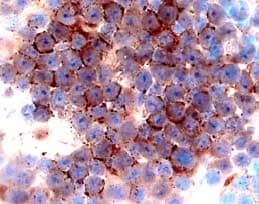
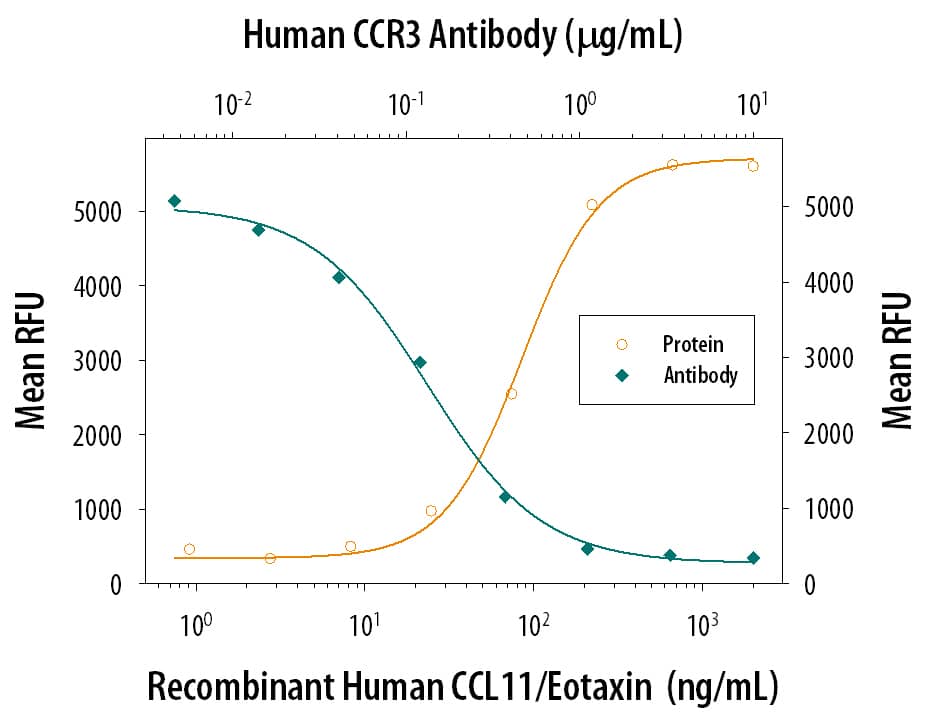
![Bioactivity IL-4 [Unconjugated]](https://images.novusbio.com/images/protein/6507-ilcf_recombinant-human-il-4-cho-expressed-protein-cf-bioactivity-272020133214.jpg)
![Flow Cytometry CCR1 Antibody (53504) [Unconjugated]](https://images.novusbio.com/images/antibody/mab145_human-ccr1-mab-clone-53504-flow-cytometry-1520248459..jpg)
![Flow Cytometry CXCR1/IL-8RA Antibody (42705) [Unconjugated]](https://images.novusbio.com/images/antibody/CXCR1_MAB330_Flow_Cytometry_19204.jpg)
![Flow Cytometry CXCR1/IL-8RA Antibody (42705) [Unconjugated]](https://images.novusbio.com/images/mab330_human-cxcr1-il-8-ra-mab-clone-42705-flow-cytometry-1212202575309.jpg)
![Western Blot CXCR1/IL-8RA Antibody (42705) [Unconjugated]](https://images.novusbio.com/images/mab330_human-cxcr1-il-8-ra-mab-clone-42705-western-blot-121220259205018.jpg)
![Neutralization CXCL9/MIG Antibody [Unconjugated]](https://images.novusbio.com/images/antibody/CXCL9_AF-492-NA_Block_Neutralize_8729.jpg)
![Western Blot CXCL9/MIG Antibody [Unconjugated]](https://images.novusbio.com/images/af-492-na_mouse-cxcl9-mig-affinity-purified-polyclonal-ab-8220249512813.jpg)
![Immunocytochemistry/ Immunofluorescence CXCL9/MIG Antibody [Unconjugated]](https://images.novusbio.com/images/af-492-na_mouse-cxcl9-mig-affinity-purified-polyclonal-ab-8220249504618.jpg)
![N/A CCL22/MDC [HRP]](https://images.novusbio.com/images/elisa/CCL22_DMD00_ELISA_142.jpg)
![N/A CCL22/MDC [HRP]](https://images.novusbio.com/images/elisa/DATA_CCL22_DMD00_ELISA_762.jpg)