| Applications | WB |
| Clonality | Polyclonal |
| Host | Goat |
| Conjugate | Biotin |
| Concentration | LYOPH |
| Immunogen | Mouse myeloma cell line NS0-derived recombinant human BAFF/BLyS (R&D Systems, Catalog # 2149-BF) Ala134-Leu285 Accession # Q9Y275 |
| Specificity | Detects human BAFF/BLyS in Western blots. In this format, less than 1% cross-reactivity with recombinant human APRIL is observed. |
| Source | N/A |
| Isotype | IgG |
| Clonality | Polyclonal |
| Host | Goat |
| Gene | TNFSF13B |
| Purity Statement | Antigen Affinity-purified |
| Innovator's Reward | Test in a species/application not listed above to receive a full credit towards a future purchase. |
| Dilutions |
|
|
| Readout System | ||
| Publications |
|
| Storage | Use a manual defrost freezer and avoid repeated freeze-thaw cycles.
|
| Buffer | Lyophilized from a 0.2 μm filtered solution in PBS with BSA as a carrier protein. |
| Preservative | No Preservative |
| Concentration | LYOPH |
| Reconstitution Instructions | Reconstitute at 0.2 mg/mL in sterile PBS. |
BAFF (also known as TALL-1, BLyS, and THANK) is a type II transmembrane glycoprotein belonging to the TNF superfamily and has been designated as TNF superfamily member 13B (TNFSF13B). Human BAFF is a 285 amino acid (aa) protein consisting of a 218 aa extracellular domain, a 21 aa transmembrane region and a 46 aa cytoplasmic tail (1, 2). BAFF has the typical structural characteristics of the TNF superfamily ligands. It is a homotrimeric protein having the structurally conserved motif known as TNF homology domain (3, 4). A higher ordered structure composed of a cluster of trimeric units resembling the structure of a viral capsid has also been reported (4). Human BAFF may be shed from the cell surface by proteolytic cleavage between R133 and Ala134 to yield a soluble form of the protein that is detectable in serum (1, 5). Within the TNF superfamily BAFF shares the highest homology (48%) with APRIL (1). BAFF shares with APRIL the ability to bind to BCMA and TACI and also binds specifically to BAFF receptor (BAFF R, also known as BR3 or TNFSFR13C), which is the principal BAFF receptor (6 - 8). All three receptors are type III transmembrane proteins that are expressd in B cells. BAFF and APRIL can form active heteromers that bind to TACI (9). BAFF is expressed in peripheral blood mononuclear cells, in spleen and lymph nodes. Its expression in resting monocytes is up-regulated by IFN-alpha , IFN-beta , LPS and IL-10. BAFF provides critical survival signals to a subset of B cells with intermediate maturation status (T2 B cells) during the immune response (10). BAFF also plays an important role in the development of lymphoid tissue and enhances the survival of activated memory B cells (7, 11). Human and mouse BAFF share 86% aa sequence identity (1).


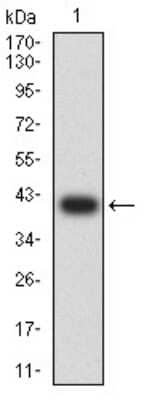
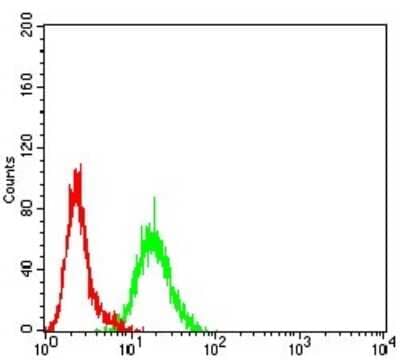
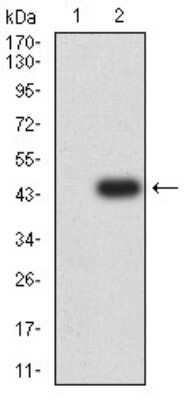


Secondary Antibodies |
Isotype Controls |
The concentration calculator allows you to quickly calculate the volume, mass or concentration of your vial. Simply enter your mass, volume, or concentration values for your reagent and the calculator will determine the rest.


![SDS-Page TNF-alpha [Unconjugated]](https://images.novusbio.com/images/protein/TNF-alpha_210-TA_256.jpg)
![Bioactivity TNF-alpha [Unconjugated]](https://images.novusbio.com/images/protein/TNFalpha_210TA_1658.jpg)
![SEC-MALS TNF-alpha [Unconjugated]](https://images.novusbio.com/images/210-ta_recombinant-human-tnf-alpha-protein-sec-mals-35202312244..jpg)
![N/A APRIL/TNFSF13 [Biotin]](https://images.novusbio.com/images/elisa/DATA_APRIL_DY884_ELISA_2253.jpg)
![N/A APRIL/TNFSF13 [Biotin]](https://images.novusbio.com/images/elisa/DATA_APRIL_DY884_ELISA_2333.jpg)

![Flow Cytometry BAFFR/TNFRSF13C Antibody [Unconjugated]](https://images.novusbio.com/images/antibody/BAFF_R_AF1162_Flow_Cytometry_18737.jpg)
![Neutralization BAFFR/TNFRSF13C Antibody [Unconjugated]](https://images.novusbio.com/images/antibody/af1162_human-baff-r-tnfrsf13c-affinity-purified-polyclonal-ab-neutralization-115202015554.jpg)
![Immunohistochemistry BAFFR/TNFRSF13C Antibody [Unconjugated]](https://images.novusbio.com/images/antibody/BAFF_R_AF1162_Immunohistochemistry_23315.jpg)


![N/A IL-10 [Biotin]](https://images.novusbio.com/images/elisa/DATA_IL10_DY417_ELISA_2014.jpg)
![Western Blot CD40/TNFRSF5 Antibody [Unconjugated]](https://images.novusbio.com/images/af632_human-cd40-tnfrsf5-affinity-purified-polyclonal-ab-822024950191.jpg)
![Western Blot CD40/TNFRSF5 Antibody [Unconjugated]](https://images.novusbio.com/images/af632_human-cd40-tnfrsf5-affinity-purified-polyclonal-ab-44202415425047.jpg)
![Simple Western CD40/TNFRSF5 Antibody [Unconjugated]](https://images.novusbio.com/images/antibody/af632_human-cd40-tnfrsf5-affinity-purified-polyclonal-ab-simple-western-58202111562.jpg)
![N/A CD40 Ligand/TNFSF5 [HRP]](https://images.novusbio.com/images/elisa/CD40_Ligand_DCDL40_ELISA_60.jpg)
![N/A CD40 Ligand/TNFSF5 [HRP]](https://images.novusbio.com/images/elisa/DATA_CD40_Ligand_DCDL40_ELISA_624.jpg)


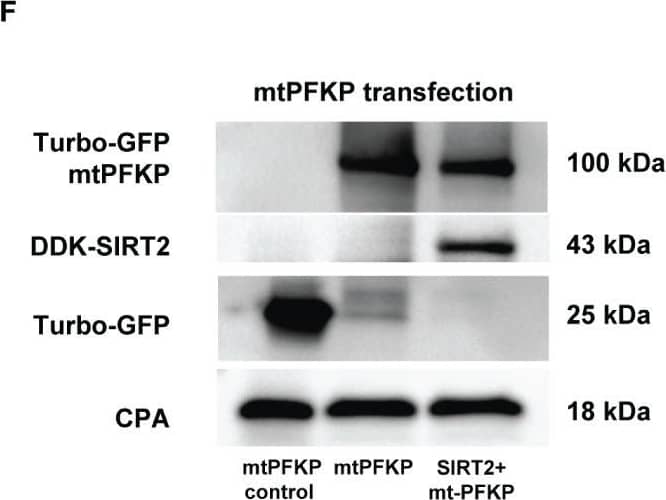

![Bioactivity IL-4 [Unconjugated]](https://images.novusbio.com/images/protein/6507-ilcf_recombinant-human-il-4-cho-expressed-protein-cf-bioactivity-272020133214.jpg)
![Bioactivity IL-2 [Unconjugated]](https://images.novusbio.com/images/202-il_recombinant-human-il-2-protein-bioactivity-174202314946.jpg)
![Bioactivity CTLA-4 [Unconjugated]](https://images.novusbio.com/images/protein/CTLA4_7268CT_2293.jpg)