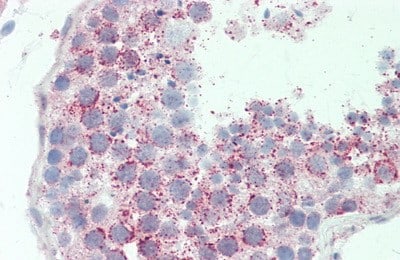
![Immunohistochemistry-Paraffin: Annexin A10 Antibody [NB300-894] - Human Pancreas using this antibody at 3.8ug/ml. Steamed antigen retrieval with citrate buffer pH 6, AP-staining.](http://images.novusbio.com/fullsize/Annexin-A10-Antibody-Immunohistochemistry-NB300-894-img0001.jpg "Immunohistochemistry-Paraffin: Annexin A10 Antibody [NB300-894] - Human Pancreas using this antibody at 3.8ug/ml. Steamed antigen retrieval with citrate buffer pH 6, AP-staining.")
| Reactivity | Hu, Mu, Rt, BvSpecies Glossary |
| Applications | ELISA, IHC |
| Clonality | Polyclonal |
| Host | Goat |
| Conjugate | Unconjugated |
| Concentration | 0.5 mg/ml |
| Immunogen | Peptide with sequence FCGDYVQGTIFPAPN corresponding to N-Terminus according to NP_009124.2. |
| Predicted Species | Mouse (100%), Rat (100%), Bovine (100%). Backed by our 100% Guarantee. |
| Isotype | IgG |
| Clonality | Polyclonal |
| Host | Goat |
| Gene | ANXA10 |
| Purity | Immunogen affinity purified |
| Innovator's Reward | Test in a species/application not listed above to receive a full credit towards a future purchase. |
| Dilutions |
|
||
| Application Notes | WB: Preliminary experiments (at 1 ug/ml) gave an approx. 45-48 kDa band in Hela, A431 and human kidney lysates. Please note that currently we cannot find an explanation in scientific literature for the band we observe given the predicted MW of approx. 37 kDa band according to NP_009124. IHC-P: Human pancreas shows staining of islet of Langerhans. |
||
| Control |
|
||
| Publications |
|
| Storage | Store at -20C. Avoid freeze-thaw cycles. |
| Buffer | Tris saline (20 mM Tris pH 7.3, 150 mM NaCl), 0.5% BSA |
| Preservative | 0.02% Sodium Azide |
| Concentration | 0.5 mg/ml |
| Purity | Immunogen affinity purified |
![Western Blot Osteopontin/OPN Antibody [Unconjugated]](https://images.novusbio.com/images/af808_mouse-osteopontin-opn-affinity-purified-polyclonal-ab-western-blot-121220259133019.jpg)
![Western Blot Osteopontin/OPN Antibody [Unconjugated]](https://images.novusbio.com/images/af808_mouse-osteopontin-opn-affinity-purified-polyclonal-ab-western-blot-12122025932150.jpg)
![Western Blot Osteopontin/OPN Antibody [Unconjugated]](https://images.novusbio.com/images/af808_mouse-osteopontin-opn-affinity-purified-polyclonal-ab-western-blot-121220259224819.jpg)


![Western Blot alpha-Fetoprotein/AFP Antibody (189502) [Unconjugated]](https://images.novusbio.com/images/antibody/alphaFetoprotein_MAB1368_Western_Blot_20276.jpg)
![Immunocytochemistry/ Immunofluorescence alpha-Fetoprotein/AFP Antibody (189502) [Unconjugated]](https://images.novusbio.com/images/mab1368_human-mouse-alpha-fetoprotein-mab-clone-189502-41202410325519.jpg)
![Knockout Validated alpha-Fetoprotein/AFP Antibody (189502) [Unconjugated]](https://images.novusbio.com/images/antibody/alphaFetoprotein_MAB1368_Knockout_Validated_21503.jpg)


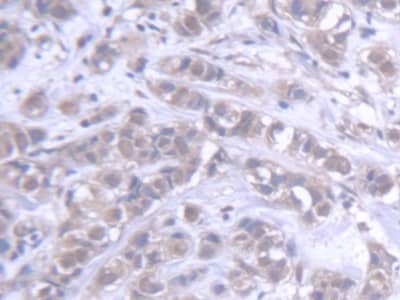
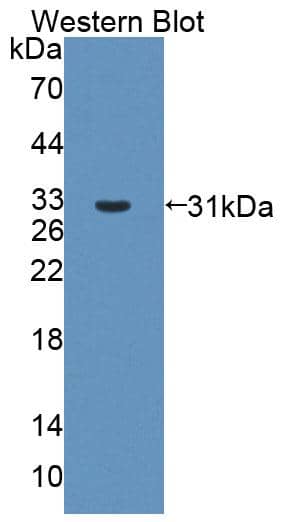

| Publication using NB300-894 | Applications | Species |
|---|---|---|
| Morgan RO, Jenkins NA, Gilbert DJ et al. Novel human and mouse annexin A10 are linked to the genome duplications during early chordate evolution. Genomics 1999-08-15 [PMID: 10458909] |
Secondary Antibodies |
Isotype Controls |
Research Areas for Annexin A10 Antibody (NB300-894)Find related products by research area.
|
The concentration calculator allows you to quickly calculate the volume, mass or concentration of your vial. Simply enter your mass, volume, or concentration values for your reagent and the calculator will determine the rest.


![Simple Western Annexin A1 Antibody [Unconjugated]](https://images.novusbio.com/images/antibody/Annexin_A1_AF3770_Simple_Western_16649.jpg)
![Immunohistochemistry Annexin A1 Antibody [Unconjugated]](https://images.novusbio.com/images/antibody/Annexin_A1_AF3770_Immunohistochemistry_10404.jpg)
![Western Blot Annexin A1 Antibody [Unconjugated]](https://images.novusbio.com/images/antibody/Annexin_A1_AF3770_Western_Blot_5334.jpg)

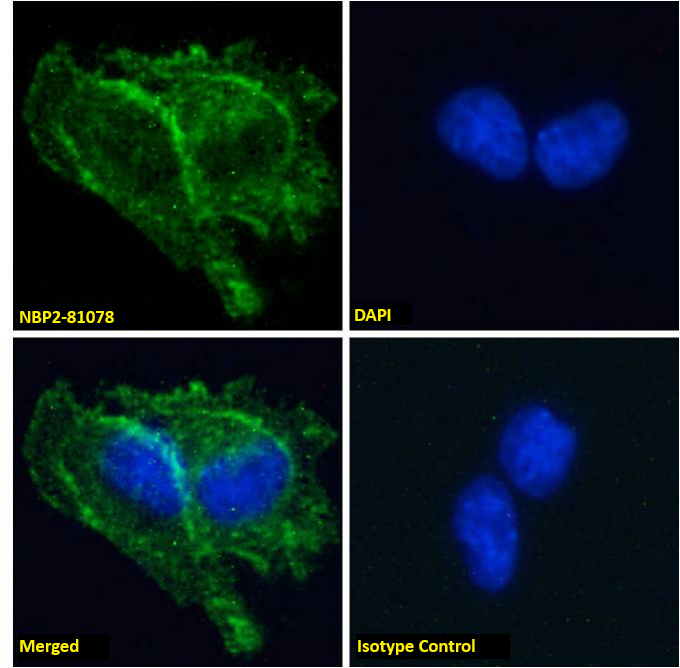


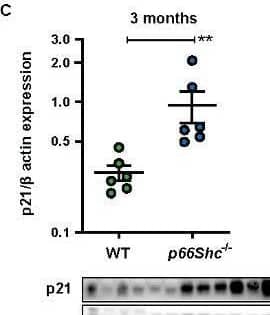
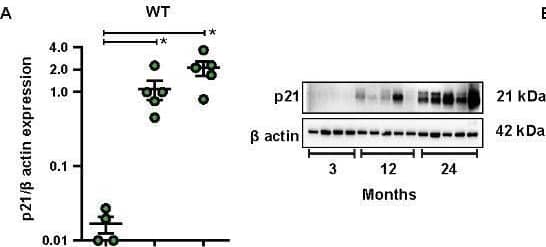
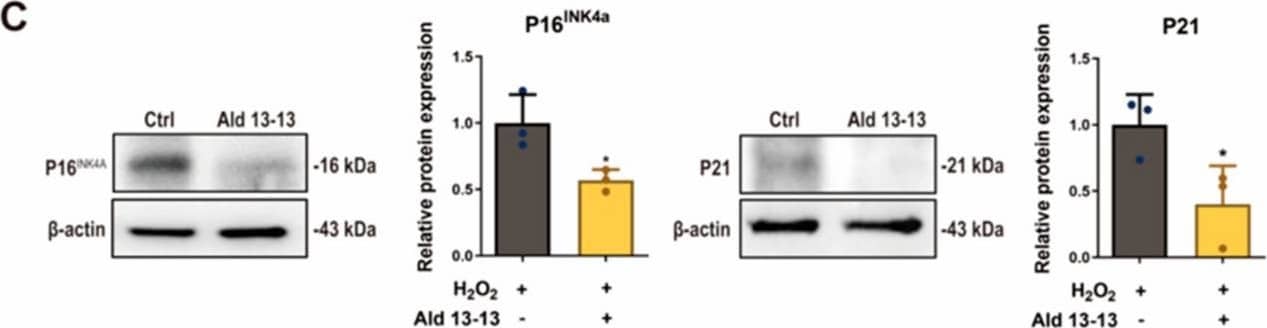
![Intracellular Staining by Flow Cytometry RUNX3/CBFA3 Antibody (527327) [Unconjugated]](https://images.novusbio.com/images/antibody/RUNX3_MAB3765_Flow_Cytometry_8418.jpg)
![Western Blot Smad4 Antibody [Unconjugated]](https://images.novusbio.com/images/antibody/Smad4_AF2097_Western_Blot_17168.jpg)
![Chromatin Immunoprecipitation (ChIP) Smad4 Antibody [Unconjugated]](https://images.novusbio.com/images/antibody/Smad4_AF2097_Chromatin_Immunoprecipitation_11225.jpg)
![Immunocytochemistry Smad4 Antibody [Unconjugated]](https://images.novusbio.com/images/antibody/Smad4_AF2097_Immunocytochemistry__Immunofluorescence_17807.jpg)
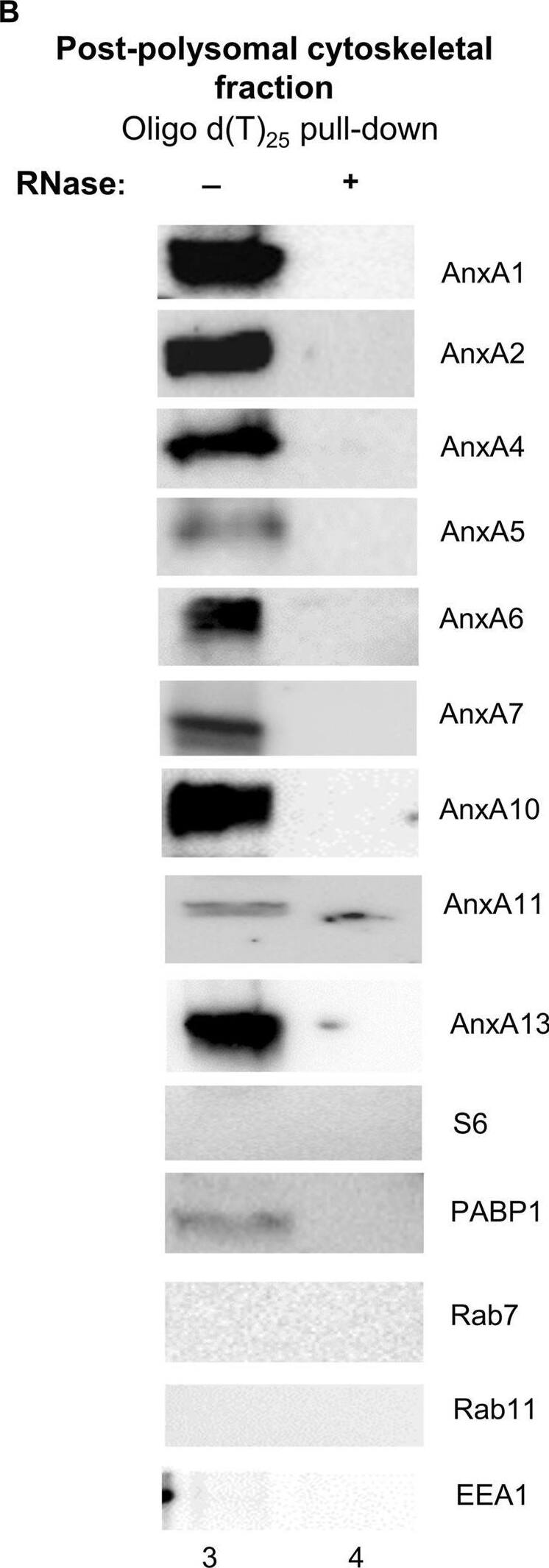

![Immunohistochemistry DCC Antibody [Unconjugated]](https://images.novusbio.com/images/af844_mouse-dcc-affinity-purified-polyclonal-ab-immunohistochemistry-21102022151713.jpg)
![N/A BDNF [HRP]](https://images.novusbio.com/images/elisa/BDNF_DBD00_ELISA_36.jpg)
![N/A BDNF [HRP]](https://images.novusbio.com/images/elisa/DATA_BDNF_DBD00_ELISA_587.jpg)
![N/A BDNF [HRP]](https://images.novusbio.com/images/elisa/DATA_BDNF_DBD00_ELISA_588.jpg)