| Immunogen | Human Burkitt's lymphoma cells |
| Localization | Cell Surface |
| Specificity | Recognizes a protein of 130-140kDa, identified as CD22 (also known as BL-CAM). CD22 expression is restricted to normal and neoplastic B cells and is absent from other haemopoietic cell types. In B-cell ontogeny, CD22 is first expressed in the cytoplasm of pro-B and pre-B cells, and on the surface as B cells mature to become IgD+. It is not expressed by plasma cells, CD22 is found highly expressed in follicular mantle and marginal zone B-cells, and while germinal center B-cells are relatively weak. CD22 is a member of the immunoglobulin superfamily and serves as an adhesion receptor for sialic acid-bearing ligands expressed on erythrocytes and all leukocyte classes. It also associates with tyrosine kinases and play a role in signal transduction and B-cell activation. |
| Isotype | IgG1 Kappa |
| Clonality | Monoclonal |
| Host | Mouse |
| Gene | CD22 |
| Purity | Protein A or G purified |
| Innovator's Reward | Test in a species/application not listed above to receive a full credit towards a future purchase. |
| Dilutions |
|
| Application Notes | Functional Studies: Order Ab without Azide. Optimal dilution for a specific application should be determined. |
| Theoretical MW | 135 kDa. Disclaimer note: The observed molecular weight of the protein may vary from the listed predicted molecular weight due to post translational modifications, post translation cleavages, relative charges, and other experimental factors. |
| Storage | Store at 4C. |
| Buffer | 10 mM PBS with 0.05% BSA |
| Preservative | 0.05% Sodium Azide |
| Concentration | 0.2 mg/ml |
| Purity | Protein A or G purified |


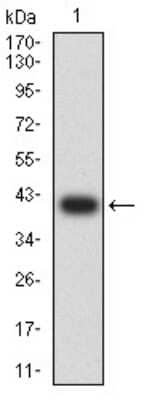
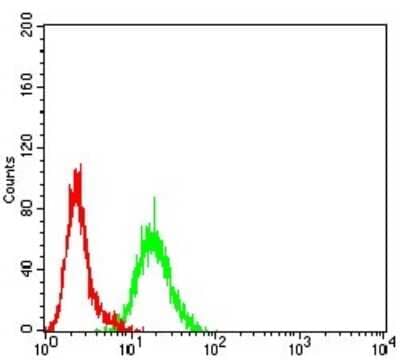
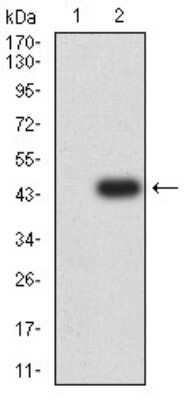


Secondary Antibodies |
Isotype Controls |
Research Areas for Siglec-2/CD22 Antibody (NBP2-44601)Find related products by research area.
|
|
Antigen-loss relapse after successful CAR-T therapy; What do we do now? By Jacqueline Carrico, BS, MD Tumor cell mechanisms driving tolerance to CAR-T Despite very promising results of CAR-T therapy in acute lymphoblastic leukemia, B-ALL, antigen-loss relapse has arisen as a major chall... Read full blog post. |
The concentration calculator allows you to quickly calculate the volume, mass or concentration of your vial. Simply enter your mass, volume, or concentration values for your reagent and the calculator will determine the rest.


![Bioactivity CTLA-4 [Unconjugated]](https://images.novusbio.com/images/protein/CTLA4_7268CT_2293.jpg)
![Immunohistochemistry Neprilysin/CD10 Antibody [Unconjugated]](https://images.novusbio.com/images/antibody/Neprilysin_AF1126_Immunohistochemistry_6679.jpg)
![Immunohistochemistry Neprilysin/CD10 Antibody [Unconjugated]](https://images.novusbio.com/images/antibody/af1126_mouse-neprilysin-affinity-purified-polyclonal-ab-immunohistochemistry-7520268331.png)
![N/A Neprilysin/CD10 Antibody [Unconjugated]](https://images.novusbio.com/images/antibody/af1126_mouse-neprilysin-affinity-purified-polyclonal-ab-7520268433.png)


![Immunohistochemistry CD45 Antibody [Unconjugated]](https://images.novusbio.com/images/antibody/CD45_AF114_Immunohistochemistry_23525.jpg)
![Immunocytochemistry CD45 Antibody [Unconjugated]](https://images.novusbio.com/images/antibody/af114_mouse-cd45-affinity-purified-polyclonal-ab-immunocytochemistry-6122021145449.jpg)

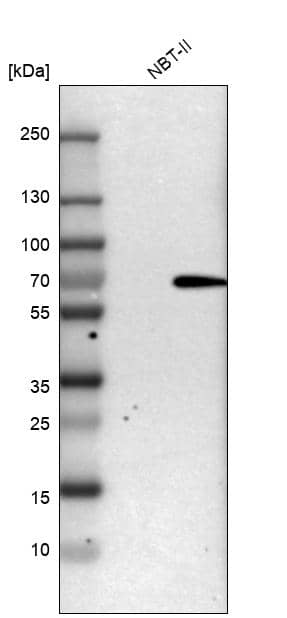


![Immunocytochemistry CD23/Fc epsilon RII Antibody [Unconjugated]](https://images.novusbio.com/images/antibody/CD23_AF123_Immunocytochemistry_6469.jpg)
![ELISA CD23/Fc epsilon RII Antibody [Unconjugated]](https://images.novusbio.com/images/af123_human-cd23-fc-epsilon-rii-affinity-purified-polyclonal-ab-elisa-639201850091061764.jpg)
![N/A CD25/IL-2R alpha [HRP]](https://images.novusbio.com/images/elisa/IL-2_R_alpha_DR2A00_ELISA_167.jpg)
![N/A CD25/IL-2R alpha [HRP]](https://images.novusbio.com/images/elisa/DATA_CD25_DR2A00_ELISA_800.jpg)


