| Reactivity | HuSpecies Glossary |
| Applications | Enzyme Activity |
| Format | Carrier-Free |
| Details of Functionality | Measured by its ability to oxidize 3-hydroxy kynurenine. The specific activity is > 75 pmol/min/µg, as measured under the described conditions. |
| Source | Spodoptera frugiperda, Sf 21 (baculovirus)-derived human Kynureninase protein Met1-Asn465, with a C-terminal 10-His tag |
| Accession # | |
| N-terminal Sequence | Met1 |
| Protein/Peptide Type | Recombinant Enzymes |
| Gene | KYNU |
| Purity | >95%, by SDS-PAGE under reducing conditions and visualized by silver stain |
| Endotoxin Note | <1.0 EU per 1 μg of the protein by the LAL method. |
| Dilutions |
|
|
| Theoretical MW | 54 kDa. Disclaimer note: The observed molecular weight of the protein may vary from the listed predicted molecular weight due to post translational modifications, post translation cleavages, relative charges, and other experimental factors. |
|
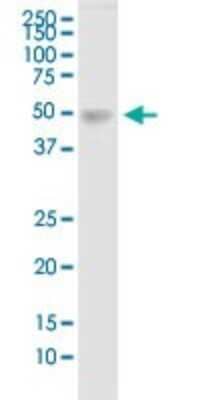
| SDS-PAGE | 51 kDa, reducing conditions |
|
| Publications |
|
| Storage | Use a manual defrost freezer and avoid repeated freeze-thaw cycles.
|
|||
| Buffer | Supplied as a 0.2 μm filtered solution in MES and NaCl. |
|||
| Purity | >95%, by SDS-PAGE under reducing conditions and visualized by silver stain |
|||
| Assay Procedure |
*Adjusted for Substrate Blank
|
Kynureninase is a pyridoxal-5 (-phosphate-dependent enzyme that catalyzes the hydrolytic cleavage of the amino acids L-kynurenine and L-3-hydroxykynurenine to give either anthranilic acid or 3-hydroxyanthranilic acid and alanine (1). The enzyme is a member of the “kynurenine pathway” enzymes, through which the majority of dietary tryptophan is degraded in the liver, and is involved in the de novo biosynthesis of NAD+ (2, 3). Kynurenine pathway genes are expressed in immune system cells such as macrophages and microglia. During inflammatory responses, the kynurenine pathway in these cells produces quinolinic acid (QA) and not NAD+. QA excites neurons via the activation of NMDA (N-methyl-D-aspartate) receptors resulting in neuronal damage. The tissue-damaging process has been demonstrated in AIDS-related dementia complex, Alzheimer’s, stroke, epilepsy, and Huntington’s disease. Because Kynureninase is one of the key enzymes of QA production, its inhibitors may be useful for the treatment of neurological disorders. The recombinant Kynureninase has been shown to possess specificity for 3-hydroxykynurenine over kynurenine (4, 5).







The concentration calculator allows you to quickly calculate the volume, mass or concentration of your vial. Simply enter your mass, volume, or concentration values for your reagent and the calculator will determine the rest.





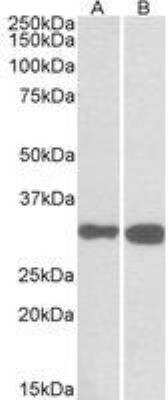


![SDS-Page TNF-alpha [Unconjugated]](https://images.novusbio.com/images/protein/TNF-alpha_210-TA_256.jpg)
![Bioactivity TNF-alpha [Unconjugated]](https://images.novusbio.com/images/protein/TNFalpha_210TA_1658.jpg)
![SEC-MALS TNF-alpha [Unconjugated]](https://images.novusbio.com/images/210-ta_recombinant-human-tnf-alpha-protein-sec-mals-35202312244..jpg)


![Bioactivity GM-CSF [Unconjugated]](https://images.novusbio.com/images/protein/7954-gmcf_recombinant-human-gm-csf-cho-expressed-protein-cf-bioactivity-272020121514.jpg)