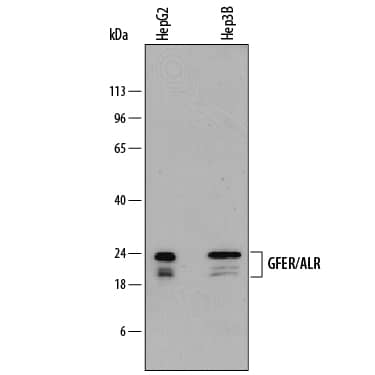
HAF016). A specific band was detected for Histone Deacetylase 8/HDAC8 at approximately 50 kDa (as indicated). This experiment was conducted under reducing conditions and using Immunoblot Buffer Group 8." title="Western blot shows lysates of HEK293 human embryonic kidney cell line. PVDF membrane was probed with 1 µg/mL of Sheep Anti-Human/Mouse Histone Deacetylase 8/HDAC8 Antigen Affinity-purified Polyclonal Antibody (Catalog # AF4359) followed by HRP-conjugated Anti-Sheep IgG Secondary Antibody (Catalog # HAF016). A specific band was detected for Histone Deacetylase 8/HDAC8 at approximately 50 kDa (as indicated). This experiment was conducted under reducing conditions and using Immunoblot Buffer Group 8." />
| Reactivity | Hu, MuSpecies Glossary |
| Applications | WB, ChIP |
| Clonality | Polyclonal |
| Host | Sheep |
| Conjugate | Unconjugated |
| Concentration | LYOPH |
| Immunogen | S. frugiperda insect ovarian cell line Sf 21-derived recombinant human HDAC8 isoform 1 Met1-Val377 (Leu31Pro) Accession # Q9BY41 |
| Specificity | Detects human HDAC8 in direct ELISAs and Western blots. |
| Source | N/A |
| Isotype | IgG |
| Clonality | Polyclonal |
| Host | Sheep |
| Gene | HDAC8 |
| Purity Statement | Antigen Affinity-purified |
| Innovator's Reward | Test in a species/application not listed above to receive a full credit towards a future purchase. |
| Storage | Use a manual defrost freezer and avoid repeated freeze-thaw cycles.
|
| Buffer | Lyophilized from a 0.2 μm filtered solution in PBS with Trehalose. *Small pack size (SP) is supplied either lyophilized or as a 0.2 µm filtered solution in PBS. |
| Preservative | No Preservative |
| Concentration | LYOPH |
| Reconstitution Instructions | Reconstitute at 0.2 mg/mL in sterile PBS. |
HDAC8 (Histone deacetylase 8) is a 50 kDa member of the class I subfamily, histone deacetylase family of transcriptional regulators. It is a smooth muscle enzyme that deacetylates histone lysines, blocking gene transcription. HDAC8 appears to function as a monomer, and phosphorylation at Ser39 inhibits activity. Human HDAC8 is 377 amino acids (aa) in length. It contains a series of alpha helices and strands, plus a catalytic ferrous ion binding site (Asp178-His180-Asp267). There are four potential splice variants, all of which possess an alternate start site 38 aa upstream of the standard start site. Three have additional changes; two show a one and three aa substitution respectively for aa 211-377, while a third has a 15 aa substitution for aa 148-377. Human HDAC8 shares more than 96% aa identity with both mouse and canine HDAC8.











Secondary Antibodies |
Isotype Controls |
The concentration calculator allows you to quickly calculate the volume, mass or concentration of your vial. Simply enter your mass, volume, or concentration values for your reagent and the calculator will determine the rest.


 5-001-A) for 15 minutes in an ultrasonic bath, followed by Biotinylated Anti-Sheep IgG Secondary Antibody (Catalog # [[catalogNumber:BAF016).Immunocomplexes were captured using 50 µL of MagCellect Streptavidin Ferrofluid (Catalog # [[catalogNumber:MAG999) and DNA was purified using chelating resin solution. TheIFN-gammapromoter was detected by standard PCR." title="Jurkat human acute T cell leukemia cell line treated with 50 ng/mL PMA and 200 ng/mL calcium ionomycin for 30 minutes was fixed using formaldehyde, resuspended in lysis buffer, and sonicated to shear chromatin. Histone Deacetylase 8/HDAC8/DNA complexes were immunoprecipitated using 5 µg Sheep Anti-Human/Mouse Histone Deacetylase 8/HDAC8 Antigen Affinity-purified Polyclonal Antibody (Catalog # AF4359) or control antibody (Catalog #