After August 17, 2026, Novus Biologicals products and services will no longer be available on this website; you will access all products and services on rndsystems.com. Create your R&D Systems online account today.
Can't find what you are looking for? Use our Antibody Concierge Service & we will help you locate your antibody!
Or feel free to contact us for alternative products.
Datasheet
Reviews & Publications
Protocols & FAQs
Support & Research
Activin RIIA Antibody Summary
Immunogen
recombinant human activin receptor IIA expressed in Sf 21 insect cells.
Localization
Plasma membrane
Specificity
This antibody has the ability to block receptor-ligand interaction. In ELISA assays, it will block 50% of the binding of recombinant human activin A to recombinant human activin receptor IIA/Fc chimera. The antibody demonstrates less than 2% cross-reactivity with recombinant human activin receptor I and recombinant human activin receptor IIB.
Isotype
IgG
Clonality
Polyclonal
Host
Goat
Gene
ACVR2A
Purity
Immunogen affinity purified
Innovator's Reward
Test in a species/application not listed above to receive a full credit towards a future purchase.
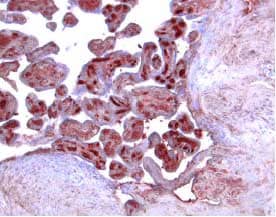
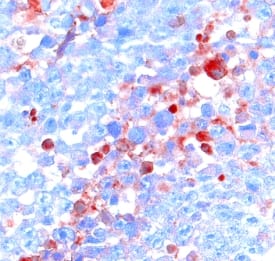
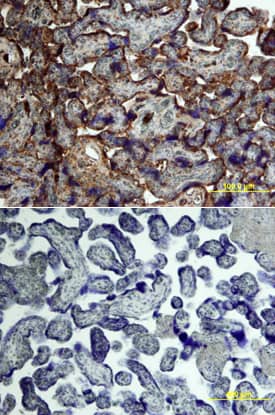
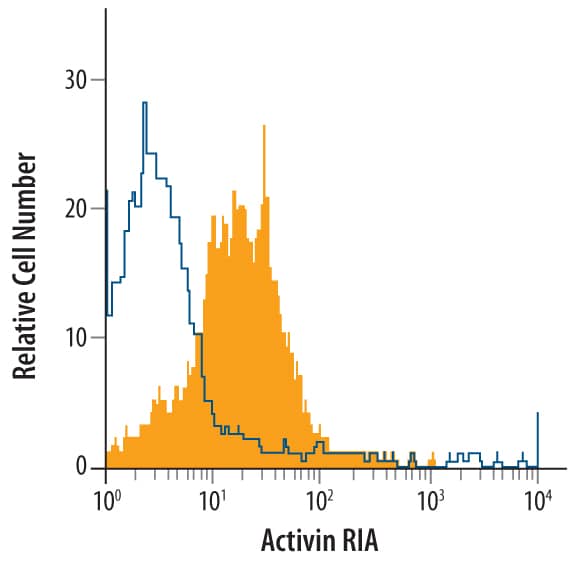
ELISA: Use at a concentration of 0.5 - 1.0 ug/ml. WB: Use at a concentration of 0.1 - 0.2 ug/ml. Detects human activin receptor IIA at approximately 5 ng/lane under reducing and non-reducing conditions. Predicted molecular weight: 58 kDa. Not tested in other applications.Optimal dilutions/concentrations should be determined by the end user.
Publications
Read Publication using NB120-10595 in the following applications:
Mouse reactivity reported in scientific literature (PMID: 30759349).
Packaging, Storage & Formulations
Storage
Store at 4C short term. Aliquot and store at -20C long term. Avoid freeze-thaw cycles.
Buffer
PBS and 5% Trehalose
Preservative
No Preservative
Concentration
0.1 mg/ml
Purity
Immunogen affinity purified
Alternate Names for Activin RIIA Antibody
activin A receptor, type II
activin A receptor, type IIA
Activin receptor type IIA
activin receptor type-2A
Activin RIIA
ActivinRIIA
ACTRII
ACTRIIA
ACVR2A
ACVR2ACTR-IIA
AVR2A
EC 2.7.11
EC 2.7.11.30
Background
Activin, a disulfide-linked homodimeric protein is secreted by Sertoli cells in the testis and granulosa cells in the ovary. In early studies, this peptide was thought to be an inhibin and not recognized as a unique compound. Activins and inhibins are members of the TGF-beta superfamily due to amino acid homology with respect to the conservation of 7 of the 9 cysteine residues common to all TGF-beta forms. Activins are homodimers or heterodimers of the various beta subunit isoforms, while inhibins are heterodimers of a unique alpha subunit and one of the various beta subunits. Five beta subunits have been cloned (mammalian betaA, betaB, betaC, betaE, and Xenopus betaD). The activin/inhibin nomenclature reflects the subunit composition of the proteins: activin A (betaA-betaA), activin B (betaB-betaB), activin AB (betaB-betaA), inhibin A (alpha-betaA), and inhibin B (alpha- betaB). Activins have a wide range of biological activities including mesoderm induction, neural cell differentiation, bone remodeling, hematopoiesis, and reproductive physiology. Activins are also involved in growth and differentiation of several tissues from different species. This protein also plays a key role in the production and regulation of hormones such as FSH, LH, GnRH, and ACTH. Activin influences erythropoiesis and the potentiation of erythroid colony formation, oxytocin secretion, paracrine, and autocrine regulation. Similar to other TGF-beta family members, activins exert their biological activities through the effects ot the heterodimeric complex composed of two membrane spanning serine-threonine kinases designated type I and type receptors. Activin type I and type II receptors are distinguished by the level of sequence homology of their kinase domains and other structural and functional features. To date, seven type I and five type II activin receptors have been cloned from mammals, including activin receptor IA, activin receptor IIA, activin receptor IB, and activin receptor IIB. In addition, two splicevariants of activin receptor IIA and five splice variants of activin receptor IIB have been reported. Type I activin receptors are highly conserved and do not bind directly to activin but will associate with the type II receptor-activin complex and initiate signal transduction. Type I activin receptors will also bind with the BMP-2/7-bound BMPR-II and form signaling complexes. Human, mouse, and bovine type IB activin receptors share greater than 98 % homology.
Limitations
This product is for research use only and is not approved for use in humans or in clinical diagnosis. Primary Antibodies are guaranteed for 1 year from date of receipt.
FAQs for Activin RIIA Antibody (NB120-10595). (Showing 1 - 2 of 2 FAQ).
I want to do a sandwich ELISA for the detection of the extracellular domain (aa19-135) of ACVR2a using a rabbit and a goat antibody. The rabbit antibody I have is directed against the first 50 aa of ACVR2A and I'm interested in using your goat ACVR2A antibody (NB120-10595). Of course, I have to make sure that the epitopes of the 2 antibodies I want to use in my ELISA are distinct. I don't need to know the exact sequence of the immunogen that was used to produce this antibody, but if I know that there is no overlap with the first 50 aa, it's fine for me.
This antibody was developed as a polyclonal in goat using the protein immunogen recombinant human activin receptor IIA expressed in Sf 21 insect cells. The antibody was affinity purified using the immunogen as the affinity ligand. There is no single epitope for this antibody, since it is polyclonal. The immunogen (whole protein) would have many potential immunogenic sites. This antibody does have functional blocking activity in ELISA, but that activity could be due to multiple epitope recognition sites
I would like to have more information about this antibody NB120-10595. According to the datasheet it can be used for neutralization. However, no reference or publication has been listed for this product. Would you please provide some more information including the protocol and recommended dilution?
In regards to NB120-10595 the lab has informed me that this was tested and reported by a customer who tested it for its ability to function as a blockade of receptor-ligand interaction via a functional ELISA assay. Approximately a 1-3 microgram/ml concentration of this antibody was used and found to block 50% of the binding of 30ng/ml of rhActivin A to immobilized rhAct RIIA/Fc Chimera (100 microlters of a 0.5 microgram/ml solution was coated in each well).
The concentration calculator allows you to quickly calculate the volume, mass or concentration of your vial. Simply enter your mass, volume, or concentration values for your reagent and the calculator will determine the rest.
=
÷
Review this Product
Be the first to review our Activin RIIA Antibody and receive a gift card or discount.


![Neutralization TGF-beta RII Antibody [Unconjugated]](https://images.novusbio.com/images/af-241-na_human-tgf-beta-rii-affinity-purified-polyclonal-ab-neutralization-639183615258769416.jpg)



![N/A Follistatin [HRP]](https://images.novusbio.com/images/elisa/DATA_Follistatin_DFN00_ELISA_681.jpg)
![N/A Follistatin [HRP]](https://images.novusbio.com/images/elisa/DATA_Follistatin_DFN00_ELISA_682.jpg)
![N/A Follistatin [HRP]](https://images.novusbio.com/images/elisa/Follistatin_DFN00_ELISA_97.jpg)
![Cell Culture BMP-7 [Unconjugated]](https://images.novusbio.com/images/354-bp_recombinant-human-bmp-7-protein-cell-culture-252023113257..jpg)
![Bioactivity BMP-7 [Unconjugated]](https://images.novusbio.com/images/protein/354-bp_recombinant-human-bmp-7-protein-bioactivity-7122020141940.jpg)
![SDS-Page BMP-6 [Unconjugated]](https://images.novusbio.com/images/protein/BMP-6_507-BP_374.jpg)
![Bioactivity BMP-6 [Unconjugated]](https://images.novusbio.com/images/protein/BMP-6_507-BP_376.jpg)
![Bioactivity BMP-2 [Unconjugated]](https://images.novusbio.com/images/protein/355-bm_recombinant-human-mouse-rat-bmp-2-protein-bioactivity-181120209742.jpg)
![Bioactivity GDF-8/Myostatin [Unconjugated]](https://images.novusbio.com/images/protein/GDF-8_788-G8_CF_116.jpg)
![SDS-Page GDF-8/Myostatin [Unconjugated]](https://images.novusbio.com/images/protein/GDF-8_788-G8_CF_114.jpg)
![SDS-Page BMP-4 [Unconjugated]](https://images.novusbio.com/images/protein/BMP-4_314-BP_100.jpg)
![Bioactivity BMP-4 [Unconjugated]](https://images.novusbio.com/images/314-bp_recombinant-human-bmp-4-protein-1882021123744.jpg)
![Western Blot BMPR-IA/ALK-3 Antibody [Unconjugated]](https://images.novusbio.com/images/af346_human-bmpr-ia-alk-3-affinity-purified-polyclonal-ab-western-blot-121220258152618.jpg)
![Western Blot BMPR-IA/ALK-3 Antibody [Unconjugated]](https://images.novusbio.com/images/af346_human-bmpr-ia-alk-3-affinity-purified-polyclonal-ab-western-blot-12122025822247.jpg)
![Western Blot BMPR-IA/ALK-3 Antibody [Unconjugated]](https://images.novusbio.com/images/af346_human-bmpr-ia-alk-3-affinity-purified-polyclonal-ab-western-blot-12122025822317.jpg)


![Western Blot Smad2/3 Antibody [Unconjugated]](https://images.novusbio.com/images/antibody/Smad3_AF3797_Western_Blot_5347.jpg)
![Immunohistochemistry Smad2/3 Antibody [Unconjugated]](https://images.novusbio.com/images/antibody/af3797_human-mouse-smad2-3-affinity-purified-polyclonal-ab-immunohistochemistry-3082021153223.jpg)
![Simple Western Smad2/3 Antibody [Unconjugated]](https://images.novusbio.com/images/antibody/Smad2_3_AF3797_Simple_Western_20385.jpg)